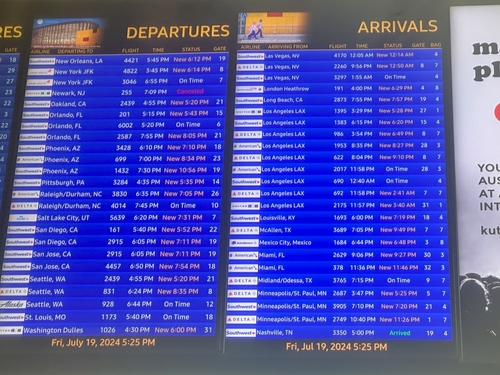

When you take a flight, do you look at your boarding pass and wonder what the three-letter code for your destination means? Why is Los Angeles “LAX”, Chicago “ORD”, and Orlando “MCO”? Behind each code lies a story, a mix of aviation history, geography, old airfields, and sometimes, pure creativity. Some even come with a little sense of humor.
For many immigrants and travelers, airport codes represent something more: a first arrival, a long-awaited reunion, or a trip back home. At Remitly, we understand that travel isn’t just about miles and maps; it’s about connection. And as it turns out, those three little letters can tell you a lot about how the world stays connected.
The science behind airport code creation
Every airport in the world has a unique three-letter code assigned by the International Air Transport Association (IATA), the global body that keeps aviation running smoothly.
These codes offer a standardized way for identifying and tracking tickets, baggage, and flight schedules. Pilots and air traffic controllers use a different four-letter version issued by the International Civil Aviation Organization (ICAO), but for travelers, it’s the IATA code that matters most.
In the early days of aviation, airports used two-letter weather station codes, as the primary concern for flight crews was the weather conditions. But this structure offered only 676 likely combinations.
When air travel exploded in the 1930s, the number of airports worldwide increased significantly. So, the system expanded to three letters—and over 17,500 combinations—to avoid overlaps. Most cities simply borrowed from their names, like ATL for Atlanta, SFO for San Francisco, and BOS for Boston.
As the skies got busier, cities had to get more creative. Toronto’s YYZ uses a “Y” prefix dating back to its early radio call sign days. Frankfurt (FRA) and Tokyo (HND/NRT) kept it straightforward, while some, like Osaka (KIX) or Rio de Janeiro (GIG), opted for something memorable.
Geographic genius: place-based airport code origins
Some airport codes make perfect sense. Others make you scratch your head. Either way, each one has a backstory worth knowing. However, those easiest to understand are often rooted in a sense of place.
LAX (Los Angeles)
Once upon a time, Los Angeles was just “LA.” When airports switched to three-letter codes, officials tacked on an “X” as filler. It had no secret meaning—just a leftover from the transition. Ironically, that random “X” became legendary. Today, LAX isn’t just an airport code; it’s a global brand, plastered on souvenirs, merchandise, and even music lyrics.
ORD (Chicago O’Hare)
ORD comes from Orchard Field, the airport’s original name before it was renamed to honor World War II hero Edward “Butch” O’Hare. The code stuck, even as the orchards disappeared and Chicago’s airport became one of the busiest in the world.
DEN (Denver)
Not every story is complicated. Denver kept things clean and logical with DEN, matching its name perfectly: short, simple, and easy to remember. The airport’s massive size and futuristic design might surprise new visitors, but its straightforward code reflects Colorado’s no-nonsense style.
MCO (Orlando)
MCO is named after McCoy Air Force Base, which once occupied the land the installation sits on today. When Orlando’s airport opened, it kept the code as a tribute to its military roots. So, while families head there for Disney magic, there’s a piece of Florida’s Cold War past behind every bag tag.
LHR (London Heathrow)
Before there was Heathrow, there was a tiny hamlet called Heath Row. The village was cleared to make way for London’s biggest and busiest airport, but its name lives on in the airport’s designation, LHR. It’s a subtle reminder that even global travel hubs have humble beginnings.
DXB (Dubai International)
DXB in Dubai was chosen because DUB, the logical choice, was already taken by Dublin, Ireland, so an “X” stepped in as the substitute. It’s a clever workaround that ultimately led to one of the most recognizable airport codes in the world.
SIN (Singapore, Changi Airport)
Yes, you read that right. “SIN” is just short for Singapore, but travelers everywhere love the irony. The world’s best airport wears one of the cheekiest codes in aviation, showing that a bit of humor never hurts.
Historical connections hidden in plain sight
Airport codes don’t just mark destinations. They preserve local history, celebrate pioneers, and carry on stories from another era.
BWI (Baltimore/Washington International)
When you see BWI, think “both.” The Baltimore/Washington International Airport was one of the first to represent two cities instead of one, illustrating how air travel reshaped regional identities. This clever code offers a clever solution to geography.
MSY (New Orleans)
This one’s a mystery until you dig deeper. MSY stands for “Moisant Stock Yards”, named after John Moisant, a daring aviator from the early 1900s. The airport retained the name long after the stockyards were gone.
SDF (Louisville)
Louisville’s airport is officially named after legendary boxer Muhammad Ali. But its code, SDF, comes from Standiford Field, its original name. This is an example of how airports can modernize their image without sacrificing their roots.
PHL (Philadelphia)
Philadelphia International Airport’s code, PHL, is a simple nod to the city’s full name, but it also preserves a bit of its history. In early aviation, “PHL” helped distinguish the city from nearby regional airfields, giving it a clean and recognizable identity. Today, it still proudly reflects the birthplace of American independence while being a key hub for travelers heading up and down the East Coast.
AMS (Amsterdam Schiphol)
“Schiphol” translates to “ship hole,” referring to a lake where ships once sank centuries ago. The name is a nod to the area’s history, transformed from a watery landscape into one of Europe’s busiest aviation hubs.
CDG (Paris Charles de Gaulle)
CDG honors General Charles de Gaulle, the French leader who helped rebuild post-war France. The airport, and its code, reflect a nation that values memory and pride. It’s not just Paris’s main gateway; it’s part of its identity.
HND (Tokyo Haneda, Japan)
HND comes from “Haneda,” the neighborhood where Japan’s first major airport was built. Before Narita opened, Haneda was Tokyo’s main international gateway, and the code stuck even as its role shifted to domestic flights.
Clever workarounds and creative solutions
Sometimes cities ran out of luck—and letters. When the obvious codes were taken, airports had to improvise.
FLL (Fort Lauderdale)
Since “FTL” wasn’t available, Fort Lauderdale got creative. “FLL” rolled off the tongue and looked good on luggage tags. The code stuck, and so did the sunshine.
BUR (Burbank Airport, California)
Sitting in Los Angeles County, BUR had to find some way to stand out from nearby LAX. It did so by embracing its small size and personality. Locals love it for quick getaways, and Hollywood insiders adore it for being paparazzi-free.
LGA (LaGuardia, New York)
Named for New York’s colorful mayor, Fiorello LaGuardia, this code distinguishes the airport from nearby JFK and EWR. It’s fitting for an airport that still feels proudly New York—busy, bold, and a little chaotic.
IAD (Washington Dulles)
“WAS” was taken, so Dulles went with IAD, short for “International Airport Dulles.” The symmetry is satisfying, and the logic is pure Washington: diplomatic, orderly, and impossible to confuse.
EZE (Buenos Aires, Argentina)
The name “EZE” comes from Ezeiza, the Buenos Aires suburb where this airport sits. The code’s smoothness and rhythm make it one of Latin America’s most elegant identifiers. It also serves as Argentina’s main international gateway, welcoming millions of travelers each year to the country’s capital.
SYD (Sydney, Australia)
SYD is a traveler’s favorite: short, simple, and proudly Australian. The airport has even leaned into its fame, using “SYD” in its branding, merchandise, and social campaigns.
HKG (Hong Kong International)
When this airport moved from Kai Tak to a new location, it kept the “HKG” tag. This continuity helped travelers instantly recognize the city’s code, preserving decades of aviation history. Today, HKG stands as one of Asia’s busiest and most efficient airports, connecting the East and West through nonstop global routes.
OSL (Oslo, Norway)
OSL replaced FOR, its older airport code, when Oslo’s new hub opened. It’s neat, consistent, and modern, similar to the country itself. The code also reflects Norway’s focus on simplicity and sustainability, with Oslo Airport often ranked among Europe’s greenest and most efficient travel hubs.
Modern airport codes
In the age of global branding, airport codes are more than logistical tags; they’re marketing gold.
IST (Istanbul, Türkiye)
When Istanbul opened one of the world’s busiest airports in 2018, it reclaimed IST from the old Atatürk site. The three letters now appear on signs, merch, and social media, a badge of pride for a city that bridges Europe and Asia.
DOH (Doha, Qatar)
DOH fits its name perfectly and looks sleek in print. The code now doubles as a luxury brand, thanks to Qatar Airways’ global recognition. The airport it represents, Hamad International, is consistently ranked among the world’s best, famous for its art installations, high-end shopping, and calm efficiency in connecting East and West.
DEL (Delhi, India)
DEL captures New Delhi’s energy and keeps things simple for millions of travelers flying in and out every year. Indira Gandhi International Airport has grown into one of the busiest and most advanced hubs in Asia, boasting a design that seamlessly blends modern infrastructure and traditional Indian aesthetics.
MEX (Mexico City, Mexico)
MEX is both obvious and proud. The airport’s shops and souvenirs embrace the unique identity, turning the three-letter code into a celebration of Mexican culture. Sitting in the heart of one of the world’s largest cities, Mexico City International Airport welcomes travelers with a mix of history, color, and constant motion.
Fun facts about airport codes
There are a few airport codes that prove that even in a world full of strict rules, aviation has a sense of humor.
- FUN (Tuvalu): Where else could “FUN” literally be a destination?
- LOL (Nevada, USA): A real airport, and you can officially laugh out loud when you land.
- OMG (Namibia): Proof that surprise and delight can coexist in aviation.
- DAD (Da Nang, Vietnam): A sweet name for travelers heading home to family.
- MAD (Madrid, Spain): Perfectly chaotic, perfectly fitting.
- BOO (Bodø, Norway): Cute or creepy, you decide.
- YUM (Yuma, Arizona): Deliciously appropriate for a foodie-friendly town.
Travel, identity, and the immigrant journey
Airport codes may look small, but for millions, they represent something huge: belonging. These tiny abbreviations remind us that travel isn’t just about getting from point A to B. It’s about why we go and who we see when we get there. For travelers and immigrants alike, these codes become part of life’s geography, a shorthand for where memories are made.
At Remitly, we know those journeys well. Just as airports bridge continents, Remitly helps people stay connected across borders, sending love and support back home.
So, next time you see your destination printed on a ticket, take a closer look. Whether it’s LAX or MNL, CDG or DEL, there’s a story behind every three letters.
FAQs
Why are airport codes three letters long?
Air travel started with two-letter weather codes, but as more airports opened, three-letter identifiers became standard. It gave the world more room to fly, literally.
Who assigns airport codes?
The International Air Transport Association (IATA) handles three-letter codes, while the International Civil Aviation Organization (ICAO) oversees four-letter codes for operational purposes.
Why don’t airport codes always match city names?
Because airports grow and evolve. Many codes reflect older airfields, military bases, or local landmarks, while others are simply creative solutions when the obvious choices were taken.
Can airports change their codes?
Rarely. Changing a code is like changing a country’s phone number. It’s possible, but complicated. A few airports have done it successfully, often for branding reasons.
What are some of the funniest or cleverest airport codes worldwide?
Familiar favorites include FUN (Tuvalu), OMG (Namibia), and YUM (Arizona).