English (US) – Page 22

Katakana Alphabet: Japanese Script for Loanwords and Emphasis

Discover the katakana alphabet, essential for writing loanwords and emphasizing words in Japanese. Explore its significance in our latest blog post!

English (US)

Key Highlights

Here’s a quick look at what you’ll learn about the katakana alphabet:

  • The Japanese language has three writing systems. These are hiragana, kanji, and the katakana alphabet.
  • Katakana is used when you write foreign words, loanwords, and foreign names.
  • It has 46 basic characters. These characters stand for syllables, just like hiragana does.
  • There are many common Japanese words you might already know. For example, “computer” (コンピュータ) and “tutor” (チューター) are written in katakana.
  • When you learn katakana, you open a door to a whole new part of the Japanese writing system and new Japanese words.

Introduction

Welcome to the world of the Japanese language! If you have started with hiragana, your next step is to learn katakana. At first, katakana may look different but it has the same sounds as hiragana. So, you may ask, why do you need a second set of alphabets? One good reason is that katakana is used for many foreign words in Japanese. It is the way you read many words you see in daily life. When you know both hiragana and katakana, reading Japanese signs, menus, and pop culture things will get much easier. Learning these Japanese alphabets is an important part of your journey with the Japanese language.

Understanding the Katakana Alphabet in Japanese Writing

The Japanese writing system is like no other. Katakana has a clear and important job in it. You can think of katakana as the way many people in Japan show a word comes from out of the country. When you see words written in this set of sharp lines and shapes, you know that word did not start in Japan. It is a simple way to point out something foreign.

Each katakana character stands for a sound. It is a syllable, just like the sounds you find in hiragana. This means katakana is a part of the japanese syllabary, and it helps you know how to say the word out loud. The Japanese writing system uses katakana to bring new, foreign words into the japanese language. At the same time, this keeps those words set apart from other japanese words.

In this text, you can find out more about katakana’s job in writing, where it comes from, and how people use it today.

What Is Katakana? Purpose and Role in Japanese Script

Katakana (カタカナ) is one of the two main ways to write sounds in the japanese language. The other one is called kana. Katakana is mostly used for writing foreign words. People call these loanwords. These words come from things, names, and places that are not from japanese or chinese. For example, if your name is Sarah, you write it in katakana like サラ (Sara).

This way of writing helps set apart foreign words from native japanese words. Native japanese words are written in hiragana or kanji. This is good for learners of japanese. When you see katakana, you can sound out the word. Often, you will know that it comes from english or another foreign language. So, “computer” is written as コンピュータ (konpyūta).

Katakana makes it easy for japanese to use and change words from other countries. It works like a bridge between japanese and a foreign language. Katakana is one of the japanese alphabets you need to learn if you want to read modern japanese. You will find it on restaurant menus, in books, and in school papers—all over japan.

Historical Origins and Development of Katakana

The story of katakana starts with kanji. Kanji is the writing system that came to Japan from China. Around the 9th century, some Buddhist monks needed a way to read and mark Chinese texts. They made a kind of shorthand. To do this, they took pieces of hard Chinese characters and used these to show Japanese sounds. This new script was simple, and it became katakana.

This is why each katakana character looks more angled and plain than the fancy kanji that it came from. For example, the katakana character “e” (エ) comes from the kanji 江. At first, people used this short style for official documents and to make reading Chinese writing easier.

Later, the japanese writing system changed and grew. Now, there are three main scripts. Kanji is still used for main meanings. Hiragana is used for native japanese words and grammar. Katakana is used for special jobs. Knowing this story shows why japanese uses more than one script and how katakana found its own place in the language.

When and Why Katakana Is Used in Modern Japanese

In modern Japan, katakana is a big part of the Japanese writing system. You see it often. People use katakana mostly to show words taken from other languages. This makes it easy for English speakers to know some words, since many loanwords are close to what you see in English.

Katakana is not just for loanwords, though. It’s also used to add stress to some Japanese words. In English, you do this with italics or bold. Katakana can help show sound words, known as onomatopoeia. It’s also common for technical terms. Many companies use katakana for their names. Toyota (トヨタ) and Suzuki (スズキ) are two big examples.

Here are the main times you will see katakana:

  • Foreign words and loanwords: for things like “beer” (ビール, bīru) or “ice cream” (アイスクリーム, aisu kurīmu).
  • Foreign names and country names: such as “America” (アメリカ, Amerika).
  • Emphasis: to help some Japanese words stand out in the sentence.
  • Onomatopoeia: words used to show a sound.

Katakana helps people with foreign words, Japanese words, and names like America in Japan. It is one part of the Japanese writing system and works well for both English and Japanese speakers.

Katakana vs. Hiragana: Key Differences and Uses

While katakana and hiragana are both types of Japanese syllabaries, they have a different look and are used in different ways. You can think of them as two styles for the same set of sounds. Hiragana letters are more smooth and curvy. But katakana letters look sharp and have more straight lines.

The main difference is how people use them. Hiragana is used with native Japanese words, help words like particles, and at the end of verbs. Katakana is for foreign loanwords, to show stress or attention, and for some technical words. Now let’s look at how they look, when people use them, and see some real examples.

Visual Distinctions Between Katakana and Hiragana

The first thing you will see when looking at katakana and hiragana is how they look. Hiragana characters are round and smooth. They almost seem like they were drawn with a simple soft line. This makes sense in the japanese language because they came from a flowing style of writing. Take the hiragana for “a” as an example. It is written as あ.

Katakana, on the other hand, uses lots of straight lines and sharp points. A katakana character looks more blocky or stiff. For example, the katakana for “a” is ア. The reason for this look comes from the way katakana began. Because katakana came from taking small parts of harder kanji, they had to be quick and easy to read.

These looks help people understand japanese as they read or write. When you see rounded hiragana, you know it is usually a word from japanese or something with grammar. When you spot a sharp katakana character, one will think of a loanword or something getting more focus. Knowing the difference between these two is very important when starting to learn japanese.

Common Contexts for Using Katakana vs. Hiragana

Knowing when to use katakana and when to use hiragana is very important for reading and writing in the japanese writing system. Both of them have the same sounds, but they do different jobs. Hiragana is used for most of the native japanese words and is important for grammar.

You see hiragana in japanese for particles. These connect the parts of a sentence, and it shows where the verb and adjective endings are in words. People also use hiragana for words that do not have a common kanji, and for furigana. Furigana is when small hiragana letters show how to say a kanji word. You find furigana in books for kids, or for people who are learning to read japanese. On the other hand, katakana is used for words that come from other languages.

Here is a simple guide for how to use them:

  • Hiragana: This is used for most native japanese words (like ありがとう, arigatō), for grammar particles, and the endings on verbs and adjectives.
  • Katakana: This is for loanwords (like コンピュータ, konpyūta), for foreign names, for onomatopoeia, and when you want to give a word extra focus.

The japanese writing system uses hiragana, katakana, and kanji. It is good to know the right use for each part. This way, you can read and write better in japanese. If you get used to

Examples of Words Written in Katakana and Hiragana

Seeing words side-by-side is one of the best ways to understand the different roles of hiragana and katakana. Let’s take a common concept and see how it’s written. The native Japanese word for “car” is kuruma, written in hiragana as くるま. However, the English word “car” is also used as a loanword, written in katakana as カー (kā). They both mean car, but their script tells you their origin.

This pattern applies to countless Japanese words. You’ll find a native term written in hiragana and a corresponding loanword from a foreign language written with katakana characters. This is especially true for modern technology, food, and pop culture concepts.

Here are a few more examples to illustrate the difference. Notice how the katakana words are adapted from an English word, while the hiragana words are of Japanese origin.

Script Type Japanese Word Romaji Meaning
Katakana ビール bīru Beer (from English)
Hiragana さけ sake Sake (Japanese rice wine)
Katakana ペン pen Pen (from English)
Hiragana ふで fude Writing brush

The Complete Katakana Chart Explained

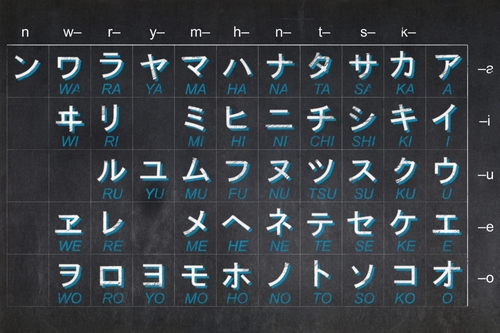
Ready to see all the characters at one time? The katakana chart can be your guide as you start learning this script. Like hiragana, the basic katakana chart shows the 46 main katakana characters in a grid called gojūon, or “fifty sounds”. The grid puts the five main vowels and their consonant matches together. This helps making it easy to follow and use when you are working to learn all the basic katakana.

Seeing how the chart works is the first step to knowing and saying these katakana characters right. We will start by checking out the 46 basic katakana symbols. After that, we will get into the extended sounds. These give even more range to the Japanese alphabets and your Japanese skills.

Katakana Characters: The 46 Basic Symbols

The katakana system starts with 46 basic characters. This group has five vowels (ア, イ, ウ, エ, オ), forty pairs made with a consonant and a vowel (like カ, キ, ク, ケ, コ), and one single consonant, ン (n). Each character in this japanese syllabary stands for its own sound. So when you get the pronunciation for one, you will say it that way every time you see it in a word.

These characters appear in a chart. The chart begins with the vowels. Then, you see consonants joined with those vowels (you get a k-line, s-line, t-line, and more). The “s” line shows サ (sa), シ (shi), ス (su), セ (se), and ソ (so). This neat way of organizing makes it a lot easier to learn basic katakana.

If you have already learned hiragana, you probably know these sounds. Now you have to match sounds you already know with a new group of sharp, angled basic characters. Try to make a strong connection in your mind, so each sound always matches the same katakana sign. This will help you remember the basic katakana script well.

Extended Katakana Sounds: Voiced, Semi-Voiced, and Contracted Forms

Beyond the basic 46 characters, katakana also uses special marks to make new sounds. These are very important for good Japanese pronunciation, especially when using foreign words. There are two main marks called dakuten and handakuten. The dakuten (〃) looks like two small lines. This mark makes a consonant sound “stronger.” For example, it changes the “k” in カ (ka) into a “g” in ガ (ga).

The handakuten (゜) is a small circle. It is used with “h” sounds. When you add it, it turns “h” sounds into “p” sounds. For example, ヒ (hi) turns into ピ (pi). Katakana also has small versions of ヤ (ya), ユ (yu), and ヨ (yo). If you join these with a character that ends with “i,” you get a single new sound or syllable, such as キャ (kya).

These extra forms help katakana write sounds not usually found in Japanese. This is a good way to show the real sound when you use loanwords from English or other languages. Using katakana like this helps you get a closer Japanese pronunciation for foreign words and new sounds.

Reference Tools: Where to Find Printable and Online Katakana Charts

Having a good katakana chart near you is important when you are just starting to learn Japanese. The good news is, you can find many useful resources online. If you search online, you will see many websites have printable katakana charts in pdf format. You can print one and put it on your wall or keep it on your desk to peek at any time. This is a great way for people who need to see things often to remember them.

A lot of language learning websites and apps also have interactive online katakana charts. These charts often come with audio so you can hear how to say each character. This can help you get a good accent. Some places even let you practice typing in Japanese katakana, so you can learn by doing and not just looking.

If you like to use something you can touch and write on, here are some good options to try:

  • Language Learning Websites: Most of these sites for Japanese will offer a free katakana chart in pdf format that you can print.
  • App Stores: Look for “katakana chart” or “Japanese learning” in app stores to find apps with charts and quizzes.
  • Online Marketplaces: You can buy laminated katakana charts or flashcard sets too.

These are some easy ways to get a katakana chart and practice Japanese katakana daily. Just pick what works best for you!

Beginner’s Guide: How to Start Learning Katakana Alphabet

Taking the first step to learn katakana can seem scary at first, but with the right way to study, you can get the hang of it fast. The key for this is to divide it into small parts. Do not try to remember all the characters at one time. Pick a few to start with, and practice those until you know them well.

At first, get to know the katakana chart. After that, start practicing the characters. You can write the letters again and again. You can also use flashcards, or read easy words in Japanese from real life. If you have a plan to follow, learning the Japanese language will be much better and easier. Here, we will talk about the tools you will need and the steps you can take to start learning Japanese and katakana.

What You’ll Need to Begin Learning Katakana (Resources & Equipment)

You do not need a lot of special things to start learning katakana. In fact, the simplest tools can help the most. The key thing is to use resources that work for you and make you want to practice katakana often. It is good to use different ways to learn like reading, writing, and using tools you can work with.

Begin with simple things like a pen and paper. When you write the katakana by hand, you get to know the shapes and the right way to write them. After that, you can use digital tools and other things to help you remember what you saw before. Many people say that mnemonics, or little tricks that connect the look of a katakana to a picture, help a lot.

Here are the basic things you need before you start:

  • A printable katakana chart for you to look at anytime.
  • A notebook and pen, so you can keep up your writing practice.
  • Flashcards you can hold or look at on the internet, so you can test yourself over and over.
  • A list of katakana mnemonics to make it quicker to remember each shape.
  • Access to an app or a website where you can take quizzes and work on your reading.

Using these tools, you will find it is much easier to practice katakana and learn each one in a way that works best for you.

Step-by-Step Guide to Mastering Katakana

Ready to get started with Japanese katakana? If you use a step-by-step way to learn, it can help make the 46 characters look less tough. In fact, you can make big progress. You want to know how the system works before you try to remember every symbol. This way, you will not just know the shapes. You will also learn how to use them the right way.

Begin by learning the katakana chart and the sound each piece has. Then practice by writing them. This will help you remember with your hand as well as your mind. When you are able to tell what each one is and write them out, use memory tricks like mnemonics to help things stick. Soon, you can start reading and writing real words.

Here is a simple guide to help you learn Japanese katakana:

  • Step 1: Get to know the katakana chart.
  • Step 2: Practice writing each katakana, and try to use the right stroke order.
  • Step 3: Use mnemonics and flashcards to help remember each shape.
  • Step 4: Begin reading and writing common loanwords.

Step 1: Familiarize Yourself with the Katakana Chart

Your first mission is to get to know the katakana chart. Print the katakana chart out or keep it open on your screen. You don’t need to memorize the whole thing at one time. For now, just take a look at it. Notice the way it’s set up. The katakana chart has rows and columns that match up with vowel and consonant sounds. This layout will help you as you learn.

Start with one row at a time. You can begin by learning the five main vowels: ア (a), イ (i), ウ (u), エ (e), オ (o). Say these sounds out loud. Pay attention to how their shapes look. When you feel good with the vowels, move on to the first consonant row, also known as the “k-line.” This has these katakana: カ (ka), キ (ki), ク (ku), ケ (ke), コ (ko).

The goal is not to just drill the japanese syllabary into your head. Right now, you want to make the katakana and its structure feel more simple and less confusing. If you break the japanese katakana chart into small, clear groups, you will build a way of thinking that will help you learn even more as you go.

Step 2: Practice Writing and Stroke Order for Each Character

Now it is time to grab a pen and get started. Writing the characters is an important step in learning katakana. This helps your hands learn the shapes until they become second nature. When you practice katakana, make sure you watch the stroke order for each one. In the japanese writing system, each character needs to be written in a certain sequence and direction.

Why should you care about stroke order? It makes your writing clear and balanced. It also helps tell the difference between similar katakana characters. For example, you need to use stroke order to tell apart シ (shi) and ツ (tsu), or ソ (so) and ン (n). Many times, these small differences are only from the first stroke or which way you write. There are the online guides and apps that show the right japanese writing system order for each katakana with step-by-step videos.

Start by tracing the shapes. Then, try to write each katakana character from memory. You can fill a page with the “a-line” first, then move on to the “k-line,” and keep going. Doing this type of practice may feel slow, but it is one of the best ways to get good at katakana and use the japanese writing system well. Keep at it, as this steady practice lets the characters feel easy and part of your every day work.

Step 3: Memorize Katakana Using Mnemonics and Flashcards

With so many katakana characters that look the same, it is hard to just memorize them by repeating. But mnemonics and flashcards can help a lot! Mnemonics help you make a picture in your head or a short story to remember a katakana character. For example, the katakana character ケ (ke) looks like the letter “K.” This small link can help you remember it better.

You can search for pre-made mnemonic systems for katakana online, or you can try making your own. If you make your own, the memory will stick more. Using mnemonics along with flashcards can be a good way to get the katakana in your head. Try to look at the character, say what it is, like “ke,” and then turn the card over to see if you are right.

Here are some ways you can use these tools for katakana:

  • Use a flashcard app like Anki or Quizlet.
  • Make flashcards you can hold, putting the katakana character on one side, and the romaji on the other.
  • Try a mnemonic system that works for you, like the one in the Katakana Memory Hint app.
  • Go over your flashcards every day for a few minutes to help keep katakana in your head.

Step 4: Read and Write Common Loanwords in Katakana

After you have a good idea of the single katakana characters, you can start using them with real words. This part can be the most fun because you get to see how people use katakana in the japanese language. Start with easy loanwords, especially the ones that come from english, because you may often notice them first.

Begin by reading words that are simple. If you look at a word such as カメラ (kamera), break the word into each syllable: “ka-me-ra.” You will soon see this is the japanese way to write “camera.” Doing this helps you connect the katakana symbols to words you know, which helps you learn better.

Here are a few ways to get better at reading katakana:

  • Find lists of everyday katakana loanwords on the internet.
  • Read japanese restaurant menus. You will find many things in katakana.
  • Look for the names of countries and people who are famous that are shown in katakana.
  • Take english words you know and try to write them with katakana characters.

Conclusion

In the end, learning the Katakana alphabet helps you better understand and enjoy the Japanese language, especially when you work with loanwords. When you know what makes Katakana special and how people use it, you can read Japanese much more easily. It helps you a lot, whether you are trying to see how Katakana is different from Hiragana, or you are using useful things to study.

Every time you practice, you get a little better. Using tools like printable charts and flashcards can make it much easier for you. Try to enjoy each step along the way. When you enjoy it, you will learn more about Japanese and get closer to speaking well.

If you want to learn even more about the Japanese language and want a way just for you, you can get a free meeting with our language experts.

Frequently Asked Questions

Why does Japanese use katakana for foreign words and loanwords?

The Japanese language uses katakana when writing foreign words and loanwords. This helps make these words stand out from other words you see in the Japanese writing system. The sharp look of a katakana character gives a quick clue that a word is not native to Japanese. This use of katakana keeps things clear and easy to understand in the writing system.

What are some tips for quickly memorizing katakana characters?

To memorize the katakana alphabet fast, try using different ways to learn. Write the characters every day. This helps build muscle memory. You can use mnemonics to connect the shapes to their sounds. Test yourself often by using flashcards. This way, you check what you remember. Break the Japanese syllabary into small groups. When you do this, learning katakana will not seem as hard.

Are there online katakana keyboards or typing tools for practice?

Yes, you can find many online tools and resources to help you practice Japanese katakana. To start, you can turn on the Japanese keyboard on your computer or phone. This lets you type in Japanese katakana right away. There are websites, such as Kana Pro, that give you typing exercises. You can pick which characters to work on. These tools help you get faster and better at typing in katakana.

What are the most common mistakes beginners make with katakana?

People new to katakana often get mixed up with look-alike characters. For example, many confuse シ (shi) with ツ (tsu). They also mix up ソ (so) and ン (n). Another thing that comes up a lot is not using the right stroke order. If you skip that, it can make your writing hard to read. Students also get the dash (ー) wrong. It shows a long vowel sound in katakana, and if you say it wrong, your word can mean something else. It helps to pay close attention to things like using the dash, the correct way to write tsu and shi, and practicing the stroke order for all katakana.

Key Highlights

  • The Japanese language has three ways to write: Hiragana, Katakana, and Kanji.
  • Kanji characters come from Chinese characters but are used in Japanese writing.
  • Hiragana and Katakana stand for sounds, but Kanji characters show whole words or ideas.
  • People use Kanji together with Hiragana and Katakana in daily Japanese sentences.
  • Kanji characters can be read in two main ways: On’yomi, which is from Chinese, and Kun’yomi, which is from Japanese.
  • When you want to read most Japanese texts, you have to learn Kanji, because it is the main part of the japanese writing system.

Introduction

Welcome to the world of Japanese writing! Learning how to speak Japanese may be easy for some people, but reading and writing are hard to do. This is because the Japanese language uses three scripts—Hiragana, Katakana, and Kanji. Kanji is made up of Chinese characters that are a big part of Japanese culture. These characters play a major role in Japanese writing. In this guide, you will learn what Kanji is, where it came from, and how people in Japan use it today.

Understanding the Kanji Alphabet in Japanese Writing

When you look into Japanese writing, you may hear about the “Kanji alphabet.” But Kanji is not really an alphabet. Kanji is made up of characters that come from the Chinese writing system. These characters show whole ideas or words. They do not show sounds, like letters do.

The Japanese writing system uses these Kanji characters, and it also uses two other sets of letters. These are called Hiragana and Katakana, and they are phonetic alphabets. By using Kanji, Hiragana, and Katakana together, the Japanese writing system is complete. In this, we will talk about how these characters started, and how they are not the same as the phonetic alphabets.

What is Kanji and Where Did It Originate?

Kanji characters play a big part in the Japanese writing system, but they did not start in Japan. Long ago, Japan took its way of writing from the Chinese language. These borrowed characters are what we now call kanji characters. Some of these have changed a bit from their Chinese counterparts, but they are still very important in Japanese culture.

In the English alphabet, each letter stands for a sound. In the Japanese writing system, every single kanji shows a word or a meaningful unit of language. You can think of them as small pictures that give an idea. For example, the way to write “big” is 大.

Taking kanji from the Chinese language made things a little more complex. A single kanji can have different meanings and you may say it in more than one way. This can be hard for people who are new to Japanese writing. But knowing where kanji comes from helps people see why they are used in a different way from scripts that show sounds.

How Kanji Differs from Hiragana and Katakana

The Japanese writing system uses three scripts that have their own jobs. Kanji shows the ideas and main parts of words. Hiragana and Katakana are both phonetic alphabets, so each character stands for a sound or a syllable.

These scripts were made to fit the japanese language better. Hiragana is used for things like verb and adjective endings, small words called particles, and native japanese words that are not written with kanji. Katakana is used for foreign words, loan words, foreign names, and puts emphasis on some words.

Here’s a simple way to look at what they do:

  • Kanji (漢字): Gives the main meaning for words. It is used for nouns, verb stems, and adjective stems.
  • Hiragana (ひらがな): Shows grammatical endings, particles, and native words.
  • Katakana (カタカナ): Used for foreign words, names, and sound words.

A normal japanese sentence will have a mix of Kanji and Hiragana characters. Katakana comes in when you want to say foreign words, loan words, or show emphasis.

Components and Structure of Kanji Characters

Each Japanese Kanji character is a detailed sign. To learn kanji, you need to know how it is made. Every one of these characters has a set number of strokes. You write them in a certain way, which is called the stroke order. There are more than 45,000 kanji, but you don’t have to get to all of them. For most things you do each day, only about 2,000 to 3,000 Japanese kanji are used.

Kanji are also made from smaller pieces called radicals. If you learn to spot these pieces and know the right stroke order, you will find learning new Japanese kanji can be easier to handle. Now, let’s look at these parts in more detail.

Radicals and Stroke Order Explained

Before you try to write a Kanji character, it’s helpful to understand its components. Radicals are the building blocks of Kanji, and they often give a hint about the character’s meaning. For example, many Kanji related to water will contain the radical for water (水). Recognizing these radicals helps in both memorizing the character and looking it up in Japanese dictionaries.

Stroke order is the sequence in which you write the lines that form a character. Following the correct order is crucial because it ensures the Kanji look balanced and are easily recognizable. While there are exceptions, some general rules apply.

Here are a few basic stroke order rules:

Rule Description
Top to Bottom Write strokes from the top of the character downwards.
Left to Right Write strokes from the left side of the character to the right.
Horizontals before Verticals Draw horizontal strokes before vertical ones that cross them.
Outside before Inside For enclosing frames, draw the outer part before the inner part.

Mastering these rules makes writing Kanji a much more systematic and less intimidating process.

On’yomi and Kun’yomi Readings

One of the hardest things about learning kanji characters is that most of them have at least two different ways that you can say them. These ways are called On’yomi and Kun’yomi. This part of the language comes from when the Japanese took kanji characters from Chinese.

On’yomi (音読み) is often called the “sound reading.” This reading is how Japanese people tried to sound out the Chinese word. You will use this type more when you see a kanji as part of compound words that use two or more kanji characters together.

Kun’yomi (訓読み) is also known as the “meaning reading.” This is the way that the Japanese reading is connected to the meaning of the word. You will see this reading used when the kanji stands on its own, or when it has hiragana at the end (these are called okurigana).

  • On’yomi (Chinese reading): Used in compound words.
  • Kun’yomi (Japanese reading): Used for standalone words or with Hiragana.
  • Example: The kanji for water, 水, can be said as “sui” (On’yomi) like in 水道 (suidō – waterway), or “mizu” (Kun’yomi) when it is by itself.

When you learn the Japanese reading system, you will find different ways to read many kanji characters. Give it some time and with practice you will get the hang

How Kanji is Used in Modern Japanese

In Japanese today, kanji characters are very important. Japanese people use them all the time when writing to show the main meaning of words. You will see kanji used for nouns, the base parts of verbs and adjectives, and also in names. If there were no kanji, Japanese writing would just be a long line of sound characters. This would make it hard for people to read fast.

Kanji gives shape and meaning to the language. Hiragana and Katakana are used with kanji. They help with grammar and are used for foreign words too. This way of using all three types of letters helps keep Japanese clear and easy to understand. Now, let’s look at some real-life examples of how kanji, hiragana, and katakana show up in everyday life.

Everyday Applications of Kanji in Sentences

You will see Kanji in almost every Japanese sentence. People use them to write many nouns, like “time” (時間, jikan) and “Tokyo” (東京, Tōkyō). The root of most verbs and adjectives will also use Kanji, while Hiragana characters show if the word is polite or what tense it is in. So, for “to watch,” the Kanji 見 is used. If you want to write “watching,” you add Hiragana, like 見ている.

Kanji can be put together to make compound words. This helps make the writing system clear and quick to use. For example, if you join the Kanji for “electricity” (電) with “talk” (話), you get 電話 (denwa), which means “telephone.” Learning this can be hard at first, so Japanese is a difficult language. But all these parts come together to make a logical writing system.

Here are a few ways you can see Kanji used in a Japanese sentence:

  • Noun: The word for Japan is 日本 (Nihon/Nippon).
  • Verb Stem: In 食べます (tabemasu – to eat), the Kanji 食 stands for the “eat” part.
  • Adjective Stem: In 新しい (atarashii – new), the Kanji 新 brings the main meaning.

The Japanese writing system uses both Kanji and Hiragana characters. This can make Japanese

The Role of Kanji in Japanese Names and Signs

Kanji is a big part of Japanese culture and daily life. You will see it a lot in Japanese names and in public signs. Most people in Japan have names written in Kanji, and each Kanji has a special meaning. Parents pick these Kanji for their children because they hope to give them something good through the name. For example, the name 佳子 (Yoshiko) means “good” and “child” when you look at the Kanji.

You will also see place names written in Kanji wherever you go. Big cities like 東京 (Tōkyō) and 京都 (Kyōto) stand out because of their Kanji. The use of Kanji is not just for city names, though. You will spot it on most signs, like train stations, street names, menus, and even posters that give you information.

Kanji is very good for signs because each symbol can show a lot through its look. A sign with止 (stop) can say what you need to do right away, without using many words. This way of showing meaning is key to Japanese culture and helps people talk and get around every day. If you plan to visit or live in Japan, it is good to learn some of the common Kanji to help you with place names and getting around.

Learning the Kanji Alphabet – Methods and Official Lists

Starting to learn Japanese Kanji can seem like a lot, but there is a clear way to begin. The Japanese government made lists of Kanji that students learn in schools. These lists show the basic characters first and group them by grade level. This makes it easy for anyone new to Kanji.

If you stick to these official lists, you will get to know the most useful and common characters first. There are also many good ways and tools to help you with your learning. Working from the basic characters up to the more difficult ones is a smart and simple way to learn Japanese Kanji.

Recognizing Essential Kanji for Beginners (JLPT N5 Level)

If you are new to the Japanese language, the best first step is to start with the Kanji you need for the JLPT N5 level. This is the easiest level for the test. It has the basic characters you need to use for simple, everyday Japanese. There are about 100 basic characters in this level. Learning these will give you a good base to build from.

These N5 Kanji show numbers, ways to go, people, and other basic ideas. You can see full lists for JLPT N5 online, in books, or on language apps. If you start with these, learning Kanji will not feel too hard or scary.

Some key beginner Kanji are:

  • Numbers: 一 (one), 二 (two), 三 (three)
  • People: 人 (person), 女 (woman), 男 (man)
  • Nature: 日 (sun/day), 月 (moon/month), 木 (tree)

When you learn these basic characters, you will begin to spot them in many Japanese words and lines. It’s a good feeling and will make you want to keep going.

Popular Techniques for Memorizing Kanji Efficiently

Memorizing Kanji is not the same as learning a basic alphabet. Every character in Kanji has its own meaning, shape, and can be read in more than one way. Because of this, you need special ways to learn it. One good way is using mnemonics. This means you make short stories or link pictures to each Kanji. This helps you join the look of the character with what it means.

There is also a better way for moving what you learn into your long-term memory. It is called Spaced Repetition Systems, or SRS. A popular example is the Anki app. SRS gives you flashcards at set times so you can see which Kanji you are close to forgetting. This is a much better way to remember, instead of just trying to cram everything at once.

Here are some better ways for japanese reading and learning stroke order with Kanji:

  • Mnemonics: Make pictures or stories so you can match the meaning of the character with how it looks. The book Kanji Pict-o-Graphix can help with this step.
  • Spaced Repetition (SRS): Try apps like Anki. They help you remember Kanji by showing you the right card at the right time.
  • Writing Practice: Keep writing the same Kanji again and again. This will help you learn the stroke order and shape so your hand and mind remember it.

Try mixing these ways together. You will see

Frequently Asked Questions (FAQ)

You may have some questions about Kanji. This part tries to answer a few of the main things people ask about this writing system.

Why is Kanji not considered an actual alphabet?

Kanji characters are not an alphabet. Each kanji shows an idea or word instead of just a sound. In an alphabet, like you see in English or in Japanese Hiragana and Katakana, each letter stands for a sound. Kanji are taken from Chinese characters and work in a different way in the writing system.

Do you need to know meanings or just shapes to learn kanji?

To really get kanji characters, you have to learn what they mean and how they look. The shape lets you spot the character, but the meaning is key if you want to understand it. Also, because kanji have different meanings and even more than one way to say them in Japanese reading, it is important to know the context and meaning to read them right.

Conclusion

To end, knowing the Kanji alphabet is important for anyone who wants to get better at Japanese writing. Kanji is a big part of this language. It has been around for a long time. It mixes meaning and structure in a way that helps people talk and write every day. When you learn which characters are most used and find ways to remember them, you will feel ready to handle the many Kanji out there. You will use Kanji when you read names, signs, or full sentences. If you know how Kanji works, your Japanese language skills will get better. You will also learn more about the culture. So, enjoy learning Kanji and see where this can take you.

Key Highlights

Here are the main points you should know from our guide about the Pinyin alphabet:

  • Pinyin is the official way to use the Roman alphabet to write Standard Mandarin Chinese.
  • It helps with language learning. You can use the Roman alphabet to show Chinese sounds.
  • When you write a Pinyin syllable, it has three parts. Those are the first sound, the last sound, and a tone mark.
  • Mandarin Chinese is a language with tones. The tone mark used will change what a word means.
  • If you understand Pinyin, it is the first step to getting good at saying Mandarin Chinese words.
  • With Pinyin, you can type Chinese characters on a regular keyboard.

Introduction

Have you ever looked at chinese characters and thought, how do I start learning them? You are not the only one. The chinese language can be tough, but there is a great tool that makes it easier for you. That tool is Pinyin. This romanization system helps you understand chinese by using the roman alphabet. Pinyin works like a bridge. It lets you go from learning chinese characters to using the letters you know. If you are just starting to learn mandarin chinese, Pinyin is the best first step for language learning. It helps you read, write, and speak the chinese language with more confidence.

Understanding the Pinyin Alphabet as a Romanization System

Pinyin is a smart way to use the roman alphabet to show how to say words in Mandarin Chinese. It is like a guide that tells you how something should sound. Instead of guessing how to say a word or a character, you can look at its Pinyin and know how to say it. This makes the chinese language easier for people who are just starting to learn.

This way of writing breaks each chinese sound into small steps. It helps you learn and copy them. In the next parts, we will share what Pinyin is, how it uses roman letters for chinese sounds, and why it is important for language learning.

What Is Pinyin and Why Is It Used for Mandarin Chinese?

Hanyu Pinyin is the main way to write the sounds of Mandarin Chinese using the Roman alphabet. It started in the 1950s to help people in China read and bring in a single method for teaching how to say words. Before Pinyin, there were different systems for writing Chinese sounds, and that made things confusing.

Pinyin gives an easy and clear path to show the sounds of chinese characters. For instance, the word for “horse,” 马, is written as “mǎ” in Pinyin. You get to know right away how to say it and also the tone. If there was no Pinyin, you would need to remember how every single character sounds one by one, which is hard.

The chinese language is easier to learn with this system. Pinyin is what helps most people start with pronunciation, and it’s used to type chinese characters when people use their phones and computers. It is needed for modern chat and writing.

Roman Letters in Pinyin: Bridging Chinese Sounds and English Script

Pinyin uses the Latin alphabet to show how to say words in Mandarin. This makes it much easier for English speakers to begin learning. Many pinyin letters sound close to the ones in English. But, you need to know that the system is made for Chinese sounds and not for English. Some letters will be used in ways that you do not see in English. They have sounds that are new.

Pinyin uses 25 letters of the Roman alphabet. The letter “v” is the only one not used. Because you have seen these letters before, you may get about half of the sounds right when you start. Still, there are some letters where the sound is not what you think.

Here are some examples to help you remember:

  • The letter “q” in pinyin sounds like “ch” in cheese.
  • The letter “x” sounds like “sh” in sheep, but you move your tongue more forward.
  • The “zh” sounds a little like the “j” in jump.

How Pinyin Supports Language Learning and Pronunciation

Pinyin is a big help for language learning because it gives you a clear way to get good at the pronunciation of Chinese characters. It breaks them down into small, simple sounds so you do not have to guess. This helps you know how each character should sound. You can copy how native speakers talk from the first day using this system.

Pinyin is also very important for your listening skills. The more you see and use Pinyin, the more you can pick up on the right sounds and tones. This is key for understanding people when they talk and for joining in real talks with native speakers. It helps you move from just looking at chinese characters to saying them the right way.

In addition, Pinyin is one of the main input methods for all of China. If you want to type a chinese character on any device, you can type its Pinyin. You then pick the right one from a list. Because of this, Pinyin is a must-have tool you will use every day in the digital world.

The History and Development of the Pinyin Alphabet

The story of how Pinyin came to be is very interesting. Before Pinyin, people used different romanization systems to write Chinese words with the alphabet. This often caused a lot of confusion. There was no single, official romanization system, so it was hard for everyone to be on the same page. As China wanted to help more people learn to read and have the same rules for learning, the need for one romanization system became clear.

The People’s Republic of China worked hard to create a new way to write Chinese words using letters. In the middle of the 20th century, Zhou Youguang, a linguist, led the work on Pinyin. This new system was made to be easy for the chinese people to use and helpful for people from other countries, too. Now, let’s see why they wanted to make Pinyin and how it grew to be a global standard people use everywhere.

Origins and Motivation Behind Pinyin Creation

In the early 20th century, there were several systems for writing Chinese words with English letters. These systems were fighting to be the top choice. One well-known system was Wade-Giles. Thomas Wade made it at first, and later, Herbert Giles updated it. For many years, people who spoke English used this way of writing Chinese. But Wade-Giles had some hard parts. This made it tough for many people who wanted to learn the chinese language.

The main reason for making a new system was to help more people be able to read in China. The government wanted something that could help everyone in the country learn how to say words in Standard Mandarin, no matter where they lived. Pinyin was made to be easier for most people to use and to be clear when they looked at the words, unlike the old way.

Lots of language experts worked on this new way to write Chinese words. Zhou Youguang was a big part of this work, and many people know him as the “father of Pinyin.” Their main hope was to have a romanization system that sounded right and was simple to learn. This made it be much easier for people to get into Chinese, no matter who they are or where they come from.

Key Milestones in Pinyin Adoption and Evolution

The adoption of Pinyin was a gradual process marked by several key milestones. After its initial development, the system was officially published by the government of the People’s Republic of China in 1958. Its first major role was in schools, where it was used to teach children the pronunciation of Standard Mandarin Chinese.

Over the next few decades, Pinyin’s influence grew beyond China’s borders. International organizations began to recognize its utility and accuracy. A major turning point came in 1982 when the International Organization for Standardization (ISO) adopted Pinyin as the standard for romanizing Chinese. This solidified its global status.

The United Nations followed suit in 1986, further cementing Pinyin’s role as the official romanization system worldwide.

Year Milestone
1958 Pinyin is officially published by the Chinese government.
1979 Pinyin replaces Wade-Giles in most foreign publications.
1982 The ISO adopts Pinyin as the international standard.
1986 The United Nations adopts Pinyin for all Chinese names.

Impact on Modern Chinese Education and Communication

Pinyin has changed the way Chinese people learn today. It is the first thing kids study when they go to primary school. This system helps children read and pronounce words. They can see the sounds for many characters by using pinyin letters and tones. Because of this, they start to have accurate communication at a young age.

For mandarin learners all over the world, pinyin is important, too. It helps make the sounds much less confusing. Each textbook, course, and language app uses it. Instead of trying hard to learn strange sounds, learners can trust this system. It helps them learn faster and feel better about using Chinese.

There is also another way pinyin letters matter. Lots of chinese people and others use it to type words in Chinese on digital devices such as smartphones or computers. You can type the pinyin letters, pick the right character, and send your message. This makes pinyin a must-have tool for everyday life now.

Structure of the Pinyin Alphabet: Initials, Finals, and Tones

Every pinyin syllable has three main parts. There is an initial, a final, and a tone. The initial is the first sound. It is usually a consonant. The final is the next sound. It is a vowel or has a vowel in it. The tone mark goes over the main vowel in the final. This tone shows how your pitch should move and helps people know what you are saying. The meaning of the word can change with the tone mark.

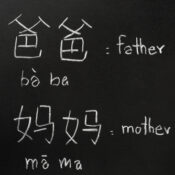
It is important to know about these parts if you want to get good at Mandarin pronunciation. For example, in the pinyin syllable “mā” (妈, mother), “m” is the initial, “a” is the final, and the straight line over “a” is the first tone mark. This helps you see how Chinese sounds are put together.

Next, we will look at each part to help you learn how chinese sounds work and how to say them right.

Initials: Consonant Sounds in Mandarin

In Pinyin, initials are the consonant sounds that come at the start of a syllable. There are 23 initials in all. Most syllables use an initial, but some, like “ài” (爱, love), do not have one and use just the ending sound. Some of these initials sound close to the ones you find in English. For example, m, f, n, and l are the same. But there are some mandarin sounds that are special to chinese sounds.

Mandarin pronunciation has a group called retroflex consonants. These are “zh,” “ch,” “sh,” and “r.” To make these, you move the tip of your tongue back and curl it near the roof of your mouth. These sounds may feel strange when you first try, but they are important for others to understand you.

You also need to know about “j,” “q,” and “x.” These sounds do not match any English sounds exactly. You have to use your tongue in a new way to say them right. When you get these parts of mandarin pronunciation right, you will sound much more like a native speaker.

Finals: Main Vowels and Syllable Endings

Finals are the part that comes after the initial in a syllable. In Pinyin, there are 35 finals. You can put them into simple finals and compound finals. The simple vowels are the base for all the finals and are often the first thing you will learn. There are six simple vowels: a, o, e, i, u, and ü.

Each simple final has its own sound. For example, “a” is said like the ‘a’ in “father.” “i” is like the ‘ee’ in “bee.” The sound “ü” can be tricky for english speakers. You do not have this sound in English. It is a lot like the ‘u’ sound in French or German.

Compound finals happen when two or three vowels come together. Examples of compound finals are “ai” (said like the ‘igh’ in “high”) or “iao.” These create many new sounds in Mandarin. The main vowel in each final will carry the tone mark.

Tone System: How Tone Marks Alter Meaning

Mandarin Chinese is a language where the way you say a word, or the pitch you use, can completely change what the word means. In Mandarin, each syllable can have four main tones and also a neutral tone. These tones show up as tone marks or diacritical marks over the main vowel in a Pinyin syllable.

Take the syllable “ma” for example. There are words where “ma” means something different for each tone mark used. So, to get the meaning right, you need to focus not just on how you say the word, but which tone to use. If you skip the tones, you might say the wrong thing, so it’s important to practice them from the start.

Here are the four main tones you will find:

  • First tone (mā): This is a high, steady pitch. It is like you are singing a high note and holding it.
  • Second tone (má): This tone rises, almost like when you ask “What?” or “Really?” with your voice going up.
  • Third tone (mǎ): This tone falls a bit at first, then goes up, making a dip in the sound.
  • Fourth tone (mà): This one is fast and goes down quick, like when you give a short, sharp command and say, “Stop!”

There is also a neutral tone. It is used in speech lightly and does not get stressed.

Using the right tone on the main vowel is key in Mandarin Chinese

Comparing Pinyin and the English Alphabet

When you first see the Pinyin alphabet, you might notice that it looks a lot like the English alphabet. The reason for this is both use the Roman alphabet. This can help English speakers who want to start learning Mandarin. But it’s important to know that Pinyin is a tool to show the sounds of Chinese words. It isn’t the same as the English system.

In Pinyin, the same letters often sound different from what you know in English. If you try to read Pinyin letters like English letters, your mandarin pronunciation will be wrong. Next, we will talk about the main differences with the sounds, spelling, and special sounds you might find in Pinyin. This will help you avoid common mistakes when saying chinese words.

Differences in Pronunciation and Spelling

One of the biggest problems for English speakers who are learning chinese sounds is to think that a Pinyin letter always sounds the same as in English. Some letters, like ‘m’ and ‘f’, are almost the same. But many are not. For example, the Pinyin letter ‘c’ is like the ‘ts’ you hear in “cats.” The Pinyin ‘q’ is like the ‘ch’ sound in “cheese.” These changes in how we say the sounds are important.

There is also another big difference. In English, a letter can have many different sounds. Think about the letter ‘a’ in the words “cat,” “father,” and “late.” In Pinyin, every letter or letters together always stand for one set sound. It does not change. This makes chinese sounds much simpler to learn for English speakers once you know the rules.

Spelling in Pinyin shows you the sound only. It does not come from old words or history like English spelling does. Once you have learned the Pinyin system, you can say any word written in it. This is a big help for anyone learning chinese sounds, because it makes reading and saying new words easier and using the language much smoother.

Unique Sounds and Letters in Pinyin

Pinyin has some sounds and letters you will not find in English. One thing that stands out is the vowel “ü.” To make this sound, round your lips as if you want to say “ooh,” but say “ee.” You can hear this in words like “lǜ” (绿, green) and “nǚ” (女, female). The two dots above the letter are called diacritical marks. They show that this is not the usual “u.”

Another thing that is special in Pinyin is the use of tones. Mandarin pronunciation uses four main tones and one neutral tone. The meaning of a word can change with each tone. These tones are shown by accent marks placed over the vowels. English does not use these marks.

Here are some other sounds that make Pinyin special:

  • zh: This comes out like the ‘j’ in “jar,” but your tongue is curled back.
  • x: This is a sharp ‘sh’ sound, and you put the tongue tip near the front teeth.
  • r: At the start of a syllable, this is said like the ‘s’ in “measure.”

Common Beginner Mistakes and How to Avoid Them

When you first start with Pinyin, it’s easy to make some mistakes that can change your learning experience. The biggest mistake most people make is using English sounds for Pinyin letters. It’s important to remember that Pinyin is its own set of sounds, which are not the same as English. If you forget this, you will probably say a lot of words the wrong way.

Another thing that gets in the way is not paying attention to tones. Many people try hard to get the initials and finals right, but they do not always focus on the tones. Tones are not just extra sounds—they change what a word means. If you skip them, you won’t get accurate communication with others. Consistent practice with tones from day one is a good idea.

Here are some tips to help you with pronunciation and have a better learning experience:

  • Listen to native speakers and try to say the sounds like they do.
  • Don’t just guess. If you are not sure how something sounds, go look it up.
  • To begin, practice tones with single syllables. Move to full words when you feel ready.
  • Record what you say and listen to it. Then, compare it with a native audio to hear the difference.

Beginner’s Guide: Getting Started with the Pinyin Alphabet

Are you ready to start learning the Pinyin alphabet? This simple guide will help you have a good learning experience. You will get clear explanations and find out about the best tools for accurate pronunciation. With the right steps, you will be reading and typing Pinyin in no time.

When you use online audio charts and try out a Chinese keyboard, you will see that learning Pinyin is open to all who want to learn Mandarin Chinese. Follow these steps, so you can build a strong base in how Mandarin sounds. Let’s get started on this journey together.

Essential Tools and Resources for Learning Pinyin

When you learn Chinese Pinyin, having the right resources can help a lot. There are many good tools out there, and a lot of them do not cost anything. One of the best ones is an interactive Pinyin audio chart. You just click on each letter and you get to hear how a native speaker would say it.

Many language learning apps and websites have a whole section just for Pinyin. You will find lessons, quizzes, and guides that show you how to say things the right way. You can use these on your phone or other digital devices. This is a good way to practice any time and get quick feedback on how you are doing.

Here are some tools you can use to get started:

  • Online Pinyin Audio Chart: You can use this to hear the right way to say initials, finals, and tones.
  • Pinyin Keyboard Apps: Use these on your phone or computer to practice typing in Pinyin.
  • Flashcard Apps (like Anki or Pleco): These help you remember how Pinyin sounds match with Chinese characters.
  • YouTube Channels: Many channels give free and clear lessons on how to say Pinyin the right way.

Step-by-Step Guide to Mastering Pinyin Pronunciation

Learning how to say words the right way takes time and practice. This guide will help Mandarin learners by giving clear explanations and breaking things down into easy steps. When you do this, you will not feel stress. You can work on one skill at a time and keep moving forward.

The first thing you should do is listen. Before you try to speak, spend some time listening to the sounds. Pay attention to how they should sound. After that, you can move on to practice. There are many tools and drills online that help you get better. The guide gives you simple directions and structure. This will help you feel good and build your confidence fast.

This guide will help you with listening to how native people say the words, practicing using online tools, and learning the parts of Pinyin. If you follow these steps, you will be on your way to clear and accurate pronunciation in Mandarin.

Step 1: Listening to Native Pronunciations (Audio Charts)

The first step to learn the Pinyin alphabet is to listen. Before you try to say any word, you should know what the sounds are. The best way to do this is to use an online Pinyin audio chart. On these charts, you can click on every initial, final, and tone with your mouse. You will hear how it is said by native speakers.

As you listen, make sure you notice small differences in the sounds. Some sounds, like ‘z,’ ‘c,’ and ‘s,’ or ‘j,’ ‘q,’ and ‘x,’ can sound close. Do not listen just once. Play each sound a few times. If there is a video, also take a look at how the person moves their mouth. This step of passive listening is very important. It helps your ear get used to the sounds in the Chinese language.

This step helps build your “mental audio library” for Mandarin pronunciation. It will be much easier to fix your speech when you start talking. You will know the sound you are going for.

Step 2: Practicing with Online Pinyin Keyboards and Apps

After you get used to the sounds, you can start to practice. One good way you can do this is by using a virtual Chinese keyboard online. Most computers and mobile devices let you add a Pinyin keyboard very easily. With this, you can type pinyin letters, and the computer or phone will show you a list of Chinese characters that match the word.

All you need to do is type the pinyin for a word, such as “nihao”, and then you will see the Chinese characters with the same sound. This way is helpful for you to remember, and it also gets you used to how people use Pinyin every day. Some online tools will play the sound for you as you type, which helps even more.

Using a chinese keyboard on your digital devices is good for linking the pinyin letters, how the word sounds, and the chinese characters together. It’s a hands-on way to learn that uses your eyes, ears, and fingers. This will make it much easier when you want to talk with someone, type messages, or look things up in Chinese on your mobile devices or computer.

Step 3: Memorizing Initials, Finals, and Tones with Practice Drills

Once you have trained your ear and have practiced typing, the last step is to really remember the Pinyin system. You do this by using consistent practice. Break Pinyin down into the main parts. These are initials, finals, and tone marks. Keep working with them until you feel that using them comes easy. Going over the same things again and again is very important for language learning.

Try to focus on only one group of sounds at a time. For example, spend one day on the simple finals. Spend the next day on a set of initials that are alike. Then, have another day just for the four main tones. Test yourself often with flashcards. You can use real cards or do this on your phone.

Here are a few good ways to practice:

  • Tone Pairs: Say two-syllable words that have different tone pairs, like 1st-2nd or 3rd-4th tones. This helps you get better with tones.
  • Minimal Pairs: Work with words that sound almost the same except for one sound, like “shì” and “sì.” This will help you fix your pronunciation.
  • Read Aloud: Pick short and easy texts written in Pinyin. Then read them out loud. Make sure you check your tones and how you say the words.

By doing these things during your daily practice, you make language learning feel easier and more steady. Practice often, and the way you say and type in P

Conclusion

To sum up, knowing the Pinyin alphabet is important if you want to learn Mandarin Chinese well. This romanization system helps show the link between Chinese sounds and the English alphabet. It is also important for getting the right pronunciation and picking up the language. When you learn about its parts—like initials, finals, and tones—you will get better at reading and speaking. It does not matter if you are just starting or trying to get better, you can use all the great tools out there to help you learn. Start with Pinyin, and you will soon find out how good and interesting Mandarin Chinese can be!

Frequently Asked Questions

How do I pronounce each letter in the pinyin alphabet?

The best way to learn Pinyin pronunciation is by using an interactive audio chart. Many letters in Pinyin do not sound the same as English ones, so it helps to listen to native speakers. This way, you get clear explanations on how to make the unique Chinese sounds needed for good Mandarin pronunciation.

Where can I find an audio chart for pinyin pronunciations?

You can find a free Chinese Pinyin audio chart online by doing a quick search. There are many language learning websites and apps with charts like these. You can click on each sound and hear how native speakers say it. You can use these resources on all digital devices, so you can practice when you want.

Are there online tools for typing in pinyin?

Yes, there are many tools online you can use to type in Pinyin. Most computers and mobile devices have a Chinese keyboard in their settings. You can turn this on. With this, you type the Pinyin spelling, and then you choose the right Chinese character. This makes typing easy.

How is pinyin used in language learning apps and websites?

In language learning apps, you see Pinyin under chinese characters. It helps you know how to say new words. This is in lessons, quizzes, and flashcards. It makes your learning experience better. With Pinyin, you can get accurate pronunciation and learn to speak mandarin chinese the right way from the start.

Key Highlights

  • Reno is seeing more tech companies and people move in. It is now a top place for both big companies and people starting new businesses.
  • The city of reno gives important business incentives, with tax laws that help and strong economic development programs.
  • To start a business in reno, you need to get a business license from the city of reno. You also need to register your business with the nevada secretary of state.
  • Downtown reno is changing fast. There are a lot of new buildings and fresh plans for old places. This means there are many chances for new business.
  • Nevada makes it easy for businesses to grow. There is no corporate or personal income tax, which brings many new companies to the state.
  • The city keeps growing its support for new tech ideas. This helps the tech industry do well, lets it grow, and helps new businesses get started.

Introduction

Welcome to Reno, known as the “Biggest Little City.” It sits in northern Nevada and is now growing fast as a center for business and technology. The city of Reno is seeing big changes. More people who run businesses and companies want to be here. This area used to be known as just a place for tourists, but now it is a top spot for both new and old businesses to start and grow.

This guide shows why Reno is booming. It also tells you what makes this city stand out, and how you can be part of the city’s bright future.

Why Reno is Attracting Tech Companies and Entrepreneurs

The city of Reno is now a big draw for tech companies and business owners looking for a good West Coast business location. The growth in northern Nevada did not happen by chance. It is the result of strong economic development efforts that have helped build a good tech community. Many people now find that Reno gives them both good business chances and a nice place to live.

This growth comes from better new ideas and a place that makes doing business easier. There are many reasons why people are moving here. These range from money reasons to a strong support system. Let’s look at some of the main reasons people are moving here and the things that help keep them in the city of Reno.

Key Reasons Behind Relocation to Reno

One of the main reasons many businesses pick a Reno business location is because of the great tax advantages. Nevada has tax laws that help companies save money. This benefit, along with a smart location choice, makes the area outside the city limits just as good for business activities as downtown Reno.

But companies don’t come to Reno only for tax advantages. There are some other things the city does well that are tough to find on the west coast. These things are:

  • Strategic Location: Reno lets you reach over 60 million customers in just one day by truck. You can do this across eight states and five big ports.
  • Lower Cost of Living: The cost to live in Reno is much lower than the Bay Area and other west coast spots known for tech jobs. Housing is also cheaper here.
  • Pro-Business Environment: Getting a business license and finding professional services is easy in Reno. The state and city both do things to support business every step of the way.

This mix, with tax advantages, good transport links, and better living costs, is hard to beat. It helps businesses work smarter. It can also make their workers feel better at work and at home.

Tech Ecosystem Growth and Innovation Infrastructure

Reno’s tech scene is growing fast. The city of Reno is seeing a lot of money go into new tools and buildings for tech companies. It is not just about a couple of big names showing up. It is about making a place where tech ideas and new things can do well for a long time. One example is the Switch Tahoe Reno Data Center. This center is known around the world for cloud work and big data, and it helps the city’s tech strength.

This growth does not happen on its own. The state of Nevada, also called the silver state, and groups like the Governor’s Office of Economic Development are working hard to help this happen. They want the state to be a good place for new ideas in tech. Big leaders like Tesla, Apple, and Amazon have already come here. When these big tech companies move in, it helps smaller companies too. It makes others want to move in and makes the community more lively.

All of this brings more and more growth. When more tech companies come to the city of Reno, the number of skilled people who live and work here goes up. There are more tools and help for new companies too. Together, these changes are helping the city stand out as a top place for new ideas and growth in tech.

Business Incentives and Advantages for Companies in Reno

Reno has many business incentives and tax benefits. These things make it a good place to start or move a company. The city’s focus on economic development gives real help to people who want to run a business here. You can get different tax abatements, like on sales tax and more. These perks make it easier to start a City of Reno business. They can also help make ongoing costs lower.

When you start your business license application, you will see a process set up to help you grow. These business incentives set Reno apart from other places. Now, let’s look more at the money-saving perks and special programs you can get in the City of Reno.

Tax Benefits and Financial Perks for Businesses

The tax benefits in Nevada are among the most significant advantages for any business. The state famously has no corporate income tax and no personal income tax. This means more of your hard-earned revenue stays with your company, allowing for reinvestment and growth. Additionally, the favorable Nevada tax structure includes no taxes on gross receipts or franchise taxes.

These financial perks drastically reduce the burden on businesses compared to neighboring states. While you will have a license fee and need to manage sales tax, the overall tax landscape is exceptionally friendly. Below is a quick comparison of Nevada’s tax advantages:

Tax Type Nevada’s Rate
Corporate Income Tax 0%
Personal Income Tax 0%
Franchise Tax 0%
Inventory Tax 0%

Furthermore, qualifying companies can benefit from special tax abatements and deferral programs, which can lower business license costs and other expenses even more. This pro-business approach is designed to attract and retain companies, fueling the state’s economic engine.

Special Programs and Support for Startups

The State of Nevada has more for new businesses than just tax benefits. There are special programs meant to help people with new ideas and get their new business started. The Nevada Governor’s Office of Economic Development is important for anyone who wants to start a business. The office gives you many incentives, including deferral programs that can help cut costs at the start.

If your new business is in the City of Reno, you might get extra help through programs that are built to grow the area. These programs want to bring in companies that make the city’s economy stronger and different. These main support programs often have:

  • Tax Abatement Programs: These lower the amount you pay for sales, use, and property taxes if your company can take part.
  • Employee Training Grants: Money assistance you can use to train people who will work for you.
  • Specialized Deferral Programs: Choices to put off paying sales and use tax on equipment you need for your company.

These special help plans from the governor’s office show that the State of Nevada cares about businesses starting out—from the time you pick a business name to the day the doors open. This kind of help is one reason the City of Reno is a good spot for new businesses and companies that want to grow.

Essential Steps to Start or Register a Business in Reno

Want to start a business in Reno? The steps are clear and simple. First, you need to choose your business name and your business location. After that, you will need to register your business and get your business license. You will work with the Nevada Secretary of State, the Department of Taxation, the City of Reno, and the Washoe County Clerk’s Office.

It’s important to follow every step of the process. Doing things right will help your business stay on track. You must follow all the rules from the state and local offices, from filling out your business license application to getting final approval. The next sections will tell you about the legal steps you need and how to open your business in Reno.

Licensing, Registration, and Legal Requirements

The first thing you need to do if you want to start a new business in the State of Nevada is to register your business with the Nevada Secretary of State. This step is where you make your business official. You will get to choose if your business will be a sole proprietorship, LLC, or a corporation. After you finish this step, you will get proof of registration. You need this before moving forward with business licensing.

After you are done with state registration, you must get a City of Reno business license if your business will operate in Washoe County. You will need to fill out an application with the city’s business license office. Depending on your business, you might also have to get another license from Washoe County. Be sure you know the legal rules that fit your business type.

Since the process can sometimes be tough to figure out, it is a good idea to get legal advice. This can be a big help so you do not miss any state or local rules, like zoning or special permits for your industry. By doing this, you can stay out of trouble and make your business run well.

Process for Opening a Business in Downtown Reno

Starting a business in the busy Downtown Reno area means you have to take a few important steps. After you register your business name with the state, you need to go to City Hall. This is where you will start your City of Reno business license application. The Planning Division in the city will look at your business location and your activities. They do this to make sure what you want to do is ok within the city limits.

For business owners in Downtown Reno, it’s important to think about the special details of the city. Some business activities may need other checks, like making sure you follow environmental control rules or connecting to city systems such as storm drain systems. If your project is big, the City Planning Commission might also have to review your plan. Here are the main steps:

  • Submitting a complete business license application to the City of Reno.
  • Getting approval from the Planning Division for your location and use.
  • Paying the required license fee.

When you finish these steps and get your city of reno business license, make sure you see the Washoe County Clerk to find out if there are other rules you have to follow in Washoe County. This process is set up to help new City of Reno businesses start out the right way in this busy downtown area.

Conclusion

To sum up, Reno, Nevada, is fast becoming a lively place for tech companies and people who want to start a business. The city has good business deals and a helpful community. There is also new infrastructure that helps companies grow. Startups and other businesses can do well here. The city’s tax breaks and special programs make it a great choice for anyone who wants to get ahead in a tough market. If you want to move or start your own business in Reno, now is a good time to see what the city has for you. If you need help getting started, you can ask for a free consultation today!

Key Highlights

Here’s a quick look at what makes Norfolk a great place to start your business:

  • The city has a strong port that helps many types of businesses grow.
  • Norfolk gives a lot of support to people who start new businesses through its economic programs.
  • To get your business license, you need to follow a clear process with the Commissioner of the Revenue.
  • If you want your business in the city of Norfolk downtown, there are good things about the location, like being close to people and other businesses.
  • There are also new business areas growing outside the port, so you can find more choices.
  • The tax rate and rules are easy to follow, and the city of Norfolk has simple tools to help you understand everything.

Introduction

Welcome to Norfolk, Virginia. The city is known for its strong port economy and has many new and exciting industries for you to explore. If you want to start or move your business here, you are in the right spot. Norfolk is more than just a city with a deep history in ships and sea life. It is a helpful place that wants people with business ideas to do well.

This guide will help you understand the business license process in Norfolk. It also shows you where to find help and support. You will learn all you need to know to do well with your business in Norfolk’s busy and growing economy.

Overview of Norfolk’s Economic Landscape

Norfolk has a rich history with both old ways and new ideas coming together. The city’s port has helped build trade and keep the economy strong for many years. Because of this, Norfolk now has many types of businesses and is a great place for opportunity on the East Coast.

This growth comes from good plans to help business in norfolk. The city cares about old businesses as well as new ones. It does not matter if you work in logistics, tech, or retail—the city is ready to help you do well. Next, we can look at how big the port is and what things are helping norfolk move forward.

The Strategic Role of the Port of Virginia

The Port of Virginia is at the heart of Norfolk’s economy. It is on the Atlantic coast, and that makes the city of Norfolk a key spot for global trade. The port helps thousands of people get jobs in Norfolk and around the area. The goods that pass through create big changes. They help many industries, like logistics, manufacturing, and services.

The busy port drives growth in real estate. It creates need for warehouses, office space, and homes for the workers. Because of it, many local business owners can reach their customers, suppliers, and markets all over the world. The port is not just something in the background. It is the root of many good business stories in the city of Norfolk.

The port helps more than just trade and shipping. It brings in money and pushes new ideas in transport technology. The city of Norfolk gets noticed as a strong part of the U.S. and world economy because of it. The port gives a solid base so other parts of the city can do well too.

Key Economic Drivers and Emerging Sectors

Norfolk has long had a strong port, but the city’s economy is now growing in new ways. Today, the defense field, healthcare, and higher education play a big part in providing jobs and building a skilled group of people who work here. These main areas help new things grow in the city and open the door for new ideas.

Some fast-growing areas are the technology field, biomedical research, and advanced manufacturing. These are getting lots of support from the department of development. If you run a small business or want to start one, these new fields are a good spot to get into. There are many good chances for people with new ideas in Norfolk.

This change in the economy is very good news for any small business. A city with jobs in many industries tends to stay strong. That means more ways your small business could grow. As you think about starting up here, see how your gross receipts could grow by being a part of these industries that are shaping Norfolk now. Your first steps should be to make a clear plan that fits with how Norfolk’s department of development is helping these growing fields.

Starting and Registering a Business in Norfolk

Are you ready to make your business official in the City of Norfolk? You can do this by going through a simple application process for your business license. This is an important step. It helps to make your work legal and shows you are following all local rules. The Commissioner of the Revenue in Norfolk will help you get everything ready.

You need to pick a business name that is different from others, and you should know the things you have to do. The city made the process easy to follow for all new businesses. Below, you can see the steps you have to take and which permits you will need to start off in the right way.

Essential Steps to Get Started

The business license process in Norfolk is made to be easy for you. The first thing you need to do is put together a solid business plan. This plan helps you know what to do next. It also helps when you try to get money for your business or want to work with other people. Your plan should explain your business structure, who your customers will be, and your money goals.

When you are done with your business plans, you need to set up a real business address in the city. This address is a must for your application. After that, the application process will ask you to give details about how you will run your business. It does not matter what types of businesses you have, you must share this information. To start a business in Norfolk, follow these main steps:

  • Decide on your business name and choose your legal structure (like sole proprietorship or LLC).
  • Get a Federal Employer Identification Number (EIN) if you will hire people.
  • Fill out the business license application with the commissioner of the revenue.
  • Find out if you need special zoning or permits.

After you turn in your application and pay the needed fees, you will be ready to have your business run legally in Norfolk.

Important Permits, Licenses, and Registrations

Beyond the main business license, your specific industry may require additional permits, licenses, and registrations. It’s vital to identify and secure these important documents before you open your doors to avoid any legal issues. The City’s Department of Development and Zoning Department are key resources for determining what you need.

For example, a restaurant will need health department permits, while a construction company will need contractor-specific licenses. Always check with the relevant city and state agencies. Keeping your paperwork in order is a fundamental part of running a smooth and compliant operation.

Here are some of the common permits and licenses you might need to operate a business in Norfolk, in addition to your primary business license:

Permit/License Type Issuing Department/Agency
Zoning Approval Norfolk Department of Planning & Zoning
Health Permit Norfolk Department of Public Health
ABC License (for alcohol) Virginia Alcoholic Beverage Control Authority
Professional License Virginia Dept. of Professional & Occupational Regulation
Food Handler Permit Norfolk Department of Public Health

Resources and Support for Small Business Owners

You do not need to do everything on your own as a small business owner in Norfolk. The city has many ways to help you do well, starting with money for your new idea and training as you grow. Norfolk Economic Development is a main partner for you. They help with things like getting your business license and finding ways to make your company bigger.

On top of all the help you get in Norfolk, you can use programs from the Small Business Administration, or SBA. These groups work to help people who start small businesses get money, learn from mentors, and know what skills to use to make their company last. Take a look at what programs and chances there are for you.

Norfolk Economic Development Programs

Norfolk Economic Development gives strong support to new and current businesses. The department of development has many programs to help your business grow and stay steady. These programs are made to help you get through the basic steps of starting or growing a business in Norfolk.

A big part of their help is with the business license process. They make sure you know what you need to do to get your business license and meet all city rules from the first day. The Norfolk Economic Development team can also help you find the right spot for your business by showing you properties that match your needs and budget. They are your main contact for many questions about starting up.

The department of development can also guide you to funding options, both small local grants and bigger loan programs. They even put together training workshops and classes on things like how to do marketing, keep up with money, and follow rules. This way, you have what you need to do well in your business.

Networking, Training, and Funding Opportunities

Building a strong network in Norfolk is just as important as making a good business plan. The city offers the chance to join many networking events, industry meetups, and forums. Here, you can meet other entrepreneurs, possible clients, and mentors. These meetings can help you start new partnerships and find good people to work with.

Keeping your skills up to date is important, too. The Small Business Administration (SBA) and other groups in Norfolk often hold workshops about important topics. You can join these workshops for little or no cost. You will learn useful things there that you can use right away with your small business.

Getting the right funds can be tough. But Norfolk gives you many ways to get the help you need. You can look at these options:

  • Local microloan programs that help new businesses get started.
  • SBA-guaranteed loans from partner banks.
  • Grant programs offered by the city for some industries or areas.
  • Help finding angel investors and venture capital firms.

Doing Business in Downtown Norfolk

Downtown Norfolk is the main area of the city. It is the big center for money, events, and culture in the region. If you set up your business in this part of Norfolk, you get to be right where things happen. You have better chances to find clients, work with partners, and find a strong group of workers. Having a definite place of business with a business address downtown adds respect to your name right away. You also get to meet a lot of new people.

This top real estate spot, though, comes with special rules. There are zoning laws you must look at. You will also need the right business license. These things matter if you want to work in the area. The rewards for working downtown are big, but it helps to know what you must do. Here, we will show you all the good things about being in downtown Norfolk. We will also talk about the business license, zoning, and other steps you need to follow to start up in this area.

Unique Advantages of the Downtown Core

Choosing a business address in the downtown core gives you more than a well-known location. It gives you a real boost over the competition. When you set up in the middle of Norfolk’s business district, you put your company close to many other professional operations. Working here makes it easier for you and your team to meet and share ideas. It also means workers can walk to great places like restaurants, shops, and the waterfront in just minutes.

Home businesses can sometimes feel lonely. But when your office is downtown, you are part of a lively group of other businesses and people. There are many real estate choices in the area, with both high-rise modern offices and older, historic spaces. You can pick a place that matches the look and style of your company.

The reasons to pick the downtown core are easy to see. Here are the main benefits you get:

  • More people see your business and there is more foot traffic.
  • You are close to important clients, banks, and government offices.
  • You get more chances to network and work with others.
  • It is easier to hire great workers who want to be in the city.
  • The area feels exciting, which lifts spirits and makes your brand look strong.

Regulatory Considerations and Zoning Essentials

When you start a business in downtown Norfolk, it is important to know the local rules. Your first stop should be the Zoning Department. The staff there checks if your type of business can be at the location you chose. This step comes before you can get a business license.

The Department of Planning wants each new business and building to fit with the city’s main ideas for downtown. This covers rules for signs, caring for historic places, and what you can use buildings for. These rules help downtown Norfolk keep its special look and work well for everyone.

It is a good idea to talk to the Zoning Department and Department of Planning early. This can help you know what you can do at your spot and tell you about the steps to get any needed approvals. If you stay on top of zoning and local rules, you will save time, money, and be set for a good start.

Regulations and Best Practices for Local Businesses

As the owner of the business, you need to make sure you follow all city of norfolk rules. You should always stick to the business compliance steps. This will help you stay out of trouble, but it also helps folks trust you and lets your business grow the right way. The first thing you will need to do is get the right business license for what you plan to do.

But it does not stop there. You must keep up with more things as time goes on. Make sure you renew your business license every year. You should also pay your business taxes when they are due and keep up with any rules that fit your field. If you do these things, you will have a good relationship with the city of norfolk and you will get to keep all your focus on running your business in the best way you can.

City of Norfolk Business Compliance Guidelines

The City of Norfolk has established clear business compliance guidelines to help entrepreneurs operate legally and efficiently. The foundation of this framework is the business license process, which is managed by the Commissioner of the Revenue. This office is your go-to resource for understanding tax obligations and licensing requirements.

Compliance extends beyond just your license. It includes accurately reporting your gross receipts, adhering to zoning laws, and maintaining any specialized permits your industry requires. The city provides resources to help you understand these obligations, ensuring a level playing field for all businesses.

To stay compliant, it’s helpful to know your key responsibilities. The main regulations you need to follow generally revolve around licensing, taxes, and zoning. Here is a simple breakdown of common compliance tasks:

Compliance Area Key Task
Business License Apply before starting and renew annually.
Business Tangible Property Tax File a return on all furniture, fixtures, and equipment.
Gross Receipts Report accurately for business license tax calculation.
Zoning Ensure your business activity is permitted at your location.
State Registration Register with the Virginia State Corporation Commission if required.

Maintaining and Renewing Business Licenses

Having a business license is not a one-time thing. You have to keep up with it. In Norfolk, you need to renew your business license every year, and the process is easy. The commissioner of the revenue will let you know when it’s time to renew by sending you a notice near the end of the year. This is a reminder so you do not forget the deadline. Take care of your renewal right away, so you do not have any problem keeping your business running as the law expects.

If you move your business, change the name, or switch up how your business is set up, you might need a new business license instead of just renewing your old one. If you make any big changes like these, tell the commissioner of the revenue right away. This will help you keep your business license up to date and right.

You should remember the renewal deadline. Save the date and be ready to send in what’s needed and make your payment. Here are the facts you want to know about renewing your business license:

  • Business licenses finish on December 31st each year.
  • The renewal deadline is usually March 1st of the next year.
  • Your renewal is decided using the last year’s gross receipts.
  • You get the choice to renew online, by mail, or in person.

Success Stories: Growing Companies in Norfolk

Norfolk is a great place for people who want to start something new. The city has many stories where someone had a small idea and turned it into a booming company. These wins show that Norfolk gives lots of support and chances to grow.

People are building many kinds of businesses here, from tech startups to cool stores. When someone gets their business license and puts in good work, they help make Norfolk an exciting city. These business owners show us what is possible and teach us helpful lessons for anyone wanting to follow in their path.

Notable Local Business Achievements

Norfolk’s business community has some great success stories. In every part of the city, you can see growth. You might see a tech firm that began in a small room turn into something big. There are also well-known restaurants that started off small and became loved by many people. These stories often start with writing up a good business plan and taking the important first step—getting a business license.

These stories show what is possible in Norfolk. When people start a business here, they might begin with just a few people. With planning, hard work, and the right moves, they can go on to serve the whole Hampton Roads area, and sometimes even further. Their wins prove that if you have a clear goal, Norfolk gives you the tools, support, and customer base you need to grow.

Even though the business names come and go, the way to success has a lot in common. Look at these wins you see around Norfolk:

  • A small boutique grows and opens more shops.
  • A software business gets big contracts with the military or at the port.
  • A craft brewery sells its beer all over the area and even across the country.
  • A service business builds a bigger team and serves lots more people.
  • A local restaurant gets good reviews and builds a loyal group of people who come back again and again.

Lessons from Entrepreneurs in the Region

Many successful entrepreneurs in Norfolk tend to go through the same things and pick up similar lessons along the way. One thing that comes up a lot is the need to really connect with the local community. If you spend time building good relationships with your customers, other business owners, and city officials, you get support that makes it easier to grow your business over time.

Another big lesson is being able to adapt when you need to. Things change fast in the market, and people who do well are usually the ones who can change their plans, try out new technology, and listen to what customers say. You have to start thinking this way from day one, like when you pick your business name or get your business license.

At the end of the day, the things these business owners have learned bring together being excited about your work and also knowing how to handle everyday matters. The people who do best love what they offer, but they also stay on top of money, rules, and smart ways to expand. Since they share their stories, it shows that with hard work and the drive to keep learning, it’s possible to do well in Norfolk.

Conclusion

To sum up, Norfolk in Virginia has a busy port and many chances for business owners and companies. The city’s location and helpful resources make it a great place if you want to start something new or grow a business. When you learn about the local economy, follow the registration steps, and use support from the area, you set yourself up for success. Norfolk gives you good reasons to do business here. You can turn your dreams into real success. If you want to get started in Norfolk, reach out for help. The city has support for you and your business needs.

Frequently Asked Questions

How can I register my small business with the city of Norfolk?

To start your small business in the City of Norfolk, you need to pick your business name first. After that, go through the application process to get a business license from the Commissioner of the Revenue. You will need to give details about your business and pay the right fee. This will help you run your business the right way in Norfolk.

What support does Norfolk Economic Development offer?

Norfolk Economic Development, through the department of development, gives help and support to businesses in Norfolk. They can guide you through the business license process. Their team also helps you find a place to set up your business. You can get information about money people can apply for and use. They also offer helpful training workshops. You will find that they are a good source for all new and growing businesses that want to do well in the city.

How do I renew or update my Norfolk business license?

If you are the owner of the business, you need to make sure your business license is renewed every year. The commissioner of the revenue is the one who manages this process. All business licenses end on December 31st.

To keep your business going, you have to send in your renewal application and payment by March 1st. If you do this on time, you will not have any issues with keeping your business open.

Key Highlights

For people who want to start a new business, Wichita Falls, Texas, is a great place. It is both helpful and not too expensive. Here are the main points you should know:

  • Wichita Falls has a low cost of living. It is also friendly to business owners.
  • The big local industries are aerospace, aviation, defense, healthcare, and manufacturing.
  • There are more chances now to start businesses in technology, e-commerce, hospitality, and retail.
  • To start a business, you need to pick a business structure and get the right business licenses.
  • There are different programs and economic incentives to help new business owners.

Introduction

Are you one of the business owners who want to start something new? Wichita Falls, Texas, could be just right for you. This city in North Texas stands out because it has steady growth, is affordable, and welcomes everyone who wants to open a business. It does not matter if you think about starting a small shop or something bigger like a factory. The first thing to do is to learn about the area and how it works. This guide will help you know about top industries, startup chances, and what steps to follow for your business type in Wichita Falls.

Overview of Wichita Falls’ Economic Landscape

Wichita Falls has a busy and growing economy. This makes it a great place for business owners and people who want to start a new business. The city is known for its strong work in making things. Over time, it has found new ways to grow. This has helped Wichita Falls build a business climate that is steady and strong.

Groups, like the Wichita Falls Chamber of Commerce, work to help businesses succeed and grow. They are there to share useful information about business openings, too. The next few parts will talk more about what makes Wichita Falls special for business owners.

Location Advantages and Demographics

Wichita Falls sits right in north Texas. This makes it a good place for business owners who want a strong spot. Its location is close to big roads, like the I-44 highway, and there are good railways nearby. These links help companies get their goods across the Lone Star State and more. It works well for people in the distribution or logistics business.

The people in this area also help businesses. Midwestern State University and Vernon College are close. So, there are skilled graduates ready to work in different fields, from tech jobs to jobs in the arts. If you want to get a physical address or see the other businesses around, you can check the Chamber of Commerce for a list of local companies. This helps you know what is going on in Wichita Falls for business owners.

The area outside Wichita Falls is rural. There is a lot of land and space, so business owners do not have to worry about running out of room. That way, companies can grow how they want, without paying big-city prices or getting stuck in crowded places.

Cost of Living and Business Affordability

One big reason many business owners pick Wichita Falls is because it is very affordable. In fact, the city is known as one of the top places in America with a low cost of living. This means you can run your business for less money, and your workers can enjoy a better life.

The money-saving perks do not stop at cheap living costs. Texas is set up to be good for business. It has state taxes that help you save money, depending on your business structure. The main things you will notice are:

  • There is no state income tax for people, so both you and your team get to keep more money.
  • It costs less to run a business overall, so companies can do well.
  • Property is not expensive, which makes buying or renting space easy.

With low living costs and good state taxes, Wichita Falls is a smart place to open a business. People who start businesses here can put more money back into their company, which helps them grow and do well for years to come.

Key Regional Industries in Wichita Falls

Wichita Falls has many types of businesses, which helps build a strong base for new Texas businesses. The city is known for making things, but it now does well in other areas, too. This mix helps keep the local economy steady and gives a lot of chances for business owners.

The top industries here are aerospace, healthcare, and manufacturing. If you learn more about these main areas, you can find chances in the supply chain or see where your new business can fit in.

Aerospace, Aviation, and Defense Sectors

The aerospace, aviation, and defense sectors are major economic drivers in Wichita Falls. The region’s low business costs and ample space for expansion have attracted industry-leading companies, creating a robust cluster of related businesses. Business owners looking to enter this market will find a supportive ecosystem.

This thriving sector is anchored by several major employers who are key players in the industry. These companies not only provide jobs but also create numerous opportunities for supply chain and support service businesses. Before starting, ensure you understand all requirements for necessary business licenses in this specialized field.

Major employers in the aerospace and defense industry in Wichita Falls include:

Company Name Industry Focus
Arconic Aerospace Manufacturing
Pratt & Whitney Aviation and Aircraft Engines
Sealed Air Manufacturing and Support

Healthcare and Medical Services

The healthcare and medical services sector is a big part of the Wichita Falls economy. This city brings people from across North Texas and has many hospitals, clinics, and other medical providers. Because of this, there is always a need for many health-related goods and services.

For business owners, this means there are good chances to make money in things like medical supply sales, outpatient care, home health help, and wellness services. As more people live in Wichita Falls and the population gets older, the need for quality healthcare will only get bigger. That’s why this is a good area for investment.

But you need to plan well before you go into healthcare. There are license requirements for both the state and the country. You have to check all these rules first if you want to work in this field in Wichita Falls. This will help you avoid problems and let you run your business the right way.

Manufacturing and Distribution

Manufacturing has been a key part of Wichita Falls for many years. It is still very strong in the city. Wichita Falls is in a great spot, with good roads and rail lines. This helps it be a top place for both making things and sending them out to other places. This strong base helps people in the city. It also gives many chances for new business owners.

The 525-acre Wichita Falls Business Park shows how much the city values this kind of work. This park has space that is set up for the needs of makers, people who ship out goods, and new tech companies. If you want to start a company in this industry, picking the right business structure matters a lot. It will help you deal with risks and save money on taxes.

With this strong base for business, those who want to start something new can find a place in a busy supply chain or open a new company that moves goods. No matter if you make items or work on getting them to others, Wichita Falls has what you need. You get good roads, helpful business rules, and a city ready to support your work.

Startup Opportunities and Trending Business Ideas

Wichita Falls has more to offer than just its usual businesses. The city gives business owners and new companies a great place to grow. It is not too expensive to live or work in, and the people here support each other. This is a good place for new ideas. If you want to start and run a new company, there are many ways to go, including tech and service businesses.

When you start your new business in Wichita Falls, there is an important choice to make. You need to pick the best business structure or business entity for you. This will change things like your taxes, your own risks, and what paperwork you need. If you look at areas like e-commerce or hospitality, you may find good chances to do well in the local market.

Technology and E-commerce Ventures

The technology and e-commerce fields in Wichita Falls are full of new chances. Everything is going digital now, and there are more ways for online businesses to grow. Wichita Falls is a good place for these types of businesses too. It costs less to get started here, so opening an e-commerce store or a tech service company in this city can be a smart move.

For business owners, there is a big plus here. You can compete with others all over, but you avoid the high costs you would pay in bigger tech cities. After you set up your business, it is very important to open business bank accounts. This helps you handle your money in a good way and makes your company look more professional. Some of the trending ideas include:

  • Building e-commerce websites for special hobbies or local goods.
  • Giving digital marketing or web development help to local businesses.
  • Setting up a subscription box service that works in the area.

With a clear business idea, people can use technology to build up a strong company in Wichita Falls and grow over time, all without spending too much.

Hospitality, Food, and Retail Startups

Wichita Falls has a busy downtown and people here really care about their town. This makes it a good spot for new restaurants, shops, and other small businesses. Many people say this is the best city to raise a family or buy a house. Because of this, there are many people living here who can be your customers.

You can do well by starting a small restaurant, a special shop, or another kind of service business that gives something good to people who live here or visit. You can look at a list of what stores are already in the area to find out what is missing. This can help you see what kind of business people still want, like a nice coffee shop, a fun store, or a spot where families can hang out. There are many people in the community who want to help new stores grow.

If you want to open a shop, cafe, or hospitality spot, you will need the right business licenses before you can start work. You must also meet rules set by health and safety groups in Wichita Falls. Take time to review what rules and paperwork you need and make sure your business is set up right from the start.

Steps to Start a Business in Wichita Falls, Texas

If you are a business owner who wants to get started in Wichita Falls, you need to know how to start a business in the State of Texas. The first step is choosing your business structure and picking a business name. You also need to set up your business entity by filing a Certificate of Formation with the Texas Secretary of State.

After your business is set up the right way, you must get the right licenses and permits. You should also open business bank accounts. Doing all of this helps you follow the rules and makes your business strong from the very start.

Choosing a Business Structure and Name

The first thing you need to do for business registration is pick a business structure. What you choose will set up your legal entity and affect things like liability and taxes. In the State of Texas, the common choices are sole proprietorships, partnerships, LLCs, and corporations. Every business type is different, so you need to find what works best for your goals.

Next, you have to choose a unique business name. Before turning in any paperwork, check for name availability. This step helps to keep your name from being the same as someone else’s. You can check this on the Texas Secretary of State website. Here are a few things to think about:

  • Pick an entity type that gives the liability protection you want.
  • Check that your business name is open for you to use.
  • Send in your Certificate of Formation to the Secretary of State to make your business official.

After you set your business structure and business name on paper and finish registration, your legal foundation is ready. Now you can start other setup tasks.

Local Licensing, Permits, and Regulations

After you set up your business entity, your next job is to get the business licenses and permits you need. Texas does not have a general business license for the whole state. Still, most business owners will have to get different permits and licenses from the local, state, and federal offices. You should check the license requirements for your own business type.

A lot of local requirements can be taken care of at the local county clerk’s office. If you plan to use a business name that is not the same as your legal name, you might need to file an assumed name certificate. You can get many texas business licenses online by visiting the main state agency websites.

The permits you need will change with your business activities. It is smart to see a listing of state permits to know the rules. Some of the most common license requirements include:

  • A Texas Sales and Use Tax Permit if you sell items or any services that get taxed.
  • Professional licenses for specific business types, for example in healthcare or building work.
  • Local permits that cover signs, health, and safety.

Getting the right business licenses is important for business owners who want to run their company the right way in Texas.

Available Incentives and Economic Development Programs

Wichita Falls and the state of Texas have many programs and incentives to help business owners. The goal is to draw in new investment and help businesses grow. These programs can make it easier to get started by lowering costs for your business. Taking a look at the options could really help your startup get the boost it needs.

There are local groups, like the Wichita Falls Chamber of Commerce, that can help you find out more about these programs and incentives. You can find things like property tax abatements, grants, or loan programs. Texas also gives out large tax benefits, so it is a good place for business owners to operate.

You should know about the state taxes you might have to pay. These could include the annual franchise tax. Even so, the state of Texas supports businesses and gives you many ways to pay less in taxes. Some important incentives you can use include:

  • Job creation tax credits.
  • Property tax abatements when you have a new facility.
  • Special grants for certain areas like technology and manufacturing.

Conclusion

To sum up, Wichita Falls has a strong economy and many chances for new and older businesses. The city has a great spot on the map, a low cost to live, and is very friendly to business owners. People can do well in fields like healthcare, aerospace, and technology here. If you learn about the local market and use the tools offered, you can take the right steps to start your business. You may want to try e-commerce or open something in hospitality. Either way, Wichita Falls is a good place to bring your business idea to life. You should look into what this city can give you and start your business journey now!

Frequently Asked Questions

What support and resources are available for startups in Wichita Falls?

Startups in Wichita Falls can get help from groups like the Wichita Falls Chamber of Commerce and the Small Business Development Center at Midwestern State University. These groups give resources and advice about business owners, business structure, and how to grow. They support you with business planning, making new connections, and finding employees. This way, you get support in every step, from setting up your business structure to hiring the right team.

How do I apply for a business license or permit in Wichita Falls?

To get business licenses in Wichita Falls, business owners need to find out the license requirements for their line of work first. Many texas business licenses are available on state agency websites. If you need local permits or an assumed name, you should reach out to the local county clerk in Wichita County.

Are there business networking organizations or brokers in Wichita Falls?

Yes, Wichita Falls has a strong business community. You can find good networking chances with groups like the Chamber of Commerce. If you are business owners in Wichita Falls and want to buy or sell a company, you can find business broker services here. They can help you with the whole buying or selling process.

Key Highlights

  • The city of Chesapeake is in a great spot in the Mid-Atlantic, making it easy to reach big markets across the U.S.
  • There is a strong logistics network here with highways, trains, air, and a top-class port. This helps the local economy grow.
  • Heavily present defense companies build a lot of chances for small business growth.
  • If you want to run a business here, you need to get a business license from the right department in the city.
  • Chesapeake Economic Development gives you comprehensive support. A business development manager is here to help and guide you.
  • This area is full of all kinds of skilled people, including many from the military and college grads, making the workforce both strong and full of energy.

Introduction

Welcome to Chesapeake, Virginia. This city of Chesapeake is in the middle of the Hampton Roads area. It is seen as a real beacon of opportunity for many people. The city has all kinds of businesses, just like its many different people. Chesapeake now is growing fast. Because of this, there is a strong need for new workers and new ideas in many types of jobs. It does not matter if you start a brand-new business or make your old one bigger. Here in Chesapeake, you will find a place that helps you. You can grow your business and also see it do really well.

The Strategic Importance of Chesapeake’s Location and Logistics Network

Chesapeake is in a great spot in the Mid-Atlantic region. This is one reason why the local economy is strong. Most businesses here are only 750 miles from about two-thirds of the people living in the U.S. This makes it much easier to connect with major markets across the country. Many companies find this to be a good place to grow.

The city has a solid logistics system. This really helps the local economy. Because of this key location and good roads and services, businesses in Chesapeake can run well and keep costs down. With comprehensive support from groups in the area, every company here can make the most of what is offered for steady growth.

Next, we will talk about the main transportation routes and the different distribution places that help make all this happen.

Major Transportation Routes and Connectivity for Businesses

Moving your products and services to where you need them to be is easy in Chesapeake. The city has many major roads that cut across, so you get good ways in and out of Hampton Roads and even farther. This strong network is a big help for businesses, especially those that need to ship or get goods often. Distribution centers do well here since they can move stuff without trouble.

The network has highways, trains, and air travel. So, you always have ways to get to your customers. The main parts of this network are:

  • Major interstate highways that keep trucking fast and easy
  • Rail lines that move heavy loads
  • An airport close by for long-distance and quick transport

To open a business in Chesapeake, VA and let this network help you, you will have to start by putting together a good plan and picking a name for your business. Then you make sure you have the money to get going and pick where you will work. The last, most needed step is to get the right business license from the city so you can operate in the area.

Access to Ports, Distribution Centers, and Regional Markets

Beyond its impressive highway and rail systems, Chesapeake’s access to one of the world’s most important commercial shipping ports is a game-changer. The Port of Virginia is just minutes away, offering deep-water access that facilitates international trade and supports a thriving network of distribution centers. Companies like Perdue AgriBusiness and Walmart leverage these port assets to expand into new regional markets efficiently.

For small businesses, resources and support are available through Chesapeake Economic Development, which can guide you through city processes. When establishing your operations, you’ll need to comply with the Chesapeake City Code and work with the Commissioner of the Revenue to handle licensing and taxes. There are several prime business districts, such as Greenbrier, that are ideal hubs for new companies.

Key logistics players in Chesapeake demonstrate the city’s capacity for large-scale operations:

Company Industry Focus
XPO Logistics Cutting-edge supply chain solutions
Walmart Distribution Center Efficient management and distribution of retail goods
Maersk Line Global shipping and logistics leader
Dollar Tree Sourcing and distribution for discount retail

Defense Industry Presence and Its Influence on Local Growth

The defense industry has a big impact on Chesapeake and the local economy. It helps move new ideas forward and gives good, steady jobs to many people who live there. Because of this, the local economy gets stronger. The money from this sector helps many types of businesses, from those that work for the government to other service jobs that back them up.

Chesapeake has a lot of important defense companies and military support places. These places work together to bring new tech, safety, and moving goods, all to one spot. This makes many chances for people to get jobs and start small businesses. We will now see who these top employers are and how small businesses can work with this important group.

Leading Defense Employers and Key Facilities in Chesapeake

Chesapeake, Virginia, is home to many defense employers and key places that play a big role in keeping the country safe and help grow jobs in the area. The companies in this city do a lot, like engineering, information technology, logistics, and technical support work for the U.S. government and the military. Their work gives people steady and good jobs, so Chesapeake is a great spot for anyone who wants to work in defense.

A lot of these companies are known as some of the best places to work in Chesapeake, VA, because they care about new ideas and helping their employees grow. Some top companies in this area are:

  • Chenega Government Consulting, which focuses on security and IT.
  • Goldbelt Falcon, giving team and technical services.
  • T-Solutions, with engineering and consulting for ships and naval jobs.
  • Centurum, who is known for new ideas in talks and info systems.

The companies, with others like Tecnico, are a big part of Chesapeake’s defense setup. They not only help make the country safe, but also help build a skilled group of workers in the city. This is why many people want to work for them.

Opportunities for Small Businesses in the Defense Sector

Chesapeake has a big defense industry, and it gives many chances for small businesses to grow. The top defense contractors in the area need help from smaller suppliers, subcontractors, and service providers to finish their jobs. This gives local companies a way to enter the defense field. These businesses can offer things like skilled manufacturing and different professional services.

If you want to get into this area, there is a lot of comprehensive support you can use. Chesapeake Economic Development has small business resources that show you how to deal with government contracts. To do well, you need to know the Virginia Public Procurement Act. This set of rules talks about how public groups buy goods and services. It also covers defense jobs and makes sure the bidding process is open and fair for everyone.

Before you try to win contracts, your business should be set up the right way. You need to have all the correct business licenses and permits to work legally in Chesapeake, Virginia. Having these things is the first and most important step if you want your small business to work with the defense sector and be a part of Chesapeake’s strong economy.

Conclusion

Chesapeake, Virginia, is a beacon of opportunity. The city has a great spot, and the logistics network is strong. There is a busy defense industry here that helps the local economy grow. This also gives small businesses more ways to work together and grow. If you get how transportation routes, jobs in defense, and local business work together, you can put your business in a good place to do well in Chesapeake. When you think about your next move here, know that using these tips can help you do better. If you want your business to grow, let’s talk about how we can help you in this promising market.

Frequently Asked Questions

What are the steps to obtain a business license in Chesapeake, VA?

To get a business license in the city of Chesapeake, you need to fill out a business license application. Then, you must submit it to the Commissioner of the Revenue. This lets your business stay in line with the Chesapeake City Code. Most times, you can find the application on the city’s main website.

Which resources support small business growth in Chesapeake?

Chesapeake gives all the help you need for small business growth in many ways. Chesapeake Economic Development shares advice, and you can talk with a business development manager to get support that fits you. There are also educational institutions in Chesapeake that work with the community. They help bring new ideas and build a stronger workforce.

What are the main business districts or hubs for new companies in Chesapeake?

Chesapeake, Virginia, has many busy business spots that are great for new companies. The Greenbrier area stands out as a top place with lots of shops and office space to use. These areas help the local economy and offer good things like strong roads and services. It is a lively place for new ventures and to push forward with product development.

Key Highlights

  • The average RV rental cost ranges from $50 to $450 per night, depending on the vehicle’s size, age, and class.
  • Your total RV rental costs are influenced by the time of year, rental location, and how far in advance you book.
  • Major rental company options include traditional businesses like Cruise America and peer-to-peer platforms like RVshare.
  • Be prepared for hidden fees, such as charges for extra mileage, generator use, cleaning, and optional kitchen or linen kits.
  • An RV rental can be a cost-effective way to travel, but it requires careful budgeting to account for all expenses.

Introduction

Have you ever dreamed of hitting the open road, free from flight schedules and hotel check-ins? An RV rental can turn that dream into a reality, offering unparalleled freedom and flexibility for your next vacation. However, understanding the true RV rental costs is the first step in planning a successful trip. Whether you’re eyeing a spacious motorhome or a compact travel trailer, this guide will break down all the prices and travel tips you need to budget accurately and enjoy the journey.

Understanding RV Rental Costs

Figuring out RV rental costs can seem tricky at first because the final price depends on many different factors. The base rental cost is just the starting point. The type of RV you choose, the rental company you go with, and the season you travel in all play a significant role in determining your final bill.

On average, you can expect the daily rental cost to be anywhere from $125 to $350. To avoid surprises, it’s a good idea to understand all the potential rental fees before you commit. Below, we’ll explore the typical price ranges, factors that influence rates, and how trip length can affect your budget.

Typical Price Range for RV Rentals

Your RV rental price will vary significantly based on the RV class you select. Larger, more luxurious models naturally come with higher nightly rates, while smaller, towable campers are much more budget-friendly. It’s important to find a balance between the space you need and the price you’re willing to pay.

To give you a clearer picture, here’s a breakdown of the average rental cost per night for various RV types. These RV rental prices are just averages, so you may find options that are cheaper or more expensive depending on the specific listing.

RV Type Average Rental Cost per Night
Class A $150 – $450
Class B $100 – $350
Class C $100 – $400
Travel Trailer $50 – $200
Fifth Wheel $60 – $300
Pop-Up Trailer $50 – $100

Always remember to review your rental agreement carefully to understand the total cost before finalizing your booking. This will help ensure there are no surprises when it comes to your vacation budget.

Factors That Influence Daily Rates

Beyond the type of RV, several other elements can cause daily rates to swing up or down. The value of the RV itself is a major factor; newer models with high-end amenities will always cost more than older, more basic units. Where and when you travel also has a huge impact on your final bill.

For example, a rental location in a popular tourist city will likely be more expensive than one in a less-trafficked area. The time of year you travel is another key consideration. Expect to pay a premium during peak seasons like summer and spring break.

Here are some of the primary factors that influence your daily rental rate:

  • Time of Year: Peak seasons (summer, holidays) are more expensive than the off-season.
  • Time of Booking: Booking your RV well in advance can often secure you a better price.
  • RV Age and Amenities: Newer models with more features command higher prices.
  • Rental Location: Rates can be higher in popular destinations or big cities.

Comparing Short-Term vs. Long-Term Rentals

The duration of your trip can have a surprising effect on your overall rental cost. While you might assume a longer trip is always more expensive, many rental companies offer discounts for long-term rentals. This means the daily rate for a week-long or month-long trip is often lower than the rate for a weekend getaway.

For instance, companies may offer a 10% to 20% discount off the daily rate for weekly rentals, with even greater savings for monthly bookings. This makes long-term rentals a more cost-effective option if you’re planning an extended road trip. It’s always worth asking if discounts are available for the length of your stay.

Additionally, some long-term rental packages might include perks like unlimited mileage, which can save you a significant amount of money and prevent an unexpected extra fee. Comparing the total cost for different trip lengths can help you find the best value for your adventure.

Types of RVs and Their Rental Prices

Choosing the right type of RV is one of the biggest decisions you’ll make, as it directly impacts your comfort and your budget. The various RV types differ greatly in size, amenities, and, of course, rental price. From massive, bus-style motorhomes to small, towable trailers, there’s an option for every kind of traveler.

Understanding the differences between each class will help you determine which vehicle best suits your needs. Let’s look at the most common RVs you’ll find at a rental company and how their features affect their RV rental costs.

Class A Motorhomes – Luxury on Wheels

If you’re looking for a luxury RV experience, a Class A motorhome is your answer. These are the largest and most spacious vehicles in the motorhome RV class, often resembling a tour bus. They come packed with high-end amenities like full bathrooms, private bedrooms, and comfortable living areas, making them a true home on wheels.

The rental price for a Class A motorhome typically ranges from $175 to $350 per night, though some high-end models can cost much more. In popular destinations like California, it’s common to see rates around $275 per night.

While they are the most expensive option, their size and comfort are unmatched. Keep in mind that their large size (35-45 feet) might make them too big for some state and national park campsites, so it’s wise to plan your route accordingly to ensure the total price fits your budget.

Class B Campervans – Compact and Versatile

For those who prioritize mobility and efficiency, Class B motorhomes, or camper vans, are an excellent choice. These are the smallest self-contained RVs, famous for their #vanlife appeal. This compact RV is perfect for solo travelers, couples, or very small families who want an adventurous and nimble vehicle.

Class B camper vans are much easier to drive and park than their larger counterparts, and they offer significantly better gas mileage, which can lead to big savings on fuel. Their compact size also allows them to fit into almost any campsite.

The average rental cost for a Class B is about $200 a night, but you can find them for as low as $100 or as high as $350, depending on the model and features. Their versatility makes them a popular and practical option for many travelers.

Class C RVs – Balance Between Size and Cost

If you find a Class A too big and a Class B too small, a Class C RV might be the perfect compromise. These motorhomes are built on a truck or van chassis and are easily recognizable by the over-cab area, which typically serves as an extra sleeping or storage space. This design provides a great balance between roominess and maneuverability.

The rental price for a Class C motorhome generally falls between $150 and $300 per day. You can often find them for around $175 to $200 a night, making them a more affordable option than Class A models while still offering plenty of amenities for a family.

A Class C RV usually includes a private bedroom, a small kitchen, and a compact bathroom. When factoring in the lower base rate and reasonable RV rental fees, the total cost often makes it a fantastic value for families and small groups.

Travel Trailers – Towable Options

If you already have a capable tow vehicle, a travel trailer can be one of the most affordable ways to enjoy the RV lifestyle. Unlike motorhomes, these towable RVs don’t have their own engine, which significantly lowers their rental price. You’ll need an SUV or truck with the proper towing capacity to pull one.

Travel trailers come in a wide range of sizes, from small 8-foot models to large 40-foot units, so you can choose one that fits your family’s needs. The rental price for a travel trailer is typically between $50 and $200 per night, with most falling in the $100 to $200 range.

Before booking, make sure your rental agreement is clear on all terms. Some owners even offer to deliver and set up the trailer at your campsite for an extra fee, which is a great option if you’re not comfortable towing.

Fifth Wheels, Toy Haulers, and Pop-Up Campers

Beyond standard travel trailers, there are other specialized towable options. A fifth wheel is a large trailer that requires a heavy-duty pickup truck with a special U-shaped coupling mounted in the truck bed. They offer residential-style living spaces and cost around $75 to $150 per night to rent.

A toy hauler is designed for adventure seekers, featuring a garage-like space in the back to haul ATVs, motorcycles, or kayaks. These versatile RVs typically rent for $100 to $200 per night. On the other end of the spectrum is the pop-up camper, one of the most budget-friendly options.

These smaller trailers are lightweight and can often be towed by a crossover or SUV. A pop-up camper folds down for easy towing and costs about $50 to $100 per night, making it a great step up from tent camping.

Major RV Rental Companies in the United States

Once you’ve decided on an RV type, the next step is choosing a rental company. You generally have two main options: traditional RV rental companies with their own fleets and nationwide availability, or peer-to-peer platforms that connect you directly with RV owners. Each has its own set of advantages.

Traditional companies often offer standardized vehicles and streamlined support, while peer rentals can provide more unique options and competitive pricing. Platforms like RVshare represent the largest online community for renters and owners. Let’s look at a few of the most popular choices.

Cruise America – Nationwide Availability

Cruise America is one of the most well-known names in the RV rental industry. As a major rental company, they offer a fleet of standardized vehicles, primarily Class C motorhomes and some travel trailers. This consistency means you know exactly what to expect from your standard vehicle, no matter which location you rent from.

A key benefit of renting from Cruise America is the reliable customer support and included roadside assistance. This provides peace of mind, especially for first-time renters who might be nervous about potential issues on the road. Their nationwide presence also makes one-way rentals a convenient possibility, though often for an additional fee.

Their pricing is straightforward, with rates typically ranging from $80 to $300 per night depending on the season and vehicle. While you might not find a unique, custom rig, you’ll get a dependable rental experience from an established company.

RVshare – Peer-to-Peer Rentals

RVshare operates on a peer-to-peer model, connecting you directly with RV owners who rent out their personal vehicles. This approach opens up a massive variety of RVs to choose from, including vintage trailers, custom-built vans, and luxury motorhomes that you wouldn’t find at a traditional rental company.

Because you’re renting from individual RV owners, prices and policies can vary widely. This can be a huge advantage, as peer rentals are often more affordable than traditional options. However, it’s crucial to read the rental agreement carefully to understand all the rental fees, rules, and what’s included.

RVshare provides a secure platform for these transactions, offering insurance and support to both renters and owners. This model gives you the chance to find a unique RV that perfectly fits your style and budget while enjoying the benefits of a protected rental process.

Outdoorsy – Unique Vehicle Selection

Similar to RVshare, Outdoorsy is another popular peer-to-peer rental company that offers a vast marketplace of unique vehicles. From Airstreams and Westfalias to brand-new Class A motorhomes, the selection on Outdoorsy is extensive and diverse, allowing you to find an RV that truly matches your personality.

RV rental prices on Outdoorsy are set by the owners, so they can fluctuate based on the vehicle’s age, amenities, and rental location. This means you can find some great deals, especially if you’re flexible with your dates or willing to travel a bit further to a different pickup spot.

The platform provides insurance, 24/7 support, and a secure payment system, making the process of renting from an owner safe and straightforward. If you’re looking for something beyond a standard-issue rental, Outdoorsy is a fantastic place to search for your perfect road trip ride.

Extra Fees to Expect When Renting an RV

The price you see advertised is rarely the final rental cost. To budget accurately for your trip, you need to be aware of the additional fees that can add up quickly. These often-overlooked rental fees, sometimes called hidden fees, can include charges for everything from extra miles to kitchen supplies.

Knowing about these potential charges ahead of time helps you avoid sticker shock and make informed decisions. Let’s break down some of the most common additional fees you might encounter when you rent an RV.

Mileage Charges

One of the most common extra costs is mileage charges. Unlike rental cars, most RV rentals do not come with unlimited mileage as a standard feature. Instead, rental companies or individual owners typically set a daily limit on the number of miles you can travel.

If you exceed this limit, you will be charged mileage fees, which usually range from $0.25 to $0.75 for each extra mile. These charges can add up quickly on a long road trip, so it’s essential to plan your route and estimate your total distance. Factoring this in is just as important as budgeting for fuel costs.

Some rentals offer different packages, so be sure to ask about your options:

  • A set number of free miles: Many rentals include 100 to 150 free miles per day.
  • Unlimited mileage: Some companies offer an unlimited mileage package for an additional upfront cost.
  • Pre-paid mileage bundles: You may be able to purchase extra miles in advance at a discounted rate.

Generator and Utility Fees

If you plan on camping “off-the-grid” without electrical hookups, you’ll rely on the RV’s generator for power. However, generator use often comes with its own set of utility fees. It’s rare for a rental to include unlimited, free generator usage.

Many owners or rental companies include a certain number of free generator hours per day, typically between three to five hours. If you go over that allowance, you’ll be charged an hourly rate, which is usually between $3 and $5 per hour. These extra costs can be a surprise if you’re not expecting them.

Before you book, be sure to clarify the policy on generator usage. Some owners may charge for all usage, while others might not charge at all. Understanding these potential rental fees will help you manage your power consumption and avoid an unexpectedly high bill at the end of your trip.

Cleaning and Preparation Fees

Nearly every rental company charges some form of cleaning or preparation fees. These can be presented as a flat-rate cleaning fee, typically between $75 and $300, or as part of a larger bundle of service fees that cover the cost of getting the RV ready for the next renter.

These preparation fees usually cover standard cleaning, sanitation, and restocking of basic supplies. However, you can still be hit with extra costs if you return the RV excessively dirty. Most rental agreements state that the vehicle should be returned in the same condition you received it.

To avoid additional cleaning fees, make sure to tidy up before you drop off the RV. This includes sweeping the floors, wiping down surfaces, and taking out the trash. Some companies also charge a separate dump fee of $50 to $150 if you don’t empty the wastewater tanks, so be sure to clarify that policy.

Security Deposits and Damage Protection

When you rent an RV, you should expect to pay a security deposit. This is a refundable amount, typically between $500 and $1,000, that the rental company holds to cover any potential damage to the vehicle during your trip. Provided you return the RV in good condition, you will get this deposit back in full.

In addition to the deposit, you’ll need some form of damage protection. Basic insurance is often included, but you might want to consider purchasing additional coverage for greater peace of mind. These plans can lower your deductible in case of an accident or cover things that the basic policy excludes.

Always read the rental agreement carefully to understand what constitutes “damage” and what your financial responsibility is. Knowing the terms of your security deposit and damage protection plan will help you relax and enjoy your trip without worrying about unexpected costs.

Insurance for RV Rentals

Insurance is a non-negotiable part of any RV rental, protecting you from major financial liability in case of an accident. Every reputable rental company requires you to have insurance, but the type and amount of coverage can vary. For your own peace of mind, it’s crucial to understand what’s covered.

Before you purchase a policy from the rental company, it’s a good idea to check with your personal auto insurance provider. Some policies extend limited coverage to rental RVs, especially smaller ones. Let’s look at what rental insurance typically covers and what your options are.

What Does RV Rental Insurance Cover?

The specific details of RV rental insurance can vary, but most basic policies offered by a rental company provide a foundation of protection. This usually includes liability coverage for accidents, as well as comprehensive and collision coverage for damage to the RV itself.

However, standard rental insurance often comes with a high deductible, and it may not cover all situations. For example, damage to the interior or certain types of mechanical failure might be excluded. It is also important to note that personal belongings inside the RV are typically not covered by the vehicle’s insurance.

Here’s what a typical policy might include:

  • Liability Coverage: Protects you if you’re at fault in an accident that causes injury or property damage to others.
  • Collision Coverage: Covers damage to the rental RV from an accident.
  • Comprehensive Coverage: Protects against non-collision events like theft, vandalism, or natural disasters.
  • Roadside Assistance: Some insurance packages include 24/7 roadside assistance for issues like flat tires or breakdowns.

Is Insurance Included in the Base Price?

Yes, some level of rental insurance is almost always included in the base rental price. Every reputable rental company will ensure the vehicle is insured before it leaves the lot. This included insurance typically meets the state’s minimum liability requirements and provides some basic protection for the vehicle.

However, “included” doesn’t always mean “comprehensive.” The standard policy often comes with a very high deductible, meaning you would be responsible for paying thousands of dollars out-of-pocket in the event of a claim. This is a critical detail to check in your rental agreement.

Before you assume you’re fully covered, ask the rental company for the specific details of the included insurance policy. Understanding the coverage limits and deductible amount will help you decide if you need to purchase additional protection for your trip.

Optional Insurance Upgrades

For greater peace of mind, most rental companies offer optional insurance upgrades. These plans provide additional coverage that goes beyond the basic included policy. While purchasing these upgrades will increase your total rental cost, they can save you a significant amount of money if something goes wrong.

These insurance upgrades often include options to lower your deductible, add interior damage protection, or increase your liability limits. Some premium packages might also bundle services like trip interruption coverage or more extensive roadside assistance, which can be invaluable on a long journey.

Deciding whether to purchase additional coverage is a personal choice based on your risk tolerance and budget. Carefully weigh the extra cost against the potential financial burden of an accident. For many travelers, the added security is well worth the price.

Additional Costs to Budget For

Your total vacation spending doesn’t stop with the rental company. To create a realistic budget, you must account for several additional costs that will arise during your trip. These extra costs, like fuel and campground fees, can significantly impact your overall expenses.

Forgetting to budget for these items is a common mistake that can lead to financial stress on the road. From keeping the tank full to paying for a place to park overnight, let’s explore the other essential expenses you’ll need to plan for.

Fuel and Gas Expenses

One of the most significant ongoing expenses of any RV trip is fuel costs. Recreational vehicles are large and heavy, and as a result, their gas mileage is much lower than a standard car. Most Class A and Class C motorhomes get between 6 and 14 miles per gallon, while smaller Class B vans might get up to 20 MPG.

This poor fuel efficiency means you’ll be stopping at the gas station frequently, and the costs will add up quickly. Before your trip, it’s a good idea to estimate your total mileage and use the RV’s expected MPG to calculate a rough budget for gas.

Don’t forget that if you’re renting a trailer, your tow vehicle will also experience a drop in gas mileage due to the extra weight. Factoring fuel into your total cost is crucial for keeping your RV rental costs in check.

Campground and Overnight Parking Fees

Unless you plan on “boondocking” exclusively, you will need to budget for campground fees. The cost of overnight parking can vary dramatically depending on the location and amenities offered. Private RV parks and resorts with full hookups (water, electricity, and sewer) can cost anywhere from $40 to $100 or more per night.

These full-service RV parks often come with perks like swimming pools, laundry facilities, and planned activities, which can make the extra costs worthwhile. For a more budget-friendly option, state and national park campgrounds are often cheaper, typically ranging from $25 to $50 per night, though they may offer limited or no hookups.

When planning your itinerary, research the campground fees for each stop along your route. Adding these expenses to your budget will give you a much more accurate idea of the total price of your RV adventure.

Pet Policies and Fees

Bringing your furry friend along on an RV trip is a huge perk, but it often comes at a price. Not all vehicles are pet-friendly, so you’ll need to filter your search specifically for rentals that allow animals. Once you find one, expect to pay pet fees.

A rental company or owner may charge a flat extra fee per pet, typically between $50 and $200 for the entire trip. Others might charge a daily rate, such as $5 to $15 per pet per day. This fee is meant to cover the extra wear and tear and potential cleaning required after a pet stays in the RV.

Be sure to read the rental agreement carefully to understand the specific rules. Some owners may have restrictions on the size or breed of the pet. Abiding by the policy is key to avoiding extra cleaning fees or losing your security deposit.

Extras Like Kitchenware, Linens, and Outdoor Gear

To make your trip more convenient, many rental companies offer add-on packages with essential supplies. While these kits add to your total rental cost, they can save you the hassle of packing bulky items from home. These additional fees are optional, so you can decide if the convenience is worth the price.

Some owners on peer-to-peer sites may include these items for free, but traditional rental agencies almost always charge for them. These extra costs are usually offered as kits, such as a kitchen kit or a personal linen kit.

Common add-ons you might see include:

  • Kitchen Kit: Includes pots, pans, dishes, cutlery, and cooking utensils for a fee, often around $110-$130.
  • Personal Linen Kit: Provides sheets, blankets, pillows, and towels for each person, usually for $50-$55 per kit.
  • Outdoor Gear: Some rentals offer chairs, grills, or fire pits for an additional charge.
  • Convenience Services: You can often pay extra for services like propane refills or tank dumping.

Tips to Save Money on Your RV Trip

An RV rental can be an amazing and affordable way to travel, but the costs can add up if you’re not careful. Fortunately, there are plenty of simple strategies you can use to lower your expenses without sacrificing the quality of your trip. With a little planning, you can find great discounts and avoid unnecessary extra costs.

From choosing the right time to travel to being flexible with your plans, here are some effective tips to save money on your next RV adventure:

  • Book your RV rental well in advance to lock in lower rates.
  • Travel during the off-season or shoulder seasons to take advantage of lower demand.
  • Look for seasonal deals and promotional codes offered by the rental company.
  • Choose a smaller or older RV, which is often more budget-friendly.
  • Pack your own linens and kitchen supplies to avoid paying for kits.

Finding Discounts and Seasonal Deals

One of the best ways to lower your rental cost is to be strategic about when and how you book. The time of year you travel has a massive impact on price, with peak season rates sometimes being 25% to 50% higher than off-season rates. If your schedule is flexible, traveling when kids are in school can lead to significant savings.

Many rental company websites feature a section for seasonal deals or special promotions. It’s always worth checking these pages before you book. You might find discounts for early bookings, last-minute trips, or extended rentals.

To maximize your savings, keep these tips in mind:

  • Book Early: Secure your rental months in advance to get the best price and selection.
  • Travel in the Off-Season: Consider a trip in the fall or spring instead of mid-summer.
  • Look for Relocation Deals: Some companies offer huge discounts if you help them move an RV from one location to another.
  • Ask About Long-Term Discounts: If you’re renting for a week or more, ask the rental company if they offer reduced daily rates.

Conclusion

In conclusion, renting an RV can be an exciting adventure, but understanding the costs involved is crucial for a smooth experience. From daily rental rates to additional fees such as mileage and insurance, being aware of these factors will help you budget effectively. Moreover, each type of RV offers unique benefits and price points, allowing you to choose one that fits your needs and travel style. By planning ahead and considering tips to save money, you can enjoy the open road without breaking the bank. Ready to embark on your RV journey? Get a free consultation to explore the best rental options tailored just for you!

Frequently Asked Questions

Is renting an RV cheaper than staying in hotels?

An RV rental can be cheaper, especially for families or groups. While the nightly rates for an RV might seem comparable to hotels, you save money by cooking your own meals. When you factor in the total rental cost, fuel, and campground fees, it often comes out ahead of paying for multiple hotel rooms and dining out.

How much does it cost to rent an RV for a week?

The weekly rental cost for an RV varies widely based on the vehicle type. A towable camper can cost $400 to $1,000 per week, while a drivable motorhome ranges from $750 to $2,000 per week. These RV rental prices are base rates, so remember to add extra for rental fees and other expenses.

Are there hidden fees I should watch out for?

Yes, you should always watch for hidden fees. Common additional fees include charges for exceeding mileage limits, generator use, and pet fees. A rental company may also charge mandatory cleaning fees. Always read your rental agreement thoroughly to understand every potential charge and avoid surprises.

Key Highlights

Here are the key things to know about the Gujarati alphabet:

  • The Gujarati language uses its own script. This script comes from the Devanagari script but does not have the bar at the top.

  • The script is an abugida. In this type of script, each consonant comes with an inherent vowel sound.

  • The Gujarati alphabet has different letters for vowels (Swar) and consonants (Vyanjan).

  • Over time, the script has changed because of other languages like Prakrit and Sanskrit. The script turned into what we use now by the 19th century.

  • To use the script, you need to know all the letters and how they go together in groups.

  • Using an alphabet chart is a good way to learn the letters. It helps people remember the Gujarati script and say the sounds the right way.

Introduction

Welcome to the world of the Gujarati language. The Gujarati script is special and used by many people. It helps you understand the rich culture that comes from the state of Gujarat. If you are new to learning Gujarati, starting with the alphabet is a good idea.

This guide will show you the basics of the Gujarati script. You will see the different letters and learn the way they sound. We will talk about vowels and consonants. You will get useful tips on pronunciation. There will also be some links and ideas for you to keep learning the language in an easy and fun way.

Let’s start now!

Overview of the Gujarati Alphabet

The Gujarati alphabet is the system people use to write the Gujarati language. Most of the time, you will hear this language in the state of Gujarat, India. The script is called an abugida. In an abugida, every consonant has the vowel sound ‘a’ by default. If you need a different vowel, you add a special mark to the consonant.

In the Gujarati alphabet, there are vowels called Swar and consonants called Vyanjan. Each one of these has its own shape and sound. We are going to talk about how the script is put together and also learn a bit about its history.

Keywords: gujarati language, alphabet, gujarati, state of gujarat, india, abugida, inherent vowel, consonants, vowels, gujarat

Structure and Unique Features of the Script

One thing that stands out about the Gujarati script is that it is an abugida. In this script, each consonant is a main letter with its own vowel sound, which is the ‘a’ sound [ə]. If you want a different vowel with the consonant, you add a small mark on the letter to show that change. When there is no vowel after a consonant, you can put it together with the next consonant to show both sounds join. People call this a conjunct or compound letter.

This type of system helps you write faster, since you do not have to write the most common vowel all the time. There is also something else about the Gujarati script that makes it stand out from Devanagari, which is its parent script. The Gujarati letters do not have the straight line on top, which in Devanagari is called the shirorekhā. Because of this, Gujarati letters look more rounded and open.

The writing starts at the left side and goes to the right. There are not different letter cases in the Gujarati script, so it is easy to write.

These things are why reading and writing in the Gujarati script can feel smooth and clear. It is a good system that uses its consonants and inherent vowels in a smart way.

Historical Evolution and Influences

The story of how the Gujarati script grew over time is quite interesting. It came from the Nagari script, and it changed in three main steps. The first period was from the 10th to the 15th century. During this time, people wrote in languages like Prakrit and Apabhramsa.

In the second period, from the 15th to the 17th century, the Old Gujarati script started to be used more. The earliest known document written in this script is a book from 1591–1592. The script changed again in the third period, which was from the 17th to the 19th century. At this time, they made the script better for quick and easy writing, so they took out the straight line that runs on top in the Devanagari script.

Up until the 19th century, the smooth, flowing style of this script was used mostly by merchants and bankers for letters and keeping track of money. The Devanagari script was used more for academic writings and books. In the end, writers and people in the Jain community started to use the new script, and that made it the main way to write the Gujarati language.

Understanding Gujarati Vowels (Swar)

Vowels, called Swar in the Gujarati language, are the basic sounds in the alphabet. You will see them used as single letters, often at the start of a word. They also show up as small marks added to other letters called consonants. Saying these vowels the right way helps you speak Gujarati clearly.

In the past, vowels in Gujarati were put into two groups: short and long. Now, people do not hear much of a gap between the two, like in Sanskrit. Let’s look at the vowels and some easy examples. This will help you know how each one sounds in Gujarati.

List of Gujarati Vowels with Pronunciation Guide

Getting to know the Gujarati vowels is your first step toward reading the language. Each vowel has a distinct character when it stands alone and a corresponding diacritical mark (matra) when paired with a consonant. This system is a core feature of the Gujarati alphabet chart.

Below is a table listing the independent vowels and their approximate English pronunciation. This guide will help you associate the Gujarati letterforms with the sounds you already know, making the learning process more intuitive.

Gujarati Vowel

English Pronunciation

અ (a)

‘a’ as in ‘ago’

આ (ā)

‘a’ as in ‘far’

ઇ (i)

‘i’ as in ‘pin’

ઈ (ī)

‘ee’ as in ‘feet’

ઉ (u)

‘u’ as in ‘put’

ઊ (ū)

‘oo’ as in ‘moon’

એ (e)

‘e’ as in ‘prey’

ઐ (ai)

‘ai’ as in ‘aisle’

ઓ (o)

‘o’ as in ‘go’

ઔ (au)

‘ou’ as in ‘ouch’

અં (am)

‘um’ as in ‘hum’

અઃ (ah)

‘ah’

ઋ (ru)

‘ru’ as in ‘rupee’

Pronunciation Examples for Each Vowel

Now that you have looked at the vowels, let’s use them in Gujarati words. Hearing the vowels in these words can help you learn how to say them. It ties the written symbol to the real sound. This can be a good tip for beginners.

You may practice by speaking these examples out loud. You can match these sounds with how they sound in English. Notice that each vowel keeps the same sound.

Here are some examples so you can practice saying the vowels:

  • આ (ā) in આમ (ām), which means “mango.” It sounds like the ‘a’ in “father.”

  • ઈ (ī) in ઈદ (īd), which means “Eid.” It sounds like the ‘ee’ in “see.”

  • ઉ (u) in ઉપવન (upvan), which means “garden.” It sounds like the ‘u’ in “put.”

  • એ (e) in એક (ek), which means “one.” It sounds like the ‘a’ in “ate.”

These examples help you understand the place of vowels in Gujarati words. It also shows how the pronunciation matches with English sounds.

Gujarati Consonants (Vyanjan) Explained

The consonants, also called Vyanjan, are the main part of the Gujarati script. In the Gujarati alphabet, there be 34 main consonants. Each consonant comes with its own ‘a’ sound. You can change this sound by adding vowel marks or you can use a mark called a virama to make it silent.

A lot of Gujarati consonants have English matches, but some make sounds you do not hear in English. These can take some time to get right. We will look at all the consonants in the Gujarati alphabet, and then share a few tips to help you learn the tricky ones in the Gujarati script.

Complete Set of Consonants and English Equivalents

The Gujarati consonants are systematically arranged based on how they are produced in the mouth, a system inherited from Sanskrit. This logical grouping makes them easier to learn. The table below provides the complete set of Gujarati consonants along with their English equivalents to serve as a pronunciation guide.

Having a clear chart of the consonants is essential. As you go through the list, try to say each sound out loud. This practice will help you build muscle memory for the unique phonetics of the Gujarati alphabet.

Gujarati Consonant

English Equivalent

ક (ka)

k

ખ (kha)

kh

ગ (ga)

g

ઘ (gha)

gh

ચ (cha)

ch

છ (chha)

chh

જ (ja)

j

ઝ (jha)

jh

ટ (ṭa)

t (retroflex)

ઠ (ṭha)

th (retroflex)

ડ (ḍa)

d (retroflex)

ઢ (ḍha)

dh (retroflex)

ણ (ṇa)

n (retroflex)

ત (ta)

t (dental)

થ (tha)

th (dental)

દ (da)

d (dental)

ધ (dha)

dh (dental)

ન (na)

n

પ (pa)

p

ફ (pha)

ph/f

બ (ba)

b

ભ (bha)

bh

મ (ma)

m

ય (ya)

y

ર (ra)

r

લ (la)

l

વ (va)

v/w

શ (sha)

sh

ષ (ṣha)

sh (retroflex)

સ (sa)

s

હ (ha)

h

ળ (ḷa)

l (retroflex)

Pronunciation Tips for Difficult Gujarati Consonants

Some Gujarati consonants can be hard for English speakers. This is because these sounds are not found in English. The sounds often use a small puff of air or need you to move your tongue in a way you may not be used to. But don’t worry. With a bit of practice, you will get used to them.

Try to listen closely to how people who speak Gujarati say the words. Try to make the same sounds they do. The main thing is to learn how each of these consonants is made in the mouth. For example, when you say retroflex consonants like ‘ટ’ (ṭa), you need to curl the tip of your tongue back so it touches the roof of your mouth.

Here are some tips to help you say some of the most tricky Gujarati consonants:

  • Aspirated vs. Unaspirated: For consonants like ‘ખ’ (kha) and ‘ઘ’ (gha), let out a strong puff of air right after the first sound. This is different from ‘ક’ (ka) and ‘ગ’ (ga), where there is little to no air coming out. You can hold your hand in front of your mouth to feel the air.

  • Retroflex Consonants: For ટ (ṭa), ઠ (ṭha), ડ (ḍa), and ઢ (ḍha), curl the tip of your tongue back and press it against the hard part at the top of your

Script Style: Writing and Recognizing Gujarati Letters

The script style of the Gujarati alphabet has letters that look smooth and round. In Hindi, people use the Devanagari script, which has a big line across the top of each letter. Gujarati letters do not have this “shirorekha.” This makes the gujarati text look open and easy to see. Learning how to recognize each gujarati letter is the first step to reading well.

It can help to use an alphabet chart with visual aids when you start. These charts often show each gujarati letter with a picture, so it is easier to remember. When you feel good at knowing these letters, you can try writing them and even start typing them by using online tools.

Practice Techniques and Visual Learning Aids

When you start to learn a new script, it is important to practice the right way. If you want to learn the Gujarati language, it helps to use visual learning along with writing exercises. To begin, look at a Gujarati alphabet chart. Say each Gujarati letter out loud as you see it. Try to picture how it looks and think about how it sounds.

Visual tools can help you make strong mental links. For example, if you see a chart that shows the letter ‘ક’ (ka) with a picture of a ‘કમળ’ (kamal), which is a lotus, you will get a better feel for the shape and sound of the letter. This use of visual and active ways to learn is better than just repeating the alphabet until you know it.

Here are some ways you can practice the Gujarati alphabet:

  • Flashcards: Make or use flashcards. On one side, write the Gujarati letter. On the other side, write how to say the letter, so you can always check the pronunciation.

  • Tracing: Use printed pages where you can trace each letter. It will help you get used to writing the Gujarati letters with your hand.

  • Alphabet Songs: Search for Gujarati alphabet songs online. These songs help you match sounds with letters in a fun way.

  • Labeling: Put labels with Gujarati names on things in your house. This will help you read Gujarati words in your daily life.

  • Use a Gujarati alphabet chart: Keep your Gujarati alphabet

Printable Charts and Digital Resources for Learners

In today’s world, you can use many digital resources to learn the Gujarati alphabet. A gujarati alphabet chart that you can print is a good place to start. You can find lots of these online. Just search for “Gujarati alphabet chart” and you will see many choices. Print one out and put it on your wall. This will help you see the letters all the time.

Besides the charts, there are digital resources to help you learn. Many websites and mobile apps use games, quizzes, or audio to teach the gujarati alphabet. You might get an advertisement for an app that teaches languages, including gujarati. These apps can give you good lessons to follow. If you want to type in gujarati, phones and computers have inbuilt keyboards. There are also online tools where you can type in gujarati without much trouble.

Here are some things to look for:

  • Printable Alphabet Posters: Find colorful gujarati alphabet charts. These often come with pictures and a pronunciation guide to help.

  • Language Learning Apps: Apps like Duolingo or Memrise, plus other gujarati apps, will have lessons about the alphabet.

  • Online Keyboards: Google Input Tools lets you type in gujarati fast. You do not need to install anything.

  • Digital Flashcard Sets: Websites and apps like Anki or Quizlet have sets that help you practice the gujarati alphabet.

By

Conclusion

To sum up, learning the Gujarati alphabet is a great step that helps you explore the deep culture and good ways to talk with others. When you get to know its script, vowels, and consonants, you really start to improve your skills in the Gujarati language. Using practice methods and online tools will make it fun and help you learn faster. It does not matter if you are just starting out or want to get better, learning Gujarati will bring you closer to its traditions. If you want to start the journey, get a free talk with our experts for tips made just for you.

Frequently Asked Questions

How many letters are in the Gujarati alphabet?

The Gujarati script has 47 main letters. It has 13 vowels and 34 consonants. You can see all of them on a complete Gujarati alphabet chart. The chart is a good tool if you want to learn the Gujarati alphabet, vowels, and consonants.

What are effective ways to memorize the Gujarati alphabet?

Good memorization takes practice every day. Try to use a gujarati alphabet chart and flashcards often. When you trace each gujarati letter, you help your hands and mind remember it. An app can give you quizzes to test what you know. Looking at a picture or word for each letter will also help you remember the gujarati alphabet better.

How does Gujarati script differ from Devanagari and other Indian scripts?

The biggest thing you’ll notice is that the gujarati script does not have the straight line on top (shirorekhā) that you see in devanagari script, which is used for hindi and other languages in india. Both the gujarati script and devanagari script are a kind of abugida, but this difference makes the gujarati alphabet look more round and open.

Key Highlights

  • The Telugu alphabet is an important part of the Telugu language. People use this language mostly in the Indian states of Andhra Pradesh and Telangana.

  • There are 52 telugu letters in the telugu script. These include 16 vowels and 36 consonants, so it covers all the sounds you need for the language.

  • The telugu script looks round and nice. The telugu alphabet started long ago and came from the ancient Brahmi script.

  • To learn the telugu alphabet, you will need to know about primary vowels. It helps to see the difference between short and long primary vowels.

  • The way telugu letters are set up helps beginners. It makes it easier to work on your telugu pronunciation and learn to write in a clear way.

Introduction

Do you want to know more about the way people write in other places or learn about a deep cultural history? When you learn the Telugu alphabet, you get to start using the Telugu language. Telugu is a Dravidian language that over 80 million people speak. People sometimes call it the “Italian of the East” because it sounds smooth and musical. The way Telugu looks on paper is special and graceful. This guide gives you easy steps to understand its rounded letters, how to say each one, and the structure of this language. You will feel ready to learn more and use Telugu, an old language that has meant a lot to many people.

Overview of the Telugu Alphabet’s Structure and History

The Telugu alphabet is called Telugu Varnamala. It is an abugida writing system and has 52 letters in total. There are 16 vowels, which are called Achulu, and 36 consonants, called Hallulu. Like other Indian languages, the Telugu alphabet comes from the ancient Brahmi script. Over the years, this old script became the base for what we now call Telugu Varnamala.

To really know the Telugu language, it helps to know where its script comes from. In Telugu, each consonant has an inherent vowel sound in it. You can change this vowel sound by using small marks. The way the alphabet is set up makes Telugu one of the most simple and clear writing systems. Next, let’s look at how the script began and what makes its letters special.

The Origins and Evolution of Telugu Script

The story of the Telugu script is about change as well as growth. It started with the ancient Brahmi script. The Brahmi script is old and many Indian languages began from it. Early signs of this script show up in old inscriptions found in places such as Bhattiprolu. These signs tell us that a version of the Telugu script was used many years ago. This is how Telugu started to become its own thing.

Between the 4th and 10th centuries CE, the telugu script changed a lot. One big change was in how the letters looked. The letters became more round over time. This happened because people wrote on palm leaves. Palm leaves could easily tear, so curvy letters were safer to use than straight lines.

Over the years, the telugu script grew from Old Telugu to the one seen now. It kept going strong through different rulers and writing styles in india. Today, the Telugu script stands for a long history as well as the rich culture of one of the main classical indian languages.

Notable Features of Telugu Rounded Letterforms

The Telugu script, or Telugu lipi, stands out because of the nice round shapes in its letters. You can see these smooth, curved forms in every word you write in Telugu. These shapes make the language look special and give it an artistic touch. There is a reason for this look. Before, people used to write Telugu letters on palm leaves. The round style kept the leaves from tearing, so it was both pretty and useful.

The telugu alphabets have a simple setup. It is easy to see what is a vowel, and what is a consonant. Vowels show their own clear sound. Consonants always come with a built-in ‘a’ sound, and you can change this sound using vowel signs. This is an important way the letters work. You will notice telugu fonts keep this round look everywhere in the writing.

Key features of these letter shapes:

  • Circular and Semi-Circular Shapes: Most letters in telugu alphabets use lots of curves and round lines.

  • Top Horizontal Line (Thalakattu): Small lines at the top of consonants show they have the built-in vowel.

  • Systematic Vowel Modifiers: The language has clear and easy-to-use vowel signs that change the consonants in telugu script.

  • Aesthetic Harmony: Curves are used in almost all the writing, and this makes the telugu script look even and neat.

Telugu Vowels (Achulu): Unique Sounds and Shapes

In the Telugu Varnamala, the vowels are known as Achulu (అచ్చులు). These are the main vowel sounds in the Telugu language. There are 16 primary vowels. Each one has its own sound. Telugu vowels stand alone. You can write each one as its own letter. But when a vowel comes after one of the consonants, it looks different. It shows up as a vowel sign (Guninthapu Gurthulu) that changes how the consonant sounds.

This is an important part of the Telugu script. The consonants help make the base of words. The vowel sounds bring the meaning and the “music” in the word. To get started with the Telugu language, you have to learn these Telugu vowels. You also need to know what the sounds are and how to say them. Let’s see how these primary vowels are split up and how you can say each one the right way.

Classification of Short and Long Vowels

Telugu vowels are neatly categorized into short vowels (Hrasva) and long vowels (Deerga). This distinction is crucial because changing the vowel length can completely alter a word’s meaning. For example, కల (kala) means “dream,” but కాల (kāla) means “time.” The only difference is the length of the ‘a’ sound.

The primary vowels are the building blocks for creating these sounds. Short vowels are pronounced quickly, while long vowels are held for approximately twice as long. Diphthongs combine two vowel sounds into one syllable. Mastering this timing is essential for clear communication.

Here is a simple table illustrating some of the Telugu vowels and their classification:

Vowel

Transliteration

Classification

Pronunciation Guide

a

Short Vowel

Like the ‘a’ in “about”

ā

Long Vowel

Like the ‘a’ in “father”, but held longer

i

Short Vowel

Like the ‘i’ in “bit”

ī

Long Vowel

Like the ‘ee’ in “see”

u

Short Vowel

Like the ‘u’ in “put”

ū

Long Vowel

Like the ‘oo’ in “food”

e

Short Vowel

Like the ‘e’ in “pen”

ē

Long Vowel

Like the ‘ay’ in “say”

Tips for Correct Pronunciation of Achulu

Getting the right Telugu pronunciation for vowels, or Achulu, is mostly about noting how long the sound lasts and where your mouth is. Telugu is a language that is very clear with its sounds. What you read is just what you say. The best way to learn is to listen to people who speak Telugu well and copy how they make each vowel sound. This is how you learn the difference between sounds.

Short and long vowels in the Telugu language are only set apart by how much time you say them for, not by sound. When you first try to speak, you can say long vowels for more time than you think is right. You can make the timing feel right as you practice. Some vowel sounds in Telugu, like the retroflex ఋ (ṛ), need you to use your tongue in a new way by curling it back close to the roof of the mouth.

Use these tips to help with Telugu vowel pronunciation and improve your understanding of vowel sounds:

  • Practice Minimal Pairs: Say words such as కల (kala) and కాల (kāla) out loud. This will help you hear the differences between short and long vowels.

  • Listen and Repeat: Make use of online resources. Listen to people who speak Telugu and say the vowel sounds just like they do.

  • Record Yourself: Use any recorder to tape your speech. Listen and compare your vowels to a native speaker. This will help you see where you need to work more.

  • **

Telugu Consonants (Hallulu): Groups and Articulation

The consonants in the Telugu alphabet are called Hallulu (హల్లులు). There are 36 of them in the Telugu script. These consonants are the main part of the script. Each one has the sound ‘a’ built in. This is common in abugida scripts like the Telugu script. The big difference between vowel and consonant letters is that vowels are sounds made by the voice alone. Consonants, on the other hand, come from blocking air in your mouth in some way.

In the Telugu varnamala, the consonants are set up in a certain way. It has to do with where and how you make the sound in your mouth. This includes details about blowing out air (which is called aspiration) and if you use your voice when you say them. Knowing this set-up helps you get better with the Telugu language. Now, we can look at how these Hallulu are grouped and how to say them in the right way.

How Hallulu Are Organized in the Alphabet

The way Telugu consonants, called Hallulu, are set in the Telugu Varnamala is very smart and clear. The letters are placed in a grid, based on where you make the sound in your mouth. This makes it much easier for the learners to pick up, instead of trying to learn a mix of random letters.

The consonants are put into five big groups. These are called “vargas.” Each group gets its name from the first letter in it. They are linked to where the sounds come from in your mouth. For example, the “Ka-varga” (క, ఖ, గ, ఘ, ఙ) group has velar sounds. You make these at the back of your throat. After this group are the palatal, retroflex, dental, and labial groups.

This way of putting consonants together gives the right order for the Telugu alphabet. Every group has unaspirated, aspirated, voiced, and nasal consonants in it. This setup is a key part of the Telugu script and many other Indian scripts. It gives learners a good path to follow when learning the Telugu varnamala and building alphabet skills in Telugu.

Techniques for Mastering Telugu Consonant Pronunciation

Getting good at saying Telugu consonants takes time and a lot of practice. You need to pay close attention to two big things: aspiration and retroflexion. These can be new for people who speak english. When you make an aspirated sound, you push out a strong puff of air. For retroflex consonants, you curl the tip of your tongue back, then touch the roof of your mouth.

To feel if you are doing aspiration right, put your hand in front of your mouth. If you say an aspirated consonant like ఖ (kha), you will feel more air come out than when you say క (ka), which doesn’t have the extra puff. Getting help from online tutors is a great way to find and fix small mistakes in your telugu pronunciation.

These tips can help you work on your telugu consonants and pronunciation:

  • Practice Articulation Points: Think about where the sound comes from—your throat (velar), the middle of your mouth (palatal), or your teeth (dental).

  • Focus on Aspiration: Drill words like ప (pa) and ఫ (pha) to hear and make the difference between no puff and a burst of air.

  • Listen to Native Speakers: Copy how people who speak telugu as their first language say different consonants to sound more natural.

  • Isolate Difficult Sounds: Give extra time to practice unusual consonants like the retroflex ళ (ḷ

Writing and Tracing Telugu Letters

When you already know the sounds, the next thing to do is write and trace Telugu letters. The Telugu script has a round and gentle style. It looks nice, but for beginners, it may not be easy at first. To get better at it, you have to practice over and over again. This is how you train your hand and remember the way to write every letter in the Telugu Varnamala.

You can find many online resources to help you. You may use regular books or use digital apps on your device. Many of these tools give tracing help, so you see how to shape each Telugu letter in the right way. Below, you will find some common ways and a step-by-step plan to help you get started with the Telugu script.

Common Tools, Workbooks, and Digital Practice Apps

These days, it is easy for learners to find many ways to practice writing Telugu letters. You can use worksheets or pick a digital app, so there is something for every learning style. The internet has many sites where you can download free workbooks or PDF files that help you work on the Telugu script.

These workbooks usually give you tracing sheets. This helps you learn how each Telugu letter should look and shows you the right order for the strokes. If you want something more fun or hands-on, you can use apps. These apps give you feedback right away and make practicing the Telugu alphabet feel like a game. Apps are great if you want to practice on your own time and build on what you know.

Here are some popular tools to help you practice writing:

  • Printable Workbooks: Search online for a “Telugu alphabet workbook PDF”. These give you tracing and writing work sheets.

  • Language Learning Apps: Check apps made for learners. These apps sometimes have space just for working with the Telugu script.

  • Online Tracing Tools: A few websites let you draw or trace Telugu letters right with your finger or mouse.

  • YouTube Tutorials: There are video lessons that show you how to write every Telugu letter step by step. You can watch and practice along with them.

Step-by-Step Guide to Tracing Telugu Varnamala

Tracing is one of the best ways for beginners and kids to learn how to write Telugu letters. This method gives them a hands-on way to get used to the shapes of the Telugu Varnamala. It helps the fingers and hand get used to making the special lines and loops that you see in the Telugu alphabet. The most important thing is to be patient and not worry about speed. It’s more important to write each letter well.

You can use a tracing workbook or a digital app to get started. These usually show the right way to write each letter with the correct stroke order. It is good to start with the easy vowels before you try the harder consonants or combine letters. Keeping practice fun and making it part of your daily routine will help learners stay with it.

Here is a small, simple guide you can use when you trace Telugu letters:

  • Start with Large Letters: Pick big Telugu letters to trace at first. It helps you see how to move your pen.

  • Follow the Stroke Order: There may be numbers or arrows. Follow them or watch an animation if you are using an app, so you learn the right way.

  • Go Slow and Steady: Take your time. Do not rush. Try to stay inside the lines and make smooth marks.

  • Practice Daily: Spend a few minutes each day tracing Telugu letters. If you do this daily, it works better than doing one long practice just once a week.

Conclusion

To sum up, learning the Telugu alphabet is not just about knowing how it looks. It is also about understanding its long history and the different sounds in it. You get better when you notice the rounded shapes of letters. It helps to say the vowels and consonants the right way. Every part of this process is important for growing your skills. The right tools and clear steps can make you more sure of yourself when you write or speak Telugu. No matter if you are new or if you want to know more, learning this alphabet can be a good and enjoyable experience. If you want to improve your fluency or work on your pronunciation, feel free to book a free trial or talk with our experts. They can help you on your way!

Frequently Asked Questions

How many letters are there in the Telugu alphabet?

The modern Telugu alphabet is called the Telugu Varnamala. It has 52 letters. There are 16 vowels. These are known as Achulu. There are also 36 consonants. These are called Hallulu. This large set of Telugu letters helps the Telugu script show all sounds in the Telugu language in a clear way.

What is the correct order of the Telugu alphabet?

The right way to write the Telugu alphabet starts with the vowels, called Achulu. The first one is అ (a). After that, the consonants, called Hallulu, come next. They are set in an order. First, you see the group called velar consonants, or క-varga. The order then moves to other groups as you go forward in the mouth.

The Telugu alphabet has this set way to make sure you learn all the vowels and consonants in the right way.

Why is it important for beginners to learn Telugu aksharalu?

If you want to start learning the Telugu language, you have to begin with Telugu aksharalu. These letters act as the main building blocks for reading, writing, and pronunciation. Once you know this alphabet, you can pick up new vocabulary more easily. You will get to know how sentences work. In time, these basics will help you say words and speak in Telugu in a way that people understand well.

Key Highlights

  • The Tamil alphabet is one of the oldest writing systems in the world. It started more than 2,000 years ago in places like Tamil Nadu.

  • There are 12 vowels, also called soul letters, and 18 consonants, or body letters. You mix these to get 216 other letters.

  • Tamil is an abugida writing system. This means each consonant in the tamil script has a vowel sound with it, and you use different marks to change that vowel sound.

  • The tamil script is made for phonetic accuracy. Each sign stands for only one sound.

  • The tamil language also has special consonants called retroflex, like the “zh” (ழ்) sound. This is one thing that makes tamil stand out.

Introduction

Are you planning to visit Tamil Nadu, or do you want to learn something new? Learning the Tamil language starts with its alphabet. The Tamil script is called Eluttukkal. It is old and beautiful and comes from a long history. To read and speak Tamil, you need to know how this writing system works. This guide will help you understand the main parts of the Tamil script. You will learn about the vowels, consonants, and how the sounds work together. This will help you build a good base for learning Tamil.

Overview of the Tamil Script Structure

The Tamil script is a type of writing system called an abugida. This means that its characters stand for syllables made up of a consonant and a vowel sound. In the Tamil script, which people use most in Tamil Nadu, consonants include a built-in short “a” vowel sound by default.

You can change this vowel sound by adding special marks to the characters. The writing system makes it easy to match the spoken sounds of Tamil to the way words look on the page. Now, let’s look at the parts of the Tamil alphabet and see what makes this writing system different from others.

Components of the Modern Tamil Alphabet

The modern Tamil script has 247 letters in all. It uses 12 vowels, called Uyir Ezhuthukkal or “soul letters,” and 18 pure consonants, known as Mei Ezhuthukkal or “body letters.” These make up the basic parts of the tamil script.

When these vowels and pure consonants come together, they make 216 compound letters, called Uyirmei Ezhuthukkal. In the tamil script, this mix of a vowel and a consonant forms one sound. You can think of it as vowels bringing the consonants to life.

There is also a special character in the tamil script called Aayutha Ezhuthu (ஃ). This letter does not fall into the vowels or consonants. Instead, it has its own sound and role in some words. With all these parts, the modern tamil script shapes the tamil alphabet in a clear way.

Unique Features of Tamil Writing System

What makes the Tamil writing system stand out? One thing is its phonetic consistency. This means that each character in the Tamil script points to a single sound. If you know the rules, you can say or read it without guessing. That is not the case with other scripts where one letter may stand for more than one sound.

The Tamil script also has an old story behind how it looks. The letters are rounded. People think they were made this way so writers could mark letters into palm leaves without tearing them. This made the whole writing system take on a smooth style.

Not only that, the Tamil script has sounds you do not find in many other languages.

  • The “zh” (ழ்) sound: You see this well-known sound in the word “Tamil” (தமிழ்) itself. It’s called a retroflex approximant and sounds a bit like both “r” and “l.”

  • Retroflex consonants: Tamil uses some unique retroflex consonants, like ‘ட’ (ṭa) and ‘ண’ (ṇa). For these, you curl your tongue back when you make the sound.

  • The Aayutha Ezhuthu (ஃ): This is a special character. It is used to change the sound of the letter that comes right after it.

Historical Evolution of the Tamil Alphabet

The Tamil alphabet has a long history that goes back more than two thousand years. It is one of the oldest ways people still write today. At first, there were early forms of this script. Over time, these changed into the Tamil alphabet we know now. Many things, like the kind of materials used for writing and meeting other cultures, helped shape this change.

A big moment in this story was when the Pallava script left its mark during the Pallava dynasty. During this time, people made a new script that later grew into the modern Tamil alphabet. Next, we will see how the earliest scripts looked and in what way other writing systems helped its growth.

Early Inscriptions and Forms

The first writing system for the Tamil language was Tamil-Brahmi. People found old writings in this script inside caves and on pottery in Tamil Nadu and in Sri Lanka too. These findings show that people used this script as early as the 3rd century BCE. Tamil-Brahmi came from the Brahmi script, which was used in old India. It was changed so people could write the special sounds of the Tamil language.

Later, Tamil-Brahmi turned into a new writing system called Vatteluttu. This happened during the time of the Chola dynasty. Vatteluttu had more round-shaped letters. The reason for this was that people often wrote on palm leaves. Sharp edges or lines would damage the palm leaves, so the round letters worked better.

The move from the Brahmi writing system to Vatteluttu was the base for the way people write Tamil today. There was always a need to have a Tamil script that sounded right and was easy to use with the tools people had, like palm leaves. These needs helped shape the modern Tamil script over many years.

Influence from Other Indic Scripts

The Tamil script did not develop in isolation. During the Pallava dynasty, there was significant interaction with other cultures, which brought the influence of Sanskrit into the region. To accommodate sounds from Sanskrit that were not native to Tamil, a new set of letters was introduced. These are known as Grantha letters.

This adaptation allowed the Tamil script to represent borrowed words, particularly in religious texts and modern vocabulary, without altering its core phonetic structure. The Pallava script, a descendant of Brahmi, played a key role in integrating these new sounds, leading to a more versatile writing system.

Here’s a look at the Grantha consonants that were incorporated into the Tamil script to represent sounds from other languages.

Grantha Letter

Sound

Example Use

‘ja’

Like in “jump”

‘sha’

Like in “shine”

‘sa’

Like in “sun”

‘ha’

Like in “hat”

க்ஷ

‘ksha’

Like in Sanskrit “kshama”

The Vowels in Tamil (Uyir Ezhuthukkal)

In the Tamil alphabet, there are 12 vowels. People call them uyir ezhuthukkal. These are seen as the soul of Tamil. They give the language a smooth and musical sound. You need vowels to make words in Tamil. Syllables are also built on these sounds.

The Tamil vowels come in two types. They are mainly different because of their length. This length is important, not just in the way you say them, but also for the meaning of a word. If you know about the short and long vowels, you will say Tamil words the right way. Now, let’s look at how the short and long vowels in the Tamil alphabet sound.

Short Vowels and Long Vowels

Tamil vowels are sorted into groups by how long you say them. There are five short vowels. These are quick and sharp when you say them. There are five long vowels, and you hold these for about twice as long as the short vowels. That extra time is important. It can change the meaning of words in Tamil.

For example, if you say palam (பலம்), it means “strength.” If you say paalam (பாலம்), it means “bridge.” Here, the sound of “a” takes longer in the second word. These changes in vowel sound matter when you speak Tamil. Getting the timing right is a basic part of speaking the language well.

Here’s an easy list:

  • Short Vowels: அ (a), இ (i), உ (u), எ (e), ஒ (o)

  • Long Vowels: ஆ (ā), ஈ (ī), ஊ (ū), ஏ (ē), ஓ (ō)

  • Diphthongs: Tamil also uses two blends of vowel sounds called diphthongs: ஐ (ai) and ஔ (au). This lets the Tamil vowel system have even more variety.

The differences between short vowels and long vowels play a big role in how words sound and what people mean when they talk in Tamil.

Pronunciation Guide for Vowels

Getting the right way to say Tamil vowels can be simple if you use common English words to help. The main thing to notice is how long you say the sound. For long vowels, you need to hold the sound for about twice as long as for short vowels.

If there is a vowel at the start of a word, you write it in its full, free form. If a vowel comes with a consonant in the middle or at the end of a word, it acts like a mark, showing up only as a sign over, under, or near the consonant.

Here are some tips for saying the vowels:

  • அ (a): Like the ‘a’ in ‘about’.

  • ஆ (ā): Like the ‘a’ in ‘father’, but say it for a longer time.

  • இ (i): Like the ‘i’ in ‘bit’.

  • ஈ (ī): Like the ‘ee’ in ‘seen’, but make it longer.

  • உ (u): Like the ‘u’ in ‘put’.

  • ஊ (ū): Like the ‘oo’ in ‘pool’, but hold it out a bit more.

Paying attention to things like short vowels and long vowels, plus how the vowel fits in the word (like in the medial position or at the end of a word), will help you understand Tamil vowels and match them to English sounds.

The Consonants in Tamil (Mei Ezhuthukkal)

Now let’s look at the 18 pure consonants in the Tamil script. These are called mei ezhuthukkal. They are the “body” of the Tamil alphabet. These are like building blocks in Tamil. When you join them with vowels, you get all the sounds in Tamil. In the Tamil script, every consonant comes with a short “a” vowel sound, unless you add a mark to change it.

These Tamil consonants include some sounds that English speakers may know. There are also a few new sounds that make Tamil special. The consonants are grouped into regular Tamil consonants and Grantha consonants. The Grantha ones came from other languages.

Standard and Grantha Consonants

The 18 main Tamil consonants are the base of how people say words in the language. These letters show the sounds used each day in Tamil and are needed when you talk or write. There are also a few special retroflex consonants in the tamil script. To say them, you need to curl your tongue back. That gives the language some sounds that you do not find in english.

Along with the usual pure consonants, the tamil script uses Grantha consonants too. They were brought in to match sounds taken from sanskrit and other languages. You will see these consonants when dealing with religious words, some loanwords, or new terms in tamil.

Here is a list of some of the special tamil consonants and the Grantha consonants:

  • Unique Tamil Sounds: The consonants ழ (ḻa), ள (ḷa), ற (ṟa), and ன (ṉa) make sounds you will not find in english.

  • Grantha Consonants: ஜ (ja), ஷ (ṣa), ஸ (sa), and ஹ (ha) were added so that tamil could show sounds like ‘j,’ ‘sh,’ ‘s,’ and ‘h.’ With these, tamil gets better at using new words.

Phonetic Characteristics of Consonants

The sounds of Tamil consonants are very clear and exact. One of the most interesting things about the tamil alphabet is the retroflex sounds. With these, you curl your tongue tip back and touch the roof of your mouth. The consonant ‘ட’ (ṭa) is one example. This is a retroflex ‘t’ sound, and it is stronger than the ‘t’ sound in english.

Tamil also makes a clear difference between the types of ‘n’ and ‘l’ sounds. You have a dental ‘n’ (ந) and a retroflex ‘n’ (ண). There is also a dental ‘l’ (ல) and a retroflex ‘l’ (ள). These seem close if you are new to tamil, but the way you say them is not the same. You cannot swap them in words.

To sound genuine when speaking tamil, you need to learn these details about the tamil consonants. The tamil letter ‘ழ’ (ḻa) is a great example. You have to put your tongue in a place between an ‘r’ and an ‘l’ for this sound. People will quickly know the strength of your tamil just by how well you use this letter in the tamil script.

Compound Letters and Syllabic Patterns

The Tamil script shows its real power when you mix vowels and consonants. This is how you get compound letters, also called uyirmei ezhuthukkal. There are 216 of them, and they make up most of the written language. This special mix is what makes Tamil an abugida writing system.

In the Tamil writing system, vowels and consonants do not sit next to each other as different symbols. They come together and become a new sign. The main part of the consonant stays the same, and the vowel is shown as a mark or change. These parts always follow a pattern that you can see. Once you learn it, it is easy to spot each one in the Tamil script.

Combining Vowels and Consonants

The way vowels and consonants come together in the Tamil alphabet is simple and follows clear rules. When you put a vowel with a consonant, the look of the consonant changes a little with a vowel mark. This vowel mark can go to the left, right, top, or even the bottom of the consonant.

Take the consonant ‘க’ (k) as an example. By itself, it has a short ‘a’ sound, so you do not need to add anything. But when you use it with other vowels, its shape changes. When you learn how this change works for one, you can use the same way to understand all the others. It is a lot like a code—once you know it, it stays the same each time.

Here are a few ways the consonant ‘க’ (k) joins with different vowels in the Tamil alphabet:

  • க் + அ = க (ka): It stays the same because the vowel is already there.

  • க் + ஆ = கா (kā): You add a straight line to the right for the longer ‘ā’ sound.

  • க் + இ = கி (ki): You make a short curve on the right for the short ‘i’ sound.

  • க் + உ = கு (ku): You add a small hook below for the short ‘u’ sound.

This rule for joining vowels and consonants works for all 18

Common Examples and Usage

Let’s take a look at some usual examples of consonant and vowel pairs you will see in Tamil words. The same way you saw the pattern with ‘க’ (ka), you will also find it with other consonants such as ‘ன’ (na), ‘ம’ (ma), and ‘ப’ (pa). The main shape of the consonant stays, but the vowel sign always goes in the same spot.

When you see these patterns, you can read many kinds of Tamil words. For example, the vowel signs for ‘ā’, ‘i’, ‘ī’, and ‘u’ attach to ‘ன’ (na) in the same way you saw for ‘க’ (ka).

Here are some usual pairs with the consonant ‘ன’ (na):

  • ன + அ = ன (na): This is the main consonant with its short ‘a’ sound.

  • ன + ஆ = னா (nā): The long ‘ā’ sound is added.

  • ன + இ = னி (ni): The short ‘i’ sound is added.

  • ன + ஈ = னீ (nī): The long ‘ī’ sound is added.
    If you often practice these pairs, you will get better at reading the tamil script and tamil words.

Learning Tools and Mnemonic Techniques

Learning a new alphabet can look hard at first, but there are many ways that can help. If you are a beginner with the tamil script, you can use simple tricks to remember better. One good way is to use stories or pictures that help you link the shape of a letter to how it sounds in tamil.

It also helps to use tools you can see, like charts that show the tamil alphabet. These charts help you look at all the letter forms and how they can go together. You start to see patterns and get to know the letters faster. If you use these ideas, you will find that you can learn the tamil script faster than you might have thought.

Visualization Aids and Printable Alphabet Charts

One of the best ways for beginners to learn the Tamil alphabet is to use visualization. A full alphabet chart that shows all the vowels, consonants, and their mix forms can help a lot. These charts show the whole system in a grid. The vowels are at the top, and the consonants go along the side.

Having a printable alphabet chart is good. You can keep it close for quick use when you need it. There are many charts like this online that you can download. Looking at the grid will help you know the patterns of the Tamil vowels and consonants and how they come together.

Here are some ways you can use these visualization tools well:

  • Create Flashcards: Make cards for each letter and syllable so you can use them for practice.

  • Use Mnemonic Images: Connect each letter’s shape with an image. For example, you might see an “elephant’s trunk” in the letter ‘எ’.

  • Practice Writing: Trace each letter on a chart to help your muscles remember how to write them.

  • Find Online Resources: Search for websites with interactive charts and printable PDFs to help with your tamil alphabet learning.

If you use these methods, learning characters, vowels, and consonants will be easier for any tamil beginner.

Effective Tips for Beginners to Master the Tamil Script

If you want to get good at the Tamil script and you are just starting out, the most important thing is to practice every day. You can make a lot of progress just by spending 10 to 15 minutes each day. This will help you see common patterns in tamil script and will make you feel more sure of yourself. Try to work on one thing at a time. For example, start by learning the vowels first before you learn the consonants.

After you get the hang of looking at each letter, you can move on to new script parts like compound forms. Write the letters down by hand. This helps you build muscle memory. Muscle memory is good because it helps people remember what their body does, which is helpful when you are learning tamil script.

Here are a few ways that can help you:

  • Start with Basic Words: Try to read easy and common tamil words. This will show you how the letters work together.

  • Use Mnemonic Devices: You can make up your own small stories or even think of pictures. This can help you remember what each letter looks like and how it sounds in the tamil alphabet.

  • Find a Language Partner: It can help if you practice with someone who speaks tamil well. They can tell you if your pronunciation is good or not.

  • Leverage Learning Apps: You can use some language apps. Many learning apps have exercises to help you with the tamil script and alphabet.

Conclusion

To sum up, learning the Tamil alphabet helps you step into a world full of culture and language beauty. When you get to know how it is built, how it sounds, and what makes it special, you can enjoy its long history and how it is used today. It does not matter if you are just starting out or want to get better at it. Using good tools and ways to practice is really important. Take on the challenge of learning the Tamil alphabet. You will see that it not only helps you talk and write better but also brings you closer to Tamil roots. Start today and see where your journey takes you!

Key Highlights

Here are the top points about the Bengali alphabet:

  • The Bengali alphabet is a Brahmic script. It is used to write Bengali, Assamese, and sometimes Sanskrit.

  • There are 11 vowels (Swarabarnas) and 32 consonants (Byanjanbarnas). Each one has its own sound.

  • Vowels are shown in two ways: standing alone or as diacritical marks called matras that join with consonants.

  • You will find special consonant clusters and sounds. There are also sounds like aspiration and nasalization. These are not there in English.

  • People write Bengali from left to right. The letters are joined at the top by a horizontal line called a matra.

Introduction

Are you looking to learn Bengali? A good way to start is with the Bengali alphabet. This old and beautiful writing system is called the Bengali script. At first, it may look a little hard, but it is quite clear and shows sounds well. The official language of Bangladesh and West Bengal uses this script, so you will be able to talk with a lot of people if you learn it. In this guide, you will get help with learning the letters, sounds, and main rules. Soon, you will be reading and writing Bengali on your own.

Overview of the Bengali Alphabet

The Bengali alphabet, or Bangla alphabet, is at the heart of the Bengali language. This system is called an abugida. Each consonant comes with a vowel sound built in. You can change this vowel sound with other marks. The Bengali script uses soft, wavy shapes that hang from a horizontal line.

There are 43 main letters in the bangla alphabet. These letters are split into two groups—vowels and consonants. You need to know how these groups work first. This helps with saying words and reading well. Every letter in the bengali script has its own name and sound, and we will look at each one soon.

Structure and Total Number of Letters

The Bengali alphabet is systematically organized. It consists of vowel letters (Swarabarnas) and consonant letters (Byanjanbarnas). In its standard form, there are 11 vowels and 32 consonants, making 43 primary letters in total. These are considered independent letters when they are written on their own, especially at the beginning of a word.

One of the key features of the script is the inherent vowel sound (ɔ). Unless a diacritical mark indicates otherwise, every consonant is pronounced with this default vowel. This syllabic nature is a core concept for new learners.

Beyond the main letters, the system also includes various diacritics, symbols, and historically, a unique set of Bengali numerals. The fundamental division, however, remains between vowels and consonants.

Letter Type

Number of Letters

Vowels

11

Consonants

32

Order of the Bengali Alphabet

The order of the Bengali alphabet is based on a careful sound pattern that makes sense. The script starts with the vowel letters (Swarabarnas). You first see অ (ɔ) and then all 11 vowels. This method makes it easy for learners to get the basic sounds of the language first.

Next come the consonant letters (Byanjanbarnas). The consonants are set up by where you make the sound in your mouth. For example, the first group has the guttural consonants, which you make at the back of your throat. This order moves step by step from the back of the mouth (guttural sounds) to the front (labial sounds or lip sounds).

This way the Bangla alphabet is arranged gives a big help to learners. The setup is not random like it is in the Latin alphabet. The Bengali order makes it simple for you to see how sounds are made and how they are grouped by the part of the mouth used.

History and Origins of Bengali Script

The story of the Bengali script goes back a long way. It started more than a thousand years ago. At the beginning, the Brahmi script gave rise to many writing styles in South Asia and Southeast Asia. Over time, this old script led to different writing forms across the region.

Bengali script came from the eastern form of Nagari. People call this the Eastern Nagari script or Proto-Bengali script. By the 11th century, Bengali script grew its own look. This made it stand out from other scripts like Devanagari. Let’s see how it changed and how it shaped different languages.

Evolution from Ancient Scripts

The Bengali script comes from the brahmi script, which is one of the world’s oldest and most important scripts. The story of the bengali script started in the 1st millennium. Back then, different regions made their own changes to the brahmi script. For bengali, its line can be seen in the gupta script and then in the siddham script. From there, the eastern nagari script formed, and this script gave us the bengali script.

The eastern nagari script is not only where bengali comes from. It also gave rise to other scripts, like assamese and tirhuta. Many scripts, such as devanagari, which is used for hindi, and odia, also share roots with bengali in the brahmi script. Still, bengali developed its own style with rounded and flowing letters. When you look at these scripts, you can often spot the horizontal line (matra) that goes over the letters. Both devanagari and bengali scripts have this feature.

But the letters do not look the same. Devanagari letters mostly look strong and have a block shape, while bengali letters are softer, more rounded, and have wave-like lines. Because of these changes over time, every script—from bengali to devanagari—has its own look and character.

Influence on Regional Languages

The Bengali script has made a big impact on other regional languages, especially on the Assamese languages. The Assamese alphabet is almost the same as the Bengali alphabet. There are just a few different letters. Because of this, people often call it the Bengali-Assamese alphabet. This shows a long history and close connection between these regions.

The Bengali script is the main writing system in Bangladesh and the Indian state of West Bengal. People use it for books, schools, and government work. It helps hundreds of millions in this area. The script is also used in parts of Tripura and Assam in India. Many Bengali-speaking people live in these areas.

Long ago, the script was also used to write Sanskrit. This shows how useful and flexible it is. The Bengali alphabet is a very important writing system in India and the Indian subcontinent.

Bengali Vowels (Swarabarnas)

The Bengali vowels are called Swarabarnas (স্বরবর্ণ). These are the basic sounds that give bengali its tune. There are 11 main vowel letters in the bengali alphabet. You use these as independent letters when a word or part of a word starts with a vowel sound.

Each Swarabarna comes with its own look and way to say it. But they do more than just start words. They also have another form called a diacritic. This sticks to the side of consonants to make new sounds. To read and write bengali the right way, you have to learn both the main and diacritic forms.

The 11 Primary Vowel Letters

The 11 main bengali vowels, or Swarabarnas, each have a special vowel sound. These full letters often show up at the beginning of a word. For example, the word for mango is আম (aam). This word starts with the vowel আ (a).

There are 11 vowel letters in modern bengali. But, some pairs make the same sound now. This comes from sanskrit, where there were both short and long vowels. In everyday bengali, you don’t hear that difference anymore.

  • ই (i) and ঈ (i): Both sound like the “ee” in “cheese.”

  • উ (u) and ঊ (u): Both sound like the “oo” in “hoop.”

One vowel, ঋ (ri), is special. It sounds like both a consonant and a vowel mixed together. But in the bengali system, it is still a vowel. If you can say these 11 letters the right way, you are taking your first big step toward speaking bengali well.

Vowel Diacritics and Their Uses

Bengali vowels have another role besides their full forms. They work as vowel diacritics. People also call these as “matras” or “kars.” These are special symbols. You add them to a consonant to change its sound. When a vowel sound comes after a consonant in a word, you use its diacritic form, not the full vowel letter.

These diacritical marks can show up over, under, before, or after the consonant. For example, the vowel আ (a) turns into the diacritic া (a-kar). If you put it with the consonant ক (k), you get কা (ka). This system helps people write syllables in a short and simple way.

All bengali vowels, except the first one, অ (ɔ), have diacritic forms. The vowel অ (ɔ) is known as the “inherent” vowel in bengali. So, when a consonant has no diacritic on it, people say it with this sound. If you want to read bengali well, you need to know how these diacritics link to a preceding consonant.

Bengali Consonants (Byanjanbarnas)

Now, let’s look at the Bengali consonants, called Byanjanbarnas (ব্যঞ্জনবর্ণ). There are 32 main consonants in the Bengali alphabet. Every consonant in this alphabet comes with the vowel sound “ɔ” unless you change it using a vowel diacritic or mix it with another consonant.

One thing that many people find hard in Bengali is learning about consonant clusters. Here, two or more consonants come together to make a new blended sound. Sometime, these form a mixed letter, which is different from the usual form. We will talk about the main consonant groups first. After that, we will get into these special clusters and see how they work.

Main Groups of Consonants

The Bengali consonants are not put in a random order. They are set in clear groups by the place where you make the consonant sound in your mouth. This grouping by sound helps you learn and remember each Bengali consonant more easily. There are five main groups. They move from the back of the mouth to the front.

These different groups make it easy to hear and say the small changes in each consonant sound in Bengali. The key groups are:

  • Gutturals: These are sounds from the back of your throat, like ক (k) and গ (g).

  • Palatals: You make these with your tongue touching the roof of your mouth, like চ (ch) and জ (j).

  • Dentals: You make these when your tongue touches the back of your teeth, like ত (t) and দ (d).

After these main groups, there are a few other consonant sounds, like র (r) and হ (h), that do not go into any one group. When you know these groups, you can say the consonant sounds in Bengali the right way.

Unique Consonant Clusters in Bengali

One thing that stands out about the Bengali script is how it often puts consonant clusters together. These are known as conjuncts. In Bengali, when you see two or more consonants side by side with no vowel between them, they can join to become one new, more complex letter. In these cases, the letters might be written up and down, next to each other, or even change shape to look like something new.

Sometimes, you can tell what each member of a conjunct is. For example, take the letters ল (l) and প (p). If you put them together, you get ল্প (lp). That’s pretty easy to see. But some consonant clusters turn into special symbols that look nothing like the original consonants. One example of this is the conjunct ক্ষ (kkh), made up of ক (k) and ষ (sh). This special cluster just has to be learned, since it doesn’t look much like its separate parts.

These consonant clusters show a blend of two or more sounds, and they are key for spelling and saying Bengali words the right way. At first, the idea of combined letters may be hard, but as you read more Bengali, you will get used to the most common ones. For example, the Bengali word for “thank you,” which is ধন্যবাদ (dhonnobad), uses the cluster ন্ন (nn).

You’ll find that recognizing a member of a conjunct or other clusters in

Pronunciation and Sound Patterns

Learning how to say words in Bengali the right way takes more than just knowing the alphabet. You need to get used to the special sound patterns in this language. This guide will show you some English matches for the sounds. Using the IPA can also help you find just the right sound for each Bangla letter.

A lot of the letters are easy to say, but some can sound different. It depends on where in the word they are or what other letters are near them. When you understand these rules, it will help you sound more like someone who speaks Bengali every day. It also helps people understand you better. The next parts will talk about main rules for saying the sounds, and they will also show you the sounds you do not get in English.

The keywords for this text are bengali, alphabet, bangla, english, ipa.

Common Pronunciation Rules

Getting accurate pronunciation in Bengali means you need to know a few simple rules. One of the main rules is about the inherent vowel, অ. By default, this vowel sounds like ɔ, as in the “o” in “on.” It can change to an “o” sound if the next part of the word has an “i” or “u” sound. For example, in the Bengali word কঠিন (koṭhin, “difficult”), you see this vowel sound change.

It’s also important to know when you don’t say the inherent vowel. If a consonant comes at the end of a word, you usually drop the vowel. So, the Bengali word for “fall” or “autumn” is শরৎ (shɔrɔt), and not “shɔrɔtɔ.” The special mark called “hasanta” (্) lets us know that the vowel sound is silent.

The vowel sound and consonant sound can both change if there are consonant clusters. Learning all these rules takes some time. But when you notice these things, you will start to sound much more fluent in Bengali. If you want to improve, learn about the inherent vowel, listen for changes at the end of a word, and watch how consonant clusters work together.

Sounds Unique to the Bengali Alphabet

Yes, the Bengali language has some sounds that can be hard for people who speak English. One thing that stands out is a puff of air called aspiration. Many consonants in Bengali come in pairs. One is said without a puff of air, and the other is said with it.

  • Aspirated vs. Unaspirated: The consonant ক (k) in Bengali is unaspirated, just like the “k” you hear in “skill.” Its partner, খ (kh), is pronounced with a puff of air, like the “k” in “kite.” You can find this in other consonant pairs too, like গ (g) and ঘ (gh).

There is also something called nasalization in the Bengali language. When a small mark called “chandrabindu” (ঁ) is placed over a vowel, you need to say the word with the air going through your nose. It’s like how it sounds in some French words.

Bengali has special consonant sounds called retroflex consonants. These are ট (ʈ) and ড (ɖ). To make these, curl the tip of your tongue up so it touches the roof of your mouth. This sound is not found in English.

Diacritics, Matras, and Additional Marks

The Bengali script has many diacritical marks and symbols. These give more sound detail to the main letters. The most common of these in Bengali are the vowel diacritical marks, called matras. The matras are short versions of the vowel letters. They stick to consonants to help make the right sounds in a word.

There are also other marks in Bengali besides matras. These extra marks show changes like the nose sound in a word, strong or blown sounds, or when a vowel is not used. The extra marks are not full letters, but they help with clear speech and meaning. We will now look at how all these marks are used with words in the Bengali script.

Use of Diacritical Marks

The main job of diacritical marks in Bengali is to show vowel sounds that come after a consonant. These marks are called vowel diacritics or kars, and are key in the way the script works. Instead of writing out a full vowel after a consonant, you just add the right diacritic.

Every vowel, except the inherent vowel অ, gets its own special diacritic or matra. For instance, the vowel ই (i) is the diacritic ি (i-kar). This one goes before the consonant it is used with. So, ক (k) and ি (i) together make কি (ki). These marks can go before, after, over, or under a consonant, and you do not move them around.

You must learn these diacritics well if you want to read Bengali. They put the pieces together by joining consonants and vowels, which helps turn each letter into real words and meaning.

Nasalization, Aspiration, and Special Symbols

Bengali has some special symbols that help show how letters sound. These marks can change the way a vowel or consonant is said. They give more fine detail to both bangla and bengali words.

Here are some of the main symbols you should know:

  • Chandrabindu (ঁ): You will see this mark over a vowel. It gives the vowel a nasal sound. For example, if you add it to এর (er), it turns into the honorific form এঁর (ẽr).

  • Bisarga (ঃ): This adds a strong “h” sound at the end of a word. For example: এঃ (eh). If you see it in the middle of a word, it often makes the consonant sound that comes right after it happen two times.

  • Anusbara (ং): This shows the “ng” sound. It is like the letter ঙ. It is found in many bangla and bengali words, like বাংলা (bangla).

These marks also help with writing consonant clusters or whenever there is a silent vowel. They are important because they help people show small changes in how words sound. This is useful for catching the way people truly speak the language.

Everyday Usage: Reading and Writing Bengali

Learning the alphabet is just the first step, but how do people use it in their daily lives? The Bengali script is a big part of everyday talk for millions. You can see the alphabet on street signs, in newspapers, books, and also in words sent by phone or online. The Bengali script is everywhere in places where people speak Bengali.

If you can read and write Bengali, you get closer to a rich culture. When you walk through a busy market in Kolkata or watch an old movie, knowing the script lets you connect with the people and the culture in a new way. Now, let’s see where you find the alphabet every day and share some simple tips to practice using it.

Bengali Alphabet in Daily Communication

The Bengali alphabet is the official language used in Bangladesh and West Bengal. You will see the Bengali script everywhere, from public places to private spaces. It is used in government paperwork, in the courts, and in every school. If you walk on the streets of Dhaka or Kolkata, you will notice it on shops, ads, and city transport.

When people talk to each other, be it letters, text messages, or posts online, they mostly use this script. Transliteration using the Latin alphabet does happen. But, for important or clear communication, people use the real Bengali script. This helps people not get confused and keeps the language and its vocabulary strong.

The script for modern Bengali does not change across books, newspapers, or websites. Once you know how to read the Bengali script, you can explore stories, news, or content online. So, understanding it helps you get closer to the culture and the people.

Bengali Alphabet Practice Tips and Resources

To get good at the Bengali alphabet, you need to practice often. Doing this many times is the best way to feel at ease with the letters. It helps that there are a lot of resources out there waiting for you. It is better to learn a few letters at a time. Try not to remember the whole list all at once.

A good way to learn is to trace each letter. Say the sound of the letter out loud as you do this. There are free practice worksheets waiting for you online. You can find these on language websites and school sites. These worksheets often show the alphabet, but break it down into smaller, easier groups. When you use different computer fonts, you see how the letters can look in many ways. This makes you more sure about reading Bengali.

Here are some ideas and tools to help you get started:

  • Use flashcards so you can spot letters right away.

  • Try watching Bengali kid’s shows. Many of them talk about the alphabet and the way to say the letters.

  • Use online transliteration tools to see how words in English look in Bengali.

  • Write out common words and phrases again and again, so you can know them well.

Conclusion

To sum up, knowing the Bengali alphabet is key if you want to get good at the Bengali language. It has its own system with vowels and consonants, and it uses many marks to change the sounds of the letters. When you learn how to read and write in Bengali, you get to take part in the culture and talk to people in new ways. No matter if you are new to this or want to get better, the tips and help in this blog will be useful for you. Enjoy what is special about the Bengali language and get started on your learning soon! If you want help or have questions, you can always ask for a free consultation.

Frequently Asked Questions

How many vowels and consonants are there in the Bengali alphabet?

The modern Bengali alphabet, or Bangla alphabet, has 11 vowel letters, which are called Swarabarnas. It also has 32 consonant letters, which are called Byanjanbarnas. These 43 main letters are known as independent letters. They make up the base of the bangla writing system. There are also many marks and shapes that join with the letters.

What are some useful tips for beginners to learn the Bengali alphabet?

For people who are new to the Bengali alphabet, it is important to practice often. Try using flashcards to help you see and know each letter. Take some time to find worksheets online and trace each letter while you say the sound out loud. Listen to native Bangla speakers and use apps for learning languages. These tools are good resources that can help you get better at bengali.

Are there unique sounds in Bengali not found in English?

Yes, the Bengali language has some sounds that are not found in many other languages. There are special consonants, like kh and gh, that need a puff of air when you say them. The Bengali language also uses retroflex sounds, like ṭ and ḍ, where you move your tongue back as you speak. You will often hear nasal vowel sounds in Bengali as well. If you want to know the exact way to say these sounds, using the IPA can be very helpful.