English (US) – Page 19

Cyrillic Alphabet: Script Variations and Language Usage

Discover the cyrillic alphabet and its various script variations. Explore its significance in different languages and how it's used globally on our blog!

English (US)

Key Highlights

  • The Cyrillic script is used as the main writing system for more than 50 Slavic languages and many non-Slavic languages too. This includes the modern Russian alphabet.
  • The script started in the Bulgarian Empire in the 9th century. It came from the Greek and Glagolitic scripts.
  • There are regional variations in the way people write and say Cyrillic letters. Different languages use unique letters and rules to make them stand out from one another.
  • Modern Cyrillic fits with technology now. It works with Unicode and you can use online keyboards for digital messages.
  • You can learn the Cyrillic script by breaking it into letter groups. Some letters will look like the ones in the Latin alphabet and some will look new to you.
  • Today, the script is still a big part of people’s cultural identity and it helps connect millions around the world.

Introduction

Have you ever seen the russian language and felt a bit scared because of its different letters? You are not the only one who feels this way. The cyrillic script can seem strange at first. But the truth is, this writing system is not as hard as you may think. It has a long and rich history, and there are nearly 250 million people who use it in many countries. The cyrillic script came from the first bulgarian empire a long time ago. Today, it is used in many slavic languages and more. If you learn about the cyrillic script, you can find a good way to understand new cultures.

The Origins of the Cyrillic Alphabet

The cyrillic script has its start in the 9th century inside the First Bulgarian Empire. People made it to help spread Christianity. The idea was not to make the local people use the Greek language of the Byzantine Empire. This writing system let people put religious texts into Church Slavonic so all the Slavic-speaking people could read them.

The cyrillic script comes from the greek alphabet and an older way of writing called Glagolitic. It was made by followers of Saints Cyril and Methodius. One of these followers was Clement of Ohrid and he worked at the Preslav Literary School. The new writing system helped the Bulgarian Empire and other Slavic groups get their own way of writing and a special cultural and religious feel during the Middle Ages. Now, we can look more at where it came from and how it moved to other places.

Historical Roots and Influences

The Cyrillic script comes from the Greek alphabet. Many of its letters, like ‘A’, ‘K’, ‘M’, and ‘T’, look the same in both. This is because the Greek alphabet was used as a base for the new writing system. But the Greek script did not fit all the sounds in Slavic languages. So, the creators needed more. They added some letters from the Glagolitic script. This older script was made earlier by Saints Cyril and Methodius.

These two men were from the Byzantine Empire. They were told to make a script that would help translate church texts for Slavic people. They came up with the Glagolitic script first. Later, in the 9th century, their students built the Cyrillic script to honor Saint Cyril.

The biggest reason for making this new script was to help the Christian church. The church wanted to reach more people by giving them books they could read. This meant turning church texts into Old Church Slavonic. It helped people learn and build a culture that was not the same as the Byzantine Empire. The Cyrillic script helped many people become readers and gave the Slavs a new way to share the way they spoke and wrote.

Early Development and Spread

The Cyrillic script started in the First Bulgarian Empire. It became the official script in 893. The Preslav Literary School, led by people like Clement of Ohrid, helped shape this writing system. They added new letters to fit the sounds of Old Church Slavonic.

From the Bulgarian Empire, the Cyrillic script spread fast across eastern Europe and the Balkans in the Middle Ages. By the 10th century, the Kievan Rus’ started using it. This group later became Russia, Ukraine, and Belarus. The use of this writing system was very important for culture and religion in many Slavic languages.

As different areas took on Cyrillic, they changed the script to match their own dialects and the way they talked. With time, Cyrillic was made the official script in many new Slavic states. It became a key part of their national story and the way people learned to read and write.

Structure and Unique Features of the Cyrillic Script

The Cyrillic script can look hard at first. But the way it is set up is very logical. It is a writing system like the Latin alphabet, so it has both big (uppercase) and small (lowercase) letters. In Cyrillic, the way you write letters by hand can be very different from how you see them in print. This is something you need to get used to if you want to learn it well.

One thing that is really about this system is how many sounds it can show. Many of the Cyrillic letters come from Greek. But some were made just to show sounds in Slavic languages. This is what makes the modern Cyrillic alphabet, like the Russian alphabet, stand out. Next, we will look more at what the letters and sounds are like in this writing system.

Letterforms—Majuscule, Minuscule, and Cursive

The Cyrillic alphabet is a lot like the Latin script. It has both capital and small letters. For many cyrillic letters, the big and small forms look almost the same. They just have a size difference, like К and к. But for some, the small (lowercase) letter does not look much like its big (uppercase) version. This can make it a bit hard for people who are just starting to learn.

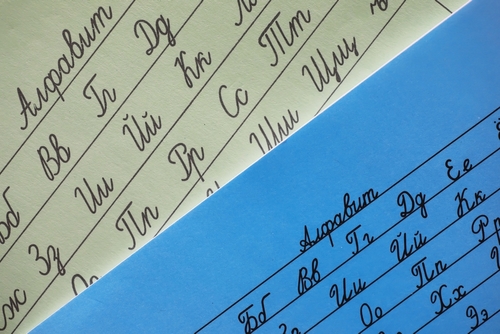
Things get even trickier when you look at writing by hand. When people write in cursive, some cyrillic letters change a lot. For example, the printed ‘т’ (which sounds like ‘t’) turns into something that looks like a small ‘m’ when you write it in cursive. If you want to read handwritten notes or special fonts, you need to know about these changes.

If you are learning this now, it’s good to remember:

  • Some cursive cyrillic letters stay close to their printed form, but some look very different. You have to practice a lot to know them all.
  • Watch out for letters like ‘д’, ‘г’, ‘и’, and ‘т’. Their cursive forms are not much like how they look when printed.

Phonetic System and Sound Representation

One big plus of the Cyrillic script is that its letters usually match up with single sounds. This system helps you get the pronunciation right with less guesswork. It is not as hard as some languages, where you have to learn a lot of tricky spelling rules. For example, in the Russian alphabet, the letter ‘A’ will almost always sound like /a/, the same way you say ‘a’ in “father.”

But, there are some special symbols in the script that do not show a sound by themselves. The Russian alphabet has both the soft sign (ь) and the hard sign (ъ). These do not make a sound alone. Instead, they change how you say the consonant before them. The soft sign tells you to soften the sound. The hard sign makes you pause between parts of the word.

You will find this pattern of matching sounds to letters in many different languages that use the Cyrillic script. Some of them add new letters or drop a few, to suit the sounds they use. Still, most of the same rules for sound and how letters work stay the same.

Major Languages Using the Cyrillic Alphabet

The Cyrillic script is the main alphabet for over 50 languages in Eastern Europe and Central Asia. Most people think of it with slavic languages like Russian, Bulgarian, and Serbian. But the Cyrillic script is also in many other languages that are not in the same group.

You can see people use the Cyrillic script for languages like Kazakh, Mongolian, and Tajik. The use of this writing system is because of the history and culture that shaped the area over time. Now, let’s look at some big slavic languages and other languages in Eastern Europe and Central Asia that use the Cyrillic script.

Slavic Languages (Russian, Bulgarian, Serbian, Ukrainian)

Cyrillic serves as the writing system for many major Slavic languages, forming a core part of their national identity. Russian, Bulgarian, Serbian, and Ukrainian are some of the most prominent examples. While they all share a common ancestor in Old Church Slavonic, each language has developed its own variant of the Cyrillic script to accommodate its unique phonetics.

These regional variations are noticeable in the number of letters and the presence of special characters. For instance, the Serbian Cyrillic alphabet includes letters like ‘Њ’ and ‘Љ’, which are not found in the Russian alphabet. Similarly, the Ukrainian alphabet has the letter ‘Ґ’ to represent a sound distinct from the standard ‘Г’.

These differences highlight how the script has been adapted to meet the specific needs of each language. Below is a comparison of a few key differences between these national languages.

Feature Russian Bulgarian Serbian Ukrainian
Number of Letters 33 30 30 33
Unique Letters Ё, Ъ, Ы, Ь Ъ (as a vowel) Ђ, Ј, Љ, Њ, Ћ, Џ Ґ, Є, І, Ї
Script Notes Includes hard and soft signs. Lacks letters like Э and Ы. Highly phonetic; one letter per sound. Includes apostrophe for pronunciation.

Non-Slavic Languages (Kazakh, Kyrgyz, Mongolian, Tajik)

Beyond the world of Slavic languages, the Cyrillic script spread to many other languages. This happened mostly in Central Asia and places influenced by the Soviet Union. Some of the languages that use a variant of the Cyrillic script as their writing system are Kazakh, Kyrgyz, Mongolian, and Tajik. Most of this change took place in the 20th century.

To make the Cyrillic letters work for these local languages, new symbols were added to show sounds that are not found in Slavic languages. For example, the Kazakh alphabet has some extra characters. These changes help show Kazakh’s special vowels and consonants. Before switching to the Cyrillic script, many of these languages used the Arabic or Latin script.

Now, there is a move for language reform in some of these countries. In Kazakhstan, people are working to switch back to a Latin script. These changes come as people think about their national identities and want to connect with other regions in the world.

Russian Cyrillic vs. Other Cyrillic Alphabets

Many people think of the Russian alphabet when they hear about the Cyrillic script. But there is more to it. The Russian alphabet is only one kind of variant of the Cyrillic script. Many national languages have their own version of this script. Each one is a bit different from the other. For example, the Serbian Cyrillic alphabet and the Bulgarian alphabet are not the same. Over time, each has changed to match the sounds of its own language. That is why they now have different sets of letters.

Because of these regional variations, you might find a letter in one alphabet that is not in another. Also, the same letter may sound different in different alphabets. It is important to know about these differences if you want to really understand the wide use of the Cyrillic script among national languages. Now, let’s look at some of the letter and sound differences between these alphabets.

Letter Variations and Additional Characters

One of the most clear ways the Russian alphabet is different from other Cyrillic scripts is in the letters that are used. Every national language has changed its own alphabet to show its sounds best. This is why some letters get added or left out in each one. For example, the Serbian Cyrillic alphabet uses the letters Ј, Љ, and Њ. These are not in the modern Russian alphabet.

These different letters often show up because the language needs to show sounds that are not in Russian. The Ukrainian alphabet uses the letter Ї (yi). The Bulgarian alphabet has the letter Ъ, which works as a vowel. This is not like the Russian hard sign. These extra letters let every variant of the Cyrillic script fit the language it is used for.

You should know a few more things about these scripts:

  • The Serbian alphabet matches sound to letter, so each letter stands for only one sound and there is no mix-up.
  • Ukrainian uses an apostrophe (‘) almost like the hard sign in Russian.
  • Some languages that are not Slavic use double letters or letters with an acute accent to show their own sounds.

These things show how the cyrillic script changes for different slavic languages. The russian alphabet, the bulgarian alphabet, and the serbian cyrillic alphabet are all examples of a variant of the cyrillic script. You will also see some have the hard sign, use double letters, or show an acute accent to help show

Distinct Pronunciation and Regional Usage

The same Cyrillic letter can be said in different ways based on the language. For example, the letter ‘Г’ will sound like a ‘g’ in Russian. In Ukrainian and Belarusian though, people often say it more like an ‘h’. These regional variations are a big part of what makes each language sound and feel different.

The way the official script is used today has been shaped by local life and history. For example, where a country has old ties with others or a strong culture, the alphabet may change over time or be used in different ways. The scientific transliteration of Cyrillic into the Latin alphabet does not stay the same from one language to the next. It changes to follow the unique way words sound in each language.

There are also new changes happening now. Some countries in Central Asia are thinking about using a Latin script instead of Cyrillic. This means the way people teach, read, and write the Cyrillic script in these places can also change. All of these things show that writing systems are always on the move, and they have a close tie to what people in each place feel about who they are.

Modern Usage and Technological Adaptations

In today’s digital world, the Cyrillic script has found a great fit with new technology. With systems like Unicode, the Cyrillic writing system now works well on computers, phones, and across the internet. This makes it easy for millions of people to use their own writing system to talk to others in many ways.

People use modern Cyrillic for lots of things, from texting friends to making official papers. Online keyboards and new ways of typing have made it simple for users to type in languages like Russian. Let’s look at how these updates have helped keep the alphabet useful and important now.

Unicode and Digital Communication

The Cyrillic script has become a part of the digital age mainly because of Unicode. Unicode gives each letter a number that is always the same. It does not matter which platform, device, or language you use. With this system, Cyrillic letters show up the right way on different software and websites. This stops the problem of mixed-up letters that people saw in the past on the internet.

Thanks to Unicode, the Cyrillic script is used a lot for online talks. People send emails, share posts on social media, build sites, and chat online with their own alphabet. This is very important. It helps people who use the official script to join with others and keep their culture safe in today’s world.

It is hard to say enough about why it is good to keep digital versions of these scripts. The rich stories and history that come with the Cyrillic letters and the official script of many countries stay easy to find for all. A clear encoding method, such as the scientific transliteration of Cyrillic, also makes it easy to work together and share learning between groups.

Online Keyboards and Typing Tools

Yes, you have many ways to type modern cyrillic letters if your device does not have a Cyrillic keyboard. Most computer and phone systems like Windows, macOS, iOS, and Android let you add a Cyrillic keyboard layout. You can then switch back and forth between regular letters and cyrillic letters with an easy command.

If you do not want to remember where each letter is, you can use a phonetic keyboard. These keyboards match cyrillic letters with Latin keys that sound close. For example, you use ‘F’ for ‘Ф’ and ‘D’ for ‘Д’. There are also many sites and apps where you get online keyboards. With these, you can type modern cyrillic with your mouse or see the layout on your screen.

Here are some good choices to type cyrillic letters today:

  • Operating System Keyboards: You can add Russian, Ukrainian, or other Cyrillic layouts right from your device’s settings.
  • Online Virtual Keyboards: Use sites like Translit.net or Google Input Tools for easy online typing.
  • Phonetic Keyboard Stickers: Get stickers to put on your keyboard. This helps you learn the layout when you type.

Learning the Cyrillic Alphabet: Tips for Beginners

Learning the Cyrillic alphabet might look hard at first, but it is not as tough as you may think. The best way is to split the work into small steps. Do not try to learn all the letters at the same time. It helps to focus on the ones that look like English letters first.

If you keep at it and pick the right way to study, you will find that you can feel sure of yourself when using Cyrillic letters. This skill will help you learn more about slavic languages and their ways of life. Here are some good steps and tips that can help you start as you learn the Cyrillic alphabet.

Easy Steps to Recognize and Write Cyrillic Letters

A good way to learn the Cyrillic script is to group the letters based on how they look compared to the Latin alphabet. You can start with letters that look and sound the same as the ones you already know. After that, move to the letters that look like they should sound the same but actually don’t—these are called “false friends.” Last, get used to the new letters you have not seen before.

To practice, write words from your language in Cyrillic letters. For example, try spelling out your name the way it sounds using these new letters. This helps the mind connect the shapes to sounds you already know. There are language apps such as Duolingo that have exercises for practicing these letters, and they work well.

Here is a short guide to help you see and write Cyrillic letters:

  • Group 1 (Familiar): Start with letters like А, К, М, О, and Т. They look and sound almost the same as Latin letters.
  • Group 2 (False Friends): Study letters like В (V), Н (N), Р (R), С (S), and У (U). These look familiar but stand for different sounds.
  • Group 3 (New Letters): Learn letters that are new, for example Б (B), Г (G), Д (D), Ж (Zh), and Я (Ya).
  • Practice Writing: Write these letters by hand often. That way

Common Challenges and Practice Recommendations

One thing that many people find hard is telling apart letters that look alike and learning “false friends.” Some cyrillic letters like ‘И’, ‘Н’, and ‘П’ look a lot like latin letters, and this can make the russian alphabet tricky. There are also cyrillic letters like ‘Ж’, ‘Ц’, and ‘Щ’ that you will not see in english. These are totally new for people learning the writing system.

To get better at this, you have to practice all the time. Try using language apps or flashcards every day to work on the cyrillic letters. It also helps to use little tricks or mnemonics. For example, if you want to remember that ‘Д’ sounds like ‘d’, you can picture it as a house with two legs—the russian word for house is ‘dom.’

Do not feel upset if you need more time. Like many new things, learning this writing system is something you need patience for. Just a few minutes of practice each day and often going back to review what you learned will make the russian alphabet much easier for you. After that, reading cyrillic letters can feel like second nature.

Conclusion

To sum up, if you learn the Cyrillic script, you can find many new languages and cultures. This writing system is more than old history. It is still important today, even in new tech. The Cyrillic script is the base for many people’s lives across the world. It is not just for Slavic languages. You can use it when you learn other languages, too.

If you get good at using the Cyrillic script, your language skills will grow. You will also start to value how different people share their lives and stories. Start your learning with an open mind. Before long, you will get used to this interesting writing system. Don’t be afraid to learn more and see what new things you can find on this road to knowledge!

Frequently Asked Questions

How long does it take to learn the Cyrillic alphabet?

Many people can get to know the Cyrillic alphabet in just a few hours or days if they spend time studying. To really master it, like reading fast or learning its cursive style, may take a few weeks of regular practice. The time it takes to learn this writing system will also depend on your native language and how much time you spend on it.

Are there easy tricks to remember tricky Cyrillic letters?

Yes! Using mnemonics is a good way to remember hard Cyrillic letters. For instance, the Russian letter ‘Ж’ (zh) looks like a bug. The word for bug in Russian is “жук” (zhuk). If you link how a cyrillic letter looks with a word that has the same sound, you can learn the alphabet much faster.

Is the Cyrillic alphabet still evolving today?

Yes, the Cyrillic script is still changing. The main Russian alphabet stays the same. However, in some countries, there are language changes going on. For example, Kazakhstan is moving from the Cyrillic script to a Latin-based official script. You can see that these regional variations and modern updates mean the use of modern Cyrillic is always shifting.

Key Highlights

  • The Devanagari script is a writing system that you will find in use for the Hindi language and for other languages in India.
  • It is an alphasyllabary. This means that every consonant in Devanagari comes with an inherent vowel sound.
  • The script has a set of vowels and a set of consonants. They are put together by the way people pronounce them.
  • People write Devanagari from left to right. The letters hang from a horizontal line known as a shirorekha.
  • This devanagari alphabet is highly phonetic. People write the words just like they sound when you say them.
  • Devanagari got its start from the old Brahmi script.

Introduction

Welcome to the world of the Devanagari script! If you want to know more about the writing you find in languages like Hindi and Sanskrit, you are at the right spot. This alphabet has a rich history and a clear structure. It is not just a group of symbols. It is a way for people to learn about the culture and the way of saying things in South Asia. In this guide, we will go over the structure, vowels, consonants, and other special parts of the Devanagari alphabet. All of this will help you see how good and important the Devanagari script is.

Overview of the Devanagari Alphabet

The Devanagari alphabet is a popular writing system that started in India. People use it to write many languages. Some of the main ones are Hindi, Marathi, and Nepali. This is also the main script used for modern Sanskrit. What makes the Devangari alphabet stand out is its phonetic form. If you hear a word, you can often write it down. And if you see a word, you can say it out loud the right way.

Devanagari is not like the Latin script where you put letters next to each other in a line. In this writing system, symbols come together into syllables. These syllables hang from a special horizontal line. This is an important feature of its look. Now, let’s see more about where it came from, why it matters for many languages, and how people use it today.

Origins and Development of the Devanagari Script

The Devanagari script has a long history in ancient India. It began with the Brahmi script, which is one of the oldest writing systems to be found in the area. Brahmi acted as a base for many other scripts in South and Southeast Asia. Over time, the Brahmi script changed into different local forms.

By the 7th century CE, the Nagari script came from these new forms. The Nagari script is known as the direct parent of the Devanagari script we use now. The name “Devanagari” is often said to mean “script of the divine city.” People called it this because of its high place in religion and learning.

The Nagari script slowly grew and became more regular over time. This led to today’s Devanagari script. Because it is clear and works well for sounds, the Devanagari script has been a strong and important writing system for hundreds of years in India—a strong link between old and new times.

Significance in South Asian Languages

Devanagari is important for the cultural and language life of the Indian subcontinent. It is the main script used for Hindi, which is spoken by most people in India. It is also the script used to write Sanskrit. Sanskrit is an important language in old Indian books, stories, and ways of thinking. Because of this, Devanagari is needed to read many religious, science, and story works.

Devanagari is not just for Hindi and Sanskrit. People use it to write other main languages too. For example, it is used for Marathi, which is spoken in the state of Maharashtra. Nepali people in Nepal also use Devanagari. This shows that the script brings together many people in South Asia who use the same way of writing. This makes it one of the biggest writing systems in this part of the world.

Devanagari helps write words the way they sound, and it has an easy-to-understand way of putting letters in order. These things make it a good script for writing and saving languages. When you learn Devanagari, you can read and write in many cultures and groups—from the busy streets of India to the high hills of Nepal.

Modern Usage and Global Presence

Devanagari is well-known around the world in the digital age. This is mostly because it is part of the Unicode standard. With the unicode standard, the script works the same on computers, phones, and other devices. Because of this, people can type, share, and read in Hindi, Sanskrit, and other Devanagari scripts online with no problem.

There are also many digital fonts to choose from now. No matter if you read news, send messages, or make a document, there is a font that will show the script the right way. This digital change has helped keep Devanagari important for people today.

Devanagari is not just for South Asia or India. It is also used in Europe and other places. For example:

  • Used in academic and language research across the world.
  • Found in cultural and religious groups outside India.
  • Used with new types of media, like websites and social platforms.

Structure of the Devanagari Script

The Devanagari script has a style that makes it easy to spot and tells it apart from other ways of writing. The most known thing about it is the line on top, called the horizontal line or shirorekha. This line goes over the letters in a word and links them together. This setup helps the script look neat and all the letters seem to hang from a clothesline.

One of the main ideas in Devanagari is that it is made around syllables. Every consonant symbol has an inherent vowel sound with it, which is usually the ‘a’ sound, also known as the schwa. If you want to change the vowel sound or show a consonant without a vowel, you add special marks. Because of this, the Devanagari script is phonetic and clear. Now, let’s look more closely at how this works.

Syllabic Nature and Script Layout

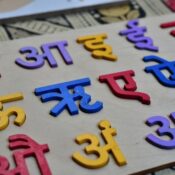
The Devanagari script is a writing system where the main parts are syllables. It is not like an alphabet that treats vowels and consonant letters the same. In the Devanagari script, each consonant comes with a default vowel sound. This built-in vowel is a short “a” sound, like the “a” in the word “about.” So, when you see the consonant letter क, you say “ka” instead of just “k.”

This way of building words changes how the whole writing system looks. When people write with the Devanagari script, they put symbols together in blocks. These blocks each show a full syllable. For example, the word “Devanagari” (देवनागरी) is spaced out like de-va-nā-ga-rī. The writing goes from left to right, and the syllables join up with a horizontal line on the top.

Because of this set-up, the sound and writing are closely linked. Whenever you can, you write words so the syllables do not finish with a consonant. This makes the flow of words soft and easy to say. The strong tie between how a word sounds and how you write it is what makes the Devanagari script special.

Basic Organization of Vowels and Consonants

The Devanagari alphabet is systematically organized into vowels and consonants. The vowel letters are listed first, followed by the consonant letters. In total, the standard Hindi alphabet contains 11 vowels and 33 basic consonants, though additional characters exist for specific sounds and loanwords.

The vowels each have two forms: an independent form used when a vowel stands alone or at the beginning of a word, and a dependent form (matra) used when it modifies a consonant. The consonants are grouped based on their place and manner of articulation, making the system highly logical for learners. For example, consonants pronounced with the back of the tongue (like ‘k’) are grouped together.

This organization is a key feature of the Hindi alphabet. Here’s a quick look at the main categories:

Category Description
Vowels Represent vowel sounds and appear in independent and dependent forms.
Consonants Represent consonant sounds and have an inherent ‘a’ vowel.
Special Characters Include nasalization marks and other diacritics for pronunciation.

Writing Direction and Notable Features (Shirorekha)

One thing that stands out about the Devanagari script is how it is written and how it looks. Devanagari script and English are both written from left to right. The most well-known part of Devanagari is the shirorekha, which is a horizontal line that goes across the top of all the letters in a word. This line joins the letters together and is the feature that gives Devanagari its easy, flowing look.

Most consonant letters in Devanagari also have a long vertical line. This line is a main part of the consonant. When consonant clusters are formed, sometimes the vertical line is dropped from the first letter so the next one can join in.

Many things make Devanagari script stand out from other writing systems, besides the shirorekha:

  • It is alphasyllabic, which means every consonant already has an inherent vowel.
  • There are two ways for vowels to appear: they can be written on their own or attached to a consonant.
  • Consonants are grouped in a set way, based on how people say them.
  • It uses some special hints, like the virama, to show when the inherent vowel in a consonant should not be pronounced.

Vowels in the Devanagari Alphabet

Vowels are very important in the Devanagari alphabet. They give life to the consonants. Each vowel letter matches a certain vowel sound, and these are split into short vowels and long vowels. Knowing the difference helps you say words the right way. For example, the short ‘a’ is not the same as the long ‘ā’.

Hindi vowels come in two forms, and this is something you need to know when you start with the script. Learning how to use these forms is needed for good reading and writing. Now, let’s see the list of vowels and what forms each one has.

List of Devanagari Vowel Characters

The Devanagari script has a group of vowel letters. Each one makes a special sound. If you want to say them right, it helps to think about the sounds you hear in English. But, some of these sounds only happen in Hindi. Every vowel letter in Devanagari can have an independent form and a dependent form. The independent form is used when the vowel stands alone, and the dependent form is called a matra. The matra is used to change the sound of a consonant.

You will see the independent forms at the beginning of a word or right after another vowel. For instance, the Hindi word आम (ām), which means “mango,” starts with the independent vowel आ. The dependent forms are small marks you add to consonants. The marks change the ‘a’ sound that every consonant starts with.

Here is a list of some common Hindi vowels in their independent form and how they sound like in English:

  • अ (a) – like the ‘a’ in ‘about’
  • आ (ā) – like the ‘a’ in ‘father’
  • इ (i) – like the ‘i’ in ‘sit’
  • ई (ī) – like the ‘ee’ in ‘see’
  • उ (u) – like the ‘u’ in ‘put’

Independent and Dependent Vowel Forms

A basic part of writing in Devanagari is to know about the two forms that every vowel has. The first form is the independent form. It is the vowel as a single letter. You use this independent form if a vowel sound comes at the beginning of a word or right after another vowel. It shows up when there is no consonant to connect the vowel to.

The other form is the dependent form. People call this a matra. A matra is a mark that goes with a consonant. The job of the matra is to change the consonant’s default vowel sound, which is ‘a’ or the schwa, and put in another vowel sound instead. The short ‘a’ sound is the default vowel, so it does not use a matra.

For example, to write the syllable “ki,” you start with the consonant क (ka). Then, you add the matra for the ‘i’ sound ( ि ). This gives you कि. Matras make it quick and simple to show vowel sounds in syllables. This system is key to how the script works. Knowing how to use matras helps you get better at writing and reading in Devanagari. It also improves your pronunciation.

Pronunciation and Usage of Vowels

Getting the correct pronunciation of Hindi vowels is very important for clear speaking. In Devanagari, each vowel sound is special. The script shows a clear difference between short vowels and long vowels. For example, the short vowel इ (i) is said quickly, like in ‘sin’. The long vowel ई (ī) lasts longer, like in ‘seen’. The time you hold these vowel sounds can make the meaning of a word change.

When a vowel comes after a consonant, you need to use its corresponding dependent form. This is called a matra. The matra connects to the consonant. It can go above, under, before, or after the consonant letter to make the right syllable. For example, if you take the consonant स (sa) and add the matra for ‘o’ (ो) to it, it becomes सो (so).

The best way to get good at these vowel sounds is to practice often. Listen to people who speak Hindi and copy the sounds of these vowels. Practice them both alone and in their matra forms with consonants. Focus on how long and how good each vowel should be. Mastering these things will help your fluency and help you understand Hindi even better.

Consonants in the Devanagari Script

Consonants are like the main parts of words in the Devanagari script. The consonant symbols in Devanagari are set up based on the place and manner of articulation. This means there are groups for sounds you make with your lips, called labial, and for sounds you make with your teeth, known as dental consonant. So, it makes the way to learn them very clear and systematic.

There is something special about the Devanagari script. Each consonant symbol already comes with an ‘a’ sound built in. If you want to write two or more consonants together and you do not want a vowel between them, you have to make a consonant cluster. Now, we will look at the types of consonants, how they are grouped, and how consonants mix with vowels in Devanagari.

Types of Consonants (Stops, Nasals, Approximants)

Devanagari consonant sounds are put into groups based on how we make them with our mouths. This way of sorting the sounds helps make the script easy to use and understand. The main groups are stops, nasals, and approximants. Each group is decided by how the air moves when we speak.

Stops are made when you completely block the air in your mouth, then let it out. These can be split into pairs too. Some stops are unaspirated, which means there is not extra air. Others are aspirated, where you let out more air. Nasals happen when you let air go out through your nose, like when you say ‘n’ or ‘m.’ Approximants happen when your tongue or lips get close together but still let some air out, making sounds like ‘y’ or ‘l.’

Here’s a look at the different kinds of these consonant types:

  • Stops: Consonants like क (ka), ग (ga), प (pa), and ब (ba).
  • Nasals: Sounds like न (na) and म (ma).
  • Approximants: Consonants such as य (ya), र (ra), and ल (la).
  • Fricatives: Sounds made when you push air through a narrow gap, like स (sa) and श (sha).

Consonant Groups by Articulation

The Hindi alphabet is smart in the way it is put together. In the Devanagari script, consonants are put in a grid using two things: where the sound comes from in your mouth (place of articulation) and how the sound is made (manner of articulation). This kind of table helps you see the way the sounds are tied together right from the start.

The consonant groups go from the back of your mouth to the front. The first group is called velar consonants, like क (ka) and ख (kha). You make these at the soft part on top of your mouth. The next groups in the Hindi alphabet are palatals, retroflex, dentals, and labials. Each group comes from a little bit further forward in your mouth. In each group, the consonants are put in the order of how the sound comes out. So it starts with simple sounds, then goes to sounds you push air with, then to sounds that need your throat, and more.

This tidy way to put the Hindi alphabet is not just to look neat. It really helps people who want to pick up the script. If you figure out the pattern, you can guess the pronunciation of new letters that are found in the same part of the table. That clear and simple structure is one main reason why people call the Devanagari script very good for learning how the words sound.

How Consonants Combine with Vowels

In Devanagari, a consonant and a vowel join together to make a syllable. Each consonant comes with its own ‘a’ sound by default. If you want the syllable to use a different vowel, you add the vowel’s dependent form, called a matra. For example, the consonant प (pa) gets an ‘i’ matra and turns into पि (pi).

When two or more consonants are found next to each other without a vowel in between, they make a consonant cluster. This is also called a conjunct. To show a consonant cluster in writing, the first member of a conjunct is often shown in a half form. You make this by removing the vertical line from the first consonant and putting it next to the second consonant. For example, half च (ca) connects to छ (cha) to make च्छ (ccha) in the word अच्छा (acchā).

It is important to know how this combination works in Devanagari, because not all consonants have a simple half form. Sometimes, the combination of consonants makes special characters that you have to remember. For example, if you join क (ka) and ष (ṣa), you get the special character क्ष (kṣa).

So, to put it simply: when you want to form different syllables in Devanagari, you have to use dependent forms, half forms, matras, and sometimes memorize

Special Signs and Pronunciation Marks

Besides vowels and consonants, Devanagari has many special signs and diacritic marks. These marks help with clear pronunciation. They can show things like nasalization, if a vowel is missing, or certain punctuation. Using these marks is key because they make sure the way people speak can be shown in writing.

Some signs in Devanagari, like the virama (or halant), help join two consonant sounds. Others, like the anusvāra, make a sound more nasal. Learning about these diacritic marks is just as important as learning the letters. Here, we will go over some of the most common signs and what they do.

Anusvāra, Visarga, and Chandrabindu

Devanagari uses a few important marks to change how words sound, especially with nose sounds and breath. The first one, called Anusvāra, is a dot above the main line of the letters (for example, कं). This mark shows you need to add a nasal sound, like when you say the ‘n’ in “Sanskrit” (संस्कृत). The bindu is key in writing many Hindi words and Sanskrit words.

Next, there is Visarga. This is shown by two dots after a letter (like in कः). Visarga means you use a soft, voiceless sound, almost like an ‘h,’ but you do not use your voice. You will see this at the end of words often in Sanskrit.

Another mark is Chandrabindu, or the “moon dot” (for example, कँ). You find this above the letter, and it shows that the vowel sound is actually going through your nose. In Hindi words, such as हूँ (hū̃, which means “am”), Chandrabindu is common. Nasalization is a big part of the way Hindi is spoken and is important for good pronunciation. It helps you say words the right way.

These small marks help a lot. They make a difference in how you pronounce words and can even separate words that look almost the same.

  • Anusvāra (ं): Adds a nasal consonant sound.
  • Visarga (ः): Adds a

Halant (Virama) and Its Function

The Halant, called the virama, is a small line you see under a consonant (like क्). The main job of this mark is to drop the consonant’s default vowel sound. So when you see a Halant, you get the sound of the consonant only, not with the vowel. For example, क is read as “ka,” but क् is just “k.”

This sign is used when putting two consonants together in Devanagari. You put the halant under the first consonant to knock out the vowel sound. This lets the letters come together to make a new sound. For example, if you put स् + क, you get स्क, which is read as “ska.” Many new fonts now make this look like one shape, but at its core, this happens because of the halant.

You can use the halant at the end of a word if the word finishes with only a consonant sound. This is seen more in Sanskrit than Hindi, especially at the end of a sentence. Knowing how the virama works will really help you get the right pronunciation, and learn how Devanagari puts together tough words with more than one consonant or if the pure consonant sound is needed at the end. The halant is key in handling these vowel sound changes.

Accent Marks and Emphasis in Writing

Modern Hindi is written in Devanagari. It usually does not use diacritic marks to show stress or tone. But you will see these marks in old Vedic Sanskrit books. In those books, the marks tell you the pitch of a syllable. This was very important for saying old songs and chants the right way. The main diacritic marks are called udātta, which is the high tone, anudātta, which is the low tone, and svarita, which means the tone goes down.

Today, people do not use special marks for stress when they write in Devanagari. People understand emphasis from the sentence and the meaning. The script is phonetic, so it helps tell the different sounds the words make. It also makes clear the difference between short and long vowels. This helps you know which part to stress. One thing to know is the schwa sound. It is at the end of many words but is dropped in speech, so that can make the stress change.

Devanagari is sometimes called the “script of the city.” The name can make people think it has a divine or special use. This means how you say words and vowels in Sanskrit or Hindi had to be very clear. Even though people do not use these accent marks much now, knowing about them helps you see how the script shows details in pronunciation. It tells us about the script’s way of making sounds clear—like the long vowels and even which vowels to

Languages and Applications of Devanagari

Devanagari is the main writing system for much more than just Hindi. People in the Indian subcontinent, including those who speak Sanskrit, Marathi, and Nepali, use it every day. Its clear sounds make it good for all types of writing, like stories, official papers, and important religious texts.

The writing system also works well in many areas. Some nearby languages use it too. They add a few special marks or letters so the script fits the way their people talk. Because of these uses, Devanagari has become a big part of the language world in South Asia. Next, we will see how people use it in major languages and for important writing.

Use in Hindi, Sanskrit, Marathi, and Nepali

The Devanagari script is used as the main writing system for many big South Asian languages. In Hindi, it is the most used and the official way to write. People use Devanagari in their everyday life, for books, and even in government files. This script matches the sounds of spoken Hindi very closely, which makes it easy to read and write.

Devanagari is also what people use for Sanskrit today. Because of this, it helps people now learn about old stories, science papers, and big ideas from long ago. The Marathi language, which is spoken in Maharashtra, and Nepali, the national language of Nepal, both use Devanagari too when people write.

Each language might change the alphabet a little or have a different way to say words. But the Devanagari script stays the same for all. This helps bring people and cultures in these areas together. It also lets people understand each other better, even if they speak different languages.

Keywords: devanagari script, writing system, hindi language, devanagari, sanskrit, hindi, alphabet, pronunciation, marathi

Adaptation for Other Regional Languages

The Devanagari script stands out because it can change to fit different needs. At first, people used it for only a few main languages. But now, you can see it used for many regional languages and dialects in India. People change the script by adding new marks or letters. They do this to show sounds that you do not find in Hindi or Sanskrit.

For instance, when words come from other language groups, like those with Perso-Arabic roots, people add dots below some letters. These dots are called nuqta. By using them, we get new letters such as क़ (qa) from क (ka), and फ़ (fa) from फ (pha). So the Devanagari script can write more types of sounds clearly.

The way Devanagari changes shows the strong design of the script. You can add to it without breaking the main structure. That makes it a good pick for many people who use different languages. Here are a few ways it has adapted:

  • Writing languages such as Konkani, Maithili, and Bhojpuri.
  • Adding sounds from Arabic and Persian.
  • In the past, some experts even thought about using it for European languages.

By staying flexible, the Devanagari script connects people. It helps to share ideas across India and even beyond.

Examples of Literary and Official Texts

Devanagari script is used for many important books and documents. In the past, people wrote sacred books like the Vedas, Ramayana, and Mahabharata in Sanskrit using Devanagari. These books show how the script helped save important cultural and religious ideas.

Today, people use Devanagari for all Hindi government papers. You can also find it in newspapers, stories, and poems. Books like “A Primer of Modern Standard Hindi” use it to help people learn Hindi. These resources are easy to find as a PDF or in print for anyone who wants to study.

When you read old books or today’s news stories, you get the ideas through the Devanagari script. It links the past and present. With its use in old texts and new digital papers, Devanagari script is very helpful for people who care about the languages and cultures of South Asia.

Conclusion

To sum it up, the Devanagari script is more than a way to write words. It is an important part of culture and language. This writing system connects many people in South Asia and other parts of the world. It has its own setup with vowels, consonants, and some special marks. It helps make languages like Hindi, Sanskrit, Marathi, and Nepali more beautiful.

When you understand how the Devanagari alphabet works and how to use it, you will find it easier to learn these languages. You also get to know more about their deep and rich history. Whether you want to start learning or know a bit and wish to get better, learning the Devanagari script is a good step. It lets you explore new ideas and cultures through reading and writing. If you want to find out more, you can reach out for a free talk and we can start this journey in language learning together.

Frequently Asked Questions

How many letters are there in the Devanagari alphabet?

The Devanagari script used today for Hindi has 44 basic letters. The script has 11 vowel letters and 33 consonant letters. There are more characters in Devanagari when you add special signs, joint consonant letters, and some letters for sounds borrowed from other languages.

How do you pronounce and write with the Devanagari script?

Writing in the Devanagari script means you put consonant symbols and vowel marks, called matras, together to make syllables. The pronunciation in Devanagari is very clear. Each letter or each letter with a matra always sounds the same way. The best way to get this right is to practice every vowel sound and each consonant symbol. It also helps a lot if you can work with a native speaker.

What are the best tips for beginners learning Devanagari?

If you are new to this, begin with the vowels and their two forms. Write Hindi words by hand because this will help you get used to them. Try out “A Primer of Modern Standard Hindi” as one helpful tool. You can also put a Devanagari font on your computer, so you can start typing in Hindi. The most important thing is to practice every day if you want to get good at it.

Key Highlights

Here are the key things to know about the Hangul alphabet:

  • The Hangul alphabet has a scientific design. King Sejong made it so people could learn it easily.
  • It has 14 basic Korean consonants and 10 basic vowels. These are the building blocks for the writing system.
  • Hangul letters join together into a syllable block. This makes the system different from English and gives it a unique look.
  • The shapes of the letters in this alphabet often show the way the mouth moves when making the sound.
  • Learning Hangul is the first step for anyone who wants to read, write, or speak simple Korean words.

Introduction

Have you ever wanted to know more about the Korean language and how people write it? The Hangul alphabet is the official writing system of Korea. It is known for being simple and easy to understand. Many other writing systems took years to grow, but Hangul was made so that all people could use it. This guide will show you the scientific design of Hangul. You can see how the letters are shaped. This will help you learn to read and write in the Korean language.

Understanding the Hangul Alphabet and Its Purpose

The Hangul alphabet is the main way to write in the Korean language. It was made in the 15th century. King Sejong wanted to give the people a new writing system that was easy to use. His goal was to help all Koreans learn, so more people could read and write.

The korean writing system was made to match the sounds of the korean language very well. It is simple to use and has a clear structure. That is why many people say it is one of the best alphabets in the world. Now, let’s see what makes this new writing system special and how it is not the same as other ways to write.

What Is Hangul and How Is It Used in Korean?

Hangul is the native alphabet for the Korean language. People use this writing system in both North and South Korea. Hangul was made to be easy for all Korean people to learn and use. Because of that, it is often seen as smart and clear.

Hangul does not go on in a long line of letters. Instead, it puts letters together into small blocks. Each one of these blocks is a syllable, and you read them from left to right and then top to bottom. This way, reading is simple when you know the basic parts.

You will see Hangul everywhere in South Korea. It is on books, newspapers, text messages, and street signs. If you want to learn the Korean language, you must master this alphabet first. It is the key to using this writing system and to understanding both Korean language and culture.

How Hangul Differs from Chinese and Japanese Writing Systems

The Korean alphabet is different from the writing systems in China and Japan. The main difference is that the korean alphabet, called Hangul, is a real alphabet. This means that each symbol has a sound, like english letters. That is not how chinese characters work.

The chinese writing system has thousands of characters. These symbols stand for whole words or ideas. It takes a lot of time and memory to learn all of them. Japan uses some chinese characters, called Kanji. But the japanese system also has two other sets of letters. They are Hiragana and Katakana. In these systems, each symbol stands for a sound, like “ka” or “shi.”

Hangul is special because of how the shapes are made. Every shape in the korean alphabet is tied to a sound. So, you do not have to learn a lot of free form symbols when you are learning the korean language. If you know 24 basic letters, you can read any word in korean. This is a big plus over both the japanese and chinese writing systems, which are more difficult.

The Scientific Principles Behind Hangul’s Design

The korean alphabet did not happen by chance. King Sejong and his team wanted to design it in a smart way. They used a scientific design to build a writing system that made sense and was easy to use. They looked at the sounds of the language to make it work well. Because of this work, the alphabet became what people call a featural alphabet.

The shapes of the letters are not just for looks. They show how your mouth and tongue move when you say the sounds. This strong link between sound and shape tells a lot about the history of korea. It also shows how much people there want everyone to read and write.

The Historical Context of Hangul Creation

In the 15th century, only a small group in Korea could read and write, because they had to use hard Classical Chinese characters. King Sejong saw that most people could not learn these Chinese characters. He asked a group of scholars from the Hall of Worthies to make a new and simple writing system. His plan was to help all the Korean people read and write, no matter where they stood in society.

This new writing system came out in 1446 through a document called “Hunminjeongeum.” This means “The Correct Sounds for the Instruction of the People.” The document explained how the alphabet worked and showed that it was made to help more people in the kingdom learn.

The start of Hangul was a big change in the history of Korea. It gave the Korean people a way to write that fit their language well. This helped people feel more like one group and made it easier for everyone to get knowledge.

Features That Make Hangul a Featural Alphabet

Hangul is called a featural alphabet because of its smart and scientific design. The shapes of the letters are not random. They are made to show the way your mouth and tongue move when you say the correct sounds. So, Hangul gives you a type of visual clue about how to pronounce words.

For example, the basic consonant ‘ㄱ’ (g) shows the back of the tongue touching the top part of your mouth. The letter ‘ㅁ’ (m) looks like a square. This is because your mouth closes in a square way when you make the “m” sound. This link helps you get the correct sounds in an easier way.

The basic structure of Hangul lets you connect what you see to what you hear. It helps people learn the sounds faster and in a clear way. The shapes of the letters work as guides for correct pronunciation. This is one thing that makes Hangul stand out from other alphabets.

Structure of Hangul Letters: Consonants and Vowels

The Hangul alphabet is made up of simple parts. There are Korean consonants and Korean vowels. The official writing system has 14 basic consonants and 10 basic vowels. With these Hangul letters, you can make all the sounds you need for the Korean language.

If you want to read and write in the korean language, you need to begin with these basic consonants and basic vowels. When you understand the main parts, you can also put them together and make more sounds, like double consonants and vowel combinations. We will talk about these next. Now, let’s look at the consonants.

Basic Consonants and Their Sounds for Beginners

Learning the 14 basic consonants is the first step to reading Hangul. Each of these consonant letters has a distinct sound, though some may sound different depending on their position in a syllable. For beginners, it’s helpful to associate them with similar English sounds.

The five main basic consonants (ㄱ, ㄴ, ㅅ, ㅁ, ㅇ) were designed based on the shape of the speech organs. For example, ㄴ (n) represents the shape of the tongue touching the upper gum ridge. Other Korean alphabet letters were created by adding strokes to these basic shapes.

Here is a chart of the basic consonants and their approximate English sounds. Remember that romanization is just a guide; listening to native speakers is the best way to learn the correct Korean sounds.

Hangul Character Romanization Approximate English Sound
g/k “g” as in “gun”
n “n” as in “nose”
d/t “d” as in “door”
r/l “l” as in “ladder”
m “m” as in “mouth”
b/p “b” as in “bed”
s “s” as in “seashell”
-/ng Silent at the start of a syllable, “ng” at the end
j “j” as in “jug”
ch “ch” as in “church”
k “k” as in “key”
t “t” as in “teeth”
p “p” as in “pie”
h “h” as in “hat”

Basic Vowels and Their Pronunciation

After you learn the consonants, the next thing to do is to get to know the 10 basic vowels. Korean vowels come from a simple way of thinking. They are made with three main parts: a dot stands for the sun or heaven, a straight line that goes across means the ground, and a straight up-and-down line shows a standing person.

These parts work together to build all the korean vowels. For example, when you put a dot to the right side of a straight up-and-down line, you get ‘ㅏ’ (a). If you add it to the left side, you get ‘ㅓ’ (eo). Korean pronunciation for basic vowels is pretty steady, so you often have an easier time learning them than english vowels.

You can also mix the basic vowels to make vowel combinations. When you blend two vowel sounds, this is called a diphthong. As you write, watch out for the right stroke order. It helps your letters come out clear and right. For example, to write ‘ㅏ’ (a), you go from top to bottom first, then make a short move from left to right.

How Hangul Letters Form Syllable Blocks

Hangul letters are not written in a straight line like English letters. In Korean, the letters are put together to make a syllable block. Each block stands for only one Korean syllable. When you read the blocks, you start from the left, then go to the right, and then move from the top to the bottom. This is the basic structure, so it can be simple to follow once you get used to it.

Every syllable block in Korean words needs at least one consonant and one vowel. This mix is what makes every Korean syllable. If you want to read and write Korean words the right way, you need to know how these blocks are made. Understanding this is very important for writing and reading with hangul letters.

Rules for Combining Consonants and Vowels

The way hangul letters are put together into blocks is based on a few simple rules. Each block starts with an initial consonant. The vowel that comes after the consonant decides how the block looks.

If the vowel is one of the vertical types—like ㅏ, ㅓ, or ㅣ—then it goes to the right of the initial consonant. If the vowel is horizontal, such as ㅗ, ㅜ, or ㅡ, it goes below the initial consonant. Sometimes, these hangul letters also have a final consonant, called a batchim, that always sits at the bottom of the block.

Here are the main ways these hangul letters are used:

  • Consonant + Vertical Vowel: The vowel is on the right side of the consonant. Example: 가 (ga).
  • Consonant + Horizontal Vowel: The vowel goes right under the consonant. Example: 고 (go).
  • With a Final Consonant: The final consonant sits at the bottom. Examples: 강 (gang) and 곡 (gok).
  • Vowel combinations are placed either to the right or under the first consonant, depending on the way they look.

Alphabetical Order and Organization of Hangul

Yes, the Korean writing system has its own alphabetical order, much like the English alphabet. This order is important if you want to find words in a dictionary or sort a list of words. In the Korean alphabet, the order starts with the consonants. After that, the vowels come next.

The order for consonants starts with ㄱ, and then goes through each basic and double consonant: ㄱ, ㄲ, ㄴ, ㄷ, ㄸ, ㄹ, ㅁ, ㅂ, ㅃ, ㅅ, ㅆ, ㅇ, ㅈ, ㅉ, ㅊ, ㅋ, ㅌ, ㅍ, ㅎ. The vowels are ordered like this: ㅏ, ㅐ, ㅑ, ㅒ, ㅓ, ㅔ, ㅕ, ㅖ, ㅗ, ㅘ, ㅙ, ㅚ, ㅛ, ㅜ, ㅝ, ㅞ, ㅟ, ㅠ, ㅡ, ㅢ, ㅣ.

When you use the korean writing system to find a word, you first look for the initial consonant in the korean character. Next, you go to the vowel. After that, you check the optional final consonant, if there is one. For instance, the korean character ‘각’ (gag) will come

Beginner’s Guide to Learning Hangul Alphabet

Starting to learn Hangul is a big first step if you want to get good at the Korean language. It’s good to take it slow and work on one part at a time. Begin with the basic letters and the sounds they make. After you know these, you can start to put them together to make words and learn more.

If you use the right tools and practice a little every day, you will be able to know the Hangul alphabet fast. After this, you can read Korean texts, get better at Korean pronunciation, and have a strong base for the korean language and korean grammar.

What You Need to Get Started: Tools and Resources

To start learning Hangul in a good way, you do not need many things. Just a few easy tools and resources will do. The right materials can help you enjoy your study time and make it count. The good news is, you can find many good resources online, and most of them are free.

One of the best things to start with is a korean alphabet chart. You can print it and keep it near you so you can check it fast any time. Flashcards are also good for helping you learn each letter and the sound it makes. You may make your own flashcards, or you can get a set made for beginners. Some have audio that says each letter’s sound, which is very good for new learners.

Here are some useful tools and resources:

  • Hangul Chart: The best to see all the korean alphabet letters—both the vowels and consonants—at once.
  • Flashcards: These help you remember the korean alphabet letters and sounds. You can use them again and again, and some have QR codes for sounds and example words.
  • Notebook and Pen: Write the korean alphabet often. Regular practice by writing helps you keep all the letters in your head.
  • Language Learning Apps: Some apps let you work with the korean alphabet in a fun way with interactive steps.

So, grab a good chart, make or get your flashcards, have regular practice with writing, and use apps when you can. All of these will make learning smooth for

Step-by-Step Process to Mastering Hangul

Learning the korean alphabet is something you can do when you follow a clear plan. Try to be steady in your work and really get why the letters look the way they do. Just remembering the shapes is not enough. If you follow each step, you will get better bit by bit.

First, get to know the basic letters. Begin with the 14 basic consonants and 10 basic vowels. Then, learn how to make syllables by putting the letters together. When you feel fine with these, try to read and write some easy words. Make sure to listen to native speakers because it will help with your korean pronunciation.

Here is a simple process to follow:

  • Memorize the Letters: Start with the 14 basic consonants and 10 basic vowels.
  • Understand Syllable Blocks: Learn the rules for combining letters into syllables.
  • Practice Regularly: Dedicate a small amount of time each day to reading and writing practice.
  • Listen and Repeat: Use audio resources to listen to native korean speakers and do your best to copy their style for correct korean pronunciation.

Step 1: Memorize the Basic Letters and Sounds

The first thing you need to do when you learn the korean alphabet is to remember the basic letters and the korean sounds that go with them. Try to focus on the 14 basic consonants and 10 basic vowels. Do not think about double consonants or tricky vowels right now.

Use flashcards or a korean alphabet chart for daily practice. Try to connect each letter’s look with its sound. For example, ‘ㅂ’ (b) looks a little like a bed. It helps to come up with shortcuts or tricks to remember these more easily. These mental tips can let you pick up the korean alphabet faster.

After you know the basic letters, try to make the sounds of simple korean words that use them. Using the basic consonants and basic vowels will help you hold onto this new skill longer and boost your comfort. It helps more to practice for a little while each day than to do a lot only now and then.

Step 2: Practice Reading, Writing, and Typing Hangul

After you remember the basic letters, the next thing to do is use them. Reading is a good way to get better with the Korean writing system. You can begin with simple, one-syllable Korean words. Then little by little, move on to longer Korean words and short Korean texts.

It is important to write too. Get a notebook and start writing each Korean character. Be sure to follow the right stroke order. This will help your handwriting look good and make each letter stick in your mind. Try writing the words that you have learned to read.

Typing in Hangul is also useful in today’s world. It is easy to add a Korean keyboard to most computers and phones. If you get used to where the keys are, you will be ready to send messages, email, and look things up online in Korean. If you do regular practice in reading, writing, and typing, you will get better with the writing system fast.

Conclusion

To sum up, learning the Hangul alphabet is a great way to get started with the Korean language. It also helps you enjoy the rich history behind the korean language. Hangul has a scientific design that makes it simple and easy for anyone to pick up. When you follow the steps in this guide, you will be able to read, write, and type in Hangul. The most important thing is to keep practicing. If you stay with it, you will soon find the alphabet quite easy to use. Happy learning!

Frequently Asked Questions

Are There Any Common Mistakes Beginners Make When Learning Hangul?

Yes, one mistake many people make is using romanization too much. This can cause you to say the words in a wrong way. Many beginners also mix up basic letters that look like each other. For example, they may confuse ㄷ (d/t) with ㄹ (r/l). Another thing that can be hard is knowing the different sounds a Korean character can have when it is in a new spot in a word.

How Can I Quickly Memorize Hangul Letters?

To learn the Hangul alphabet fast, use flashcards. Try using simple memory tricks to help link each shape with its sound. Keep a Korean alphabet chart with you. Write the basic consonants and Korean vowels every day. This helps your hand and mind get used to the Korean writing system. These steps can help you remember the Korean alphabet better.

Where Can I Find Reliable Hangul Charts and Flashcards?

You can get a good Korean alphabet chart or flashcards from language learning sites. You will also find them in many bookstores and even on places like Amazon. Try to pick tools or charts made by native speakers or language experts. They often give you audio to help you say Hangul characters the right way. These make it easy for people to start with the Korean alphabet.

How Do I Type Hangul on My Computer or Phone?

To type in the Korean language, you should first add the Korean keyboard in your device’s language settings. The standard Korean keyboard puts each Korean character together to form syllable blocks while you type. This can feel new at first, and it may take a bit of practice. But the keyboard follows the same pattern as the Korean writing system.

Key Highlights

  • The runic alphabet is called Futhark. It started with the early Germanic tribes around the year 150 CE, long before the Viking Age.
  • The oldest kind is Elder Futhark. It has 24 letters and was made for carving into wood and stone.
  • This ancient writing system was used across Northern Europe. People wrote runic inscriptions, personal messages, and made memorials with it.
  • Later on, the Norse people turned it into the Younger Futhark. This new form became the main alphabet during the Viking Age.
  • Now, the runic alphabet still gets people’s interest. You can see the letters in art, tattoos, pop culture, and the way we look back on history today.

Introduction

Have you ever seen odd, straight lines cut into stone and wondered what they mean? You may have been looking at the runic alphabet. This is an ancient writing system that early Germanic people used. The runes are not just some letters. They are a way to see into the world of strong warriors, wise people, and great storytellers. In this guide, you will learn about the origins of the runic alphabet. You will get to know the Elder Futhark, and find out what these interesting symbols from the old Norse times were all about. Let’s see how the runes became such an important part of norse history!

The Origins of the Runic Alphabet

The origins of the runic alphabet are still talked about a lot by experts. Many think that early germanic tribes in northern europe made this writing system before the vikings were around. These early germanic cultures wanted a way to write things down, and runes were what they came up with.

But this alphabet was not only for record-keeping. It also had something special and mysterious about it. The word “rune” comes from a very old germanic word that means “secret” or “whisper.” This shows it was important in those times. Let’s look at how this alphabet started and how it moved across europe.

Historical Roots and Early Discoveries

The runic alphabet is an old writing system that showed up around 150 CE. Scholars think it may be based on the early Greek alphabet or be taken from ones used in Italy, like Etruscan. The letters are sharp and straight. This makes them easy to carve on wood, bone, or stone.

The earliest runic inscriptions that archaeologists have found are usually short. They have things like a person’s name or a quick note. These simple inscriptions give us a look into history. Finds like this are spread all over Europe, which shows that many Germanic groups used this writing system.

Finding a runestone with these runic markings is like getting a message from the past. Every carved symbol links us to the people who made it so long ago. It helps us learn more about their lives and languages. These discoveries still help us understand how writing started in early Europe.

Geographic Spread Across the Germanic World

The runic alphabet first showed up and then spread with the Germanic tribes. It reached big parts of northern Europe and became a key part of life in many places. The most important spots where these runes were used are now called Denmark, Germany, and Sweden.

This writing system did not stay in mainland Europe. When Germanic people moved, they took it with them everywhere they went. That is how runes got to the British Isles. In these new lands, the alphabet started to change so people could use it for old English.

People in different areas all used these runes, which shows how useful and important they were. Today, you can find inscriptions written in the runic alphabet from the Balkans all the way up to Scandinavia. For many years, this was a tradition many Germanic tribes shared across europe and northern europe.

Structure of the Elder Futhark

The Elder Futhark is the oldest kind of runic alphabet. It is the base for all the later ones. The name comes from the first six letters: F, U, Þ (Thorn), A, R, and K. This is like how the word “alphabet” comes from the Greek Alpha and Beta.

The elder futhark writing system is more than just a group of signs. Each runic letter had its own name, sound, and a deeper meaning. Now, let’s look closer at how many letters it has and the special way they are set up.

Number of Letters in the Original Elder Futhark

The Elder Futhark is an alphabet made up of 24 different runes. This group of letters stayed the same for many years. People in Europe who spoke old Germanic languages used them. Each rune stands for a certain sound, or phoneme, in the language.

The names of the letters in the Elder Futhark were real words in the Proto-Germanic language. For example, the rune for ‘F’ is called Fehu. This word means “cattle” or “wealth.” The rune for ‘U’ is Ūruz. That means “aurochs,” which is a kind of wild ox. These names give every letter more meaning than just its sound.

With this way of writing, the Elder Futhark was a deep and meaningful system. People could use the 24 runes as their full alphabet. At the same time, the names of the runes and what they meant made these signs a big part of their life in Europe. The runes were tied to their culture and what they believed and did every day.

Organization and Order of the Runic Symbols

One thing you should know about the Elder Futhark runes is that they have their own order. It is not like the A, B, C of the latin alphabet. Instead, the runes use F, U, Þ, A, R, K to start. Because of this, these alphabet sets are called futharks.

There are 24 elder futhark runes. People split them into three groups. Each group has eight runes and they are called ættir (the single word is ætt). Every ætt gets its name from a god, taken from the first rune in that group. Frey’s Ætt is the first. Heimdall’s Ætt is the second. Týr’s Ætt is the third. This way of naming shows there is a link to old stories or something more, beyond just writing with an alphabet.

You will see this style in early runic inscriptions. It shows the system was at the heart of how people learned about the alphabet, runes, and rune order. Splitting the runes into three ættir may have even had meaning for magic or hidden uses in runic work. This made the elder futhark runes more than just letters—they were part of something bigger.

Chart of the Elder Futhark: Runes and Their Latin Equivalents

Learning how the Elder Futhark connects to the modern Latin alphabet will help you see how these old runes were used. There is not always an exact match for each rune, but we can make a chart. This chart puts each runic letter by the closest sound in the latin alphabet. It can show you how words would have been spelled with these runes.

Keep in mind, this is a transliteration and not a word-for-word swap. The sounds used in Proto-Germanic are not the same as the ones we use in english today. This simple guide will help you get to know the runic letters and what sounds they make. Take a look below for a quick way to see each rune and what sound it stands for.

Visual Guide to Elder Futhark Letters

To help you visualize the alphabet, here is a chart that displays the 24 Elder Futhark runic symbols alongside their names and the Latin letters they correspond to. This table serves as a handy reference for anyone interested in learning to recognize or use the runes.

The chart is divided into the three ættir, or families of eight runes, which was the traditional way of organizing them. Seeing them laid out this way can help you appreciate the structure of this ancient writing system.

Runic Symbol Rune Name Latin Letter
Fehu F
Uruz U
Thurisaz TH
Ansuz A
Raidho R
Kenaz K
Gebo G
Wunjo W
Hagalaz H
Nauthiz N
Isa I
Jera J (or Y)
Eihwaz É (or EI)
Perthro P
Algiz Z
Sowilo S
Tiwaz T
Berkano B
Ehwaz E
Mannaz M
Laguz L
Ingwaz NG
Dagaz D
Othala O

Phonetic Values and Corresponding Latin Letters

Each runic letter stands for a certain sound, or phoneme, from the old Proto-Germanic language. When we use the latin alphabet to match these runes, we try to find the closest modern letter and sound. For example, the rune ᚠ (Fehu) is for the ‘f’ sound, and ᛏ (Tiwaz) makes the ‘t’ sound. These matches are easy to understand.

But some runes stand for sounds that are not often used in modern english. The rune ᚦ (Thurisaz) gives the ‘th’ sound you find in the word “thorn.” In the same way, ᛜ (Ingwaz) shows the ‘ng’ sound at the end of “sing.” These special sounds show what made the old language stand out.

Knowing these phonetic values is important when you want to write names or words with Elder Futhark. You need to think beyond just trading one alphabet letter for another. You have to pay close attention to the rune sounds so you can get the real way this script would sound.

Symbolism and Meanings of Individual Elder Futhark Runes

The runes in the Elder Futhark were not just used as letters for writing. Each rune had its own deep meaning. These runes got their names from the Proto-Germanic language, so each name stood for a simple word. This word could be about nature, old stories, or things that were part of daily life then. Because of this, runic inscriptions became more than just letters—they packed a lot of meaning into small messages.

You can see hints of what these runes meant in old sources like the Poetic Edda and some ancient poems. These sources show us that runes were a big part of how people saw the world. For them, a single rune could stand for money, fighting through hard times, safety, or winning. Now, let’s look closer at what some of these mighty symbols stood for in old belief and use.

Common Interpretations for Each Rune

Each one of the 24 Elder Futhark runes has its own meaning that comes from its name. These old meanings may not always be the same, but many of them talk about the same big ideas that have lasted through time. This makes the Elder Futhark alphabet full of powerful symbols.

When you learn what these ideas mean, you can see how the people back then thought about the world. They looked at life through nature, higher powers, and what people face in life. A single Elder Futhark rune could stand for something big and deep.

Here are some well-known meanings for a few of the Elder Futhark runes:

  • Fehu (ᚠ): Stands for wealth, cattle, and being successful.
  • Uruz (ᚢ): Shows strength, wild power, and great new possibilities.
  • Thurisaz (ᚦ): Is about giants, thorns, and things that can destroy.
  • Ansuz (ᚨ): Stands for the gods (especially Odin), talking, and knowing.
  • Raidho (ᚱ): Shows travel, moving, and living life your own way.
  • Kenaz (ᚲ): Means a torch, learning, and the fire of new ideas.
  • Gebo (ᚷ): Stands for gifts, being giving, and working together.
  • Wunjo (ᚹ): Means joy, being at peace, and

Deep Symbolic Associations and Traditional Meanings

The meaning of a rune is more than just a simple word. Runes are tied to Norse stories and also to the old ways of life for Germans. For example, the rune called Ansuz is linked to Odin. He is the god who gave up much to get the knowledge of the runes. So, this rune stands for wisdom from the gods and new ideas.

People used runes for many things, not just for writing. They would carve them onto things to remember someone, to call for safety, or even to place curses. The Björketorp Runestone in Sweden shows this. It has writing with a warning of a strong curse for anyone who touches the stone. This story shows just how much power people thought runes had.

Knowing the runes was seen as a good skill to have. It meant you could get and use knowledge of the runes and maybe understand deeper forces in the world. This tie between the runes and big questions in life is what makes them interesting and draws people to them, still today.

Uses of the Elder Futhark in Ancient Times

The use of runes in ancient times was both practical and deep. Before the Viking Age, Germanic people used Elder Futhark inscriptions for many things. These markings were not just random shapes. They were clear messages made to last a long time. You might see these on a simple tool, a weapon, or even a large runestone.

Runes had a lot of uses. They could show everyday messages or strong magical words. People used them to talk with each other, to mark what belonged to them, and to speak with the spirit world. Now, let’s look at how the use of runes was part of daily life and how they played a role in magical rites.

Everyday Communication and Inscriptions

In daily life, the elder futhark was used as an easy way to talk to others. The earliest runic inscriptions have things like people’s names. They show who owns things like a comb or brooch. It is like a label from a long time ago, so people would know what was theirs.

Runes were used for important personal messages too. People put them on grave markers. These inscriptions told others who was buried there, who made the runic inscriptions, and who put up the stone to remember someone. These grave markers were a public way for all people to honor their loved ones. It also helped to keep their names and personal messages in the memory of the community.

People didn’t just use runes on small things or grave markers. You could also find their inscriptions on cliff walls or big stones. Sometimes, the runic inscriptions were as simple as writing that someone “was here.” This is a lot like modern graffiti. It makes us feel a connection to the people of that time, because they did some of the same things we do now, even thousands of years ago.

Magical, Mystical, and Ritual Applications

People used runes not just for writing, but also in the world of magic. There are many examples of rune inscriptions carved into amulets, charms, and stones. These often show magical ideas and plans. Some offer prayers for safety or wishes for good luck. Others are curses made to harm those seen as enemies. Their strong trust in the power of these carved runes played a big part in making runes important in their culture.

When people held special rituals, they often called on the runes to reach out to the gods or other unseen things. Some rune inscriptions look like they were used in magic acts, but there is not much clear information about how these ceremonies worked today. The sharp lines and letter shapes in the runes worked well for carving into wood or stone. That is how runes stayed on things they used in serious or sacred events.

Now, many people link the use of runes with fortune-telling or what people call rune divination. But history shows there is not much proof this happened a lot, especially at the time the elder futhark was used. Most of the time, older magical use of runes was to make changes in the world. They wanted to give people courage and health with good charms or strike others with curses. Most people were not that focused on asking runes to tell them about the future.

Comparing Elder Futhark, Younger Futhark, and Anglo-Saxon Futhorc

The Elder Futhark was not the only runic alphabet out there. As the Germanic languages changed and spread, the writing changed too. There were two big changes. The first one was the Younger Futhark. People used it in Scandinavia during the Viking Age. The second one was the Anglo-Saxon Futhorc, used in the British Isles.

Each of these alphabets has its own look and style. This shows how the people who used them had new needs over time. When we compare the Elder Futhark, Younger Futhark, and Futhorc, we get to see how runic writing changed across the years. Now, let’s look at how these alphabets shifted and what makes each one different.

Evolution of the Runic Alphabets

The story of runic alphabets is one of change. The Elder Futhark was the first of these. It had 24 letters. The early Germanic tribes used this alphabet for many years. But as time went on, languages kept changing. That made the runes change too.

At the beginning of the Viking Age, around 800 CE, people in Scandinavia wanted a simpler script. So, they changed the Elder Futhark to the Younger Futhark. The new alphabet was much shorter, with only 16 runes. Old Norse, the main language then, had more sounds now. So, some runes had to stand for more than one sound.

Things went in another direction in the British Isles. Here, folks changed the runic alphabet to fit Old English. They made it longer and called it the Anglo-Saxon Futhorc. At its biggest, this had about 33 runes. Even into the medieval period, the alphabet kept growing. This shows how runes could change so well as people and languages changed around them.

Key Differences in Shape, Number, and Usage

The three main runic alphabets are Elder Futhark, Younger Futhark, and Anglo-Saxon Futhorc. These writing systems are not the same. Their shapes, how many symbols there are, and how people use them changed to fit new languages and cultures.

One clear way they are different is in how many runes each alphabet uses. As time went on, languages changed and needed new sounds. The size of each alphabet grew or got smaller to keep up with these changes.

Here are the most important differences:

  • Number of Runes: The Elder Futhark has 24 runes. The Younger Futhark made things simpler with just 16 runes. The Anglo-Saxon Futhorc got even larger later, reaching up to 33 runes so it could show all the sounds in old English.
  • Shape of Runes: The Younger Futhark made new styles. These had “long-branch” and “short-twig” looks that were easier to carve on wooden sticks. Futhorc also changed its shapes so new sounds in English could be shown.
  • Usage: People sometimes see Elder Futhark inscriptions as short marks on personal items. The Younger Futhark was put on big runestones during the Viking Age. The Anglo-Saxon Futhorc was written not just on objects, but also in manuscripts with the Latin alphabet.

These changes show how the writing system, alphabet, and runes had to change for

Translating Modern Words with the Runic Alphabet

Many people today like to write their names or top words using runes. This is called transliteration. It means you turn words from one writing style into another by using the sounds of the words. You can use a chart that shows which runes match with latin letters to help with this.

But it is not as easy as it sounds. There are some problems you may find. English now has sounds and some letters that the old Germaniclanguages did not have. So you may notice a few challenges when you try to use runes for english. Here is the best way to use transliteration and what you need to know about what may not work.

Approach to Transliteration from English to Runes

The best way to start when you want to change English words into runes is to listen to the sounds, not just look at the letters of the alphabet. If you try to swap one letter for another from the Latin alphabet, you might not get the right result. For example, the letter ‘c’ in English can sound like ‘k’ or ‘s’. You should choose the rune for the sound you hear.

To do this, speak the English word out loud and break it into each sound it has. Next, pick the rune that matches each sound. For example, when you say the word “rune,” you hear the ‘r’, ‘oo’, and ‘n’ sounds. For each sound, there is a rune. You would choose Raidho for ‘r’, Uruz for ‘oo’, and Nauthiz for ‘n’.

Using this way gives you a result that is closer to how people used the runes, not just how they look in the Latin alphabet. It helps you understand that runes are about the sounds from an ancient time, not the modern letters in English or the Latin alphabet. Doing this is a fun activity, and it makes you feel closer to these old letters or runes.

Challenges and Limitations in Modern Use

When you try to write english words with runes, you will see some problems. The elder futhark alphabet was not made for modern english. This means that some sounds and letters do not match with the runes in this old alphabet.

Because of this, you will have to make some creative choices. For example, the latin alphabet has letters like ‘q’ and ‘v’. These do not have their own rune. You need to pick the closest sound or put runes together to get close to that sound. So, using runes for english is more like art and not an exact way.

Here are some main problems you will face:

  • Missing Sounds: English has vowels and sounds that are not in proto-germanic. The elder futhark does not have a rune for sounds like the ‘j’ in “judge.”
  • Silent Letters: There are many silent letters in english. Since runes are only for the sounds you say, you leave out any letter that is not spoken.
  • Letter Combinations: For sounds like ‘sh’ or ‘ch’, you must put two runes together, because there is no one rune for these in this alphabet.
  • Context Matters: The same letter in the latin alphabet can make many sounds, like ‘a’ in “cat” and “car.” This means you will use a different rune for each case, based on which sound you hear.

Using runes for english words shows how the latin alphabet and the elder f

The Runic Alphabet in Today’s World

The runic alphabet is alive and well in the modern world. These old symbols are not lost. In fact, they are showing up more and more in pop culture, art, and tech. You might see them in a fantasy movie, on jewelry, or in a company’s logo. This growing interest shows that people still love their strange and strong look.

Today, people use the runic alphabet in many ways. Sometimes the use is as it was in the past, but often it is changed in a new way. Some people care about the old rune meanings. Others just like the way the symbols look. That is why the runic alphabet is useful for artists, writers, and other people who want to give their work a hint of myth, magic, or history.

Modern Representations in Art, Fashion, and Technology

In art and fashion, runes are a common design. You can see them in tattoos, on clothes, and in jewelry. People use them to show who they are, to give themselves strength, or to share something about where they come from. Artists put runes in paintings and sculptures to add a touch of old Norse mystery or style.

Pop culture uses runes a lot. You will find the runic alphabet in fantasy stories like the ones by J.R.R. Tolkien. Runes show up in many video games and TV shows set in fantasy or old times. Because of this, people all over the world now know about younger futhark and other runes.

Runes are used in technology, too. The Bluetooth sign is made from two Younger Futhark runes: Hagall (ᚼ) and Bjarkan (ᛒ). These stand for the name Harald Bluetooth, a Viking king. He brought people together. In the same way, Bluetooth brings devices together.

Finding Free Resources and Images for Personal Use

If you want to use runes for your own project, you can find many free resources and images on the internet. You may want a chart for study, a font for design, or images for creative work. When you do a quick search, you will get some great results.

Lots of museum websites, study portals, and font libraries have good materials too. These things usually try to show the real look and use of runes, so they are a good help for people who want to find out more about the old use of runes.

Here are some places where you can find free resources:

  • University and Museum Websites: Check the online collections from places like the National Museum of Iceland or websites about runic studies. These give good information and pictures you can trust.
  • Font Libraries: Some websites, like Google Fonts, have runic fonts (like Noto Sans Runic) you can download and use in your own work.
  • Online Rune Translators: These sites let you see your words changed into runes. They can be fun but know that they are not always right.
  • Public Domain Image Sites: You can find pictures of runestones and the runic alphabet on websites with public domain or Creative Commons images, and use them for free in your personal work.

With the use of runes, especially ones from iceland, you have many choices to get started with your project.

Conclusion

To sum up, the elder futhark runes are more than an ancient writing system. They show a long history, deep culture, and strong meaning that still matters today. When you learn about the elder futhark, you get to know what the people before us thought and did. You also find new ways to use these runes to share your thoughts and ideas now. It does not matter if you want to learn about their past or use them for art and your own symbols, the elder futhark runes are still very interesting. If you want to know more about this writing system or how it can add something good to your life, you can always get in touch for a talk!

Frequently Asked Questions

Is there a ‘correct’ Norse runic alphabet today?

There is not one “correct” Norse runic alphabet. The Elder Futhark came first, and people used it before the Viking Age. The Younger Futhark was the main alphabet for Norse words during the Viking Age. Now, which one you use depends on what you want. You can use it for history, making art, or your own reason.

Were the runes used only by the Vikings?

No, runes were not used only by the Vikings. The Elder Futhark was an alphabet that people in many Germanic tribes used in Northern and Central Europe. They used it many years before the Viking Age. The Vikings used the Younger Futhark, which is a new kind of this alphabet. The Younger Futhark came from the older Elder Futhark.

Can anyone use the Elder Futhark runes for divination or personal meaning?

Yes, anyone can use the elder futhark runes for their own growth. Long ago, people talked about the use of runes for divination, but this is still a topic people debate today. Now, many use the elder futhark runes for deep thought and to find meaning. When you have knowledge of the runes and what each one means, you can connect with them in your own way.

Key Highlights

  • The Phoenician alphabet is an early writing system. It came from the Proto-Canaanite script around the 15th century BC.
  • This was one of the first alphabetic scripts that people used in many places. Phoenician traders spread it all over the Mediterranean.
  • This old writing system led to many modern ones, including the Greek alphabet and Latin script.
  • The origins of the Phoenician alphabet go back to Egyptian hieroglyphs. It turned tricky picture-based writing into something much simpler.
  • The Phoenician script is what we call an “abjad.” It had 22 consonants, and the person reading would guess the vowels.

Introduction

Have you ever thought about where the letters you use each day started? The story goes back thousands of years to the Phoenician alphabet. This old writing system changed a lot. It made writing easier, and more people could use it. That helped lead to many of the languages we have now. To really know the history of writing, you need to see how this old alphabet became the start of scripts that people all over the world still use today. Now, nearly 70% of people use a writing system that grew from the Phoenician alphabet.

Tracing the Origins of the Phoenician Alphabet

The story of the Phoenician alphabet starts in the old Near East. This important script did not just show up. It grew from other writing styles during the early Iron Age. It comes from the Canaanite languages. People spoke these languages in the Levant, in places like Lebanon, Syria, and Israel.

People who study ancient texts have found how it all happened. The alphabet was a big step in the history of writing. It moved from hard symbols to ones that show sounds. Now, let’s look at the time and places that helped make this script and see what shaped it.

The Ancient Mediterranean World and Early Alphabets

The ancient Mediterranean world was a busy place, with different people meeting and trading. Each group had its own way of recording things. Before the Phoenicians, people used complex writing systems. These included Egyptian hieroglyphs and many other linear scripts. These old ways of writing often needed hundreds of symbols. That meant that reading and writing was a skill for just a few trained scribes. For instance, in the early Greek world, the Linear B script had nearly 200 symbols.

The Phoenician alphabet was important because it made everything much simpler. It did not use detailed pictures or symbols for syllables. Instead, the new writing system was based on the idea that one sign stands for one sound. This made reading and writing much easier for people to learn.

This change was a huge step in the history of writing. It helped more people, like merchants, soldiers, and regular folks, to share ideas over long distances. This writing system became the starting point for new alphabets. These would later spread across the Greek world and other places, shaping how people communicate.

When and Where the Phoenician Alphabet Emerged

The phoenician script started to look different and new around the 11th century BC, in the early iron age. The origins of the phoenician alphabet are in the coastal land of the Levant, which back then people called Canaan. This place now includes what we know as Lebanon, northern Syria, and Israel.

Before the early iron age, people living in this area, even the Phoenicians, mostly used cuneiform scripts for writing. But with time, the new alphabet system of the phoenician script was found to be easier to use and better for trade. The oldest known writing in this script was found in Byblos. It is from around 1000 BC.

The phoenician script started here, but soon people in the heartland began using it everywhere. Over time, this way of writing reached southern asia minor and even across the Mediterranean. The geographic origin of this script in the Levant made it easy for phoenician sailors to take it with them as they met new people and went new places.

Early Influences and Precursors to the Phoenician Script

The Phoenician script did not just appear; it came from older writing systems. It grew out of the Proto-Canaanite alphabet, which started around the 15th century BC. This change is seen as the missing link between picture writing and real alphabets. The biggest influence on the phoenician letters was egyptian hieroglyphs. Many shapes and names of the phoenician letters lead back to these symbols.

The first letter, ‘aleph, stands for “ox” and came from a drawing of an ox’s head. The Phoenicians took these symbols and made them fit with the sounds of their own canaanite languages. Other types of linear scripts were around, but the Phoenicians made their consonant alphabet known and used.

Many historians say the Phoenicians made a huge step because they built the first widespread alphabetic script. They organized it well, and their large trade network helped the phoenician script reach far from its home. This helped shape most alphabets after it all over the world.

Structure and Characteristics of the Phoenician Alphabet

The smart thing about the Phoenician alphabet is how simple and useful it is. This writing system is called an “abjad,” a type of writing system that has only consonants. When people used this script, they had to guess the right vowel sounds by looking at the words and knowing the language. This way worked well for languages like the Semitic languages.

There were 22 letters in the Phoenician script. Every letter had its own name and sound. This made the alphabet simple to learn, unlike other systems with hundreds of symbols. Now, let’s talk about the letters in this writing system and how this type of writing system worked.

Number of Letters and Their Phonetic Values

The Phoenician alphabet was comprised of 22 distinct letters, each representing a consonant sound. This was a perfect fit for Semitic languages like Phoenician, whose words are often built on three-letter consonantal roots. The meaning of a word could be understood from its consonants alone, with vowels providing grammatical nuance.

The letter names themselves were acrophonic, meaning the name of the letter began with the sound it represented. Many of these names were borrowed from everyday objects, a holdover from the script’s pictographic ancestors. For example, the letter mem meant “water” and represented the /m/ sound, while nun meant “fish” and stood for the /n/ sound.

This direct link between a letter’s name, its shape, and its sound made the system intuitive and easy to master. Here are some of the Phoenician letters and their names:

Phoenician Letter Letter Name Meaning of Name
? ’āleph Ox
? bēt House
? gīmel Camel
? dālet Door
? mēm Water
? nūn Fish

Unique Features of the Abjad Writing System

The Phoenician alphabet is a well-known type of writing system called an abjad. This type of writing system changed how people wrote because it used only consonants. It does not have any signs for vowel sounds. People using it guessed the missing vowel sounds from context. At first, it may seem tricky, but for Semitic languages, it worked very well.

In languages like Phoenician and Hebrew, words come from consonantal roots. These usually have three letters. These letters hold the main meaning of the word. For example, the root K-T-B means “writing.” By adding different vowel sounds to this root, people could get new words like “he wrote” or “a book.” The main point of the word comes from the consonants. This made the abjad system good for those who used it.

This writing system changed writing in a few main ways:

  • Simplicity: The number of symbols someone had to learn dropped from hundreds to only 22.
  • Speed: People could write faster since they did not need to add the vowels.
  • Adaptability: It was easy for other Semitic languages to use, because they also used consonantal roots.
  • Accessibility: Its easy form helped many more people, not just trained writers, learn to read and write—even merchants and regular people.

This is why the Phoenician abjad became such a big idea in the history of type of writing systems.

How the Phoenician Script Was Written and Read

The way people used the Phoenician script to write was usually from right to left in straight lines. This is how many other scripts that came from it, like Hebrew and Arabic, also go. It’s like you open a book at the back and read from the right side to the left on each line.

Some of the earliest Phoenician inscriptions used something called boustrophedon. This word means “as the ox plows.” In this way, one line goes right to left, and the next line goes left to right. Each line goes in a different way, like an ox moving back and forth in a field.

While people in some places wrote on clay tablets, the Phoenician script was used on many things. People would write on papyrus or on pieces of broken pottery, also called ostraca. The shapes that make up the writing in the Phoenician script were easy to make with ink and good brush, which was better for people who spent time by the sea, instead of using sticks on wet clay.

The Role of Phoenician Traders in Spreading Written Language

The Phoenician alphabet was not limited to its original home. The people who spread the alphabet were the Phoenician traders. These traders were well known for how they traveled and traded by sea. They went all over the Mediterranean, making settlements and starting pathways for trade from the Levant to North Africa and into Southern Europe.

As they traded things like wood, cloth, and glass, the traders also took another big thing with them—their writing system. Sharing this alphabet changed how people talked to each other all across the old world. It gave everyone a new, easy way to keep records and send messages. We can see that their business efforts helped the alphabet become popular in many places.

Maritime Commerce and Alphabet Dissemination

Maritime trade was the main driver that spread the Phoenician alphabet. The Phoenician merchants were known as masters of the sea. They built a wide network in the Mediterranean world that brought together many groups of people. Their ships took many goods to different places. More than that, they brought new ideas to every port. When they set up trading posts and colonies, their writing system came along with them every time.

For any group focused on trade, there had to be a way to keep track of trading deals, cargo, and contracts. This writing system was simple and did its job well. Other ancient scripts took a lot of time to learn, but the Phoenician one could be picked up quickly by sailors and regular workers, not only by scribes. This made it better than the other types of writing back then.

As Phoenician merchants met with people in the Mediterranean world all the time, many started using their writing system. These people saw how good it was for their business and everyday work. Because of that, people slowly changed the way they wrote and spoke. The spread of the Phoenician alphabet was never a forced act but happened on its own through contact, trade, and the need to understand each other better.

Adoption by Neighboring Civilizations

The Phoenician writing system was very useful. The people living nearby saw how good it was and made it their own. In the Middle East and around the Mediterranean, many groups started to use it for their own languages. The ancient Israelites are one example. They used a script almost the same as the Phoenician one to write Old Hebrew.

Other middle eastern kingdoms, like the Moabites and Ammonites, used this writing system too. The writing system later moved to the greek world, where it changed a lot. The Greeks did not just copy it. They changed it to work for how their own language sounded.

When people took this writing system, they would often do these things:

  • Use the letter shapes and the sounds that went with them.
  • Keep the old letter names, like alpha from aleph and beta from bet.
  • Change the script a bit to work with their own language, especially by adding vowel sounds.

Archaeological Finds and Inscriptions Across the Mediterranean

Archaeological findings give solid proof that the Phoenician script was known in many places. People have found Phoenician inscriptions across the Mediterranean. This includes areas from Lebanon all the way to Spain. These finds help us see that the script was part of many people’s lives back then. You can see these ancient texts on things like monuments, pottery, and even small personal items. All this shows the Phoenician script was used a lot in daily life.

One famous and key find is the writing on the sarcophagus of King Ahiram of Byblos. This object is from around 1000 BC. It gives us one of the earliest full examples of how the Phoenician script looked and worked in the Early Iron Age. This discovery was very helpful in learning about the alphabet’s old forms and its use at that time.

Other big archaeological finds with the phoenician script include:

  • The Nora Stone: This stone was found in Sardinia. It is one of the oldest Phoenician texts that people have found outside the Levant. It points to how the alphabet began to move west early on.
  • The Pyrgi Tablets: These were found in Italy and are made of gold. They have a treaty written in both Phoenician and Etruscan. This shows that the script was used when making deals between different peoples.
  • Numerous Ostraca: There have also been many broken pieces of pottery with Phoenician writing on them.

Influence of the Phoenician Alphabet on Later Scripts

The Phoenician alphabet has left its mark on the world through the scripts it helped create. This old writing system was the starting point for many key alphabets. The impact of the Phoenician script spread as it led to the greek alphabet, the aramaic alphabet, and, over time, the latin alphabets we use today in the West.

When each new group picked up the Phoenician writing system, they changed it to fit their own language. Still, the basic setup stayed the same. If we follow the chain from the start, we can see how it moved from the greeks to the forms we use today.

The Greek Alphabet: Adaptation and Change

The Greeks began using the Phoenician alphabet, and this was a big moment in the history of writing. The Greeks came across the script while trading and saw that it could be useful. But the Phoenician letters were not a perfect match for the Ancient Greek language. The Phoenician system, also called an abjad, did not have letters for vowel sounds. In Greek, vowels are very important for grammar, so they had to find a way to improve the script.

The Greeks did something smart to fix this problem. They took some Phoenician letters that stood for sounds not used in Greek and used them for their vowel sounds. For example, the Phoenician letter ‘aleph became the Greek vowel alpha (A). The letter he turned into epsilon (E). By doing this, they made the first type of writing system with different characters for both consonants and vowel sounds.

This change made the greek alphabet more clear and useful. With the new writing system, people could show spoken words more exactly on paper. This was important for putting their poetry, ideas, and history in writing. This improved alphabet became the base for many other types of writing system after that. The use of phoenician letters and the focus on vowel sounds helped shape all of these new systems.

From Greek to Latin: Foundations of Modern European Alphabets

The journey of the alphabet from Greece to the rest of Europe continued through Italy. The Greek alphabet was adopted and modified by the Etruscans, a civilization in ancient Italy, who created their own script. This Etruscan script, a form of Old Italic, was then borrowed by the Romans, who adapted it to write Latin. This adaptation formed the basis of the Latin alphabets that dominate Western alphabets today.

Many letters we use in English come directly from this lineage. The Romans adopted most of the Etruscan letters, which were themselves derived from Greek. They standardized the shapes and sounds, creating the clear, elegant script that would spread with their empire.

The direct line of descent is clear when you compare the letters. The shape and sound have been passed down through generations of scripts, with minor changes along the way.

Phoenician Greek Latin
? (‘aleph) Α (Alpha) A
? (bet) Β (Beta) B
? (gimel) Γ (Gamma) C, G
? (dalet) Δ (Delta) D
? (he) Ε (Epsilon) E

Connections to Hebrew, Aramaic, and Other Semitic Scripts

The Phoenician alphabet did not just impact Greece and Rome in the west. It was also important for the growth of big writing systems in the East. The link between the Phoenician alphabet and other scripts, like the Hebrew alphabet and the Aramaic alphabet, is very strong. Around the start of the first millennium BC, scripts used for writing Phoenician, Biblical Hebrew, and Moabite looked so much the same that they could almost be mistaken for each other.

The Aramaic script, which came from the Phoenician system as well, became very important. It was the official writing style of the Achaemenid Persian Empire. People used it to write the Aramaic language, which became the main way to speak across much of the old Near East.

You can see this shared background in a few ways:

  • Letter Shapes: Many letters in the Hebrew alphabet and Aramaic alphabet come right from letters in the Phoenician alphabet.
  • Script Direction: The way the words go on the page is the same in Phoenician, Hebrew, and Aramaic—they all start on the right and go to the left.
  • Abjad System: At first, the Hebrew alphabet and Aramaic script both were abjads. That means they just showed the consonants and did not write out the vowels. Later on, people made systems to show the vowels too.

Languages and Societies that Used the Phoenician Alphabet

The Phoenician alphabet was first made for writing the Phoenician language. This was a Semitic language that people spoke in big city-states on the Levantine coast. But the alphabet was not just for one language or group of people. As the power of the Phoenicians grew, more people used their script. Different groups changed and used the alphabet in new ways to fit what they needed.

The alphabet went from its home to places like Carthage. In Carthage, the script changed into what people called Punic. Now, let’s look at the groups that used this writing. We can also see how it helped people who spoke different languages talk to each other in the old world.

Use in Phoenician City-States and Colonies

The Phoenician alphabet was mostly used by the Phoenician people. They lived in city-states like Tyre, Sidon, and Byblos that were rich and free. In these places, the script was needed for many things. People wrote royal messages, religious texts, and most important, they used it for their big trading lives. Ancient texts found in these cities give us good records of their lives and what they did.

When the Phoenicians moved across the Mediterranean, they took the alphabet with them. They started new settlements from Cyprus to Spain. These places became centers where the alphabet was used. In each one, people used the script to handle trade, run colony business, and keep close with the homeland.

Now, the Phoenician language is not one people speak anymore. The alphabet is not in use today, but its impact is still with us. Many alphabets from around the world came out of this one. The script was made to fit the time and people. It was a tool for a busy group that sailed and traded far, even if their land was small.

Carthaginian and Punic Adaptations

One of the most well-known colonies of the Phoenicians was Carthage. You can find this city in today’s Tunisia in North Africa. As Carthage got bigger and started to make its own mark, its kind of Phoenician language and the writing system changed. This newer form is called Punic. The Punic script came straight from the old Phoenician, but over time, it took on a new style that was more flowing and curved.

The Carthaginian people used Punic script in both their work and personal life. It stayed as the main writing system in North Africa for many years, even after Rome took over Carthage. In fact, researchers have found that people kept speaking and writing Punic even when Rome ruled, up to at least the 6th century AD.

Key points about Punic adaptations include:

  • Evolution of Style: Punic script turned into a more curved and flowing style. It was not as stiff as the early Phoenician way of writing.
  • Long-Term Use: This writing system stayed around long after many other Semitic scripts were gone. This shows it was a big part of north Africa’s life and culture.
  • Neo-Punic: In the time when Rome was in control, a newer form came up called Neo-Punic. It started to show some hints from Latin, but it still kept the most important parts of the old Phoenician structure.

Lasting Impact on Multilingual Societies

The Phoenician writing system was important in the history of writing. It helped many groups be able to talk to each other across the ancient world. The writing system was simple and easy to use. Because of this, people from different places and languages could use it as a shared tool to send messages and speak to one another. This was good for busy trade cities where Greek, Egyptian, Aramaic, and others came together to do business.

One smart part of the Phoenician writing system was that it used signs for sounds. This made it different from picture-based writing systems that were tied to just one language. The alphabet could be adapted to write almost any language people needed. That was a big change for everyone. For the first time, many cultures could borrow the writing system for their own use. They did not need to know a totally new or hard system.

Because of this, people came closer together. They could write treaties in more than one language and still use the same kind of writing. Merchants could make notes that their partners from other lands would understand. Ideas could travel from one group to the other very fast. So, the Phoenician writing system was not only a script but also a way to link different people. It really played a significant role in building a world where new languages and cultures could meet and work together.

Conclusion

To sum up, the Phoenician alphabet was a key change that helped build many writing systems we use now. It began long ago in the old Mediterranean world, where it grew because of people meeting and trading. This shows how important it was in helping people learn how to read and write. When we look at how it led to the Greek and latin alphabets, we see that this type of writing helped shape the basics of how we talk to each other today. Learning about the Phoenician alphabet makes us more aware of the history of written words. It also links us with a mix of languages that are still changing. If you want to know more about old scripts, you can ask our experts for a free consultation!

Frequently Asked Questions

Why is the Phoenician alphabet considered such a breakthrough in writing history?

The Phoenician alphabet changed the way people wrote. It was the first writing system to use an alphabet that many people could use. The phoenician script had only 22 symbols for sounds, so it was simple. This made learning to read and write easier for more people, not just a few scribes. The writing system played a significant role in making it easy to share ideas. Because it was simple, the phoenician script spread fast to many places. It later became the base for most of the new alphabets we use now.

What are common myths or misconceptions about the Phoenician alphabet?

Many people think the Phoenicians came up with the alphabet all by themselves. The truth is, their writing system came from older Proto-Canaanite scripts. What the Phoenicians really did was make this writing system better, use the same rules for everyone, and spread it far and wide through their trade. This is why so many people give them credit.

Key Highlights

  • The Gothic alphabet was made in the 4th century by Bishop Wulfila.
  • The main reason for the Gothic alphabet was to help put the Bible into the Gothic language so the Goths could read it.
  • The script is different because it uses things from both the Greek and Latin alphabets.
  • This alphabet is important for those who want to know about early Germanic languages and old texts like the Gospel of John.
  • People do not use it now, but you can still see its style in art and modern calligraphy.
  • Learning the Gothic letters can be a good way to get into ancient writing and scripts.

Introduction

Have you ever thought about the alphabets that people used long ago? The Gothic alphabet is a script from old times that connects to early Germanic languages. This alphabet is not the spiky font many people picture when they think of Gothic writing. It is a system that was made many years back, separate from what you see in blackletter fonts now. The Gothic alphabet was an important tool. It used parts of Ancient Greek and Latin to help the Gothic language have its own written form. Looking at this alphabet helps us learn about the Goths and what life was like for them. It also shows us their place in history, bringing together the ideas of alphabet, Gothic, Latin, Greek, and the early Germanic languages.

The Origins of the Gothic Alphabet

The Gothic alphabet was made in the 4th century AD. Bishop Wulfila was the one who brought the alphabet to life. He wanted to share Christianity with the Goths. He saw that the best way to do this would be to help the people read the Bible in their own words.

To make this happen, he needed a special writing style. Bishop Wulfila made the gothic alphabet for the translation of the Bible. He took the words from Greek and put them into the gothic language, which was part of the germanic parent language. The gothic language is not used now. This moment was big in the story of language and faith.

Early Germanic Scripts and Cultural Context

Before the Gothic alphabet came to be, many early Germanic languages were written with the runic alphabet. People made these runes by carving them into stone, wood, or even metal. The runic alphabet was used by the main tribes of the time, including the Goths. These symbols were not just regular letters. Many people thought the runes had special or sacred meaning.

The Goths moved around a lot and ended up living near the Black Sea. As their group grew bigger, things changed. When Christianity started to spread among the Goths, they needed a different way to write. The old runic alphabet was not good for writing long things like the Bible or other church texts.

The Gothic language needed something better now. This change pushed them to come up with a new way to write. Wulfila, a Christian bishop, made the Gothic alphabet to help people read and write the bible. The old runic system was no longer enough. The new script fit the sounds of their language and was easy to use on paper, leading the way for new traditions among the Goths.

Development and Adoption by the Goths

Most people say that Bishop Wulfila made the Gothic alphabet in the fourth century. He saw that the Latin and Greek alphabet alone could not match the sounds of the Gothic language. So Wulfila used parts from both the Greek alphabet and the Latin alphabet. He also made new letters for sounds you find only in the Gothic language.

His main goal was to help spread the Christian faith. Wulfila did this by putting the Bible in the language of the Goths. This helped people in the Gothic tribes, like the Ostrogoths and Visigoths, get easy access to Christian stories and ideas. Because of his work, more of them chose to follow Christianity.

Soon, the Gothic alphabet became part of daily religious life. People used it a lot and it became the main way to write the Gothic language. The making of this alphabet gave the Goths their own way to write and keep their stories. Today, historians and linguists can study what the Goths wrote long ago thanks to what Wulfila started.

Structure and Letters of the Gothic Alphabet

The structure of the Gothic alphabet is a mix of what you know and some new things. The Greek alphabet was the main script in the eastern part of the Roman Empire where the Goths lived, so many letters in the Gothic alphabet come from Greek. When you see the Gothic letters, there is a clear look that matches the Greek ones.

But Wulfila added letters from the Latin script and older runes too. He did this to show sounds that are not in Greek. Because of this, the Gothic alphabet is a mix or hybrid system of Greek, Latin script, and old runes. When you understand this, you get why some letters seem like ones you have seen before, while others in the gothic alphabet look new. Now, let’s take a look at each letter and see what makes them special in the alphabet.

Complete Chart of Gothic Letters and Their Names

Seeing the full set of Gothic letters is the best way to appreciate their unique forms. Each letter had a name, often related to a common word, which helped in learning and memorization. The chart below shows the Gothic letters in their traditional alphabetical order, along with their names and the common transliteration used by scholars today.

This arrangement helps when you are trying to read an original manuscript. The letters served dual purposes, as they also had a numerical value, a practice borrowed from the Greek system. Notice how some letters resemble their Greek or Latin counterparts, while others are distinct.

Gothic Letter Transliteration Name Numerical Value
? a Ahsa 1
? b Bairkan 2
? g Giba 3
? d Dags 4
? e Aihws 5
? q Qairthra 6
? z Ezec 7
? h Hagl 8
? þ (th) Thyth 9
? i Eis 10
? k Kusma 20
? l Lagus 30
? m Manna 40
? n Nauths 50
? j Jer 60
? u Urus 70
? p Pairthra 80
? ninety 90
? r Raida 100
? s Sauil 200
? t Teiws 300
? w Winja 400
? f Faihu 500
? x Iggws 600
? hw (ƕ) Hwair 700
? o Othal 800
? nine hundred 900

Vowels, Consonants, and Unique Characters Explained

The gothic alphabet has a simple group of vowels and consonants. These letters help show the sounds you find in gothic language, which is called gothic phonology. The vowels in the alphabet are /a/, /e/, /i/, /o/, and /u/. They are almost the same as what you see in latin. The way you say them might be a bit different, though. Some sounds are short, and some are long. Knowing this is important to understanding how the gothic language works.

The consonants in the gothic alphabet are easy to notice, too. Most are popular, but there are also a few special letters. These were made because the gothic language has sounds that are not found in greek or latin alphabets. The people who made the alphabet worked hard to match the sounds very well. That care for sound, or gothic phonology, is one of the coolest things about the gothic alphabet.

Some of the letters you will see, that make the gothic alphabet and gothic language different, are:

  • þ (Thyth): This letter is for the “th” sound. For example, the sound in “thin.” It comes from the runic alphabet.
  • ƕ (Hwair): This letter is used for the “hw” sound. It is like the sound in how people used to say “what” a long time ago.
  • j (Jer): This is for the “y” sound, as you hear

Writing in the Gothic Alphabet

Have you ever wanted to try writing the Gothic alphabet? Learning to write the gothic script can be a good and fun experience. This is not about modern gothic calligraphy with sharp lines. It is about getting back to the rounded hand used for old scriptures. It lets you be close to history.

A simple tutorial can help you get the basic strokes and shapes of each letter in the gothic alphabet. If you are into history, languages, or calligraphy, using a step-by-step guide is best. It will show you how to start writing this classic and beautiful gothic script.

Step-By-Step Guide to Learning Gothic Script

Learning gothic script is much easier when you break it into steps you can handle. It helps if you do not learn the letters in alphabetical order. Instead, start with the simple shapes first. This way, you get to know the basic strokes before you try to write the harder letters.

A good tutorial will walk you through each letter and show the order you need to use for the pen strokes. The gothic style here is called textualis quadrata. This kind of gothic script is made with small, clear marks. You need to be patient, because for some letters like ‘n’, you may have to make up to six different strokes for just one letter!

Here’s a simple way to get started:

  • Gather Your Tools: Find a broad-nibbed pen, some good paper, and ink. It also helps if you use a sloped writing surface.
  • Master the Basic Strokes: Begin with the letters ‘i’ and ‘l’. These use straight up-and-down lines called ‘minims’ and diamond shapes called ‘lozenges’.
  • Build on Simple Letters: When you feel ready, try doing the letters ‘n’ and ‘u’. These letters are really just two ‘i’s joined together.
  • Practice Regularly: Try writing simple words with the letters you know. If you practice a lot, you will build muscle memory and get better over time.

Tips for Practicing and Resources for Gothic Calligraphy

The best way to get better at Gothic calligraphy is to practice often. Start by working on making each letter the same size and shape. Try to keep the height, width, and space between the letters even every time. This will help your script look smooth and balanced, just like the old Gothic alphabet in history books. Do not rush. Take your time and focus on how each letter forms.

When you practice, watch your posture and how you hold the pen. Keep your arm loose and your grip light. This helps your lettering look more natural and less stiff. Try to move your whole arm, not just your fingers. This makes a big difference in your calligraphy.

You can find many helpful tools online for your lettering practice.

  • Tutorials: Search for guides that show every step with clear pictures for each pen stroke.
  • Printable Worksheets: Look for free sheets you can print with lines and sample letters to trace.
  • Digital Fonts: Download a Gothic calligraphy font to type practice words, then copy those words by hand.
  • Community Groups: Join online groups for calligraphy. Share your work and get tips from other fans.

Keep at it, and soon you will see your gothic letters and handwriting improve.

Comparison with Modern Scripts

When you look at the Gothic alphabet next to the modern English alphabet, you can see a big difference right away. Both come from the Latin alphabet in some way, but they do not look the same. Each went its own way over the years. The Gothic script has its own look. This makes it stand out.

There is one thing you need to know. Do not mix up the 4th-century Gothic alphabet with the “Gothic” or blackletter style from the Middle Ages. The names are the same, but the two are not the same alphabet. Each is its own kind of writing. Here, we will look at how Wulfila’s Gothic script matches up to the English alphabet we use now and also to other old scripts.

Differences Between Gothic Alphabet and Modern English

The biggest way the gothic alphabet is not like modern English is the letters themselves. The letters you see in the gothic alphabet are not the same ones we use today. The alphabet we use now comes from the latin script. It has 26 letters, and they have changed slowly over a lot of years. The gothic alphabet is different. It is a mix of styles, so there are a lot of gothic letters that will look strange to most people reading English.

Because the letters are not the same, it is hard to move gothic words right into English. A one-to-one match does not always work without something called transliteration. For example, there are some sounds in gothic that the English language writes using two letters together, like “th” or “wh.” But gothic has its own single letters just for those sounds.

Here are some main ways they are different:

  • Unique Characters: The gothic alphabet uses special gothic letters, like ? (þ) and ? (ƕ), and you will not find letters like these in the english alphabet.
  • Letter Shapes: Many letters in the gothic alphabet came from greek and have shapes that look different than the latin script and english alphabet (compare the gothic ‘r’ to the english ‘r’).
  • Numerical Values: In gothic, some alphabet letters were used as numbers too. The english alphabet does not do this.

Relationship to Old English Blackletter and Other Scripts

It’s easy to get mixed up about this, but the 4th-century Gothic alphabet is not the same thing as the script called “Gothic,” “blackletter,” or “Old English.” That later script, often called blackletter, is really a form of the Latin alphabet. It became well known in Western Europe from the 12th century and after that. It is the style you may think of when you picture the letters in old books or fancy calligraphy.

The Gothic alphabet used by Wulfila was made just for the Gothic language. Blackletter, instead, is a way people would write Latin letters like A, B, and C using a fancy style. Old English, on the other hand, was first written using a runic alphabet before switching to a form of the Latin script.

So, even though the word “Gothic” is used in both cases, it actually means two different things. One is a special alphabet for the Gothic language, and the other is a different way to use the Latin script, which was common in Europe much later. The real link between them is that they both belong to the wider Germanic tradition.

Historical Significance and Usage

The historical importance of the Gothic alphabet is huge, especially when you look at early Germanic history and languages. When the Gothic alphabet was created, it was a turning point. The Goths had a written form of their language for the first time. This helped them keep records of their culture and their religious beliefs in writing.

People know about the use of the Gothic alphabet mainly because a few old manuscripts still exist. The most well-known one is the Codex Argenteus. These priceless documents have parts of the Gospel of John and other Bible texts. They are a main way for us to see and study the now-lost Gothic language. In this piece, we’ll look at how the alphabet was used and why items like the Codex Ambrosianus are so important.

The gothic alphabet, Codex Argenteus, gothic language, Gospel of John, and Codex Ambrosianus all play a big role in helping us know more about the Goths and their old writing system.

Main Functions and Uses in Early Germanic History

The main job of the gothic alphabet was for religion. Bishop Wulfila made the gothic script so the Bible and other Christian books could be changed into the gothic language. This way, the Goths could read about their faith in their own words. This was very important when they started to follow Arian Christianity in the 4th century.

The gothic script was not only for religion. It was also something that set the Goths apart from Roman and Greek people nearby. Having their own alphabet gave all the gothic tribes a stronger feeling of being together. So, it helped them talk about their leaders and also build their own culture.

Now, for those who study language and history, the gothic script is a way to see into the past. The texts in the gothic alphabet are some of the only full writings we have of any east germanic languages. They are a good way to know how germanic languages like English, German, and Dutch changed with time. For us, this makes the gothic script a major part of early germanic history.

Examples of Text and Words Written in Gothic Alphabet

Seeing some examples of Gothic words can help make the alphabet feel more real. The best source the world has for these examples comes from old texts, like the Codex Argenteus. This is a 6th-century manuscript with parts of Wulfila’s Bible translation. The line that is known by most people is the Lord’s Prayer at the start of the Gospel of John.

When you look at these Gothic words, you may notice how they link to other Germanic languages. Many of the simple words for family, nature, and things we do every day still look familiar to people who know English or German. It helps us see our deep and shared language roots.

Here are a few examples of gothic words with their translations:

  • ??? (atta): “father”
  • ????? ????? (bagme bloma): “flower of the trees”
  • ??? (jah): “and”
  • ????? (raida): “wagon” or “chariot”

These ancient words are kept safe in the old manuscripts. They give us a way

Gothic Alphabet in Art and Calligraphy Today

The Gothic language is no longer spoken, but the alphabet is still seen in art and calligraphy. It has a style that stands out, and many people use it in new design work. Artists, designers, and people who do calligraphy all get ideas from the shapes of these letters. The long history of the gothic alphabet can give your project more feeling and style.

There are a lot of ways to use the gothic alphabet now. People make digital fonts, and some create hand-written art by using it. The look of the letters is easy to notice and gives a nice touch to anything you make. If you want to use it in a design or just look at it, you have many choices. There are also good resources out there where you can find these gothic alphabet styles for your work.

Let’s look at how the gothic alphabet is part of today’s design and find out where you can get top-quality resources.

High-Quality Images and Modern Design Applications

For people who want to use the Gothic alphabet in their work, the first thing to do is get good images. There are great places to find these images, like digital archives of old books, big university libraries, and museum collections. These options often have scans that are very clear, such as the ones from the Codex Argenteus. You can use these to see the script up close.

The gothic alphabet is old, but there are still many new ways to use it now. Because this alphabet looks so different, it can help give designs a bit of history or fantasy. Some font designers have also made digital families of this script, so you can use the gothic alphabet in all types of digital media, or in things like branding and graphic design.

Here are some ways you can use this script in modern design:

  • Logos and Branding: One gothic letter can really stand out as a logo or a special monogram that people will remember.
  • Tattoo Design: The strong look of the font and its ties to the past make it good for tattoo lettering that means something special.
  • Fantasy and Historical Art: Artists like to use the gothic alphabet when they want their maps, book covers, or game screens to feel real and full of history. This style gives them lots of new ideas for their art.

Free Printable Sheets and Artistic Inspiration

If you want to try Gothic calligraphy, you will be glad to know that you can find lots of free resources. Many people who love calligraphy and some old history groups share free printable sheets on the internet. The guides you find online often show the full alphabet, lines for you to practice on, and sometimes even full words you can trace.

These free printable sheets are a good start for anyone new. You can use them to learn the basic strokes and see how each letter in the Gothic alphabet is shaped. This means you do not have to spend money on books or classes right away. It is a good and simple way to learn this old art form.

Here is where you can get printable sheets and some creative ideas:

  • Calligraphy Blogs and Websites: You can find free help and step-by-step lessons shared by calligraphers on their own sites.
  • University Archives: There are some universities where you can get free learning tools about old writing styles from their language or history departments.
  • Pinterest and Art Communities: When you search on Pinterest and other art groups online, you will find many practice sheets made by other people, plus lot of ideas to help with your Gothic calligraphy.

Conclusion

To sum up, the Gothic Alphabet is a special part of our culture and shows how language changed over time. It started from early Germanic writing and was later used by the Goths. The gothic alphabet helped people share ideas long ago and still gives people in the art world new ideas now. You can learn gothic calligraphy for fun or look at the history to see why the gothic script is important. Getting into the gothic alphabet lets you see more about art and style. So, try looking at this old way of writing to see its beauty for yourself. If you want to get started, you can use our free printable sheets and other resources to help guide you on your creative journey!

Frequently Asked Questions

Is the Gothic Alphabet still used today?

No, the Gothic alphabet is not used today. The Gothic language it was made for is an extinct East Germanic language. Today, the Gothic alphabet is mostly used by linguists and people who study history. Some people also use it for art and calligraphy, but these are mostly enthusiasts.

Where can I find resources for learning Gothic calligraphy?

You can find good tools for learning gothic calligraphy on the internet. You should check websites and blogs, as many of them have a step-by-step tutorial for you. Some of them offer digital font files that you can download and look at for help. You may also get free sheets you can print to practice your writing. Video sites have easy-to-follow guides, too, and these can help you see how to do each stroke with your hand.

How hard is it to read original Gothic writing?

Reading old Gothic writing is not easy. It helps to learn the alphabet first. But you also need to know the gothic language and its grammar. For example, the preterite tense can be hard. Old gothic texts do not have punctuation or spaces like the ones we see now. This makes it hard for people to read or translate. Because of this, translation is a special skill.

Key Highlights

  • The Glagolitic script is the oldest known Slavic alphabet from the 9th century.
  • Saint Cyril made the Glagolitic script so people could translate religious texts into Old Church Slavonic.
  • The script has a unique look, with many decorative shapes. It stands apart from both Greek and Latin alphabets.
  • The script got some of its structure from Greek. Still, the Glagolitic script uses its own special letter forms.
  • Many regions started to use the Cyrillic alphabet instead of Glagolitic. But in Croatia, people kept using the Croatian Glagolitic script for hundreds of years.
  • The Glagolitic script helped people learn to read and write. It also played a big part in giving Slavic people their own culture and identity.

Introduction

Have you ever seen an alphabet that looks like art and not just letters? The Glagolitic script stands out for this reason. The Glagolitic script is the oldest known Slavic alphabet, and it is both beautiful and interesting. It played an important part in the story of Old Church Slavonic.

This was before the Cyrillic alphabet became the one everyone knows today. Back then, the glagolitic script let the Slavic people write and read in their own language. In this blog, you will find out more about the origin of the Glagolitic alphabet, learn what makes it special, and see how it made a mark on culture for years to come.

Origins and Creation of the Glagolitic Alphabet

The story of the Glagolitic script starts in the 9th century. The main reason for its creation was to share religious books with Slavic people in their own language. The Byzantine Empire wanted to reach more people, and they knew language was one way to do that. Saint Cyril was a scholar from the Byzantine Empire. He got this big job.

Saint Cyril made the Glagolitic alphabet for the way people talked in Moravia. Because of this new alphabet, people could put the Bible and church text into words that Slavs could easily get. For the first time, the Slavic people had a way to read and write in their own language. This was a huge change for their culture and way of writing. Later on, the Glagolitic script became known in Croatia. Let’s look more at who helped make it and why it first came to be.

Who Created the Glagolitic Script and When

The Glagolitic script came from Saint Cyril, who was a monk and scholar from the Byzantine Empire. His brother, Saint Methodius, helped him do this. They worked on the alphabet around the year 863 AD. This happened because Prince Rastislav of Great Moravia wanted Christian teachers who would use the Slavic language for his people. He did not want outside groups, like the Germans, to have control over the mission work.

Saint Cyril was good with languages. He saw that the Greek alphabet was not right for the Slavic language. Many sounds in Slavic were missing from the Greek letters. Cyril and Methodius set out to make a new alphabet that worked with all the sounds in their everyday talk. The Byzantine emperor supported their plan, which was somehow a way for the empire to spread its reach and show more byzantine influence.

The final result was the Glagolitic script. This new alphabet fit the way people spoke in Moravia during the 9th century. Making the Glagolitic script was a big point in time that let people in Moravia read and write in their own way. This gave them a chance to build their own culture and learn more from what Cyril and the mission brought to them.

Early Purposes and Historical Context

From the start, the glagolitic script was made for one big reason. It was there to help translate the Bible and other key religious books from Greek into Old Church Slavonic. This let the Slavic people hear Christian teachings in their own language for the very first time. It was a big step for them.

This meant a lot to the people at the time. With the glagolitic script, Cyril and Methodius gave people the chance to read and write in Slavonic. It helped them feel free from the Roman church, which used Latin. The glagolitic script showed their own Slavic roots and ties to the Byzantine world.

With this new way to write, people built a strong Slavic literary and religious tradition that lasted many years. It made sure the Slavonic language stayed important for church life and for other big matters.

Features and Structure of the Glagolitic Script

The Glagolitic script stands out because of its fancy and detailed letters. The shapes are not as simple as the ones in the Latin script or Greek alphabet, even though the Glagolitic script took some inspiration from those systems. The Glagolitic font includes lots of loops, circles, and triangles, which make it look very different. The alphabet had about 38 letters in the beginning to fit all the special sounds in Old Church Slavonic.

The system itself comes from the Greek alphabet. But the way the letters look may come from other scripts, like Hebrew or Armenian. Because of these ideas mixing together, the writing became not only useful but also nice to look at. Let’s take a closer look at some letters of the glagolitic script and see what makes them so special.

Glagolitic Letters and Their Pronunciation

The Glagolitic alphabet was meticulously designed to represent the specific sounds of the Old Church Slavonic language. Each letter in the Glagolitic font has a name, and its design corresponds to a particular phonetic value. For instance, the first letter, “Az,” represents the /a/ sound, much like the letter ‘A’ in English.

Many letters were adapted from Greek, while others were newly created for Slavic sounds that didn’t exist in Greek. The Croatian Glagolitic script, a later variant, developed its own squared style but maintained the core phonetic principles. Understanding these letters helps appreciate the ingenuity behind the oldest Slavic alphabet.

Here are a few examples of Glagolitic letters and their approximate pronunciations to give you an idea of how the script worked.

Glagolitic Letter Name Approximate Pronunciation
Az (Ⰰ) /a/ as in “father”
Buky (Ⰱ) /b/ as in “book”
Vědě (Ⰲ) /v/ as in “vine”
Glagoli (Ⰳ) /g/ as in “go”
Dobro (Ⰴ) /d/ as in “dog”

Unique Characteristics Compared to Other Alphabets

The Glagolitic script is very different from the Cyrillic and Latin alphabets. The first thing that catches the eye is how complex the letters look. The Cyrillic alphabet took many of its letters straight from the Greek alphabet. But the glagolitic script has its own letter shapes. They are full of curves, loops, and sharp turns.

The people who made the glagolitic script did this on purpose. They wanted the Slavs to have their own look that was not the same as the ones found in Rome or Constantinople. After some time, the glagolitic script changed in places like Croatia. There, it became the croatian glagolitic script, where the lines got even more square and sharp. This helped set it even further apart.

Here are some features that make the glagolitic script special:

  • Complex Letterforms: The Greek and Latin alphabet both use simple shapes, but the glagolitic script went in another direction. Its letters are more ornate.
  • Original Design: The letters were made just for Slavic sounds. These do not match any letters in the latin or greek alphabet or even the cyrillic alphabet.
  • Symbolic Names: Each letter had its own name, which meant something. For example, Az meant “I,” Buky meant “letters,” and Vědě meant “know.”
  • Ideological Independence: The unique look of the glagolit

Conclusion

To sum up, the Glagolitic script shows the deep culture and language history of Slavic people. The alphabet has a special shape and was very important for old church slavonic. It helped save many religious texts. When we learn about the glagolitic script, we get to know more about how language grew and also feel respect for the many ways people write. If you want to know more about how the glagolitic script has shaped slavonic languages or its past uses, be sure to check out more resources!

Frequently Asked Questions

How does the Glagolitic alphabet differ from Cyrillic?

The main difference between the glagolitic script and the cyrillic alphabet is in the letters. The glagolitic script uses detailed and fancy shapes that are very different from what you see in most writing systems. The cyrillic alphabet, built later, takes most of its look from the greek alphabet. That is why it is much easier to spot shapes from the greek and latin script when looking at cyrillic. So, the cyrillic alphabet looks less strange next to the alphabets people use in western Europe.

Is the Glagolitic script still used today?

The Glagolitic script is not used often today, but it is still very important in culture, especially in Croatia. People mostly use the Glagolitic script for decoration and special events. You can see it on monuments, art, and designs for souvenirs. The heritage of this alphabet can be found in places like Zagreb. People in the city keep the memory of the Glagolitic script alive by showing it proudly where visitors and locals can see it.

What was its significance in Old Church Slavonic and religious history?

The Glagolitic script had a big role in the history of religion. It made it possible for people to read the Bible in Old Church Slavonic. This meant many Slavic people could learn about Christianity in their own language. Because of the glagolitic script, there was a special Slavic church that was not under Rome and did not use Latin. People like Bishop Philip of Senj worked hard to protect this right for their church.

Key Highlights

Here are the key takeaways about the Coptic alphabet:

  • The Coptic alphabet is known as the final stage of the ancient Egyptian language.
  • The script has 32 letters. Twenty-five come from Greek letters, and the other seven are from the Demotic script.
  • The Coptic script was made to match the sounds people spoke in the Egyptian language at that time.
  • Today, it is still used in the services of the Coptic Church as the main language for prayer.
  • The coptic script took the place of the older Egyptian ways of writing like hieroglyphics and the Demotic script.

Introduction

Have you thought about how the old Egyptian writing connects to writing we use now? The Coptic alphabet is a good way to look at this change. People used this script to write the Coptic language. The Coptic language is the last form of the old Egyptian language. People in Egypt spoke that language for many years. Now, most people use the Coptic language in the Coptic Church for religious reasons. Still, the story of the Coptic language is full of history and culture. It helps link the time of the pharaohs and the Christian time in Egypt. The coptic language shows us how the ancient egyptian language changed and grew with the past and the present.

Understanding the Coptic Alphabet

At its core, the Coptic alphabet is a link between two worlds. It joins the ancient Egyptian language and the Greek alphabet. People made it so they could write the Egyptian language in a way that was simple and sounded right. Earlier scripts were hard and did not show all the right sounds. The Coptic language uses this system to show each sound more clearly.

This writing system became very important for the Coptic language. It was used most for writing religious texts. Let’s look at what makes this writing system rare, what it means for the language, and how it is built.

What Defines the Coptic Alphabet?

The Coptic alphabet is a writing system where each sign stands for one sound, like how the English alphabet works. This way is not the same as the older Ancient Egyptian scripts like hieroglyphs. Those older ways mixed different kinds of symbols and sounds. The Coptic alphabet is used to write the coptic language, which is the last part of the long egyptian language story.

The main thing that makes the Coptic alphabet stand out is how it was made. Many of the letters come from the greek alphabet because Greece had a lot of impact on Egypt at that time. Still, greek letters alone did not let people write all the sounds you find in the egyptian language.

To fix this, the people who made this writing system added extra signs from the demotic script. This script was really just an old and easy way of egyptian writing. With both greek letters and some demotic script signs, the Coptic alphabet could show every sound in the coptic language. It is a complete system and helps people write and speak what they need to in coptic.

The Role of the Alphabet in the Coptic Language

The rise of the Coptic script was a key point for the Coptic language. It gave people a clear and simple way to write the last stage of the old Egyptian language instead of using hard hieroglyphs. This new script helped save the spoken language by making it much easier to write it down and get it right.

The script was, and still is, used the most for faith. People in Egypt used it to write down religious texts for the Coptic Orthodox Church, like Bible translations and other prayer books. This helped spread and keep Christian teachings safe in the language the people spoke. It let many people learn about their faith in a way that was close to home for them.

Now, even if Coptic is not spoken by many people, the Coptic script is still very important for the Coptic Orthodox Church. You will find it used in prayers, hymns, and all types of church services. The script keeps a strong, direct tie to the language and heart of the early Egyptian Christians and their rich look at faith. It is a real sign of who Copts are—a big part of their identity.

Structure and Components of the Coptic Script

The Coptic script is a true alphabet with a set number of letters. There are 32 characters in all. Each letter matches a certain sound, so it is a phonetic egyptian writing system. This was a big change from the old scripts, which used signs with more than one job.

The alphabet comes from two main groups, depending on where the letters came from:

  • Greek-derived letters: The first 25 letters in the coptic script come straight from the greek alphabet. These letters are the main sounds people use when they write in coptic.
  • Demotic-derived letters: The last 7 letters come from demotic characters. These were needed for sounds in the egyptian language that were not in greek.

The mix of greek and demotic sources sets the coptic script apart. It helped people write the egyptian language by making a full set of letters. This made a good and lasting writing system that people have used for many years.

Origins and Historical Evolution

The story of the Coptic script shows how the egyptian language changed over time. It stands as the final stage of the ancient egyptian language. Still, the way the script looks and works comes from a greek origin. The coptic script did not show up all at once. It grew out of a long process. This script helped connect about every part of pharaonic ways with the new helenistic culture in Egypt.

Old forms of writing did not work well for the people and for recording religion. So, there was a need to have a new way to write. Let’s take a look at how the coptic script came from its ancient egyptian roots and the big points that shaped its history.

Roots in Ancient Egyptian and Greek Writing

The Coptic script comes from two roots. It is linked to the ancient Egyptian language and the Greek alphabet. Long ago, people in Egypt wrote in special ways. They used hieroglyphics, and later, more simple styles called hieratic and demotic. These ways of writing were a big part of Egypt’s culture and its religion.

But things started to change after the conquest of Egypt by Alexander the Great. Greek turned into the main language for running things and for culture. There was now a strong Hellenistic effect in Egypt, which made the Greek alphabet common. Later, when Christianity grew, people saw the need to put religious texts into the native Egyptian language. This was important so that all people could understand what these texts said.

You can see the Greek origin in the Coptic alphabet’s first 25 letters. The Egyptian writing system gave the last seven. These final letters came from Demotic. They showed the Egyptian sounds you can’t find in Greek. This blend made a writing system that worked well for both Greek and Egyptian speakers. It was a smart way to keep the coptic script both easy for Greeks to read and good for people who spoke the Egyptian language.

Transition from Hieroglyphic and Demotic Scripts to Coptic

The move to the Coptic script did not happen all at once. It took some time and marked the final stage of the ancient Egyptian language in writing. For many years, people used hieroglyphs for monuments and the Demotic script for work and daily life. Both scripts were hard to learn, and not many got to know them well.

Over time, Greek influence grew in Egypt, and more people started to follow Christianity. With these changes, the old scripts became harder to use. Many wanted an easy way to write the ancient Egyptian language so that more people could read the religious texts. The old ways of writing were seen as parts of Egypt’s pagan past, and there was a push to leave them behind.

The Coptic script became the answer most needed. It was much simpler than hieroglyphics and Demotic. In this new script, it got easier for people to read, learn, and use the egyptian language. Because of this, many Christian texts were translated, helping these works to spread fast and be read by more. The Coptic script was the one that carried the ancient egyptian language through its final stage.

Key Figures and Moments in Coptic Alphabet History

The Coptic alphabet did not come from one person. Its story is tied to big changes in Egyptian history, especially during the time when the Romans were in control.

The spread of Christianity played a big part in creating a standard way to write. Christian scholars in Egypt wanted a good way to put the Bible and other religious books from the Greek language into their own Egyptian language. The old scripts did not work well for this, so people made and started to use Coptic.

At that time, there were a few big reasons for this change:

  • Pagan associations: The old ways of writing, like hieroglyphic and Demotic scripts, were linked to Egypt’s past religions. So, the Christian group wanted a new script for their faith.
  • Need for precision: A new alphabet that worked by sound made it easier to copy religious texts the same way every time. This helped keep the teachings clear.
  • The Nag Hammadi Library: The finding of these 4th-century books shows early Coptic writing, and you can see how they used it for many religious and deep-thinking works.

The story of the Coptic alphabet shows how the spread of Christianity and cultural shifts shaped Egyptian history. The change also helped keep many ideas and beliefs safe for years. The Nag Hammadi texts give us real pictures of life from that time, too.

Greek Influence and Unique Coptic Additions

The Coptic alphabet shows a mix of cultures. It is based on the Greek alphabet, which shows how strong Greek culture was in Egypt for a long time. Most of the letters look like Greek letters, and they stand for the same sounds.

But Coptic is more than just Greek. To show the sounds from the egyptian language, the Coptic alphabet took some signs from the demotic egyptian script too. This mix of Greek and Egyptian parts is what makes the Coptic alphabet stand out.

Borrowed Greek Letters in the Coptic Script

The main part of the Coptic script comes from the Greek alphabet. It takes 25 letters right from Greek. This makes the Coptic script easy to read for those people who already know Hellenistic writing. You can see the Greek origin clearly in the characters. For example, Alpha (Ⲁ), Veeta (Beta, Ⲃ), and Ghamma (Gamma, Ⲅ) all come from Greek letters.

This choice was based on what worked best. Greek was used for government and for study at that time. The Greek alphabet was popular and easy to use because it stood for the sounds of a language. Making the coptic script from it made it easier to put important books on religion and philosophy into the egyptian language.

Still, even with many greek letters, some of them got new sounds in coptic. This change helped match how local words sound. For example:

  • The letter Delta (Ⲇ) is often used for a “th” sound, like in “then.”
  • The letter Epsilon (Ⲩ) may be said as “v,” “u,” or “y.” It depends on the other letters found with it.

These changes helped the coptic script fit the egyptian language better, even before adding the special Egyptian letters.

Demotic and Native Egyptian Characters in the Alphabet

The Greek alphabet was used to build the Coptic script, but it was not enough on its own. The egyptian language had some sounds that did not exist in Greek. To fix this, the makers of the script used Demotic. Demotic was a handwriting style in Egypt for many years.

They picked seven Demotic characters to show these special egyptian language sounds. These letters were added in after the ones that came from the Greek alphabet. Doing this gave the Coptic script a full and clear way to write all the spoken language sounds. These extra letters link back to Egypt’s old past, and are needed to write egyptian language words the right way.

Putting in these Demotic characters helps make the Coptic script a true egyptian language alphabet. So, it’s not just another way to write Greek. For example, the letter Shai (Ϣ) makes a “sh” sound, while Fai (Ϥ) makes an “f” sound. These letters help people write spoken language as it was really heard. By bringing in pieces from both writing system styles, the Coptic script shows how new ideas can mix with old ways.

Differences Between Greek and Coptic Alphabets

Even though the Coptic alphabet takes a lot from the Greek alphabet, there are some big differences between the two. The first thing you will notice is the number of letters. The Coptic alphabet has 32 letters. The Greek alphabet has only 24.

Some of the extra letters in Coptic come from the Demotic script. These letters stand for sounds that you only find in the Egyptian language. This makes Coptic special. It is not just the Greek alphabet with some changes. It is a separate system that was made for a new language.

Some other things that stand out are:

  • Additional Letters: There are seven letters in Coptic that you don’t find in Greek. These come from Demotic script. Some examples are Shai (Ϣ), Fai (Ϥ), and Khai (Ϧ).
  • Pronunciation Variations: Some of the same letters in both alphabets sound different when you say them. For example, in Coptic, the Greek letter Beta is said as “v” (Veeta), unless you are at the beginning of a word.
  • Letter Usage: There is a letter called Soo (Ⲋ) in Coptic. This letter comes from an old Greek letter and is used only for the number 6.

The Coptic letters help show how the egyptian language keeps its shape, while still using parts from the greek alphabet and demotic script, and extra symbols make it work well for its

Letters and Sounds of the Coptic Alphabet

Getting to know the Coptic alphabet means you will work with 32 letters and the sounds they make. Many of these letters come from Greek, so you might find some are familiar. But in the Coptic language, how you say them can be different. There are also new sounds from Demotic, and these might be new for you.

The first thing to do is to learn the sounds of the letters. This will help you start to read in Coptic. We will go over how many letters there are, how to say them, and see how the vowels and consonants help to make Coptic language words.

Total Number of Letters and Their Pronunciation

The Coptic alphabet has 32 letters in all. There are 25 letters from the Greek alphabet and seven from the old Egyptian Demotic script. Every letter stands for a certain sound. This helps make the Coptic language simple to say out loud if you learn the rules. The Coptic language really tries to match sounds and letters.

The Greek alphabet letters in Coptic usually sound the same as in Greek, but there are a few cases where this is not true. For example, Veeta (Ⲃ) sounds like “b” at the start of a word. Later in the word or at the end, it sounds like “v.” Another one is Tav (Ⲧ). It is a “t” most of the time, but if it comes after Nei (Ⲛ), it can sound like “d.”

The seven letters from the Demotic script are different. They give the coptic language sounds found in the Egyptian language but not in Greek. Some of these are Shai (Ϣ) for the “sh” sound, Cheema (Ϭ) for “ch,” and Janja (Ϫ), which makes a hard “g” or “j” sound. To speak the coptic language well, you need to learn these special letters and how to say them right. This is important for getting good at the coptic language.

Chart of Coptic Letters with Names and Origins

Understanding the Coptic alphabet becomes much easier when you can see the letters, their names, and where they came from. The majority have a clear Greek origin, while the final seven are distinctly Egyptian, derived from the Demotic script. This visual guide helps to categorize the letters and aids in memorization.

Below is a chart showcasing some of the Coptic letters. It includes the character, its name, and its origin, illustrating the hybrid nature of the Coptic text. This is not an exhaustive list but provides a solid introduction to the building blocks of the script.

The following table lays out several letters to give you an idea of the system.

Letter Name Origin
Ⲁ ⲁ Alpha Greek
Ⲃ ⲃ Veeta Greek
Ⲅ ⲅ Ghamma Greek
Ϣ ϣ Shai Demotic
Ϥ ϥ Fai Demotic
Ϩ ϩ Horee Demotic
Ϭ ϭ Cheema Demotic

This table clearly distinguishes between the letters borrowed from Greek and those adapted from Demotic, highlighting the two foundational pillars of the Coptic alphabet.

Vowels and Consonants in Coptic Pronunciation

Coptic pronunciation, like in any other language, needs a clear line between vowels and consonants. The vowels are interesting because they have both short and long sounds. This can change the meaning of a word. There are seven vowel sounds in the Coptic language. These sounds use letters like Alpha (ⲁ), Ei (ⲉ), Eeta (ⲏ), Iota (ⲓ), O (ⲟ), O (ⲱ), and Epsilon (ⲩ).

The consonants are most of the coptic language alphabet. A lot of them are easy for English speakers. For example, Mei (ⲙ) sounds like “m,” and Nei (ⲛ) sounds like “n.” Some consonants, though, have special ways to say them. This can change based on where they come in a word or what sounds are near them.

If you are just starting out, it helps to learn a few main coptic language pronunciation tips:

  • Alpha (Ⲁ): Most times, this is said like the “a” in “father.”
  • Veeta (Ⲃ): At the beginning of a word, this letter sounds like “b,” as in “boy.” In other spots, it sounds like “v,” as in “Victor.”
  • Eeta (Ⲏ): This vowel is long, like “ee” in “meet.”
  • **

Coptic Dialects and Script Variations

The coptic language was not just one single kind. Like the way many languages change by location, there were a few different coptic dialects in Egypt. The two most well-known were Sahidic, which people spoke in Upper Egypt, and Bohairic, used in the Nile Delta of Lower Egypt. People who used these dialects could still understand each other. But there were some changes in the way people said words and the words they used.

These small changes in dialects also made little differences in how people wrote the language. The main alphabet for the ancient egyptian language stayed almost the same, but some letters would sound or be used in special ways, based on the place they lived in. Now, let’s look closer at these main dialects and see how they affected the written part of the final stage of the ancient egyptian language.

Sahidic vs. Bohairic Coptic Alphabets

The two main dialects of Coptic are Sahidic and Bohairic. Each one has its own history and a few different features. Sahidic Coptic started in Upper Egypt. It was the main dialect for books and text from about the 4th to the 11th century. Many important Gnostic and Christian writings got translated into this dialect.

The Bohairic dialect comes from the Nile Delta area. It became more important later on. After the 11th century, Bohairic turned into the official liturgical language of the Coptic Orthodox Church. Bohairic still holds this role now. It is the dialect you most often hear or learn in Coptic church services all over the world.

Both dialects of Coptic use the same alphabet at the base. There are some small changes in how each looks or sounds:

  • Letter Usage: Bohairic uses the letter Khai (Ϧ). This letter is not in classic Sahidic Coptic.
  • Pronunciation: Some letters sound different. In Sahidic, the letter Ⲅ (Ghamma) had a deeper sound in the throat.
  • Spelling: Each dialect sometimes spells words in its own way. This shows how they speak those words.

The Coptic church, including the Coptic Orthodox, still uses these dialects in many ways now. Sahidic Coptic helps us study old books, while the Bohairic dialect is the main one you

Regional Usage and Minor Dialectal Variations

Besides the major types of the Coptic language like Sahidic and Bohairic, there were also a few other smaller regional forms. These minor dialects include Akhmimic, Lycopolitan (also called Subakhmimic), and Fayyumic. People spoke them in certain parts of Egypt. Each one had its own sound and grammar rules. But their use was local, and they did not become as well-known in writing as Sahidic or Bohairic.

You could see these changes in how people wrote the Coptic language back then. Scribes in different places would spell words in their own ways. They sometimes used special letters to show how people in their area spoke. For instance, the Fayyumic dialect often used the letter ⲗ (Lamda) while other dialects used ⲣ (Ro) in the same place.

Today, there are no more native speakers of these smaller Coptic dialects. Still, we can find old records and texts written in these ways. To experts, these ancient papers tell a lot about how the coptic language was once spoken in Upper Egypt and other parts, showing just how much variety there was back then.

Influence of Local Practices on Writing

The coptic script did not change only because of big language trends. It was also shaped by day-to-day habits and how people wrote things down. In many monasteries and writing places across Egypt, scribes made their own ways and rules for writing. This sometimes changed the shape of the letters, how words were spelled, and even grammar.

For example, how one scribe was taught would show in their handwriting and in the art style of the book or note they wrote. With time, what one person liked to do might become the normal way in their area. This made different regional styles in the coptic script writing system. This happened with a lot of writing systems before printing was common.

These local writing habits tell us a lot about egyptian history. We see that the coptic script—even with many main rules—kept changing to fit what people needed. It also would show the habits of the writers. The small changes we see in different books show there were many local identities inside the bigger coptic community.

Writing System and Directionality

Unlike some ancient scripts that you could write in more than one way, the Coptic writing system is simple and always the same. People write the Coptic alphabet from left to right. This is like how you write in English and Greek. The Coptic script got this way of writing from the Greek alphabet, as that is where it started.

The left-to-right style is used in all types of Coptic writing. People wrote this way in personal letters and also in fancy religious manuscripts. You need to know this before you can read or write anything in Coptic. Next, we will see how you form each letter and learn about punctuation in a Coptic manuscript.

How to Write Coptic Letters

Learning to write the Coptic alphabet can be easy for most people, especially if you know the Greek or Roman alphabets. Each letter in the Coptic script has a clear uppercase and lowercase form. This is a lot like how it works in English. First, it is smart to practice each letter one at a time. Pay attention to the shape of the letter and where each stroke goes.

The Coptic writing system is simple. You write from left to right and top to bottom on the page. You do not need to worry about strange letter mixes or changing direction as you write. Using a pen and paper is a good way to start. It helps your hand get used to how each letter feels.

Here are some easy tips to begin writing Coptic text:

  • Use lined paper: It keeps your letters the right size and helps you write in a straight line.
  • Start with simple letters: Try letters that look like English or Greek first, such as Alpha (Ⲁ), O (Ⲟ), and Mei (Ⲙ).
  • Practice in groups: Work with letters that share a shape or stroke style. This makes it easier to remember them.

If you practice the coptic script often, the way the letters are formed will become easy for you.

Punctuation, Spacing, and Ligatures in Coptic

The Coptic script uses punctuation marks and special symbols to make reading clearer. It is a bit more simple than what we see in modern English. In old times, people often wrote words together with no spaces. But as time went on, splitting words with spaces became normal in the writing system.

The raised dot or a mark like a colon is often used in the coptic script. It shows a pause or ending, much like a comma or period in English. There is also something called the “jinkim.” This is a short line written above a vowel. The jinkim tells you that the vowel is said by itself as one syllable. This is needed for good reading out loud and in church songs.

The coptic script does not use ligatures much. Ligatures are when two or more letters are joined together to look like one symbol. In other writing systems, these joinings can be common, but in the coptic script, each letter usually stands alone. This helps all people see the letters clearly and makes it easy to read, even if you are just starting out.

Manuscript Examples and Calligraphy Traditions

Coptic manuscripts show some of the best uses of the coptic script and its strong calligraphy style. Scribes in monasteries copied these documents with care. The pages are not just words—they are like small works of art. The calligraphy has bold and rounded letters called Coptic uncial. It is easy to read and also looks very good.

One of the well-known groups of Coptic manuscripts is the nag hammadi library. People found it in 1945. These books are from the 4th century. They hold many early Christian and Gnostic texts written in coptic script. These books help people learn about the language, the history of Christianity, and how people wrote texts during that time.

In the coptic church, the art of calligraphy is still a big deal. People use ornamented manuscripts during services. Drawing the coptic script with style is thought to be a holy practice. Today, these nice works show the deep meaning behind the alphabet. It is more than just a writing system—it is a key part of their culture and beliefs.

Teaching and Learning the Coptic Alphabet

Are you looking to learn the Coptic alphabet? There are more tools now than ever to help you. If you are part of the Coptic Church and want to feel close to your roots, or if you are learning languages for school or fun, you can find something that works for you.

You can choose old favorites like flashcards, or try out new digital apps. Today, there are many ways to learn, and most are made to be easy and fun for people of any age. There are good tools, simple learning methods, and tips for teaching those who are starting out with the Coptic alphabet. Let’s take a look at some of these to help you get started.

Common Tools and Educational Resources

There are many ways you can learn the Coptic alphabet. The Coptic Church and colleges give a lot of these tools to help you. They make it easy for all learning styles, like if you like to see things or listen to them. You can use these by yourself, or in a group with a teacher.

If you want to learn as people have done before, you can use books and workbooks. These have lessons with grammar, words, and writing. These books also have you read and practice translating Coptic text. Flashcards, which can be paper or on a screen, help people remember each letter and the sounds that go with them.

Many people now use online tools. Here are some simple ways people learn today:

  • Mobile Apps: Many apps give you fun lessons, small quizzes, and how each word sounds. You can learn while you are moving around during your day.
  • Websites and PDFs: A lot of groups from the Coptic Church offer free PDFs online. You can get alphabet charts, lessons, and phrases using these.
  • Online Videos: On YouTube, there are videos that help you learn the alphabet. Some show how to say the letters and words, and you can even see lessons about church hymns.

All these tools are good for anyone who wants to get started with the Coptic alphabet and read real Coptic text.

Songs, Rhymes, and Flashcards for Beginners

Making learning fun is the best way to pick up something new, and this is true for the Coptic alphabet too. Songs and rhymes help a lot, especially for kids and new learners. If you set the letters to a simple and easy song, like the “ABC song” in English, you can remember the order and names much better.

Many Coptic Sunday schools and coptic language classes use songs just for this reason. These songs do more than teach letters. They help you with the rhythm and tune of the coptic language as well. This kind of listening helps you remember faster.

Along with songs, here are other useful tools for beginners:

  • Alphabet Flashcards: You can make or use ready-made flashcards. Put the letter on one side, and its name and sound on the other side. This is an easy and classic way to study.
  • Mnemonic Phrases: To help remember, come up with funny sentences or short stories that use words starting with each letter in order.
  • Interactive Games: Try matching games. You match upper and lower case of each letter or match the letter with its sound. These games make learning feel like play, not work.

Approaches for Teaching Children and New Learners

When you teach the Coptic language and its alphabet to children or people who are new, it helps to keep things fun and interactive. The goal is to help learners feel a bond with the language from the start, not just to remember many words. Teachers often break lessons into small and easy steps.

Most teachers begin with the simple things. They show a few Coptic letters at one time and say their names and sounds. They use bright charts and fun pictures to make it easier. Kids and learners may trace letters, sing songs about the alphabet, or play word games. All these senses help learners to use and understand the Coptic language better.

A good teacher will try these ideas:

  • Storytelling: Using Coptic words and phrases when telling easy stories puts the language in real situations.
  • Arts and Crafts: Letting learners color Coptic letters or make them with clay gives them hands-on practice.
  • Connecting to Culture: Teaching Coptic greetings or short prayers shows how people today still use this special language.

When you use these ways to teach the Coptic language, you help make learning better and more fun for all.

Cultural and Religious Importance

The Coptic alphabet is more than just an old script. It is at the heart of what the Coptic Orthodox Church is and stands for. Its meaning goes beyond language. For Egyptian Christians, the Coptic alphabet is a holy part of their lives. It carries many years of faith, tradition, and heritage. It is the way they say their prayers, sing their hymns, and keep their most important religious documents.

This script is a strong tie to the start of Christianity in Egypt. It helps ‎people hold on to the words of the saints and people who lived and died for their faith. Let’s look at how this script shapes the church, how it fits in with Egyptian Christian heritage, and how people are working to keep it going in today’s world.

Use of the Coptic Alphabet in the Coptic Orthodox Church

Today, the main use of the Coptic alphabet is in the Coptic Orthodox Church. The Coptic language is their official language for prayers during coptic church services all over the world. Most people who go to these churches speak Arabic in daily life. Still, in church, the Divine Liturgy, prayer times, and all sacraments are read and chanted in the coptic language.

Using the coptic language and its writing at church means a lot. It helps keep a bond between people now and those in the early church in Egypt. When people and the leaders in the church chant in Coptic, they are saying some of the same things their ancestors said close to two thousand years ago.

This way, the coptic orthodox church keeps its special words and ways of thinking alive. Many prayers, ideas, and songs are best said in Coptic because they have deeper meaning in that language. This is why the Coptic alphabet is more than just letters you read. It matters for worship and helps make the experience special for all who come.

Enduring Role in Egyptian Christian Heritage

For Egyptian Christians, the Coptic language and its alphabet are a big part of their culture and their faith. The word “Copt” comes from a Greek word that means “Egyptian.” The Coptic language is the last form of the old language of their ancestors, and it has a Christian feel. It stands as a clear sign of what makes them different in Egypt.

This script is a real tie to a long history that started before the seventh century, before the Arab conquest. It shows a time when the christian religion was the most important in Egypt, and when the Coptic language was heard from churches to shop stalls. To keep the Coptic language alive is also to keep a special identity from the past safe.

Today, as some people may feel pushed to let go of their ways, the Coptic alphabet still stands strong. It helps Egyptian Christians remember they have deep roots in this land, and that they have given much to the christian religion. The alphabet makes sure their story will not be forgotten.

Modern Significance and Revitalization Efforts

The Coptic alphabet is important to the Coptic community, and its meaning keeps growing as Coptic people move around the world. For those who live outside Egypt, the coptic language now stands out even more as a strong part of who they are. Today, more people—especially young people—want to bring the coptic language back as a language people talk in, not just as a church language.

Because people are getting more interested, there are now many plans to help save and teach the coptic language. The coptic orthodox church is leading much of this work. Many church dioceses and local groups hold language classes for people of all ages. In these classes, people learn the coptic alphabet, grammar, and church hymns.

There are also schools and groups outside the church working hard for the coptic language. They make books and lessons, turn old texts into digital form, and plan events to show coptic culture. All of this work helps to make sure the coptic alphabet and coptic language stay active and important for the coptic orthodox church and for coptic orthodox people in the future.

Coptic Alphabet in the Modern United States

The Coptic alphabet is not just found in Egypt. You can see it in the United States as well, because many Egyptian Christians have moved here and made it their new home. For these people, the Coptic language and the way it is written are very important. It helps them keep their culture and faith strong, even though they live far away from Egypt. The Coptic Church is the main place where they keep the language alive and help people learn it.

All over the U.S., you can find Coptic Orthodox churches. The ancient alphabet gets used every week during church services. Younger people learn the language of their families here. This makes sure the Coptic alphabet does not get lost. It helps tie the group to their roots and brings all of the Coptic people together, even if they now live many miles apart.

Where Coptic Is Used Today

In the United States, the Coptic language is mainly heard in the Coptic Orthodox Church. People use it for worship. You can hear the sounds of Coptic during the Divine Liturgy and other church services. Hymns, prayers, and Bible readings are often sung or recited in Coptic, but you will also hear English and Arabic so that everyone can understand what is happening.

Using Coptic in church is at the heart of what it means to be Egyptian Christians in the U.S. It gives the people a real and strong link to their spiritual roots. It also ties each local church to the larger Coptic community around the world. When you hear or speak the language in church, it reminds everyone of their special faith and tradition.

Besides worship, the Coptic language is also taught to kids and adults. Sunday schools and special language classes at the church help people learn it. These classes are there to teach younger American-born people about their background. By doing this, they help more people join church services and learn about the life and history of the Coptic Church.

Organizations and Communities Preserving Coptic Script

Preserving the Coptic language and the Coptic alphabet in the U.S. depends mostly on the people in the community. Many groups help with this. The Coptic Orthodox Church is the top group in these efforts. It works through local churches and its own offices. The church gives people a way to learn, and it shares the tools they need to study the language.

There are other groups working outside the church, too. Some come from the world of culture and others from schools. These groups can be less official and made up of people who really want to help keep the Coptic language alive. They sometimes lead groups, teach classes, or set up internet chat rooms. They plan workshops and even make new teaching sheets or videos. Their goal is to help keep the language strong and get people to love using the Coptic language.

Here are some main groups that help keep the language alive:

  • Local Parishes: Most Coptic churches in the U.S. have classes on the Coptic language. You will usually find these offered during Sunday school.
  • Coptic Dioceses: Offices that belong to church leadership often make main teaching plans and gather the things teachers need for lessons. They help other churches use these tools in their language programs.
  • Academic Institutions: A few universities with Middle Eastern or religion-related programs will have Coptic language classes. This way, the language is studied and remembered in school as well.

All these efforts come together to support the Coptic language

Learning Opportunities and Events in the U.S.

If you are in the United States and want to learn the Coptic language, you have many options. There are lots of chances to study, especially if you are part of, or live near, Coptic communities. One of the easiest ways for most people to start is to reach out to a local Coptic Orthodox church. Most of these churches welcome anyone interested in learning about the language and what it means to be Coptic Orthodox.

You will find that many churches hold classes often. These classes are open to different age groups and skill levels. It does not matter if you are a kid or a grown-up. When you start, you usually learn about the Coptic alphabet and how to say the words right. After that, you move forward into reading church texts and singing hymns.

You can find more ways to learn about the Coptic language as well, like:

  • Summer Camps and Retreats: Some dioceses set up summer camps or weekend retreats each year. The focus is on Coptic language and the culture that comes with it.
  • Cultural Festivals: Many churches host Coptic festivals. These events are full of music and fun. You get to hear and use the Coptic language with others in a happy place. You might find good books or tools for study at these festivals too.
  • Online Courses and Webinars: There are now more online places and community groups where you can learn the Coptic language through virtual classes. You can

Conclusion

The Coptic alphabet is a strong part of history. It brings together both ancient Egyptian and Greek cultures. This script has some Greek letters and some from Egypt. This mix shows how it changed as time went by. When we learn about the Coptic alphabet, we see more than just old words. We get to know how it matters to the Coptic Orthodox Church and all of Egyptian heritage. Many people now become more interested in this old script, mostly in the United States. This gives people a chance to bring it back inside their groups. Accepting the Coptic alphabet is not just about the language. It helps keep a big part of identity and culture safe. If you want to learn more, you can join local groups or take part in events around Coptic culture and language.

Frequently Asked Questions

How is the Coptic alphabet different from ancient Greek and Egyptian scripts?

The Coptic alphabet is a mix of different scripts. Most of its letters come from the Greek alphabet. But, it also has seven special letters that are added from the ancient Egyptian Demotic script. These extra letters are there because the Greek alphabet did not have some sounds. The Coptic alphabet is different from hieroglyphs because it is only an alphabet.

How do you start learning to read or write the Coptic alphabet?

To start learning the Coptic alphabet, you will need to know the 32 letters and how they sound. You can use things like flashcards, alphabet songs, and online charts to help you with this. Practice writing the Coptic script by going from left to right. Try to write each letter the right way. You should look for a class at a local Coptic church if you want more help. This can make learning easier.

Why is the Coptic alphabet important for the Coptic community today?

The Coptic alphabet is very important to the Coptic community. It is used as the writing system for the Coptic Church, especially during church services. The alphabet helps keep their old religious texts and prayers safe. It also lets people connect with their roots in the early years of the Christian faith. This script shows just how special their culture is.

Key Highlights

Here are some important things to know about the Syriac alphabet:

  • The Syriac alphabet is a writing system that comes from the old Aramaic script.
  • People use it mainly to write the Syriac language. This language is a dialect of Aramaic that was once used by many in the Middle East.
  • There are three main kinds of this writing system. These are Estrangela, Serto (West Syriac), and Madnhaya (East Syriac).
  • The Syriac alphabet has 22 consonant letters. Vowels are marked with diacritics or sometimes certain consonant letters are used for vowels.
  • The alphabet is very important in culture and religion. It is special for Christian communities, who write many Classical Syriac Aramaic texts with it.

Introduction

Have you ever thought about the beautiful scripts you see in old texts from the Middle East? The Syriac alphabet is one of the most important ones you will find. This writing system comes from the older Aramaic alphabet. It is the main script used for the Syriac language.

The Syriac script is very old. It has strong ties with books, faith, and the life of people in the region. Thanks to the Syriac language and this alphabet, we get to see the rich history of people around the world. The Syriac script lets us know what life was like in early days and still means a lot to many today.

Origins and Historical Background of the Syriac Alphabet

The story of the Syriac alphabet starts with the strong link it has to other Semitic languages. It was made around the 1st century AD in Edessa, a city in Upper Mesopotamia. This script came from a local style of the Aramaic alphabet. People built this writing system so it could show the sounds of the Syriac language. Syriac is a dialect of Aramaic.

The need to make one clear script for religious and learning reasons is a big part of its past. Now, let’s look at where it got its start from Aramaic roots. We can see how it grew over time and what kind of mark it left on other scripts in the Semitic languages and around the area.

Roots in the Aramaic Script

The Syriac alphabet started with the Aramaic script. Aramaic was used by many people in the old Near East. Its alphabet was taken up by different groups to write their own languages. The Syriac alphabet came from this and stands out as a top example of how writing systems can change.

You can see the link between Syriac and Aramaic in the number of letters it uses, their names, and the shapes of the letters. The early Syriac alphabet was an abjad. That means it was mostly made up of consonants. The reader had to guess the vowel sounds based on what was being said.

As the Syriac language built up its own style and got used for religion and books, the script started to break away from other Aramaic-based alphabets. This change led to the unique, swooping and joined style seen in the Syriac writing system now. So, Syriac is easy to spot as a member of the Semitic languages group and stands out in its family of scripts.

Early Development and Spread

The early growth of the Syriac alphabet happened because people started using it in the city of Edessa. This city soon turned into a big place for Syriac Christianity. When Christianity began to spread in the Middle East, the Syriac language and its script spread as well. Syriac soon became the official language of the church in the area. Because of this, there was a big push for translation of the Bible and other religious books into Syriac.

This use in religion was one key reason why the script of this aramaic alphabet became set and more people used it. Missionaries and traders took Syriac manuscripts with them to places as far away as the coast by the Mediterranean, and even all the way to India and China. This alphabet turned into an important way that christian communities and others in these large areas talked, learned, and prayed.

The syriac language spread and became one of the main written languages, along with greek and latin, for early groups that followed christianity. Because of its wide use, this form of the aramaic alphabet did not just last, but did well for many years.

Influence on Neighboring Scripts

The Syriac alphabet did more than just spread to new places. It played a big part in shaping other writing systems, too. The cursive and connected style of its letters gave the idea for some scripts used in nearby areas. As people who spoke Syriac traveled as missionaries or merchants, they brought their writing system to a lot of different cultures.

A good example of this is the Sogdian alphabet. That alphabet later became what we know as Old Uyghur script and traditional Mongolian scripts. One key change was how the Mongolian script gets written from top to bottom. People think they got this idea by turning the Syriac script on its side.

Also, some experts think a form of Syriac script may have helped shape the Arabic alphabet. This is mainly true of the Nabataean Aramaic script, which Arabic grew from. The flowing, connected look seen in Syriac is a lot like what you see in Arabic calligraphy. This shows how the writing system in the region has a long, connected past with the Syriac script, aramaic, and alphabet.

Geographical Reach and Cultural Significance

The Syriac alphabet started from one place but did not stay there. It spread to many different lands. It became an important part of life for Christian communities in the Middle East and across Asia. Many people used it to write about deep ideas in religion, thought, and science for more than a thousand years.

Today, the alphabet is still a strong sign of who Syriac Christians are all over the world. In the next part, we will see how people began to use it in the region, why it matters so much to Christian traditions, and how it is used by modern communities now.

Adoption Across the Middle East

The Syriac alphabet spread across the Middle East because Syriac Christian communities grew in many places. Before the Islamic conquest, the Syriac language was common as a spoken language. People used its alphabet in trade, government work, and for writing religious books.

After Arabic started to be the main language, the Syriac alphabet still had a big place in Christian communities. Monasteries and church schools kept it alive and passed it down. These groups used the alphabet to show who they were.

People used the Syriac alphabet the most in these places:

  • Syria and Mesopotamia: This area was the main center for the Syriac language.
  • The Persian Empire: Here, the Church of the East used Syriac.
  • The Malabar Coast of India: Saint Thomas Christians in this area used it.
  • Central Asia and China: Old manuscripts along the Silk Road show Syriac writing.

This shows how the Syriac language and its alphabet let many christians share ideas, write books, and built their identity, even as the middle east changed over the years.

Role in Christian Traditions

The Syriac alphabet plays a big part in the life of many Eastern Christian groups. For Syriac Christians, the alphabet is more than just a way to write. They see it as something special that holds their religious and church history. The Syriac Orthodox Church, the Church of the East, and some other churches still use this alphabet for their church services and scholarly publications.

The main use of the Syriac script is in church services. You can see the Bible, books of prayers, and hymns all written in this alphabet. When people go to church, the priests and deacons say prayers out loud or sing from old manuscripts or new printed books that use the Syriac script. This helps people now stay close to the followers who came before them.

People use the Syriac script in their lives all the time, so it stands for both their faith and who they are as a group. Learning the Syriac alphabet is an important step for many Syriac Christians. It helps them feel a part of their church, their past, and their community that goes back through many years.

Modern-Day Use Communities

People still use the Syriac alphabet in modern times. It is important for many who live in the Middle East and for those who have moved to other countries. Today, fewer people speak Modern Syriac, which is also called a Neo-Aramaic dialect. Even so, the alphabet is still a big part of life for these Christian communities. It helps keep their culture and religious traditions strong. You can find these communities in Iraq, Syria, Turkey, Iran, and Lebanon. Many of their families have also gone to North America, Europe, and Australia.

Now, the Syriac script is used for much more than just religious events. People use it in newspapers, books, and things made to help teach the Syriac language. There are efforts to keep the language and script alive, with a focus on teaching the alphabet to young people and adults.

For these Christian groups, the Syriac alphabet and Syriac script mean a lot. They show the world their history, their faith, and how they have stayed strong through hard times. This link to the past gives them a way to keep their identity—even as the world keeps changing around them.

Structure of the Syriac Alphabet

The Syriac alphabet has a simple structure that is like other Semitic languages. It comes from the Aramaic alphabet. It is an abjad, so the letters are mostly for the consonants. You read and write it from right to left. The Syriac alphabet has a set number of letters, and each letter has a name and a sound.

To really see how the Syriac alphabet works, you need to know its basic structure. We will talk about how many letters there are. We will also look at their names, the order they go in, and how this alphabet is like other Semitic and Aramaic scripts.

Total Number of Letters

The Syriac alphabet consists of 22 letters. This number is standard for many ancient Semitic writing systems, including its parent, the Aramaic alphabet, as well as Phoenician and Hebrew. Each letter of the alphabet originally represented only a consonant sound.

These 22 letters form the foundation of the entire writing system. While additional letters or modifications can be used to represent sounds from foreign words, the core alphabet remains unchanged. The letters are all consonants, but some can also function as vowels in certain contexts, a feature we will explore later.

Here is a simple table listing the 22 letters of the Syriac alphabet and their names.

Letter Name
ܐ Olaf
ܒ Beth
ܓ Gomal
ܕ Dolath
ܗ He
ܘ Waw
ܙ Zain
ܚ Heth
ܛ Teth
ܝ Yudh
ܟ Kof
ܠ Lomad
ܡ Mim
ܢ Nun
ܣ Semkath
ܥ E
ܦ Pe
ܨ Sodhe
ܩ Qof
ܪ Rish
ܫ Shin
ܬ Taw

Syriac Letter Names and Order

The names and order of the letters in the Syriac alphabet come right from the Aramaic alphabet. This order is called the Semitic abjad order. It starts with Olaf (or Alap), then Beth, then Gomal, and goes all the way to Taw. If you know Hebrew or any script that comes from Aramaic, you will see right away that the letters look and sound familiar.

For example, the first four letters—Olaf, Beth, Gomal, Dolath—match the Hebrew letters Aleph, Bet, Gimel, Dalet. They also line up with the Arabic letters Alif, Ba’, Jim, Dal. Because of this, if you have any knowledge of the Arabic alphabet or have studied Hebrew, it will help you when you learn Syriac.

Each name in the Syriac alphabet is a real word in Aramaic. For example, “Beth” means house, “Gomal” means camel, and “Yudh” means hand. Long ago, teachers used these words so students could more easily remember the alphabet. Students could picture the letter shapes as everyday things or ideas, and that helped them memorize each one.

Comparison to Other Semitic Alphabets

When you look at the Syriac alphabet and compare it with other Semitic alphabets like Hebrew and Arabic, you can see some things are the same and some are not. These three come from the Aramaic alphabet. You write them from right to left. Each one is an abjad, so the letters mostly stand for consonants.

But the Syriac script has its own flowing style. Most letters in a word join with others. This looks like Arabic, but not like Hebrew, which goes for block letters instead. This makes Syriac letters look smooth and connected. There are also differences in how the scripts handle vowel sounds. Syriac, Hebrew, and Arabic all use dots and dashes for vowels, but the types of marks and where you put them are different.

Here are some main ways to compare them:

  • Number of Letters: Syriac has 22 main letters, just like Hebrew. Arabic has 28.
  • Cursive Form: Syriac letters connect in words, like Arabic letters. Hebrew letters usually do not join together.
  • Letter Shapes: In Syriac and Arabic, the shapes of the letters change depending on where they are in a word.
  • Vowel Systems: Each script gives its own style of diacritics to show vowel sounds.

Major Script Variations

The Syriac alphabet is not just one script. Over the years, it changed and grew into three main types, and each one has its own style and use. The first type is called Estrangela. Later, it led to two more scripts: the West Syriac Serto and the East Syriac Madnhaya.

These different styles of the Syriac script came about because of differences in both how people saw their faith and where they lived. Let’s look more at these three special forms of the Syriac alphabet and see what makes them stand out.

Estrangela – The Classical Form

Estrangela is the oldest way to write the Syriac script. This style started in the 1st century AD. The name seems to come from words that mean “rounded script.” Some people think it’s tied to “gospel writing.” This script stands out because the letters are big and apart from each other. It is the classical form of the Syriac alphabet.

The earliest Syriac manuscripts used Estrangela. It was the main script for all Syriac writers for many years. If you look at old manuscripts and scholarly publications, you will often see its large and clear letters. Even the first copies of the Peshitta, which is the most known Syriac translation of the Bible, were written with it.

After the 8th century, people did not use Estrangela much for daily writing. Still, it never went away. Now, it is usually used for names, headlines, or in places where academic work talks about Classical Syriac. Its tall and square look makes it easy to spot against other cursive forms of the Syriac script that came later.

West Syriac Serto

The West Syriac script is also called Serto or the Jacobite script. It is one of the two main styles that came from Estrangela. The word “Serto” means “linear script.” This script is smooth and round, and the letters look simple and easy to write. The western variety of this script became the standard style for Christian communities in the Syriac Orthodox Church and Maronite Church.

East Syriac and West Syriac scripts are different. The main thing that separates Serto from Estrangela is that it is faster and simpler to write. The letters in the West Syriac script do not have as many details and connect better, so it is easy for people to write by hand. People in the western part of the Syriac-speaking world used this west syriac script the most.

There is another thing about Serto that stands out. The script uses tiny Greek letters to show vowel sounds. These small marks are placed above or below a consonant to let you know which vowels to use. Jacob of Edessa created this way of writing vowels in the 7th century. This way is not like the East Syriac script, which uses a dot system for vowels.

East Syriac Madnhaya

The East Syriac script is also called Madnhaya, which means “Eastern.” It is one of the main styles that came from Estrangela. Some people call it the Nestorian script because it is linked to the Church of the East. This east syriac style looks more angular and uses a special way of marking vowel sounds with dots.

While the West Syriac Serto script has rounded letters, Madnhaya keeps the letters closer to the older Estrangela form, but makes them more simple and quick to write. This type of script became the main writing system for Syriac Christians in areas like Mesopotamia and the Persian Empire. After that, it even spread out to India and China.

One thing that stands out about the East Syriac script is the way vowels are shown. It puts dots above or below the consonant letters to show vowel sounds. For example, if you see a single dot above a letter, it points to one type of vowel. When there are two dots below, it tells you about another vowel sound. Using dots for vowels sets this writing system apart from the West Syriac script, which uses a Greek method for vowels.

Writing System Features

The Syriac writing system stands out for the way it looks. It is a cursive script that you write from right to left. Each consonant changes its shape depending on where it is in the word. This is called letter shaping. It helps give the writing its smooth and joined look.

In Syriac, there are special ways to combine letters. These combinations are called ligatures. They make the text look even more flowing and tight.

Let’s look closer at how the writing system is built around consonants. We will also talk about the rules for letter shaping, and the way these forms are connected in the Syriac writing system.

Consonant-Based Script Structure

The Syriac script is an abjad. That means it is a writing system with symbols that stand for consonants. This is common for old Semitic languages. In early Syriac manuscripts, people wrote words using the 22 consonant letters. The reader had to guess the vowel sounds from the situation and from what they knew of the language.

This way of writing works well for many Semitic languages. In these languages, the root of a word has three consonants. The vowels you add in show different meanings, like tense or if there is more than one thing. By using only consonants, the script stays simple and focused. It shows the main part of the word.

As time went on, fewer people spoke the Syriac language. It got harder for readers to know what vowels should be there. Because of this, writers started to use marks to show vowel sounds. Still, the main part of the alphabet stayed as a set of consonant symbols. This is what makes the Syriac script a real abjad. It is not like the Latin or Greek alphabets, which use letters for both consonants and vowels the same way.

Position-Based Letter Shaping

A big part of the Syriac alphabet is that letters change their shape depending on where they are in a word. The Syriac script does this, and so does the Arabic script. In the Syriac alphabet, most of the 22 letters look different if they come at the beginning, middle, end of a word, or if they appear alone. This shape change helps make the letters connect. It also gives the Syriac script a smooth and flowing look.

For example, a letter at the start of a word gets a shape that helps it join with the next letter. When you see a letter in the middle of a word, it will join to both the letter before and after it. If a letter comes at the end of a word, it usually shows its final form, which can have a longer tail or a closed shape. There are some letters that do not join the letter that comes next, and this creates a small break in the word.

It is important to get used to these different letter shapes if you want to read and write in Syriac the right way. The system of shaping letters at the end of a word, in other spots, or when alone, is what gives the Syriac script its neat and lively look. It can even look a bit like calligraphy next to other writing. This shows how special and good the Syriac script really is.

Ligatures and Connected Forms

The Syriac writing system does more than connect letters by their place in a word. It also uses ligatures in the Syriac script. A ligature happens when two or more letters join to become one neat shape. People once used this often when they wrote by hand, because it helped them save space and write faster.

The most well-known ligature in Syriac uses the letters Lomad (L) and Olaf (A). When you see these two letters together, they almost always show up as one clear shape, not as two close letters. This special way of writing Lomad-Olaf stands out in the Syriac writing system.

There are some other shapes made by joining letters, but they are not as often used. The use of ligatures adds to how interesting and nice this script looks. Here are some key points to know about ligatures:

  • They put two or more letters into one shape.
  • The Lomad-Olaf ligature is the most well-known one.
  • Ligatures let people write words in a smaller space and help the text look better.
  • They are an important part of the old Syriac writing system.

Representation of Vowels in Syriac

The Syriac script is an abjad. Because of this, you might wonder how vowel sounds get shown. In early Syriac, there were no marks for vowels. Over time, people saw the need to show vowels. So, two main ways came up to write vowel sounds clearly.

The first way uses some consonant letters in the Syriac script. These consonants, called matres lectionis, help show long vowel sounds.

The second way adds diacritics. These are dots or little marks you put above or under consonants to show exactly which vowel is there. This system is bigger and gives more detail about vowels.

Now, let’s look at how these methods work. We will talk about the diacritics used for sounds, the matres lectionis, and some other marks that help with the way words are said.

Diacritics for Vowel Notation

To show clear vowel sounds, the Syriac script made use of detailed diacritics. These are small marks put above or below the letters. They let you know which vowel sound to use. There are two main types of Syriac: East Syriac and West Syriac. These two use different diacritic methods.

The East Syriac script uses dots. The number of dots and where they are located—either above or below a consonant—shows which vowel to say. For example, one single dot above a letter stands for a certain vowel sound. Two dots placed in a line at an angle stand for another. This helps cover all the vowel sounds you need to make. The system in east syriac is known to be very clear.

West Syriac, or Serto, does it in a different way. This west syriac style uses tiny Greek vowel letters as diacritics. You find these mini Greek vowels above or below the Syriac consonants to match the right vowel sounds. Jacob of Edessa brought in this style, and it made sure people could tell exactly how to say each word in the west syriac tradition. There are other kinds of marks in the Syriac script too. For example, the Syriac abbreviation mark is a line that goes over letters.

Matres Lectionis in the Syriac Script

Before people made systems with diacritical marks for vowels, the Syriac script used something called matres lectionis. This means “mothers of reading” in Latin. It helped show some vowel sounds. In this system, a few consonant letters were also used to show long vowel sounds. It was one of the first ways for people to make their writing less hard to read, before a full system for vowels was made.

The main letters used as matres lectionis in the Syriac script are Olaf (ܐ), Waw (ܘ), and Yudh (ܝ). The letter Olaf started as a glottal stop, but over time, it was also used for the long “a” sound. The letter Waw showed a long “o” or “u” sound. The letter Yudh was often used for starter “i” or “e” sounds.

Even when people started using diacritics for precise vowel sounds, these matres lectionis kept being used in Syriac. In texts with full vowel marks, you will often find a diacritic put on a letter that shows a vowel. This way, there is less confusion about how a word should sound. Using consonants as markers for vowels, along with diacritics, gives the Syriac script a good way to show vowel sounds fully and clearly.

Common Pronunciation Marks

The Syriac script does not just use vowels. It also has other marks called diacritics that show you how to say words. These are very helpful, as they help you know the difference between letters that look almost the same. They also let you know about special ways to say things. These marks are important when you read old or church texts in Syriac.

One main mark is a dot system. This system tells you if you should say a “hard” or “soft” sound with some letters. For example, if you see a dot above the letter Beth (ܒ), you say it as a “b” sound. If the dot is below the letter, you should say it like “v”. This helps you tell the difference when reading plural nouns, adjectives, and other grammar forms in Syriac.

Some of the other common pronunciation marks in the Syriac script are:

  • Rukkakha: This is a dot below the letter. It tells you to make a “soft” or breathy sound like v or gh.
  • Quššāya: This is a dot above the letter. It means you should use a “hard” or popping sound like b or g.
  • Syame: Two dots are put over a letter from left to right. This shows that a word is plural. You see this with plural nouns and sometimes adjectives in Syriac.
  • Talqana: This is a line that goes

Learning and Practicing the Syriac Alphabet

Are you interested in learning the Syriac alphabet? With the right help and tools, you can get started. Anyone can learn if they want to. The best way is to first know the basics. Learn how to write each letter by hand. After that, you can move on to reading and writing words.

There are many helpful resources now. You can find online guides and printed workbooks for kids and adults. Here are some tips you can use for handwriting, places for young people to learn, and spots where you can find practice sheets. This will help you get better with the Syriac alphabet.

Writing Syriac Letters by Hand

Learning to write Syriac letters by hand can be a good and interesting process. The best way to get going is to pick one main script, like Serto or Estrangela. Start by learning how to draw each of the 22 letters step by step. You should also remember that Syriac is read and written from right to left. This is not the same as English, so you will write in the other direction.

One simple way to practice the Syriac script is by using tracing sheets. Trace the shape of each single letter before you try the forms used at the start, in the middle, or at the end of a word. You need to look at how the letters connect to each other when forming the Syriac alphabet. You may use transliteration guides to help match every Syriac letter with its sound in the Latin alphabet or in English.

To help you start learning Syriac script, follow these tips:

  • Start with Estrangela: The bold and spaced-out letters here are simple and easy if you are just starting.
  • Use lined paper: This helps you keep the size and line of your letters the same.
  • Practice connecting letters: Choose two or three letters from the Syriac alphabet and write them as a group in a word.
  • Be patient: Cursive alphabets take time and extra practice. So do not rush.

With time and effort, you will get better at the Syriac alphabet and how it matches

Educational Resources for Children

There are more and more educational resources made to teach the Syriac alphabet to children. These materials help make learning easy and fun. Kids can see bright pictures, try simple exercises, and join in with activities. Many of these come from community groups and publishers who want to keep the Syriac language alive.

Books such as “The Syriac Alphabet for Children” by George Anton Kiraz show how well this can work. Usually, workbooks like this give kids only one letter at a time to study. Kids see a word and a picture with each letter, and they can color the picture. This helps children know each letter’s shape and sound while enjoying the learning.

Here are some common ways kids can learn:

  • Alphabet coloring books: These let kids color in open letters and the matching pictures.
  • Flashcards: These are good for helping to learn letters and simple words.
  • Online games and apps: Digital games keep practice interesting and fun.
  • Community language classes: Many Syriac churches and groups have classes just for kids.

These tools get children involved with the Syriac language and its alphabet. Many people want to give the younger ones the best ways to learn and enjoy it.

Printable Practice Sheets and Workbooks

Yes, you can find many printable practice sheets and workbooks for the Syriac alphabet online. These free resources help you get hands-on practice with how to write each letter. Academic websites, cultural groups, and people who love semitic languages often share these materials with everyone.

The practice sheets usually have outlines of each Syriac letter. You can trace these in all the ways the letter can show up—at the start, in the middle, at the end of words, or on its own. There are blank lines too, so you can try to write the letters by yourself. Some workbooks also give simple words and sentences. This helps you use what you learn in real ways.

If you type “Syriac alphabet practice sheets” or “Syriac writing worksheets” into your search, you will find many choices. Websites about semitic languages or syriac studies are some of the best places to get these. Using these printable sheets is a good way to practice writing the Syriac alphabet at your own speed.

Digital Use and Modern Adaptations

The Syriac alphabet has become part of the digital age. You can now see the Syriac script used on computers and the internet. This new use is possible because of Syriac Unicode standards and special fonts. Now, you can type and read songs or stories written in Syriac on most new devices. This has helped the language stay important, and helps save it for the future.

People now use online keyboards to type in the Syriac script. Many artists also use the alphabet to make new art. Let’s look at how Unicode has helped with digital support, what online tools people can get, and the ways the Syriac script is part of new calligraphy and art.

Syriac Unicode and Font Support

The addition of the Syriac alphabet to the Unicode standard was a big step for using the Syriac language on computers. Unicode gives each letter and mark its own number. This means Syriac can show up the right way on any device or website. The main Syriac block in Unicode has the 22 basic letters plus the main diacritics.

To help with the script, Unicode also includes a Syriac Supplement block. This block adds more marks and forms you need to write the Syriac language well. With this strong support, your digital text can show all the small details that make Syriac unique.

Many computers now come with one or more Syriac fonts already added. Here are a few things to know about support for Syriac:

  • The Unicode standard for Syriac is found from U+0700 to U+074F.
  • You can find special Syriac fonts that work with all three main scripts: Estrangela, Serto, and Madnhaya.
  • You need the right font systems to make the cursive links and other forms appear as they should.

Online Syriac Keyboards and Tools

There are many online keyboards and tools you can use to type in the Syriac script. These tools help if you do not have a Syriac keyboard layout on your computer. They also work well if you are on a public device. The good thing is you can type Syriac with your normal QWERTY keyboard.

Most of these web-based tools show a virtual Syriac keyboard on the screen. You can click on the letters with your mouse or just use your keyboard. Every key can be set to type a Syriac letter. When you finish, you can copy your text and use it in emails, documents, and social media.

Some of the best online resources are:

  • Virtual Keyboards: Sites like Keyman and Lexilogos that make it easy to use a Syriac keyboard.
  • Font Converters: Tools that help you turn latin script into the Syriac script.
  • Online Dictionaries: Web dictionaries that use the Syriac script in every entry or for the words they show.
  • Mobile Apps: Apps for Android and iOS that let you type in Syriac on your phone.

Contemporary Calligraphy and Art

The Syriac alphabet still moves people today and inspires new calligraphy and art. Many calligraphers and artists are making the old script new again. They use modern styles with the traditional forms. This helps the world keep, use, and share the art and story behind Syriac manuscripts.

You can find modern Syriac art in different ways. Some pieces are calligraphy of prayers or verses. Some people use the alphabet in logos, tattoos, or digital designs. Most of the time, these show how smooth and flowing the Serto script can be or how grand Estrangela looks. Artists put their work on the web. Now people all over the globe can see them.

To see more about modern Syriac calligraphy and art, you can check out:

  • Online Galleries: Websites like Behance or Pinterest have collections of modern Syriac calligraphy.
  • Museums: The British Library and the Vatican Library hold collections of old Syriac manuscripts.
  • Social Media: Many calligraphers and artists share their work on Instagram.
  • Community Centers: Syriac cultural centers and churches show both old and new art.

Conclusion

The Syriac alphabet is more than just a way to write words. It is an important part of history, culture, and who people are for many groups. When you learn about where it came from, how it changes, and how we use it now, you can see why it is important for language. As you look at the Syriac alphabet, you can see how it helped shape books and writing. It still has a big impact today. You might want to learn how to read and write the Syriac alphabet, or you might want to know more about where it comes from. There are many things to help you learn about it. If you want to move forward, check out our tools and guides that are made to help you learn the Syriac alphabet today!

Frequently Asked Questions

How does the Syriac alphabet differ from other Aramaic-derived scripts?

The Syriac alphabet stands out because the letters join together and flow like cursive writing. This is not like the Hebrew alphabet, which also came from Aramaic but uses letters that look more like blocks. The Syriac alphabet grew to have three different forms you can see: Estrangela, Serto, and Madnhaya. It also made its own way to show vowels by using dots or even Greek letters as special marks, called diacritics. These features make the Syriac alphabet different from Hebrew.

Are there recommended resources for beginners to learn Syriac writing?

Yes, beginners can get many materials to learn. Academic publishers such as Gorgias Press have books and workbooks to help you start. There are websites like the Beth Mardutho Syriac Institute with digital tools. You can also find sheets to print, and online lessons, to make it easy when you want to learn the Syriac alphabet.

Where can I view notable examples of Syriac manuscript art?

You can see great examples of Syriac art and handwriting in big libraries online. The British Library, the Vatican Library, and the Hill Museum & Manuscript Library (HMML) have all put many Syriac manuscripts on the internet. These places have shared a lot of important Syriac manuscripts, so people everywhere can see their art and history.

Working with overseas clients can open doors to larger markets, potentially higher-paying projects, and a more diverse portfolio than you might build domestically. Many freelancers find that expanding beyond local work helps them grow more sustainable businesses over time.

However, international freelancing also comes with added complexity. Payments may be delayed—or, in some cases, not arrive at all. Legal disputes can be harder to resolve across borders. Currency fluctuations may reduce your earnings. And when communication breaks down across time zones and cultures, even well-intentioned projects can become complicated.

The good news? Many of these risks can be managed with the right systems in place. You don’t need to become a lawyer or a currency expert to protect yourself—clear processes go a long way. This guide outlines practical steps you can take before, during, and after a project to work more confidently, no matter where your client is located.

Always Use a Clear, Written Contract

A contract is one of your most important safeguards. If something goes wrong—and occasionally it does—your contract helps define expectations and provides a foundation for resolution.

At minimum, your contract should include:

Risk Action
Delayed or non-payment Require an upfront deposit (30–50%); use milestone billing for large projects.
Legal ambiguity/disputes Always use a clear, written contract with a dispute resolution clause.
Currency fluctuations Build a modest buffer into pricing or use accounts that hold multiple currencies.
Scope creep Document all changes in writing, confirming any contract update or additional compensation.
Unreliable or risky client Screen clients before committing (e.g., check website, verify registration, search for complaints).
Financial vulnerability Build a financial safety net (e.g., maintaining months of living expenses as a buffer).

Cross-border disputes can be more complex than domestic ones. A clear contract helps reduce ambiguity, which in turn may reduce conflict. Contract templates from reputable business service platforms can offer a helpful starting point.

Require Upfront Deposits

Requesting a deposit before starting work is common business practice. A 30–50% upfront payment can serve several purposes.

It may help filter out clients who are not fully committed. It can also support your cash flow by covering time and upfront expenses before most of the work is completed. Just as importantly, it can reduce your financial exposure if a project ends unexpectedly.

Framing deposits as part of your standard process helps set expectations. For example: “I require a 40% deposit before starting new projects.” Presenting it as policy rather than negotiation often makes the conversation smoother.

Use Milestone Billing for Larger Projects

For longer or more complex engagements, dividing payments into milestones can help manage risk throughout the project lifecycle. Instead of invoicing the full amount at the end, you invoice at agreed checkpoints.

This approach often benefits both parties. You receive partial payments as work progresses, reducing the size of any outstanding balance. Clients gain natural review points to provide feedback. If concerns arise early, they can be addressed before the project advances too far.

Clarify Payment Logistics Before Starting

Payment logistics may seem minor, but they are a common source of friction. Before sending your first invoice, confirm:

  • Which payment method will be used
  • What currency invoices will be issued in
  • Who is responsible for transfer or transaction fees
  • Typical processing timelines
  • The correct billing contact

Documenting these details in your onboarding materials can prevent misunderstandings later.

Protect Yourself Against Currency Risk

If you are paid in a foreign currency, exchange rate fluctuations may affect your final earnings. A project priced at €5,000, for example, can convert into different amounts depending on timing and rates.

Some practical ways to manage this exposure include:

  • Building a modest buffer into your pricing
  • Using accounts that allow you to hold multiple currencies
  • Converting funds within a timeframe that aligns with your risk tolerance

You don’t need a complex strategy. Even basic awareness of exchange rate movement—and a consistent conversion policy—can help stabilize income over time.

Document All Scope Changes

Scope creep is a frequent source of freelance disputes and often happens gradually. Small additions can accumulate into substantial unpaid work.

A simple but effective practice is documenting every change in writing. After calls where scope is discussed, send a brief summary. If a client requests work outside the original agreement, confirm whether it requires a contract update and additional compensation.

Written records reduce confusion. Unwritten changes tend to increase it.

Maintain Professional Communication Records

Clear documentation can strengthen your position if disagreements arise. Keep organized records of:

  • Signed contracts and amendments
  • Invoices and payment confirmations
  • Key email threads and decisions
  • Client approvals and sign-offs

If you use multiple communication channels, consolidate essential decisions into one documented location whenever possible.

Screen Clients Before Committing

Basic due diligence before accepting a new engagement can prevent avoidable problems. For overseas clients especially, consider:

  • Reviewing the company’s website and professional presence
  • Verifying business registration when applicable
  • Searching online forums for past complaints
  • Watching for red flags such as vague scope, pressure to begin without a contract, resistance to deposits, or unusually generous budgets paired with minimal detail

Starting with a smaller trial project can also limit initial exposure while you assess reliability.

Understand Your Tax and Compliance Obligations

Foreign income often carries tax implications that differ from domestic income. Depending on your location and your client’s jurisdiction, you may need to consider:

  • Reporting foreign income to your local tax authority
  • Whether VAT or GST applies
  • Withholding tax requirements
  • Proper documentation of currency conversions

Tax regulations change and vary significantly. Consulting a qualified tax professional with cross-border experience can help ensure compliance.

Choose Payment Methods Thoughtfully

Different payment methods offer different trade-offs in terms of speed, cost, and dispute resolution.

  • Bank transfers: Often reliable for larger sums but may involve higher fees or slower processing
  • Escrow services: Funds are held by a neutral third party until work is approved, which can reduce risk in higher-value projects
  • Online payment platforms: Convenient and fast, though fee structures and dispute policies vary
  • Credit card payments: Efficient, but may involve chargeback considerations

The right choice depends on the project size, your experience with the client, and your risk tolerance.

Build a Financial Safety Net

Legal protections are important—but financial resilience is equally valuable. Freelancers who rely heavily on one client or operate without savings may be more vulnerable to delayed payments.

Consider:

  • Maintaining several months of living expenses as a buffer
  • Diversifying your client base so one client does not represent a disproportionate share of income
  • Avoiding dependence on a single payment channel

Financial flexibility can give you more confidence in handling challenges.

Know When to Pause or Walk Away

Repeated late payments, resistance to written agreements, expanding scope without compensation, or evasive communication may signal that a client relationship is becoming unbalanced.

Ending or pausing a relationship is not necessarily a failure—it can be a strategic decision. The opportunity cost of staying in a difficult engagement may outweigh its financial value. Protecting your time and professional reputation is often worth prioritizing.

Practical Protection Checklist

Before starting:

  • Signed contract in place
  • Deposit received
  • Payment method, currency, and fee responsibility confirmed
  • Client research completed

During the project:

  • Scope changes documented in writing
  • Milestone invoices issued as agreed
  • Communication records maintained

After completion:

  • Final payment confirmed before delivering remaining files
  • Documentation archived
  • Notes recorded on client reliability

Frequently Asked Questions (FAQs)

Do I need a lawyer to write a freelance contract?

Not necessarily. Many freelancers begin with contract templates from reputable business service providers. For high-value or complex projects, having a lawyer review your agreement may provide additional reassurance.

What’s the safest way to receive international payments?

There is no universal answer. For new or high-value engagements, escrow-style arrangements can add a layer of protection. For established relationships, well-known payment platforms may be sufficient. Assess each situation individually.

What should I do if an overseas client doesn’t pay?

Start with a formal written reminder, followed by a final notice with a clear deadline. If payment is not received, you may explore mediation, small claims procedures, or collections services, depending on jurisdiction.

How do I handle taxes on foreign income?

In many countries, foreign income must be reported domestically. Maintain detailed records of payments and currency conversions, and consult a tax professional for advice specific to your situation.

Is it normal to ask for a deposit from an overseas client?

Yes. Deposits are common practice across industries and are often viewed as a standard part of professional engagements.

You’ve completed the work. The invoice is in. And then comes the message: “We sent the payment.” But your account balance says otherwise.

Or maybe the situation is reversed — you’ve sent a payment to a contractor, they say it hasn’t arrived, and now both sides are frustrated, unsure of what to do next.

These moments are stressful. They can strain professional relationships and create real financial uncertainty, especially for freelancers who depend on timely payments to manage their cash flow. The reassuring part: most payment confirmation issues are not cases of fraud or permanently lost funds. They’re often the result of processing delays, incomplete documentation, or simple miscommunication between financial institutions.

This guide walks you through how to document that a payment was sent or received, how to track international transfers, and what to do if funds appear delayed. Whether you’re the sender or the recipient, proper documentation can make a significant difference.

“Sent” and “Settled” Are Not the Same Thing

Before raising an alarm, it helps to understand the difference between a payment that’s been initiated and one that’s fully processed.

When a sender clicks “transfer,” the funds don’t always move instantly. The bank or payment platform logs the request and begins processing — but the money may still be in transit. Depending on the method and destination, that process can take anywhere from a few hours to several business days.

Here’s a breakdown:

Status Definition
Initiated The sender has submitted the transfer. Funds may have left their account, but the transaction is still processing.
Pending The transfer is in progress. It may be queued for processing or passing through intermediary banks.
Cleared/Settled The funds have arrived in the recipient’s account and are available for use.

International bank transfers can involve additional steps. Payments traveling between countries may pass through intermediary banks before reaching their destination. Each step can add time — and sometimes fees.

The key takeaway: many payment disputes stem from timing misunderstandings rather than missing funds. Before escalating, confirm where the payment sits in the process.

How to Prove a Payment Was Sent

If you’re the sender and need to show that a payment was made, a simple screenshot of your banking app may not be sufficient on its own. What’s typically needed is a complete transaction confirmation that includes:

  • Payment confirmation receipt from the bank or platform
  • Transaction ID or reference number
  • Date and time of transfer
  • Amount sent and currency
  • Recipient’s account details (account number or IBAN)
  • Recipient’s bank name
  • Your account name or number (confirming the sender)

Most financial institutions and payment platforms generate a confirmation document or email after a transaction is processed. Saving this document provides formal confirmation that the payment was submitted and includes the reference number needed to trace funds if necessary.

For international wire transfers, you can request the SWIFT MT103 document from your bank. This document is widely recognized as formal confirmation of an international wire transfer and contains the routing and reference details required to trace the payment across borders.

How to Prove a Payment Was Received

On the recipient’s side, confirming that funds have arrived is generally straightforward — but documentation is still important.

Common forms of proof include:

  • A bank statement showing the deposit
  • A transaction confirmation from a payment platform
  • A screenshot showing cleared funds with the deposit visible
  • The matching transaction reference number from the sender

Matching the transaction reference or ID with the sender’s documentation creates a verifiable record. This helps confirm that the funds received correspond to the specific payment in question, which can be important in disputes or audits.

How to Track an International Bank Transfer

Cross-border payments move through a network of financial institutions before reaching their destination, which is why they may take longer and can be more complex to trace.

Here’s a step-by-step approach:

1. Confirm the transfer details were correct: Verify the recipient’s IBAN or account number, SWIFT/BIC code, and bank name. Even a small error can redirect or delay a payment.

2. Request the SWIFT MT103 from the sender’s bank: This document confirms the transfer was sent and includes routing information used for tracing.

3. Use the transaction reference number: Both the sending and receiving banks can use this number to locate the payment within their systems.

4. Contact the receiving bank directly: Provide the reference number and MT103 document (if available). The receiving bank can check whether the funds are pending, under review, or credited to the account.

5. Ask about intermediary banks: If the payment passed through a correspondent bank, that institution may need to be contacted to determine the payment’s location.

What to Do If a Payment Is Delayed

Delays are relatively common and often resolve without intervention — but it helps to know when to follow up.

International transfers often take 2 to 5 business days, though timing can vary depending on the countries involved and the institutions processing the payment.

If a payment hasn’t arrived within that timeframe:

  • Check whether weekends or public holidays may have affected processing
  • Ask the sender to confirm the transfer was fully processed (not just initiated)
  • Ask whether the receiving bank has placed the transfer under routine compliance review
  • Request that the sender’s bank initiate a payment trace

Maintaining calm, professional communication can help move the process forward efficiently.

Common Reasons Payments Appear Delayed

Understanding common causes can reduce unnecessary tension between both parties.

Reason for Delay Explanation/Impact
Incorrect account details An error in the account number, IBAN, or SWIFT code may cause the payment to be delayed or rejected.
Currency mismatch The receiving account may have restrictions on certain currencies.
Intermediary bank processing Funds may spend additional time at a correspondent bank as the payment passes through.
Compliance or fraud review Financial institutions may temporarily review certain transfers based on internal controls.
Old or closed account Payment sent to an old or closed account; account details should always be confirmed before initiating payment.
Platform withdrawal timing Funds may appear in a digital wallet or payment platform balance before transferring to a bank account, which takes additional time.

Recognizing these possibilities can help both parties focus on resolution rather than blame.

Hourglass On Desk.

Professional Communication Templates

Clear, professional communication helps protect working relationships.

If you haven’t received payment:

Subject: Follow-Up on Outstanding Payment — [Invoice Number]

Hi [Client Name],

I hope you’re well. I’m following up on the payment for [Invoice Number], due on [Date], as I haven’t seen the funds arrive yet.

Could you please share the transaction reference number and confirmation document? This will help me check with my bank and confirm the status.

Thank you for your assistance.

Best regards,
[Your Name]

If the client hasn’t received funds:

Subject: Payment Confirmation for [Invoice Number]

Hi [Client Name],

I understand the payment hasn’t arrived yet. I’m attaching the transaction confirmation and reference number for the transfer sent on [Date].

You may share this information with your bank and ask them to trace the payment using the reference number. If needed, I can also request the SWIFT MT103 document from my bank.

Please let me know if anything further is required.

Best regards,
[Your Name]

How to Prevent Future Payment Verification Issues

Prevention is often simpler than resolution. A few consistent practices can reduce confusion:

  • Include invoice numbers in the transfer reference field
  • Confirm payment details before work begins
  • Use consistent payment methods where possible
  • Request a notification once payment is sent, including the transaction reference
  • Keep organized records of invoices, confirmations, and correspondence

These habits help create a clearer payment trail for both parties.

When to Escalate

Many payment delays are resolved with proper documentation and communication. However, escalation may be appropriate when:

  • No transaction proof is provided after reasonable follow-up
  • Payment is significantly overdue and communication has stopped
  • A transaction ID or confirmation document is refused
  • A dispute deadline on a payment platform is approaching

Possible next steps include:

  • Filing a dispute through the relevant payment platform
  • Requesting a formal bank trace
  • Sending a written demand outlining the outstanding amount and deadline

Keep communication factual and documented. A clear record can be helpful if further steps are required.

Frequently Asked Questions (FAQs)

How long should I wait before following up?

For domestic transfers, 1–2 business days is often reasonable. For international transfers, allow 2–5 business days, depending on the countries and institutions involved. If funds haven’t arrived after that period, request the transaction reference number and follow up with the receiving bank.

What is an MT103 document?

An MT103 is a standardized SWIFT message confirming that an international wire transfer has been issued. It includes the sender’s and recipient’s bank details, transaction amount, and a unique reference number. It is commonly accepted as formal confirmation of an international wire transfer.

Can international payments get lost?

Permanent loss is uncommon. In many cases, funds are delayed due to intermediary processing, compliance review, or incorrect details. A bank trace using the transaction reference number can typically identify the payment’s status.

Is a screenshot sufficient proof of payment?

A screenshot alone may not meet formal documentation requirements. A full transaction confirmation including a reference number, date, amount, and recipient details provides stronger documentation. For international wires, the MT103 document offers additional verification.

What if the bank made an error?

While errors are relatively infrequent, they can occur. If a trace confirms the funds were sent correctly but haven’t arrived, request that both financial institutions investigate. Filing a formal inquiry may be necessary. Resolution timelines can vary.

Documentation Protects Everyone

Payment confirmation issues can feel personal. In many cases, however, they relate to processing timelines, missing documentation, or communication gaps between institutions.

Having a transaction ID, confirmation receipt, or MT103 document provides concrete information to work from. Clear documentation helps replace uncertainty with clarity.

When both the sender and recipient understand how to verify payments, delays are easier to navigate — and professional relationships can remain intact.

Chasing unpaid invoices is stressful at the best of times. When the client is overseas, it can become even more complicated. Currency differences, time zone delays, and limited legal recourse may make cross-border disputes costly — both financially and professionally.

The good news? Many international payment disputes are preventable. They don’t always stem from bad intent. In many cases, they grow out of unclear expectations, misaligned communication, or logistics that were never fully agreed upon. With the right systems in place, you can better protect your income and preserve client relationships.

This guide explores why international disputes happen and what you can do — before, during, and after a project — to reduce the likelihood of them occurring.

Why International Payment Disputes Happen

Before you can prevent disputes, it helps to understand what may cause them.

Unclear Scope of Work

Vague deliverables are a frequent trigger. When a client expects five revisions and you planned for two, or when “final copy” means something different to each party, disagreements can arise. Undefined timelines and ambiguous milestones often add to the confusion.

Misaligned Expectations

Cultural differences in communication styles and quality standards can create friction, even when both parties are acting in good faith. What one client considers a reasonable revision request, another may interpret as a new deliverable.

Payment Method Risks

Some payment methods carry more dispute risk than others. Credit card payments, for example, may include chargeback mechanisms. Freelancing platform dispute systems vary in how they assess cases. Even bank transfers, while typically considered more secure, may in rare situations be subject to reversal depending on timing and circumstances. Each method has its own risk profile.

Currency and Fee Confusion

A client who did not anticipate foreign exchange conversion costs may question the final amount. Disagreements over who covers transaction fees — especially on certain online payment platforms — can also lead to tension if not clarified in advance.

Delayed Communication

Time zone differences can slow communication. When responses are delayed by a full business day, small misunderstandings may take longer to resolve and can escalate if not addressed promptly.

Across many of these scenarios, disputes tend to stem from ambiguity rather than intentional misconduct. Clear systems and communication can significantly reduce the risk.

Start With a Clear, Detailed Contract

A well-structured contract is one of the most effective ways to reduce dispute risk. This is particularly important for international work, where formal enforcement across jurisdictions may be complex and costly.

Your contract should clearly define:

Contract Element Key Definition/Detail
Scope of work Exactly what is and isn’t included in the project.
Deliverables Specific outputs with detailed descriptions.
Timeline Key dates and project milestones.
Payment schedule Amounts, due dates, and accepted payment methods.
Revision limits How many revisions are included and what qualifies as a revision.
Intellectual property terms Who owns the work and at what point in the process.
Dispute resolution clause What process will be followed if disagreements arise.

Rather than treating a contract as a formality, approach it as a shared reference point that protects both parties. If a client hesitates to sign a clear and reasonable agreement, it may warrant further discussion before proceeding.

Use Milestone Billing Instead of One Large Invoice

Sending a single invoice for the full project amount can increase financial exposure. If issues arise midway, you may find yourself negotiating payment for partially completed work.

Milestone billing can help reduce this risk. Breaking a project into staged payments tied to specific deliverables allows both parties to evaluate progress along the way. A $5,000 project, for example, might be structured as:

  • 30% upfront before work begins
  • 35% at the midpoint upon delivery of a draft or first phase
  • 35% on completion after final approval

This approach can limit financial exposure, maintain engagement, and identify concerns earlier in the process.

Require Upfront Deposits

Many freelancers request a deposit — often between 30–50% — before beginning work. This practice can help confirm client commitment and reduce the likelihood of non-payment later.

Clients who provide a deposit have already invested in the project, which may encourage smoother collaboration. If a prospective client strongly resists a deposit without explanation, it may be worth clarifying expectations before moving forward.

Document Everything

In the event of a dispute, documentation can play an important role in clarifying what was agreed upon. Written records provide objective reference points if memories differ.

Consider:

  • Confirming scope changes in writing, even if discussed verbally
  • Saving email threads in an organized system
  • Following up phone calls with a written summary (“Just to confirm what we discussed today…”)
  • Tracking revision requests and approvals

If questions arise later, a clear record can help support a constructive resolution.

Clarify Payment Logistics Before You Start

Logistical misunderstandings about payment are common in international work. Addressing them before work begins can prevent confusion later.

Before kicking off a project, confirm:

  • Which payment method will be used
  • Which currency the invoice will be issued in
  • Who is responsible for transaction or conversion fees
  • What your invoicing process involves
  • Who the correct accounting contact is on the client’s side

These early clarifications may help avoid unnecessary back-and-forth.

Set Clear Revision Boundaries

Scope expansion is a frequent source of tension. As projects evolve, expectations can shift, sometimes unintentionally increasing workload beyond the original agreement.

Your contract and proposal can clarify:

  • How many revisions are included
  • What qualifies as a revision versus a new request
  • How much time the client has to provide feedback
  • What happens if revision limits are exceeded

Specific language helps reduce interpretation gaps and protects both sides.

Communicate Proactively Throughout the Project

Disputes may feel sudden, but signs of misalignment often appear earlier. A client who becomes less responsive or provides unclear feedback may be signaling concerns.

Proactive communication can help:

  • Share progress updates at agreed stages
  • Request interim approval before moving forward
  • Address concerns as soon as they surface
  • Clarify when work is considered complete

Consistent communication can strengthen trust and reduce surprises at the end of a project.

Choose Lower-Risk Payment Methods When Possible

Payment methods vary in how disputes are handled.

Bank transfers (such as ACH or wire) are often considered lower risk because they are generally more difficult to reverse once processed.

Credit card payments may provide additional protections for clients, which can introduce chargeback risk for service providers.

Escrow services — whether through dedicated escrow providers or built into freelancing platforms — hold funds with a neutral third party and release them upon agreed milestones, offering structured protection for both sides.

Platform-based payments typically include formal dispute resolution systems, and policies may differ significantly between providers.

While no method is entirely risk-free, understanding how each works can help you choose options aligned with your risk tolerance and client preferences.

How to Respond If a Dispute Begins

Even with preventative measures in place, disputes can still occur. Handling them professionally can improve the chances of resolution.

Step 1: Stay calm and professional. Clear, factual communication tends to be more productive than emotional responses.

Step 2: Share relevant documentation. Provide the signed agreement, scope details, revision approvals, and written confirmations as appropriate.

Step 3: Explore reasonable solutions. In some cases, a compromise — such as an additional revision or clarification call — may resolve the issue more efficiently than prolonged disagreement.

Step 4: Escalate if necessary. If direct communication does not resolve the matter, you may consider platform mediation, formal written notice, or legal consultation depending on the amount involved and jurisdiction.

Many disputes can be resolved before reaching formal escalation when addressed constructively.

Red Flags That May Predict Future Disputes

Certain patterns may increase the likelihood of future payment challenges. These can include:

  • Vague or frequently changing project descriptions
  • Reluctance to sign a contract
  • Resistance to providing a deposit
  • Repeated scope adjustments during early conversations
  • Slow or inconsistent communication

While none of these guarantees a dispute, recognizing patterns early can help inform your decision about whether to proceed.

Build a Business That Minimizes Dispute Risk

Reducing dispute risk is less about caution and more about building consistent systems.

This may include:

  • A structured onboarding process that sets expectations clearly
  • Standardized contract templates adaptable for each client
  • Consistent communication practices
  • Financial planning that accounts for occasional payment delays
  • Regular review of your processes after each project

Freelancers who experience fewer disputes often rely on structured systems that reduce ambiguity and improve communication.

Frequently Asked Questions (FAQs)

What’s the most common reason international payment disputes happen?

Many disputes appear to stem from unclear expectations — such as vague deliverables or undefined revision limits — rather than deliberate misconduct.

Should I always require a deposit from international clients?

While not mandatory in every case, a deposit of 30–50% is commonly used in freelance work and may reduce the risk of non-payment.

Which payment method is safest for international freelancers?

Bank transfers are often considered lower risk because they are typically harder to reverse. Escrow services can also provide structured protection. Credit card payments may carry chargeback risk, depending on provider policies.

What should I do if a client disputes a payment after I’ve already delivered the work?

Remain professional, provide documentation (such as the signed agreement and written confirmations), and explore constructive solutions. If resolution cannot be reached directly, consider formal mediation or legal advice where appropriate.

Do I need a lawyer to create a freelance contract?

Not necessarily. Many freelancers use contract templates drafted by legal professionals. For higher-value international work, having a lawyer review your agreement may provide additional peace of mind.

Can a client reverse a bank transfer?

In limited situations, reversals may be possible depending on timing and financial institution policies, though this is generally less common than credit card chargebacks.

Clarity Is Your Best Defense

International payment disputes can be more complex to resolve once they begin. Cross-border legal processes may be expensive and time-consuming, and rebuilding trust after conflict can take effort.

Preventative measures — such as clear contracts, deposits, milestone billing, documentation, and proactive communication — can reduce risk and demonstrate professionalism. Strong systems not only protect your income but may also contribute to more stable, long-term client relationships.

The clearer your processes, the lower your likelihood of dispute.