
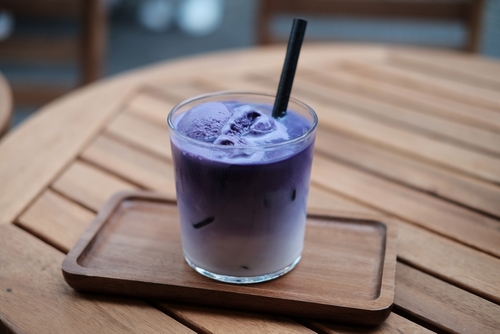
You’re at a café, scanning the menu, and there it is: a glowing purple latte staring back at you. It looks incredible. You want to order it. But you have absolutely no idea how to say it out loud without sounding foolish.
That’s ube—and you’re far from alone in that moment of hesitation.
The vibrant purple ingredient has spread to café menus, grocery store shelves, TikTok feeds, and brunch spots across the country. Grocery stores stock ube spreads and mochi pancake mixes. A popular coffee shop launched an Ube Brûlée iced latte in the US and Europe in May 2025. And the hashtag #UbeEverything has surpassed 500 million views on TikTok. Yet most people still aren’t entirely sure what ube actually is, where it comes from, or how to say it correctly.
This post covers all of that. By the end, you’ll know exactly what ube is, why it matters culturally, how to pronounce it, and where to try the real thing.
First Things First — How Do You Actually Pronounce Ube?
Let’s get this out of the way: ube is pronounced “oo-beh.” Two syllables. Not “yoo-bee.” Not “oob.” Just “oo-beh.”
The word comes directly from Tagalog, the national language of the Philippines, where it simply means “tuber.” Getting the pronunciation right is a small but meaningful way of respecting the culture that has carried this ingredient for generations.
Now that you’ve got that, let’s talk about what it actually is.
So What Is Ube, Exactly?
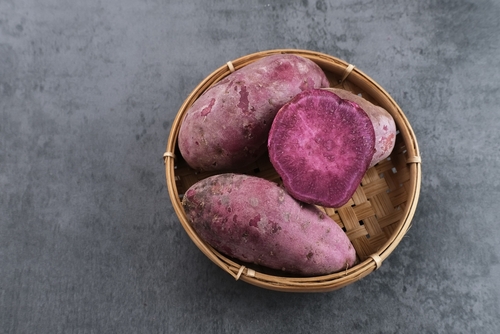
Ube is a purple yam — scientifically known as Dioscorea alata — native to the Philippines and Southeast Asia. It’s not a purple sweet potato. It’s not taro. This distinction confuses a lot of people, and it’s worth clearing up.
Taro has a more neutral, starchy flavor and a different cultural origin. Purple sweet potato is denser and sweeter. Ube has its own distinct profile: subtly sweet, nutty, and mildly earthy, often compared to a cross between vanilla and a hint of pistachio. It’s approachable rather than overpowering, which is a big part of why it works so well in drinks, desserts, and baked goods.
What gives ube its deep violet flesh — not just the skin, but the entire interior — is a class of natural antioxidants called anthocyanins. These are the same pigments found in blueberries and blackberries. No food dye required. That natural vibrancy is a significant part of its appeal for a generation paying close attention to what’s in their food.
Nutritionally, ube is a solid ingredient. It’s a natural source of potassium, vitamin C, prebiotic fibre, and anthocyanins, which may help reduce blood pressure, blood sugar, and inflammation, according to research cited by Perfect Daily Grind.
Ube Has Been a Filipino Staple for Centuries — This Isn’t New
Here’s what often gets lost in the trend coverage: ube is not a discovery. For Filipino families, it has been a beloved and deeply familiar ingredient for as long as anyone can remember.
“Ube is more than just a trendy flavor. It’s a part of us Filipinos growing up in the Philippines,” said Eric Valdez, executive chef and partner at Naks, a Filipino restaurant in New York City, in an interview with The Food Institute. “Seeing it embraced here feels like a piece of home finally being understood and celebrated.”
Traditional Filipino applications of ube include:
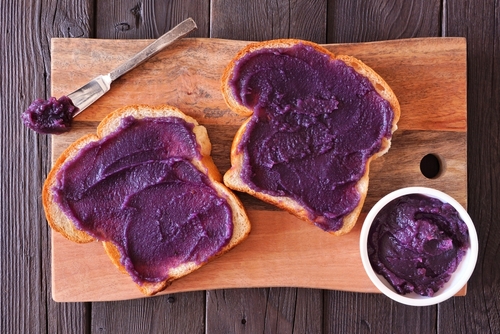
- Ube halaya — a rich, velvety jam made from purple yam, coconut milk, condensed milk, and butter, slow-cooked until thick and deeply violet
- Halo-halo — a layered shaved ice dessert with ube halaya as a signature component
- Puto bumbong — steamed purple rice cakes traditionally served during Christmas celebrations
Ube halaya, in particular, carries meaning that goes beyond taste. It’s served at family gatherings and special occasions as a symbol of togetherness and celebration. For Filipino-Americans watching ube go mainstream, the moment is emotional.
“As a Filipino-American who grew up eating ube as a kid, it’s been incredibly exciting to see the rise of ube in the mainstream. It’s more than just a trend; it’s a powerful connection to our culture, heritage, and storytelling through food,” said Billy Dec, CEO and founder of Sunda New Asian, speaking to The Food Institute.
That context matters — especially because many mass-market ube products use artificial coloring and flavoring rather than real ube. Chef Maricel Gentile, who runs a New Jersey restaurant focused on authentic Filipino cuisine, has been direct about this: if you want to understand what ube actually tastes like, seek out Filipino bakeries, Filipino grocers, or Asian food stores. Don’t judge it by a supermarket product that substitutes food dye for the real thing.
How Ube Went From Filipino Kitchens to Your TikTok Feed
The story of ube’s rise in Western culture is, at its core, a story about social media and a generation that actively seeks out global flavors.
Ube first went viral around 2016 with Manila Social Club’s purple doughnuts in New York City — one of the earliest examples of the ingredient capturing attention through visual appeal alone. It made its way into US cafés by around 2020 and has been building momentum ever since.
The numbers since then are striking. Ube was named Flavour of the Year for 2024 by T. Hasegawa, a major global flavour and fragrance company. Datassential predicted ube would outperform 88% of all other foods, beverages, and ingredients from 2024 through 2027, with its presence on US menus projected to grow 48% in that period. According to Monin’s 2024 research, 67% of consumers said they were likely to purchase an ube-flavoured beverage or dessert.
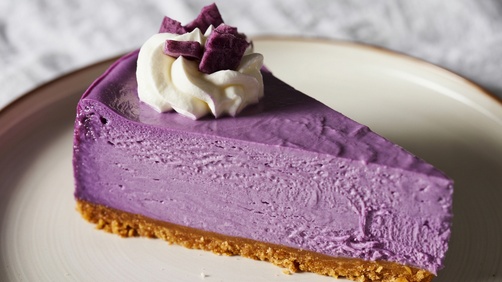
You’ll now find ube in iced lattes, cheesecake, mochi pancakes, cocktails (the Ube Espresso Martini at Sunda New Asian has reportedly gone viral twice), and ready-to-drink canned lattes. Pret A Manger brought it to mainstream café menus in the US and Europe in May 2025.
The comparison to matcha is a useful one. Matcha followed a nearly identical trajectory — niche, then viral, then ubiquitous. Ube is following the same path, and for similar reasons: striking visual appeal, genuine nutritional credentials, and a flavor that feels simultaneously familiar and new.
“Ube stands out visually and feels fresh to those markets,” said Andre Chanco, co-founder of Filipino specialty coffee roaster Yardstick Coffee, in an interview with Perfect Daily Grind. “For café operators, it’s also a smart way to add variety without straying too far from familiar flavour profiles.”
The rise of ube isn’t just a food story. It’s part of a broader shift toward Filipino cuisine receiving the global recognition it has long deserved — driven, in no small part, by Gen Z consumers who are genuinely curious about where their food comes from.
What Does Ube Actually Taste Like — and How Do You Try It?
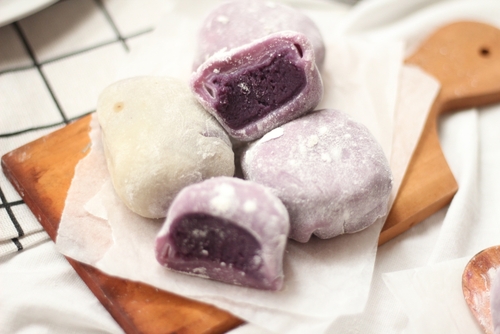
The flavor is worth describing carefully, because it’s not what most people expect. Ube is subtly sweet. It has a nutty warmth and a mild earthiness, with a vanilla-like undertone that makes it feel comforting rather than challenging. It pairs naturally with coconut, cream, and chocolate. It also works in savory applications, though sweet preparations remain the most common.
For first-timers, here are the best ways to try it:
- Ube latte at a specialty café
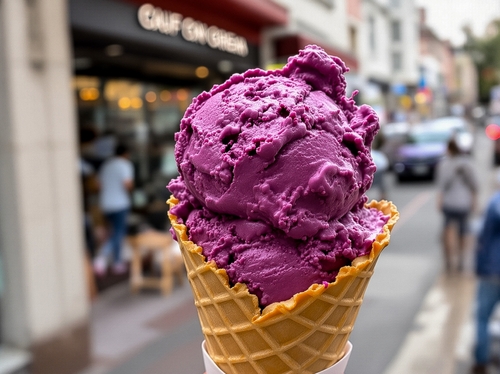
- Ube ice cream — genuinely purple, genuinely delicious
- Ube halaya on toast — simple and surprisingly satisfying
- Ube mochi or ube-filled pastries from a Filipino bakery
That last option is the most important recommendation. If you want to understand what ube actually tastes like — not an artificial approximation of it — visit a Filipino bakery or Asian grocery store. Mass-market products often substitute artificial flavoring for real ube, and the difference is significant. The real thing has a depth and complexity that a food-dyed product simply can’t replicate.
Frequently Asked Questions About Ube
How do you pronounce ube?
“Oo-beh” — two syllables, from the Tagalog word for tuber.
Is ube the same as taro or purple sweet potato?
No. Ube is a distinct species (Dioscorea alata). Taro has a different flavor and origin. Purple sweet potato has a sweeter, denser taste. Ube has its own nutty, vanilla-like profile that sets it apart from both.
Why is ube purple?
Its deep violet color comes from anthocyanins — the same natural antioxidant pigments found in blueberries. No artificial dye needed.
Where can I buy real ube?
Filipino bakeries, Asian grocery stores, or specialty food shops. Many mainstream supermarket products use artificial ube flavoring rather than the real ingredient.
Ube Is a Story Worth Knowing
Ube is not a trend that appeared out of nowhere. It’s a centuries-old ingredient from the Philippines that is finally receiving global attention — and the people who grew up with it have complicated, often deeply personal feelings about watching it go mainstream.
Approaching ube with some awareness of that history makes the whole experience richer. Knowing that the jam in your pastry has been made the same way in Filipino homes for generations, or that the flavor in your latte connects to a culture with its own celebrations and traditions — that’s the difference between eating something because it’s purple and actually appreciating what you’re tasting.
Have you tried ube yet? Drop your favorite ube find in the comments below, or share this with someone who’s been asking about that purple drink on the menu.