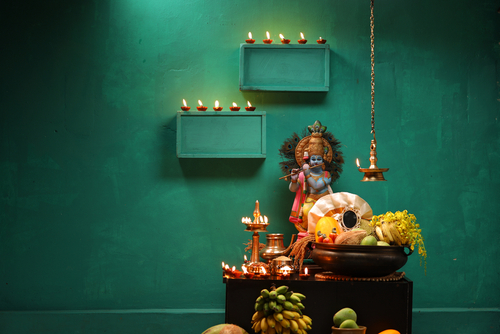

Spring brings a sense of renewal, and for the Malayali diaspora in the United States, it also brings the vibrant festival of Vishu. This traditional New Year celebration marks the first day of the Malayalam month of Medam. It is a time for hope, prosperity, and spending quality time with family.
Celebrating traditional festivals while living abroad can sometimes feel challenging. Finding the right ingredients for a feast or securing the traditional items for your morning rituals requires a bit of planning. However, observing Vishu in the US is a wonderful way to pass down your cultural heritage to the next generation and stay connected to your roots.
Vishu 2026 is an opportunity to gather your loved ones and honor the customs that make this festival so special. Whether you are hosting a large community event or having a quiet celebration at home, a little preparation goes a long way. Let us look at exactly when the festival falls this year and how you can organize a memorable celebration right here in the US.
When is Vishu 2026?
In 2026, Vishu falls on Wednesday, April 15. Because the festival is based on the solar calendar, it almost always lands on April 14 or 15 every year.
Since April 15 is a weekday, many families in the US might choose to perform the core morning rituals on the actual day before heading to work or school. You can then save the larger celebrations, like the traditional feast, for the following weekend. This allows everyone to participate without feeling rushed.
The Significance of the Malayali New Year
Vishu is deeply tied to the agricultural cycle and the spring equinox. It represents equal hours of day and night, symbolizing balance. For families from Kerala, it is considered an auspicious time to start new ventures.
The core belief of Vishu is that your experiences on the first day of the year will influence the months that follow. Looking at beautiful, prosperous things first thing in the morning ensures a year filled with good fortune. This is why the morning rituals are the most important part of the holiday.
Setting Up Your Vishu Kani in the US
The most iconic part of the festival is the Vishu Kani. “Kani” translates to “that which is seen first.” It is a carefully arranged display of auspicious items that family members look at as soon as they wake up. Setting this up in the US might require a trip to a local Indian grocery store, but the effort is highly rewarding.
Finding the Right Items Locally
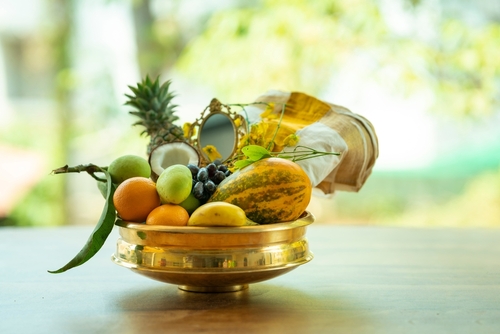
A traditional Vishu Kani includes a specific set of items. You will need raw rice, fresh lemon, golden cucumber, coconut, betel leaves, and areca nuts. You will also want to include a holy text, coins or currency notes, and a mirror (specifically an Aranmula Kannadi, though any clean, elegant mirror works).
Finding the traditional golden cucumber (Kani Vellarikka) can be tricky in some American cities. Many families substitute it with a yellow squash or a standard cucumber from their local supermarket. The traditional yellow Kanikonna flowers (Cassia fistula) might also be unavailable. You can easily replace them with local yellow spring flowers like daffodils or forsythia branches to maintain the vibrant color palette.
Arranging Your Kani
Place your items in a circular brass vessel called an Uruli. If you do not have an Uruli, a clean brass or silver bowl from your kitchen is perfectly fine. Position the mirror so that it reflects the arrangement. You want to place a lit brass lamp (Nilavilakku) next to the display.
Set up the Kani the night before in your prayer room or a quiet corner of your living room. On the morning of Vishu, the oldest member of the household wakes up first, lights the lamp, and then gently guides the other family members to the Kani with their eyes closed. Opening your eyes to this beautiful sight is said to guarantee a year of abundance.
Traditional Customs to Keep Alive
Beyond the morning Kani, several other customs define the Vishu celebration. These practices help reinforce family bonds and teach younger generations the value of generosity and respect.
Vishukkaineettam: Sharing Prosperity
One of the most beloved traditions, especially for children, is Vishukkaineettam. This is the practice of elders giving money to younger family members. It symbolizes the sharing of wealth and the blessing of prosperity.
In the US, you can use crisp new dollar bills or even silver coins. The act of handing the money with both hands while offering a blessing remains the same. It is a straightforward yet powerful way to show care and wish success upon your loved ones.
The Vishu Sadya: A Festive Feast
No Malayali festival is complete without a Sadya. This is a grand vegetarian feast served on a fresh banana leaf. A traditional Vishu Sadya features dishes like rice, sambar, avial, thoran, and olan. It also includes special seasonal dishes like Vishu Kanji (a nourishing rice porridge) and Vishu Katta (a sweet rice cake).
Sourcing banana leaves is easier than ever in the US. Most Asian and Hispanic grocery stores carry frozen banana leaves all year round. Simply thaw them, wash them carefully, and cut them to size. Cooking a full Sadya takes time, so consider dividing the cooking tasks among family members or inviting friends over for a potluck-style feast.
Connecting with Your Local Community
Celebrating away from your home country can sometimes feel isolating. However, there are thriving Malayali communities across the United States. Local cultural associations often organize large Vishu events featuring traditional music, dance performances, and catered Sadyas.
Attending these events is a great way to stay connected to your culture. It also provides a wonderful environment for children to see their heritage celebrated on a larger scale. Look for local Indian community centers or regional cultural groups on social media to find events happening near you in April 2026.
Frequently Asked Questions About Vishu
What is the exact date of Vishu in 2026?
Vishu will be celebrated on Wednesday, April 15, 2026.
Can I use local flowers for the Vishu Kani?
Yes. If you cannot find the traditional Kanikonna flowers in the US, local yellow flowers like daffodils, sunflowers, or forsythia are excellent substitutes. The focus should be on the bright yellow color, which symbolizes prosperity.
What goes into a standard Vishu Kani?
A standard Kani includes raw rice, a fresh lemon, a yellow cucumber, coconut halves, betel leaves, a mirror, a holy book, coins or paper money, and bright yellow flowers. These are arranged in a brass vessel and illuminated by a traditional oil lamp.
How do people greet each other on Vishu?
The traditional greeting is “Vishu Ashamsakal,” which simply means “Happy Vishu.” You can say this to your friends, family, and community members to wish them a prosperous New Year.
Do I need to wear new clothes for the festival?
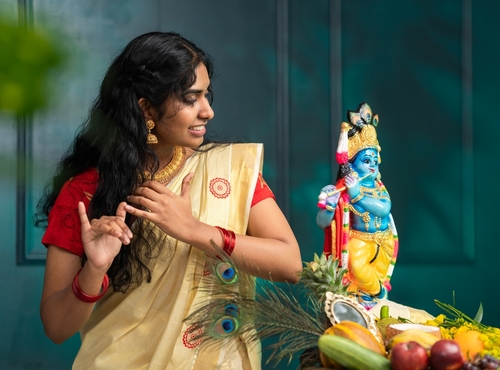
Wearing new clothes is a popular tradition known as Vishukodi. It represents a fresh start for the New Year. Many people wear traditional Kerala attire, such as a Kasavu sari or a mundu, but any new, clean outfit is perfectly acceptable.
Welcoming Prosperity in the New Year
Vishu is a beautiful reminder of hope, balance, and the importance of family. By setting up your Vishu Kani, sharing Vishukkaineettam, and enjoying a hearty Sadya, you can create lasting memories with your loved ones. The United States offers plenty of resources to help you observe these traditions authentically. Plan ahead, embrace the spirit of the holiday, and look forward to a bright and successful year ahead.