
Over 30 million Americans claim Irish ancestry. That’s more than six times the entire population of Ireland. From the cobblestone streets of South Boston to the copper mining towns of Montana, Irish immigration didn’t just shape individual communities — it carved entire regions of the United States into something distinctly, unmistakably Irish.
But what does it actually mean to be “the most Irish” state in America? Is it about raw population numbers? Cultural institutions? The density of Irish surnames on a voter roll? The answer is more layered than a simple ranked list can capture.
This article draws on US Census Bureau American Community Survey data — which tracks the percentage of residents who self-identify Irish ancestry — alongside Irish-American cultural history, to give you a data-backed ranking with the context that explains why each state made the list. By the end, you’ll know not just where Irish-American heritage runs deepest, but why it settled there in the first place, and what it looks like today.
How We Define “Most Irish” — And Why It Matters
The US Census Bureau’s American Community Survey asks Americans to self-identify their ancestry. The results give us one of the most reliable pictures available of where Irish-American identity is concentrated across the country.
That said, “most Irish” isn’t a single-dimensional measure. Some states rank high in the percentage of residents claiming Irish ancestry. Others — like New York — rank high in sheer numbers. And then there are states like Montana, where a single city carries a cultural weight that punches far above its population size.
Cultural markers matter too: the presence of Gaelic Athletic Association (GAA) clubs, Catholic parishes, Irish language programs, St. Patrick’s Day traditions, and place names all tell a story that census figures alone can’t fully convey.
It’s also worth noting the historical divide between states shaped by the Famine-era immigration wave of the 1840s and 1850s — when desperate, often destitute migrants arrived in enormous numbers at northeastern ports — and states that absorbed later waves of 20th-century Irish migration, which tended to be more economically motivated and geographically spread out. That distinction matters when you look at which states feel Irish, not just which ones count Irish.
The Most Irish States in the US (Ranked by % of Population)
1. Massachusetts
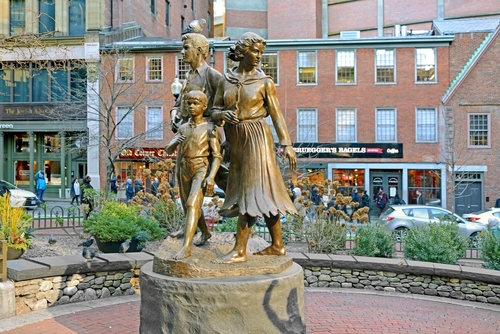
No state is more synonymous with Irish-American identity than Massachusetts. According to Census ancestry data, roughly 22–23% of Massachusetts residents claim Irish ancestry — one of the highest concentrations in the nation.
The reason traces back to the 1840s and 1850s, when Boston became one of the primary landing points for Famine-era Irish immigrants fleeing starvation and British colonial rule. They arrived with little, and they stayed. South Boston — “Southie” — became one of the most famous Irish-American neighborhoods in the world. Worcester, Springfield, and Lowell developed their own dense Irish communities tied to industrial and mill work.
The cultural imprint is everywhere: the Boston St. Patrick’s Day Parade (one of the oldest in the country), an unbroken line of Irish-Catholic political dynasties (the Kennedys being the most prominent), active GAA clubs, and parishes that remain anchors of community life. If you want to understand Irish America, Massachusetts is where you start.
2. New Hampshire
This one surprises people. New Hampshire frequently rivals — and sometimes edges out — Massachusetts in the percentage of residents claiming Irish ancestry, despite being far less famous for its Irish identity.
The explanation lies partly in geography. New Hampshire sits just north of Boston, and many Irish-American families from Massachusetts migrated north over generations, following mill work and lower costs of living. Irish communities took root in cities like Manchester and Nashua, anchored by Catholic parish culture and Irish surnames that remain prevalent across the state today.
New Hampshire’s Irish identity is quieter than Boston’s — less theatrical, more embedded. But the numbers don’t lie.
3. Connecticut
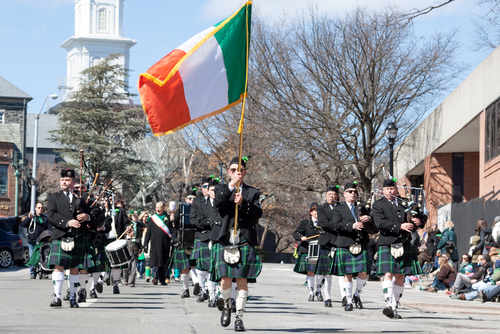
Connecticut’s industrial past is the key to its Irish identity. In the 19th century, Irish immigrants flooded into manufacturing and industrial centers like Bridgeport, Hartford, and New Haven, drawn by factory work and canal construction. They built tight-knit Catholic communities that shaped local politics for generations.
Connecticut consistently ranks among the top states for Irish ancestry by percentage, and its Irish-American political tradition — particularly within the Democratic Party — remains a defining feature of the state’s civic culture.
4. Rhode Island
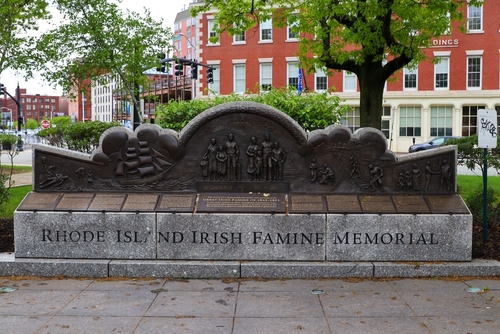
Rhode Island’s textile mills were a magnet for Irish Catholic immigrants throughout the 19th century. Providence became a hub of Irish-American life, with a strong parish culture and Irish community organizations that persist today.
Like its New England neighbors, Rhode Island carries its Irish identity in its institutions as much as its demographics — in its churches, its political networks, and its St. Patrick’s Day celebrations.
5. New Jersey
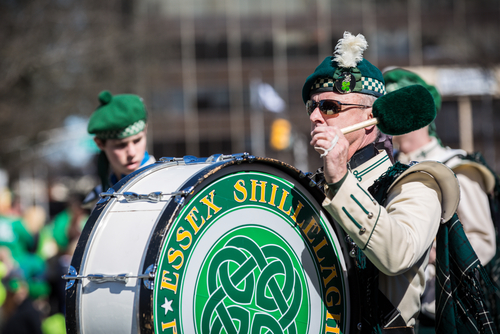
New Jersey’s Irish-American population reflects the state’s proximity to New York Harbor, through which millions of Irish immigrants entered the United States. Communities took root across the state — in Jersey City, Morristown, and the dense commuter belt that stretches toward New York City.
The state’s Irish identity is perhaps more diffuse than Massachusetts or Connecticut, spread across suburbs rather than concentrated in a single iconic city. But the numbers remain consistently high, and Irish-American civic life — particularly through Catholic institutions and local politics — runs deep.
6. New York
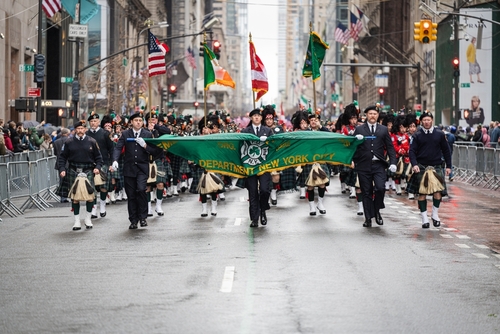
By percentage, New York ranks somewhat lower than the New England states. By every other measure, it stands alone.
New York City has the largest Irish-American population of any city in absolute terms, and its role in Irish immigrant history is without parallel. Ellis Island processed millions of new arrivals. The Five Points neighborhood in lower Manhattan was the first major Irish enclave in America. Hell’s Kitchen on the West Side followed. Today, Woodlawn in the Bronx and Rockaway in Queens remain distinctly Irish-American communities, home to both long-established families and newer arrivals from Ireland.
The New York City St. Patrick’s Day Parade — held annually on Fifth Avenue — is the largest in the world, drawing millions of spectators. For sheer cultural weight and historical significance, New York is irreplaceable.
7. Pennsylvania
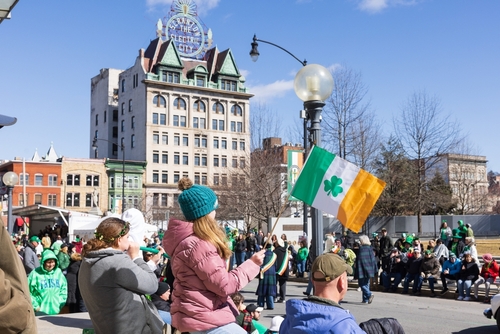
Pennsylvania’s Irish story is a tale of two very different landscapes. In the east, Philadelphia developed a substantial Irish-American community tied to port labor, the Catholic Church, and Democratic Party politics. In the west, Pittsburgh has its own Irish roots.
But it’s the anthracite coal region — Scranton, Wilkes-Barre, Pottsville — that gives Pennsylvania its most distinctive Irish-American chapter. Irish immigrants dominated the coal mining workforce in the mid-to-late 19th century, and it was here that the Molly Maguires, a secret society of Irish miners, fought brutal battles for labor rights. That history of working-class Irish resistance is woven into Pennsylvania’s identity.
8. Montana, Wyoming, and Idaho — The Western Dark Horses
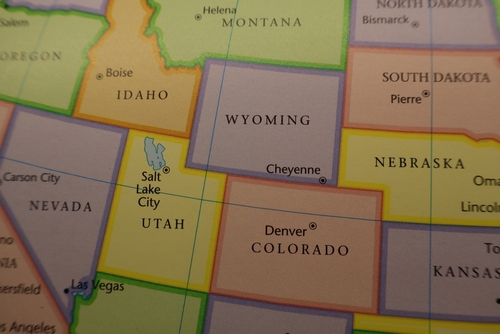
The Mountain West doesn’t typically come to mind when people think of Irish America. It should.
Several Mountain West states rank surprisingly high in percentage of Irish ancestry — and one city, in particular, stands apart from every other place in the country.
Butte, Montana deserves its own mention. In the late 19th and early 20th centuries, Butte’s copper mining boom drew tens of thousands of Irish immigrants — predominantly from counties Clare, Cork, and Kerry — to work the mines. At its peak, Butte had a higher concentration of Irish immigrants than virtually any other city outside New York. Irish neighborhoods, Irish pubs, Irish newspapers, and Irish political organizations made Butte feel, in many ways, like an extension of Ireland itself.
The St. Patrick’s Day celebration in Butte remains one of the most authentically Irish-American in the country, drawing visitors from across the nation. It’s a living reminder that Irish America didn’t stop at the eastern seaboard.
The Most Irish Cities in America
Beyond state-level data, a handful of cities stand out for the depth and visibility of their Irish-American identity:
- Boston, MA — The spiritual capital of Irish America. Southie, the annual parade, the political dynasties, the GAA clubs. No city wears its Irish identity more openly.
- Butte, MT — Historically the most concentrated Irish city in the US outside New York. Still celebrates St. Patrick’s Day with a passion that most cities can’t match.
- New York City, NY — Unmatched in scale. The Bronx and Queens carry the living tradition, while lower Manhattan holds the historical memory.
- Chicago, IL — An honorable mention with an enormous Irish-American community and one of the most famous St. Patrick’s Day traditions in the world: dyeing the Chicago River green.
- Philadelphia, PA — A deep Irish-Catholic identity rooted in labor history, parish culture, and generations of Irish-American political life.
Why Did the Irish Settle Where They Did?
The geography of Irish settlement in the United States wasn’t random. It followed patterns driven by desperation, opportunity, and community.
The Great Famine of 1845–1852 was the primary engine of mass Irish immigration to America. Over a million people died, and at least another million emigrated — most of them boarding ships bound for northeastern ports. Boston, New York, Philadelphia, and Baltimore were the arrival points, and many immigrants settled near where they landed, simply because they had neither the money nor the energy to go further.
Chain migration did the rest. Once an Irish family established itself in a particular neighborhood or city, they wrote home. Cousins, siblings, and neighbors followed. Communities grew along those invisible threads, and neighborhoods like South Boston and Hell’s Kitchen became self-sustaining Irish worlds within American cities.
Labor drove the next wave of dispersal. Irish workers built the Erie Canal, laid the transcontinental railroad, and descended into the coal mines of Pennsylvania and the copper mines of Montana. They went where the work was, and they brought their culture with them.
The Catholic Church served as a community anchor wherever Irish immigrants settled. Parishes became social hubs, schools, and political organizing spaces — which is why the geography of Irish-American settlement still maps almost perfectly onto US Catholic diocese strongholds today.
How Irish-American Culture Has Shaped These States
The Irish-American contribution to the United States is difficult to overstate.
In politics, Irish Americans built some of the most powerful political machines in American history. Tammany Hall in New York and the Boston Democratic dynasties transformed how urban politics worked. Irish-American politicians rose to positions of national influence — most visibly in the Kennedy family, but across hundreds of city halls and state legislatures throughout the Northeast.
In religion, Irish immigrants and their descendants shaped the American Catholic Church, building the dioceses, schools, hospitals, and universities that define Catholic institutional life in the US today. Georgetown, Boston College, and Notre Dame are all products of this heritage.
In labor, Irish-American workers and organizers were central to the early American union movement. From the Molly Maguires in Pennsylvania’s coal fields to the rise of organized labor in New York’s garment and construction industries, Irish immigrants fought for the rights that American workers still benefit from today.
In law enforcement, Irish Americans became so associated with urban police forces — particularly in Boston, New York, and Chicago — that “Irish cop” became a cultural archetype, for better and worse.
In literature and the arts, figures like Eugene O’Neill and F. Scott Fitzgerald brought Irish-American experience into the mainstream of American culture. Their work explored themes of ambition, identity, and belonging that resonated far beyond the Irish community.
What makes Irish-American identity so durable — more so, arguably, than many other immigrant groups of the same era — is the combination of concentrated settlement, institutional support through the Church, and a political culture that rewarded group solidarity. Irish Americans didn’t just assimilate; they transformed the institutions they entered.
Practical Takeaways
If you’re tracing Irish ancestry, Massachusetts, New York, and Pennsylvania are the most likely states where your family’s American story began. The concentration of Famine-era immigrants in these states makes their records — church baptisms, census rolls, naturalization papers — among the richest in the country. The US Census Bureau’s ancestry data is publicly searchable, so you can look up the Irish-ancestry percentage for your own county or state directly.
For heritage travel, Boston and Butte, Montana offer the most distinctly Irish-American experiences. Boston for its scale, history, and living culture. Butte for something rarer: a small city that preserved its Irish identity with a fierceness that bigger cities often lose over time.
And if you’re planning a trip around St. Patrick’s Day: the biggest celebrations (New York, Chicago) are spectacular. But the most authentically Irish-American ones are often not the largest. Butte’s celebration, Scranton’s parade, and the South Boston St. Patrick’s Day parade offer something closer to the real cultural heartbeat of Irish America.
Frequently Asked Questions (FAQs)
What is the most Irish state in the US?
Massachusetts is widely considered the most Irish state by culture and historical identity — home to South Boston, the Kennedy political dynasty, and one of the oldest St. Patrick’s Day parades in the country. However, New Hampshire often ranks first or second in percentage of population claiming Irish ancestry, according to US Census data, which surprises most people.
How many Irish Americans are there in the US?
Over 30 million Americans self-identify Irish ancestry, according to US Census Bureau American Community Survey data. That makes Irish Americans one of the largest ancestry groups in the United States — and a population more than six times the size of Ireland itself.
What US city has the most Irish Americans?
New York City has the largest Irish-American population in absolute terms, with significant communities in the Bronx (Woodlawn) and Queens (Rockaway). Historically, Butte, Montana holds a strong claim to the highest concentration of Irish immigrants outside New York — a legacy of the copper mining boom that drew thousands of Irish workers in the late 19th and early 20th centuries.
Why did so many Irish people immigrate to the northeastern US?
The northeastern US was the primary destination for Irish immigrants because the major port cities — Boston, New York, Philadelphia, and Baltimore — were the first landing points for ships crossing the Atlantic. Most Famine-era Irish immigrants arrived with very little money, which meant they settled near where they landed rather than moving inland. Over time, chain migration reinforced these communities: earlier arrivals wrote home, and family members followed the same routes to the same neighborhoods.
Is Irish-American culture different from Irish culture in Ireland?
Yes — significantly, in many ways. Irish-American identity evolved in a different context, shaped by the experience of immigration, discrimination, and assimilation into American society. The version of Irishness that developed in Boston or New York — rooted in Catholicism, Democratic Party politics, labor organizing, and neighborhood solidarity — is distinctly American in character. Many aspects of Irish-American culture, from particular musical traditions to the scale of St. Patrick’s Day celebrations, are more prominent in the US than in Ireland itself. Irish people visiting Irish-American communities often find something familiar but also something quite foreign.
Irish America Is Still Very Much Alive
Irish ancestry is woven into the fabric of American life — especially across the Northeast, and in a few surprising pockets of the Mountain West. The states on this list aren’t just statistically Irish. They carry living, breathing Irish-American culture in their parishes, their politics, their pubs, and their parades.
Understanding where Irish America concentrated — and why — is the first step toward understanding one of the most formative immigration stories in US history. Whether you’re researching your own family tree, planning a heritage trip, or simply curious about how immigration shaped the country, the trail leads through Massachusetts, New York, Pennsylvania, and a copper-mining city in Montana that most people have never visited but absolutely should.