
Folk costumes are not relics of the past. They are living archives—woven, embroidered, and worn records of who a people are, where they came from, and what they value. When a Norwegian woman puts on her bunad on Constitution Day, or a Guatemalan weaver wears a huipil that identifies her village at a glance, clothing becomes a form of communication that no words can fully replace.
But the phrase “national folk costume” requires some care. Most countries don’t have one single traditional dress. They have dozens—sometimes hundreds—rooted in regional, ethnic, and historical identities that vary dramatically from one community to the next. A sari worn in Tamil Nadu looks nothing like one from West Bengal. Spain’s flamenco dress belongs to Andalusia, not the entire country. Understanding this complexity is part of understanding the costumes themselves.
This article explores traditional dress across six continents, examining not just what people wear, but why—and what those choices reveal about history, climate, ceremony, and survival. You’ll come away with a deeper appreciation of textile traditions, a clearer sense of the social meanings embedded in fabric and color, and a better understanding of why these garments continue to matter today.
Europe: Regional Identity and Historic Craftsmanship
Norway – Bunad
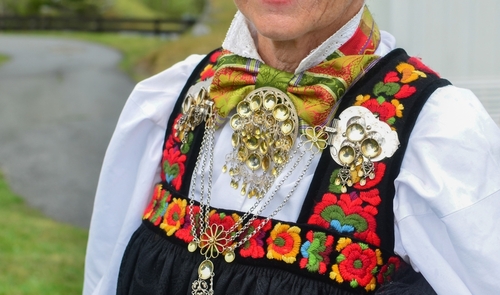
Few garments in the world are as precisely personal as the Norwegian bunad. With over 200 regional variations, no two are identical—each one tied to a specific district, embroidered by hand, and accessorized with silver sølje jewelry that carries its own regional symbolism.
The bunad is worn on May 17th, Norway’s Constitution Day, as well as at weddings, baptisms, and confirmations. It’s not just formal dress—it’s a statement of origin. For many Norwegians, acquiring a bunad is a significant life event, often involving years of saving and careful research into family and regional heritage.
Scotland – Highland Dress

The Scottish kilt has traveled far from its origins. What began as a practical garment for the Highlands—the féileadh mòr, or great kilt, which served as both clothing and bedroll—evolved over centuries into ceremonial attire worn at weddings, military parades, and Highland games across the world.
Tartan patterns became formally associated with specific clans in the 19th century, partly driven by romantic nationalism and the influence of Sir Walter Scott. Today, Highland dress—kilt, sporran, sgian-dubh, and Balmoral bonnet—is worn by diaspora communities from Nova Scotia to New Zealand, carrying a sense of Scottish identity across generations and oceans.
Spain – Flamenco Dress (Andalusia)
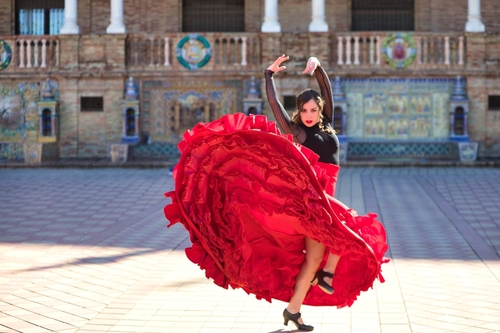
The traje de flamenca, with its bold ruffles and vibrant colors, is often mistaken for a national Spanish costume. It is, more accurately, a regional one—rooted in Andalusia and inseparable from Seville’s Feria de Abril. Its origins reflect a convergence of Romani, Moorish, and local Andalusian influences, and its designs continue to evolve each season, treated almost like haute couture within Seville’s dress culture.
Asia: Textile Mastery and Symbolic Meaning
Japan – Kimono
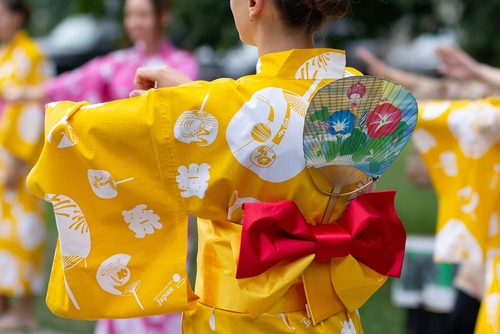
The kimono is one of the most technically demanding garments ever developed. Constructed from a single bolt of fabric without cutting, its patterns shift with the seasons—cherry blossoms in spring, chrysanthemums in autumn—and its formality is communicated through the number of crests, the length of the sleeve, and the choice of obi knot.
In recent decades, kimono rental shops have multiplied across Japanese cities, making the garment accessible to tourists and younger generations who might not own one. Simultaneously, kitsuke (the art of wearing kimono) has seen a revival, with classes and communities dedicated to preserving the practice.
India – Sari and Regional Variations
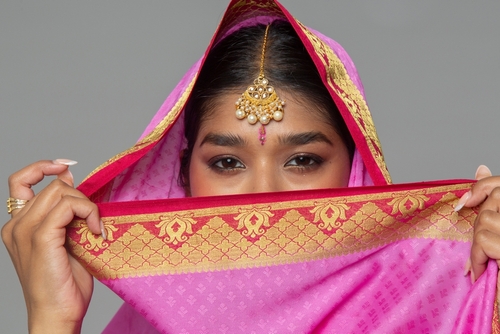
Six to nine yards of unstitched fabric. No buttons, no zippers. Yet the sari offers hundreds of distinct draping styles that vary by region, occasion, religion, and caste. A Nivi drape from Andhra Pradesh, a Bengali style with pleats at the back, a Maharashtrian style pinned between the legs—each communicates something about where the wearer is from and who she is.
The weaving traditions behind saris are equally varied. Banarasi silk saris from Varanasi are woven with gold and silver brocade, taking weeks to complete. Kanjeevaram saris from Tamil Nadu are known for their heavy silk and contrasting borders. These are not just garments—they are the output of centuries of specialized craft.
South Korea – Hanbok
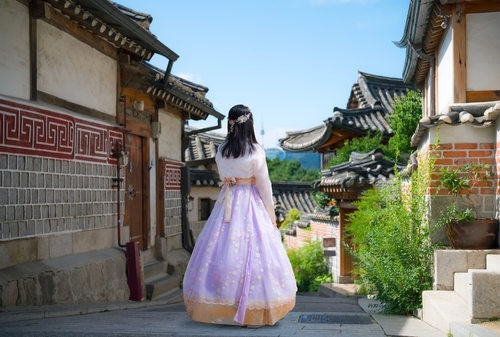
The hanbok’s silhouette—flowing skirt, short jacket, curved collar—has remained largely unchanged for over a thousand years. Its colors were historically governed by Confucian social codes: white for mourning, red and blue for weddings, bright colors for children. Embroidery motifs such as lotus flowers, phoenixes, and peonies carried specific wishes for the wearer.
Contemporary Korean designers have reinterpreted the hanbok for modern life, creating everyday versions in lighter fabrics while preserving the essential aesthetic. It remains worn at Chuseok, Seollal, weddings, and birthday celebrations.
Africa: Identity, Community, and Ceremony
Nigeria – Yoruba Aso Oke
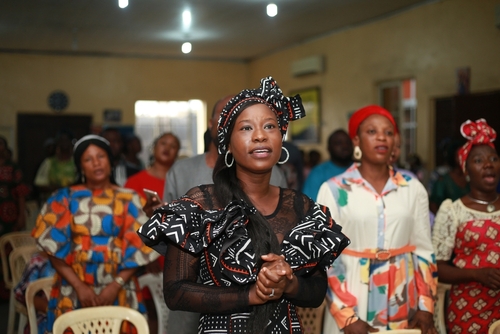
Aso oke is a handwoven fabric produced by Yoruba weavers in southwestern Nigeria. Worn primarily at weddings and important festivals, it signals status and celebration. The fabric comes in three traditional varieties—ìpèlé, ẹ̀tù, and sanyan—and is fashioned into wrappers, blouses, and the iconic gele headwrap, which is an art form in itself, tied into elaborate sculptural shapes for formal occasions.
Morocco – Caftan
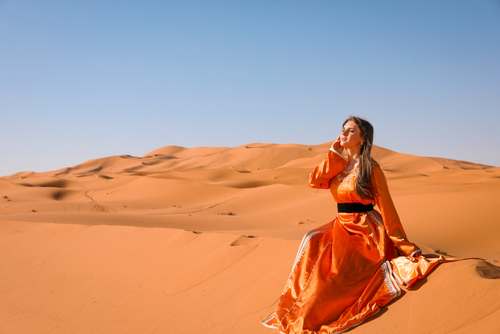
The Moroccan caftan draws from centuries of Ottoman and Andalusian influence, filtered through distinctly North African craft traditions. Worn at weddings and celebrations, formal caftans are distinguished by their sfifa (silk ribbon trimming), handmade buttons, and intricate embroidery. The level of embellishment communicates the formality of the occasion, and in Morocco, a bridal caftan can take months to produce.
Maasai – Shúkà and Beadwork
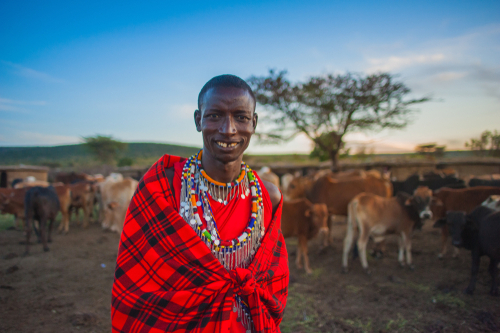
The Maasai people of Kenya and Tanzania are recognized worldwide for their shúkà cloth—typically a red-checked fabric worn draped over the body—and their elaborate beadwork, in which color carries specific meaning. Blue represents the sky and water; red, warrior strength and blood; white, purity; green, land and sustenance. Beaded jewelry communicates age, marital status, and social rank, making it a wearable biographical record.
The Americas: Indigenous Heritage and Cultural Survival
Mexico – China Poblana
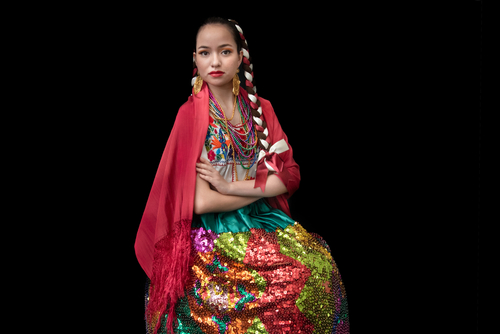
The china poblana ensemble—embroidered blouse, sequined skirt, and rebozo shawl—is often cited as Mexico’s national dress, though its origins are distinctly regional and its history is complex. It emerged in Puebla during the colonial era, blending indigenous, Spanish, and possibly Asian textile influences. Today it remains a symbol of Mexican national identity, worn during Independence Day celebrations and folkloric performances.
Guatemala – Huipil
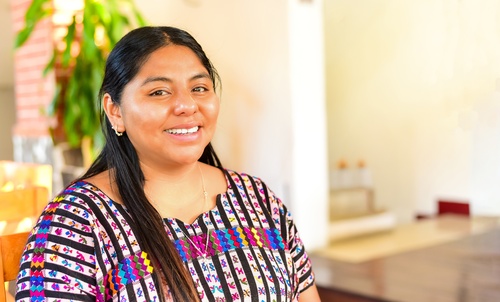
Among Guatemala’s indigenous Maya communities, the huipil (a handwoven blouse) is not merely traditional dress—it is a map. The patterns, colors, and symbols woven into each garment identify the wearer’s village of origin, and in some communities, her social and marital status. This visual language has survived centuries of colonization and is now recognized as an element of intangible cultural heritage.
Peru – Andean Dress
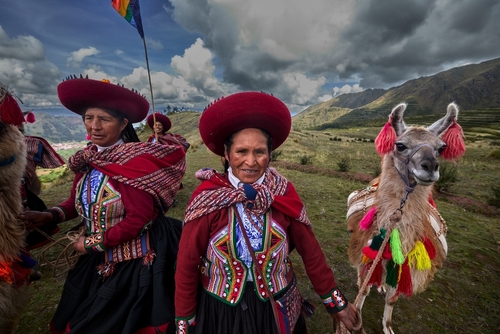
Andean dress reflects both indigenous ingenuity and colonial history in equal measure. Alpaca wool, exceptionally warm and durable at high altitudes, has been the foundation of Andean textiles for thousands of years. The bowler hat, now strongly associated with Quechua and Aymara women, was actually introduced by British railway workers in the early 20th century and adopted into local dress culture—a striking example of how traditional identity absorbs and transforms outside influence over time.
Middle East & Central Asia: Nomadic and Imperial Influences
Saudi Arabia – Thobe and Abaya
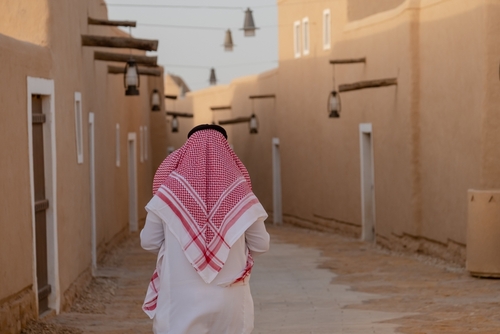
The thobe, a long white robe worn by men across much of the Arabian Peninsula, is an elegant response to climate—loose-fitting, light-colored, and covering to protect against heat and sun. Regional variations in collar style and embroidery distinguish wearers by origin. The women’s abaya, once uniformly black, has expanded in recent decades to include embroidered and colored versions, with ongoing conversations in Saudi society about the garment’s meaning and future.
Kazakhstan – Chapan
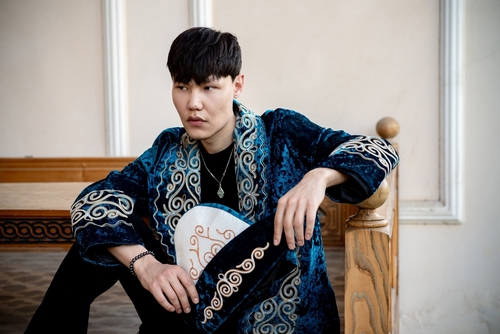
The chapan is a long embroidered coat worn across Central Asia, associated with Kazakh nomadic culture. Made from silk or velvet and decorated with detailed stitching, it is worn at Nauryz (the spring new year festival), weddings, and formal ceremonies. Gifting a chapan to a respected guest remains a meaningful tradition in Kazakh hospitality.
Oceania: Ceremonial and Environmental Expression
Samoa – Puletasi
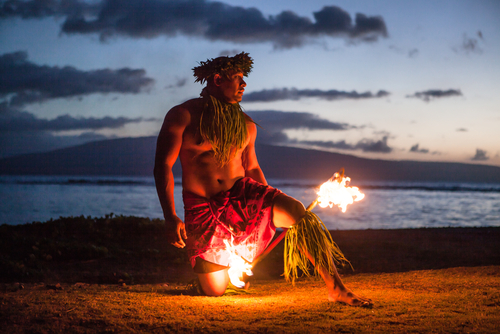
The puletasi—a matching tunic and skirt—emerged from the blend of Samoan textile traditions with colonial-era tailoring. It is worn to church, formal events, and family celebrations, and holds significant social weight in Samoan communities both on the islands and in diaspora populations across New Zealand, Australia, and the United States.
Papua New Guinea – Sing-Sing Attire
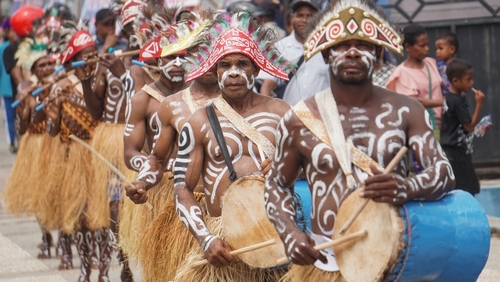
Papua New Guinea hosts over 800 distinct languages and an equivalent diversity of ceremonial dress. At sing-sing cultural festivals, communities wear elaborate headdresses made from bird-of-paradise feathers, face and body paint designed according to ancestral tradition, and woven garments specific to each group. These gatherings are a deliberate act of cultural preservation, providing a context for passing down visual and artistic knowledge between generations.
Themes Across Cultures
Looking across these traditions, several patterns emerge that go beyond aesthetics.
Climate shapes form. The loose linen of North African dress, the layered wool of Andean communities, the open weave of tropical island fabrics—each reflects a rational response to environment. Traditional garments were functional before they were ceremonial.
Colonialism left permanent marks. Peruvian bowler hats, Mexico’s china poblana, the influence of Portuguese tailoring on West African dress—colonial contact disrupted indigenous textile traditions while simultaneously generating new hybrid forms. The story is rarely one of simple preservation or simple erasure.
Clothing carries social data. Across cultures, garments communicate rank, marital status, regional origin, religious affiliation, and life stage. This is not decorative—it is informational, sometimes to a degree of precision that outsiders cannot read but insiders understand immediately.
Revival is political. Many traditional dress forms experienced decline during periods of assimilation pressure or urbanization, and their contemporary resurgence is often a conscious act of cultural resistance. The hanbok revival in South Korea, the growth of bunad ownership in Norway, and the international visibility of Guatemalan huipil weaving are all, in part, statements of identity and continuity.
Are Folk Costumes Still Worn Today?
The answer is yes—and more widely than many people assume.
National holidays provide the most visible context: Constitution Day in Norway, Independence Day in Mexico, Chuseok in South Korea. But traditional dress also persists in the quiet rhythms of everyday life: at weddings, naming ceremonies, funerals, and coming-of-age celebrations where putting on a particular garment connects an individual to something larger than themselves.
Diaspora communities often maintain these traditions with particular intensity, using dress as an anchor to cultural identity across generations and borders. A Samoan family in Auckland wearing puletasi at church, or a Nigerian family in London dressing in aso oke for a wedding, is making a statement about belonging that transcends geography.
Contemporary fashion designers are also drawing from traditional dress in ways that go beyond surface-level borrowing. Korean designers like Lie Sang Bong have incorporated hanbok aesthetics into international collections. Moroccan caftans appear regularly in global fashion media. The conversation between traditional and modern is ongoing—and generative.
Cultural Sensitivity and Ethical Considerations
Traditional dress is not a costume in the Halloween sense, and the distinction matters.
Cultural appropriation becomes a concern when garments with specific sacred, ceremonial, or communal meaning are worn without context, understanding, or permission—particularly when the communities those garments belong to have faced historical marginalization. A huipil worn as a festival fashion statement by someone unfamiliar with its meaning is a different act from wearing one with knowledge of and respect for its cultural weight.
Appreciation, by contrast, involves learning, engagement, and—where possible—economic support for the communities who produce these garments. Buying directly from Guatemalan weavers, Moroccan embroiderers, or Yoruba aso oke producers rather than from mass-produced imitations is a concrete way to support living traditions.
It’s also worth resisting the temptation to flatten. Calling something “the national costume of India” obscures a subcontinent of extraordinary regional diversity. Accuracy and humility go a long way.
Frequently Asked Questions (FAQs)
What is the difference between a folk costume and a national costume?
A folk costume is rooted in a specific regional, ethnic, or community tradition. A “national costume” is often a simplified or politically constructed concept—one garment chosen to represent an entire country, which rarely captures the true diversity of dress traditions within that nation.
Are traditional folk costumes still made by hand?
Many are, and handcraft is often central to their cultural value. Norwegian bunad embroidery, Guatemalan backstrap weaving, Moroccan caftan embroidery, and Japanese kimono dyeing are all specialized skills passed through apprenticeship and family tradition. However, mass-produced versions exist for most, and quality varies significantly.
How do I learn more about a specific country’s traditional dress?
Museum ethnographic collections, academic textile journals, and cultural organizations run by the communities themselves tend to be the most reliable sources. Travel, when done thoughtfully, offers direct engagement with living traditions.
Is it respectful to wear traditional clothing from another culture?
Context matters greatly. Wearing a garment at a cultural event where hosts invite participation is different from wearing it as costume. When in doubt, ask someone from the community, learn the garment’s significance, and buy from authentic sources rather than replicas.
Why are some traditional garments only worn on special occasions?
As urbanization and global fashion expanded, traditional dress often shifted from everyday wear to ceremonial use. This is not necessarily decline—it can also reflect the garment taking on greater symbolic weight, reserved for moments that call for a connection to heritage and community.
Clothing as a Living Record
Traditional dress survives because people choose to wear it—not because institutions preserve it in glass cases. Every time a family passes down knowledge of how to tie a gele, embroider a bunad, or weave a huipil pattern, they are transmitting something that cannot be captured in a photograph.
These garments are not frozen in time. They adapt, absorb new influences, and acquire new meanings across generations. That is exactly what makes them worth paying attention to. The next time you see traditional dress—in a photograph, at a festival, or on a street—look a little longer. There is more information there than first meets the eye.