
The Counting of the Omer is a traditional 49-day period in the Jewish calendar. This time bridges the holidays of Passover and Shavuot. It is generally a solemn season of reflection and semi-mourning. However, one specific day breaks this pattern with bright fires, joyful music, and community gatherings.
That day is Lag BaOmer. This festive holiday offers a joyful pause in the middle of a reflective season. It brings communities together to celebrate spiritual light, resilience, and unity.
If you are looking to understand this unique holiday, you are in the right place. This guide explains the meaning of Lag BaOmer, its historical roots, and the traditional customs associated with the day. You will also find practical ways to observe the holiday safely and meaningfully in 2026.
When Is Lag BaOmer 2026?
In 2026, Lag BaOmer begins on the evening of Monday, May 4, and ends at nightfall on Tuesday, May 5.
The holiday always falls on the 18th day of the Hebrew month of Iyar. In the Jewish calendar, days begin at sunset rather than at midnight. This is why Lag BaOmer celebrations, including the traditional bonfires, start on Monday evening.
What Does “Lag BaOmer” Mean?
The name “Lag BaOmer” directly translates to the 33rd day of the Omer count.
In Hebrew, letters also serve as numbers. The word “Lag” is made of two Hebrew letters: Lamed (ל), which represents 30, and Gimel (ג), which represents 3. Together, they form 33. This specific day marks a turning point in the Omer period, lifting the traditional mourning customs and allowing for joy and celebration.
The History and Spiritual Significance
The significance of Lag BaOmer stems from two major historical events in Jewish tradition. Both stories highlight themes of resilience, spiritual revelation, and light.
Rabbi Shimon bar Yochai
Rabbi Shimon bar Yochai was a prominent sage and mystic in ancient Israel. Tradition holds that he is the author of the Zohar, the foundational text of Jewish mysticism (Kabbalah).
Lag BaOmer marks the anniversary of his passing, known as a hilula. Before he died, he instructed his students to mark the day with joy rather than sadness. The day celebrates the immense spiritual light he brought into the world through his teachings.
The Plague of Rabbi Akiva’s Students
The Talmud records that a severe plague struck the students of the great Rabbi Akiva during the Omer period. Thousands of students died because they did not treat each other with adequate respect.
According to tradition, the plague miraculously stopped on the 33rd day of the Omer. This historical account is the primary reason why the mourning customs of the Omer period are suspended on Lag BaOmer.
Themes of the Day
Lag BaOmer emphasizes themes of light, unity, and spiritual revelation. The holiday encourages people to respect one another and to celebrate the persistence of Jewish spiritual wisdom.
Lag BaOmer Traditions Explained
Communities around the world observe Lag BaOmer with vibrant and distinct customs.
Bonfires
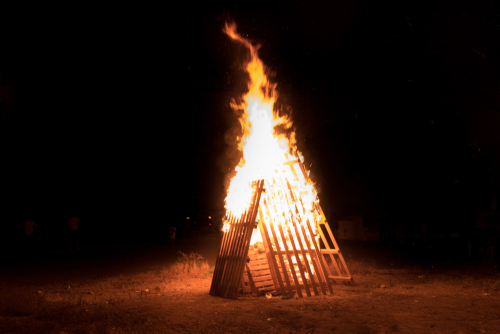
Bonfires are the most recognizable symbol of Lag BaOmer. The fire represents the spiritual light that Rabbi Shimon bar Yochai introduced to the world. Communities gather around large fires to sing, dance, and celebrate together.
Pilgrimages to Meron (Israel)
Hundreds of thousands of people travel to the town of Meron in northern Israel. This is the burial site of Rabbi Shimon bar Yochai. The pilgrimage includes massive bonfires, continuous singing, dancing, and prayer throughout the night and day.
Haircuts and Weddings
During the first 32 days of the Omer, observant Jews do not cut their hair or hold weddings due to the mourning period. On Lag BaOmer, these restrictions are lifted. It is a highly popular day for weddings. Many families also observe the Upsherin, a traditional first haircut for three-year-old boys.
Children’s Customs
Children often play outdoors with bows and arrows on Lag BaOmer. The rainbow is a symbol of divine protection. Tradition says that no rainbow was seen during the lifetime of Rabbi Shimon bar Yochai because his own merit protected the world. Playing with bows and arrows honors this legacy.
How to Celebrate Lag BaOmer Today
You can observe Lag BaOmer in many inclusive and practical ways, even if you do not attend a massive public bonfire.
At Home
You can celebrate comfortably at home with friends and family. Light a small, safe fire in a backyard fire pit, or simply light a memorial candle to honor Rabbi Shimon bar Yochai. Share stories about the history of the day and host a festive meal.
In the Community
Check your local synagogue or Jewish community center for events. Many organizations host outdoor picnics, barbecues, and communal bonfires. These events are excellent opportunities to connect with your neighbors and experience the joy of the holiday.
Reflective Practices
Take time to study Jewish texts. Reading passages from the Zohar or learning about respect and community building can be a deeply meaningful way to observe the day. Focus your energy on acts of kindness and fostering unity within your social circles.
Safety Tips for Bonfires and Gatherings
Safety is the highest priority when celebrating with fire. If you are hosting or attending a bonfire, follow these essential guidelines:
- Always follow local fire regulations and obtain necessary permits.
- Keep a hose, buckets of water, or a fire extinguisher immediately available.
- Supervise children closely and keep them at a safe distance from the flames.
- Ensure the fire is completely extinguished before leaving the area.
- Be mindful of the environmental impact and avoid burning plastics or toxic materials.
Common Questions About Lag BaOmer
Is it a religious holiday or cultural observance?
Lag BaOmer is primarily a religious and spiritual holiday rooted in rabbinic tradition. However, it also features strong cultural components, such as community barbecues and outdoor activities that appeal to a wide variety of people.
Can you work on Lag BaOmer?
Yes. Lag BaOmer is not a Yom Tov (major biblical festival like Passover or Sukkot). Therefore, there are no religious restrictions on working, driving, or using electricity.
Do all Jewish communities celebrate the same way?
No. While bonfires and the lifting of mourning customs are nearly universal, specific traditions vary. Sephardic and Ashkenazi communities may have different liturgical practices, and Israeli celebrations often look different from those in the diaspora.
How is it observed differently in Israel vs. the diaspora?
In Israel, Lag BaOmer is a massive public event. Schools are often closed, and the pilgrimage to Meron draws immense crowds. In the diaspora, celebrations are typically smaller and centered around local synagogues or community centers.
Lag BaOmer in Modern Life
Contemporary communities continue to adapt Lag BaOmer for modern life. There is a growing focus on environmental awareness, with many groups organizing eco-friendly celebrations or substituting massive bonfires with smaller, sustainable gatherings.
The holiday balances ancient mystical traditions with modern safety standards. Its core message of showing respect to others resonates strongly today, giving the holiday growing global recognition.
A Day of Light and Connection
Lag BaOmer is a beautiful interruption of a solemn season. It reminds us of the power of spiritual light, the importance of community unity, and the resilience of tradition.
You can participate in a way that feels meaningful to you, from attending a local bonfire to studying ancient texts at home. As Lag BaOmer 2026 approaches, consider what light you can bring into your own community to honor the spirit of the day.