

If you live on the U.S. West Coast, work with Canadian partners, or cross the border regularly, British Columbia’s push to end clock changes is worth paying attention to. The province passed legislation to adopt permanent daylight saving time years ago—but the change still hasn’t happened. Here’s why, and what it could mean for Americans on both sides of the border.
Before going further, here’s the key definition: “Permanent Pacific Time” means staying on daylight saving time (PDT, UTC-7) all year, instead of switching back to standard time (PST, UTC-8) every fall.
So, is British Columbia permanently on Pacific Time? No—not yet. British Columbia passed legislation to adopt permanent daylight saving time, but the change has not taken effect. Implementation depends on U.S. West Coast states—particularly Washington, Oregon, and California—making the same move first.
What Does “Permanent Pacific Time” Actually Mean?
PST vs. PDT Explained Simply
The term “Pacific Time” gets thrown around casually, but there are technically two distinct versions:
- PST (Pacific Standard Time) = UTC-8. This is the time observed in winter, after clocks “fall back.”
- PDT (Pacific Daylight Time) = UTC-7. This is the time observed in summer, after clocks “spring forward.”
- Permanent PDT = staying on UTC-7 all year, with no clock change in November.
Why the Terminology Is Confusing
Most people refer to the entire West Coast time zone as simply “Pacific Time,” regardless of the season. Technically, that’s not accurate. The informal use of “Pacific Time” blurs the PST/PDT distinction, which is why conversations about “permanent Pacific Time” can be confusing. When B.C. officials and advocates say they want permanent Pacific Time, they specifically mean permanent PDT—no more falling back in the fall.

Why British Columbia Wants Permanent Daylight Saving Time
1. Public Opinion in B.C.
The push didn’t come from politicians alone. The provincial government conducted public consultations and found strong majority support among British Columbians for eliminating the biannual clock change. The inconvenience of adjusting clocks twice a year, disrupted sleep, and general frustration with the tradition all factored into public sentiment.
2. Economic Alignment with the U.S. West Coast
B.C.’s economy is deeply tied to its southern neighbors. Washington, Oregon, and California are major trading partners. Cross-border commuters travel daily between cities like Vancouver and Bellingham. Tech and finance sectors operate across the border in real time.
A permanent time difference—even just one hour—during winter months would create unnecessary friction. Meeting scheduling, logistics coordination, and financial market timing would all be affected. Staying in sync with California, Washington, and Oregon isn’t just a preference; it’s an economic priority.
3. Health and Lifestyle Arguments
Research has consistently linked the biannual clock shift to short-term spikes in sleep disruption, and reduced productivity. Longer evening daylight also has mental health benefits, particularly in the Pacific Northwest where winter months can be gray and overcast. Advocates for the change point to reduced seasonal depression risks and more usable daylight hours after work as quality-of-life gains.
That said, sleep medicine experts often push back on this framing. Many in the medical community actually prefer permanent standard time (PST), arguing that morning light is more important for circadian rhythm alignment than extended evening light. The American Academy of Sleep Medicine has taken this position. It’s an important nuance in the broader debate.
4. Political Momentum in North America
B.C.’s move didn’t happen in isolation. By 2019, multiple U.S. states had introduced or passed legislation to adopt permanent daylight saving time, contingent on federal approval. The U.S. Senate unanimously passed the Sunshine Protection Act in 2022, which would have made DST permanent nationwide—but the bill stalled in the House and has not become law.
B.C. watched this momentum carefully. The province’s strategy was to move in regional lockstep with the U.S. West Coast rather than go it alone.
Why It Hasn’t Happened Yet
The U.S. Dependency Factor
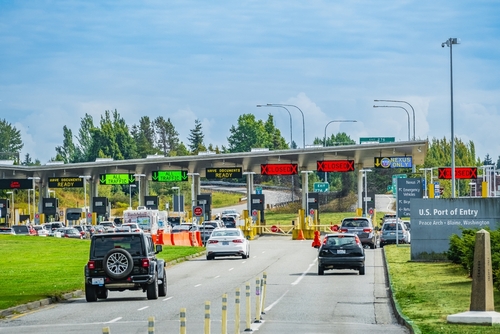
Here’s the core issue: British Columbia cannot realistically move alone without disrupting cross-border business and travel.
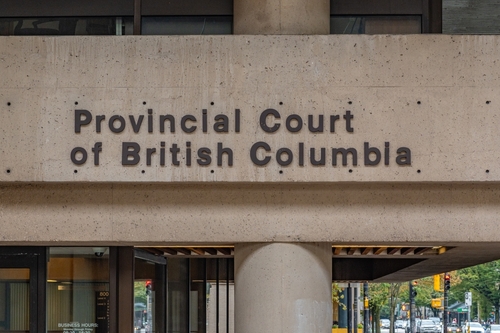
Provincial legislation—the Time Amendment Act, 2019—passed and gave the government the authority to implement the change. But B.C. explicitly tied that implementation to action by U.S. West Coast states. And those states, in turn, are waiting on the U.S. federal government.
Under current U.S. law, states can observe permanent standard time (as Arizona does), but they cannot unilaterally adopt permanent daylight saving time. That requires an act of Congress. Without federal movement, California, Washington, and Oregon remain stuck—and so does B.C.
What Happens If the U.S. Doesn’t Change?
If B.C. were to implement the change independently, it would be one hour ahead of Washington State every winter. The practical consequences:
- Cross-border commuters would face confusing scheduling mismatches
- Trade and logistics coordination would become more complicated
- Vancouver-Seattle business relationships would need constant time zone management
It’s a scenario the province has consistently said it wants to avoid.

What This Means for Americans
If You Live in Washington, Oregon, or California
For most of the year, nothing would change. B.C. and the U.S. West Coast currently share PDT in summer. The divergence only happens in winter when both sides “fall back” to standard time.
If B.C. moved to permanent PDT while U.S. states didn’t, there would be a one-hour difference from November through March. Border commuters working in Vancouver from Blaine or Bellingham would feel this most acutely. Remote workers collaborating across the border would need to account for the shift in their scheduling.
For U.S. Businesses Working With Canada
Financial markets open and close on fixed schedules. Supply chains run on precise timing. A one-hour winter difference between Vancouver and Seattle—two cities separated by about 140 miles—would add unnecessary complexity to already tight logistics networks. Tech companies with offices on both sides of the border would also face calendar and communication friction during winter months.
For Travelers
Flight schedules are built around time zones. A winter time difference between Vancouver International Airport and Seattle-Tacoma International Airport would affect connection windows and layover planning. Travelers booking winter trips to B.C. would need to double-check local times rather than assuming alignment with the U.S. Pacific coast.
How British Columbia Made the Decision
The Legislation
The Time Amendment Act, 2019 gave the B.C. government the legal authority to end the practice of changing clocks twice a year. The bill passed in the provincial legislature with cross-party support—a reflection of how broadly popular the idea was among both politicians and the public.
Government Consultation Process
Before passing the legislation, the provincial government ran a public engagement process. Results showed that the majority of respondents wanted to eliminate clock changes and preferred staying on permanent daylight saving time over permanent standard time. Premier at the time, John Horgan, cited the strong public mandate when announcing the government’s intention to move forward—conditionally.
Timeline Overview
- 2019: Time Amendment Act passed
- 2019–present: Awaiting action from U.S. West Coast states and federal legislation
- 2022: U.S. Senate passed the Sunshine Protection Act (stalled in the House)
- Current status: No implementation date set
Pros and Cons of Permanent Daylight Saving Time
Pros:
- No disruptive clock changes twice a year
- Longer evening daylight, particularly valued in fall
- Economic alignment benefits with U.S. trading partners
- Possible reduced short-term health effects associated with clock transitions
Cons:
- Darker winter mornings, which can affect school children’s safety waiting for buses
- Sleep medicine experts often argue that morning light is better for human biology, favoring permanent standard time instead
- If implemented without U.S. alignment, creates a winter time gap with Washington State
The medical debate is worth taking seriously. The American Academy of Sleep Medicine has published position statements recommending permanent standard time, not permanent daylight saving time, citing alignment with natural sunrise cycles. British Columbia’s preference for PDT is driven more by lifestyle and economic logic than by sleep science consensus.
How This Fits Into the Bigger North American Time Debate
B.C. is not alone in its frustration. Arizona and Hawaii don’t observe daylight saving time at all—they stay on standard time year-round. Several U.S. states have passed legislation to adopt permanent DST pending congressional approval. The Sunshine Protection Act’s unanimous passage in the Senate in 2022 showed real political appetite for change at the federal level, yet House action never followed.
The stall in Congress reflects genuine disagreement. Some lawmakers prefer permanent standard time. Others worry about the economic and health trade-offs of permanent DST. Regional interests vary—morning light matters more in the northern states during winter, while sunbelt states have different daylight dynamics entirely.
Until Congress acts, the status quo holds. And with it, B.C.’s legislation sits on the shelf, ready but waiting.
Frequently Asked Questions
Is British Columbia currently on permanent DST?
No. The legislation has passed, but it has not taken effect. B.C. still observes the standard clock change twice per year.
Will British Columbia stay aligned with Washington State?
Only if Washington and other U.S. West Coast states move to permanent DST. B.C. has made clear it prefers regional coordination over acting unilaterally.
What is the difference between Pacific Time and Pacific Standard Time?
“Pacific Time” is an informal term used year-round. Technically, it splits into PST (UTC-8, used in winter) and PDT (UTC-7, used in summer). Permanent Pacific Time refers specifically to staying on PDT all year.
When could the change happen?
There is no set date. Implementation requires U.S. federal legislation allowing states to permanently adopt DST. Until Congress acts, the change is unlikely.
Would B.C. ever move to permanent Pacific Time on its own?
Provincial officials have consistently indicated a preference for regional alignment. Moving independently would create a one-hour winter difference with Washington State—a scenario B.C. wants to avoid.
Does this affect the whole of Canada?
No. Time zone decisions are made at the provincial level in Canada. Other provinces operate independently on this issue. Saskatchewan, for example, already observes permanent standard time.
Key Takeaways
Here’s what matters most:
- B.C. passed legislation to adopt permanent PDT (UTC-7) in 2019
- The law has not taken effect—implementation is conditional on U.S. West Coast action
- U.S. states need federal approval to adopt permanent DST, which Congress has not yet granted
- Cross-border economic ties make regional coordination essential, not optional
- The medical debate favors permanent standard time, not permanent DST
- This is part of a larger North American conversation that remains unresolved
The bigger picture here is about economic alignment, not just daylight preferences. B.C.’s decision is fundamentally tied to its relationship with the U.S. West Coast. The clock change debate is alive on both sides of the border—and the next move belongs to the U.S. Congress.