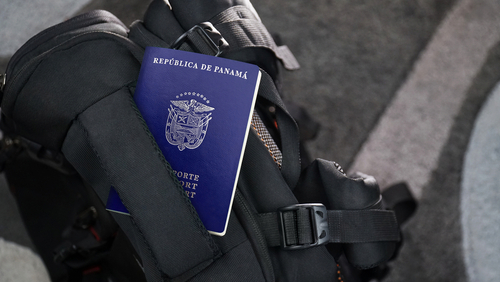

Thinking about retiring somewhere sunnier and more affordable? You’re not alone. Beautiful Panama is emerging as a top destination for US retirees thanks to its warm climate, affordable cost of living, and accessible Panama Retirement Visa. The visa has a simple application process, as well as significant incentives and rewards.
At Remitly, we want to support you as you make big moves, whether you’re starting a new job abroad or planning your golden years. Below we cover everything you need to know about retiring in Panama, including eligibility criteria, how to apply, application costs, and benefits linked to the visa.
What is the Panama Pensionado Visa?
The Panama Pensionado Visa, also known as the Panama Retirement Visa, is a residency permit that allows you to retire in Panama for life, so long as you have a lifetime pension or annuity of at least $1,000 USD per month. The visa lets you start your next chapter in a new country, and can be a pathway to citizenship. The only residency requirement is that you spend at least one day in Panama each calendar year.
The visa was launched in 1987 to attract foreign retirees to spend their pension in Panama, giving a boost to the local economy. Panama also offers a variety of incentives to choose it as a retirement destination, such as discounts on doctors’ bills and hotel bookings.
The visa reportedly has a 97% approval rate, and almost 2,000 were granted in 2024.
Key benefits of the Panama Retirement Visa
If you qualify for the Panama Retirement Visa, you can legally live in Panama, with its ideal climate and stunning natural beauty, with a Panamanian ID card (Cédula) and all its associated rights. The main restriction is that you can’t work in Panama.
The local cuisine might be enough to tempt you to move to Panama, but the visa also comes with many additional benefits, offered by the Panamanian government to attract foreign retirees.
These are some of the most significant savings they offer:
- No import tax on the household goods you bring to Panama
- No import tax for a new car, up to once every two years
- 25% discount on utility bills
- 25% discount on airline tickets
- 30% discount on other types of transportation
- 15% discount on loans made in your name
- 1% discount on the mortgage for your personal residence
- 20% discount on doctor’s bills
- 15% discount on hospital services when insurance does not apply
- 15% discount on dental and eye exams
- 10% discount on medicines
- 20% discount on bills for professional and technical services
- 50% discount on entrance to movie theatres and cultural and sporting events
- 50% discount on hotels from Monday to Thursday
- 30% discount on hotels from Friday to Sunday
- Potential pathway to citizenship after five years of continuous residency
Panama already enjoys a lower cost of living than the US, and these additional benefits help make it even more affordable for retirees. We’ve also put together a practical guide to retiring abroad to help you calculate your cost of living.
Am I eligible for the Panama Retirement Visa?
As long as you’re over the age of 18, there’s no minimum age requirement for the Panama Retirement Visa. The main eligibility criterion is that you have a lifetime monthly pension or annuity of at least $1,000 USD per month, which can be from a government or private pension. Your pension won’t be taxed in Panama.
If you choose to purchase a property in Panama worth at least $100,000 USD, your monthly income requirement drops to $750 USD.
You can bring dependents with you, including your spouse and dependent children under the age of 25, which increases the minimum income requirement by $250 USD per person.
If you meet the financial requirements, you’ll also need to show that you’re in good health, with a health certificate issued by a Panamanian doctor, and prove that you’re considered a person of good character, with police certificates from every country you’ve lived in for the last five years.
How to apply: a step-by-step guide
Now you know that you qualify, you’re one step closer to a sunny retirement. This is when the application process starts.
The application requires traveling to Panama and commissioning a Panamanian Lawyer—this might sound daunting, but in practice it should be fairly straightforward. It’s a good idea to understand how the whole process works, so you can be prepared and know exactly what you need to do in advance.
Step 1: Hire a Panamanian lawyer
Your visa application must be submitted by a lawyer in Panama, so it’s a good idea to do your research and find one with experience in visa applications and fluency in your language. This way they’ll be familiar with the process, and you can avoid any potential issues.
Step 2: Gather required documents
While you’ll need relatively few documents to complete your application, they need to be fully certified by the issuing body. A Consulate or Embassy of Panama will also need to make authenticated copies, so make sure you allow time for this to happen. In the US, the cost of authenticating documents is $30 USD per document.
Required documents include:
- Your birth certificate
- Marriage and birth certificates, if applicable, to demonstrate your relationship with dependents
- Proof of retirement income
- Police certificates for countries you’ve lived in over the last five years
Step 3: Travel to Panama
You’ll need to travel to Panama to get the rest of your documentation, meet with your lawyers, and submit your application. If you’re a US passport holder, you can travel to Panama visa-free with a valid passport and round-trip ticket. You should allow time to be in Panama for at least five business days.
When you arrive in Panama, visit the Immigration Office in Panama City to collect a Registration Form in person and register your passport.
While you’re in Panama, you’ll need to visit a local doctor for a health checkup so they can confirm you’re in good health. Your lawyer should be able to help with this process.
You’ll also need to work with your lawyer to craft a sworn statement about your personal background to accompany your application.
Step 4: Submit the application
Once these steps are complete, you can submit your application. Your lawyer will organize this with the Immigration Office, but you’ll need to be present to sign the documents when the application is submitted. This is when you’ll be asked to pay the $250 USD application fee per person, and a $800 USD migration and repatriation deposit.
Once you’ve submitted your application, it is estimated to take 30 to 60 business days to be processed.
Step 5: Receive your temporary and permanent residency cards
When your visa is approved, you’ll receive a multiple-entry temporary residency card valid for a year. This lets you travel back to Panama, and once there, you can apply for your permanent residency card by making an appointment with the Electoral Tribunal in Panama City. The cost is $100 USD, and your card usually takes 7 to 15 days to arrive.
Your path to a peaceful retirement in Panama
There are many reasons why you might be looking to retire abroad, principal among them being a more laidback lifestyle and a more affordable cost of living. Panama offers both of these in spades, plus their Pensionado Visa is affordable for anyone with a stable pension. It’s also relatively easy to apply for.
Panama has also gone out of its way to open its doors and make itself attractive to pensioners with significant discounts and benefits. So, if you’re thinking of retiring overseas, consider putting Panama on your list.
Prepare yourself for the big move with our ultimate guide to moving to Panama.
FAQs
Can I work in Panama with the Pensionado visa?
No, the Panama Pensionado Visa does not include the right to work in Panama. If you want a job, you’ll need to apply for a separate work permit. However, you can work for yourself or work remotely for a foreign company while on the visa.
How long does the application process take?
Once you’ve found a Panama lawyer to assist with your application, you can expect the process to take between four and six months, including at least one trip to Panama.
Do I have to live in Panama to keep my residency?
You don’t have to live in Panama full-time to maintain your residency, but you must spend at least one day each calendar year in the country. If you’re out of Panama for more than 24 months, your visa will expire.
Can I apply for Panamanian citizenship?
Yes, after five years of permanent residency in Panama on the Pensionado program, you can apply for citizenship. You’ll need to complete certain tests as part of the application process, such as a Spanish test and a history test. And yes, Panama recognizes dual citizenship.