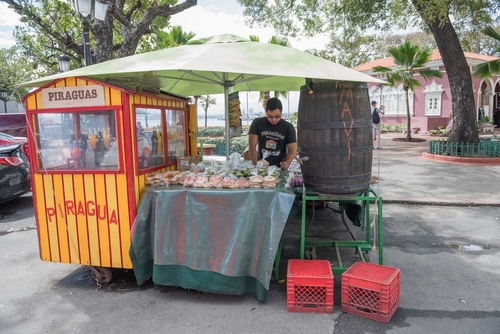

On a hot afternoon in Puerto Rico, you don’t just feel the heat—you hear the remedy. It’s the rhythmic swish-swish of a metal scraper against a block of ice, followed by the clinking of bottles. This sound signals the presence of a piragüero, and for many Puerto Ricans, it is the sound of pure, simple joy.
Piragua is more than just a cold dessert. It is a cultural institution, a memory shared across generations, and a symbol of resilience and community. While it might look like a simple cone of ice and syrup to an outsider, to those who grew up on the island, it represents afternoons in the town plaza, the rush of leaving school, and a refreshing pause in daily life.
In this guide, we’ll explore the history, craft, and enduring significance of this beloved Puerto Rican treat.
What Is Piragua?
At its simplest, piragua is a Puerto Rican frozen treat made from hand-shaved ice, shaped into a cone, and covered in fruit-flavored syrup.
The word itself is a combination of two Spanish words: pirámide (pyramid) and agua (water), describing the icy pyramid shape that defines the dessert.
Unlike machine-crushed ice found in other desserts, piragua relies on a manual process. The ice is scraped from a solid block using a handheld metal tool, creating a texture that is distinct—neither as fluffy as Hawaiian shave ice nor as crunchy as a standard snow cone. It strikes a balance that holds the syrup perfectly while offering a satisfying crunch.
The Origins of Piragua in Puerto Rico
The history of piragua is tied deeply to the Caribbean climate and the resourcefulness of its people.
Caribbean and Colonial Influences
The tradition of flavored ice travels back to Spanish colonial times, where ice was a luxury imported from colder climates. As technology advanced and ice became more accessible, the concept of mixing ice with local tropical fruit syrups took root across the Caribbean. In Puerto Rico, this evolved into a specific street food tradition adapted to the island’s relentless tropical heat.
A Treat for the People
Piragua solidified its place in Puerto Rican culture as a working-class refreshment. It was affordable, requiring only ice and syrup, and portable. Vendors could set up their carts in town plazas, public parks, and near beaches—anywhere people gathered to escape the sun. Because it was inexpensive, it became the go-to treat for children, making it a fixture of Puerto Rican childhood.
The Piragüero: Keeper of the Tradition
You cannot talk about piragua without talking about the piragüero. The vendor is as important as the product itself.
The piragüero is often a fixture in the neighborhood. They push colorful wooden carts, often painted in bright yellow, red, or orange, with an umbrella to shield the ice from the sun. These carts are mobile landmarks.
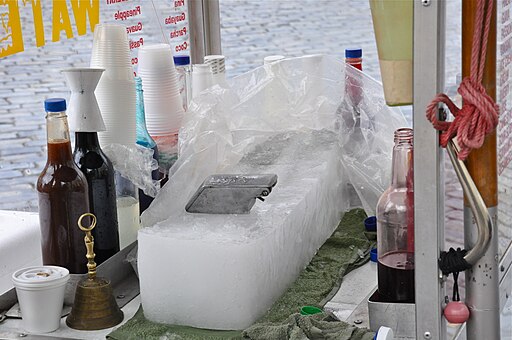
The process of making a piragua is a performance. The piragüero opens the cart to reveal a solid block of ice. Using a metal shaver (sometimes called a cepillo), they scrape the ice with a rhythmic motion that requires strength and practice. They then pack the shavings into a cup, shape the top into a point, and pour the syrup with a flourish.
This interaction builds community. A piragüero knows the regulars, knows which kids like extra syrup, and serves as a friendly face in the daily life of the barrio.

How Traditional Piragua Is Made
The beauty of piragua lies in its simplicity. There are only three components, but each matters.
1. The Ice
Everything starts with a solid block of ice. The piragüero manually scrapes this block to create shavings. The texture is crucial—if it’s too fine, it melts instantly; if it’s too coarse, it’s unpleasant to eat. The manual shaving creates a texture that is icy yet manageable.
2. The Syrups
The syrups provide the flavor and the vibrant color. While modern options exist, traditional flavors remain the favorites:
- Crema: A creamy, vanilla-based flavor.
- Tamarindo: Sweet and tangy tamarind.
- Coco: Coconut.
- Frambuesa: Raspberry.
- Parcha: Passion fruit.
- Limón: Lime.
- Melón: Watermelon.
These syrups are often homemade or locally sourced, providing a bold, authentic fruit taste that distinguishes piragua from chemically flavored alternatives.
3. The Presentation
Once the ice is shaved and packed, the piragüero shapes it into a peak. The syrup is poured generously over the top, soaking into the ice and pooling at the bottom of the cup. It is traditionally eaten directly from the cup, sometimes with a straw to drink the melted syrup at the end.
Piragua and Puerto Rican Childhood
For many Puerto Ricans, piragua is synonymous with nostalgia. It brings back memories of running out of school with a few coins in hand, or begging parents for a treat during a Sunday walk in the plaza.
The sensory experience—the sticky hands, the cold ice against the tropical heat, and the bright stain of cherry or tamarind on the tongue—creates a lasting emotional anchor. It represents a simpler time and a shared joy that connects generations. Grandparents buy piraguas for their grandchildren, passing down not just a treat, but a ritual.
Piragua vs. Other Shaved Ice Desserts
It is easy to confuse piragua with other frozen treats, but there are distinct differences.
- Snow Cones: typically use crushed ice produced by a machine. The ice pellets are larger and crunchier, and the syrup often sits at the bottom rather than soaking through.
- Hawaiian Shave Ice: uses a machine to shave ice very finely, creating a snow-like consistency that absorbs syrup completely.
- Raspados: A similar Latin American treat, but variations in toppings (like condensed milk or fresh fruit) and texture vary by country (Mexico, Colombia, etc.).
Piragua remains distinct because of the hand-shaving technique and the specific profile of Puerto Rican tropical fruit syrups. It prioritizes cultural context and tradition over endless customization.
Piragua in Today’s Puerto Rico and the Diaspora
Despite the arrival of modern ice cream shops and fast-food chains, the piragüero remains. You can still find them in Old San Juan, near the fortress of El Morro, and in town squares across the island.
The tradition has also traveled. In cities with large Puerto Rican populations, like New York (specifically El Barrio in East Harlem) and Orlando, piragüeros set up shop during the summer. For the diaspora, spotting a piragua cart is a powerful connection to home.
However, the tradition faces challenges. It is physically demanding work, and younger generations are less likely to take up the trade. Yet, the cultural pride associated with piragua keeps the tradition alive. It appears in musicals (like In the Heights), art, and festivals, ensuring its visibility remains high.
Respecting Piragua as Cultural Heritage
When buying a piragua, you are supporting a local micro-economy. Piragüeros are independent entrepreneurs who work hard to maintain a cultural legacy.
It is important to view piragua not just as a “content opportunity” for social media, but as a piece of living heritage. Respecting the vendor, understanding the history, and enjoying the treat for what it is—simple, sweet, and local—is the best way to honor the tradition.
Why Piragua Matters
In a world that is increasingly automated and fast-paced, piragua stands for the opposite. It is slow food. It is handmade. It requires human interaction.
It honors the informal economy of street vendors who have sustained Puerto Rican neighborhoods for decades. It preserves a specific culinary practice that connects people to the land (through tropical flavors) and to each other.
A Taste of Puerto Rico
Piragua is a reminder that the best things in life are often the simplest. It is a cup of ice, a splash of syrup, and a moment of cool relief on a hot day. But within that cup lies the spirit of a people—resourceful, joyful, and deeply connected to their roots.
If you visit Puerto Rico, or if you spot a colorful cart in a Puerto Rican neighborhood abroad, do not hesitate. Step up to the cart, order a tamarindo or crema, and taste a true piece of the culture.
FAQ: Piragua (Puerto Rican Shaved Ice)
What is piragua made of?
Piragua is made from hand-shaved ice topped with flavored syrup. It is traditionally served in a paper or plastic cup with a cone-shaped peak of ice.
How is piragua different from a snow cone?
Piragua is hand-shaved from a solid block of ice using a metal tool, whereas snow cones usually use machine-crushed ice pellets. The texture of piragua is distinct—flakier than a snow cone but crunchier than Hawaiian shave ice.
Who sells piragua?
Piragua is sold by piragüeros, traditional street vendors who push colorful wooden carts. They are often well-known figures in their local communities.
What are the most popular piragua flavors?
Traditional flavors include Tamarindo (tamarind), Crema (cream/vanilla), Coco (coconut), Parcha (passion fruit), Frambuesa (raspberry), and Melón (watermelon).
Is piragua still popular today?
Yes. While it faces competition from modern desserts, piragua remains a beloved staple of Puerto Rican street life, festivals, and cultural celebrations.
Can non-Puerto Ricans enjoy or make piragua?
Absolutely. Everyone is welcome to enjoy piragua. It is a great way to support local vendors and experience Puerto Rican culture authentically.