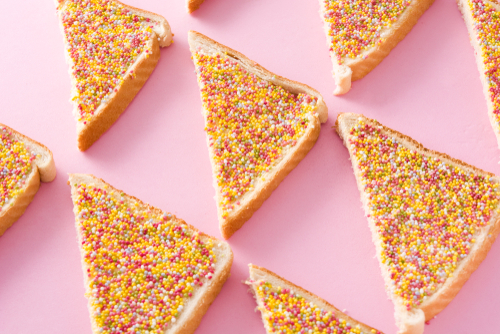

There are foods that take years of technique to master, and then there’s fairy bread — white bread, butter, and a generous coating of rainbow sprinkles, cut into triangles and served with absolutely zero apology. It has three ingredients, requires no cooking, and has been making children (and nostalgic adults) unreasonably happy for nearly a century.
If you’ve been seeing fairy bread pop up on your social media feed lately and wondering what all the fuss is about, you’re in good company. This cheerful little snack has been quietly crossing borders, charming food lovers around the world, and earning its place as one of Australia’s most beloved cultural exports. Here’s everything you need to know.
What Is Fairy Bread?
Fairy bread is exactly what it sounds like — and somehow, also much more than that.
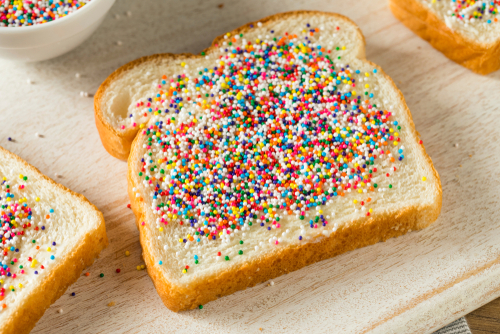
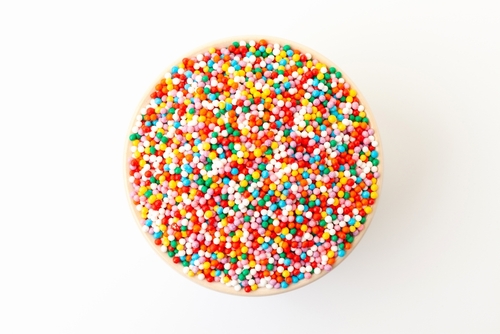
At its most classic, it’s a slice of soft white sandwich bread spread with butter or margarine, then pressed face-down onto a plate of colorful round sprinkles — known in Australia as “hundreds and thousands” — so that they stick to the butter. The slice is then cut diagonally into four triangles. That’s it. No baking, no cooking, no fuss.
The flavor has been compared to confetti cake — sweet, buttery, with a satisfying little crunch from the sprinkles. But the experience of eating fairy bread is really about more than the taste. It’s about color. It’s about the occasion. It’s about being a kid at a birthday party with butter on your fingers and sprinkles on your chin.
A few things are considered non-negotiable by purists: it must be soft white sandwich bread (not sourdough, not wholegrain, not artisan anything), the sprinkles must be the small round hundreds and thousands (not elongated jimmies, which don’t provide the same crunch), and it must be cut into triangles. When a food writer once suggested using a nicer cultured butter and different sprinkles, Australians responded with the kind of collective displeasure usually reserved for much more serious matters.
The Origin Story: From a Poem to a Party Table
The name “fairy bread” has a surprisingly literary beginning. In 1885, Scottish author Robert Louis Stevenson published A Child’s Garden of Verses, a beloved collection of children’s poetry. One poem includes the lines: “Come up here, O dusty feet! Here is fairy bread to eat.” Stevenson wasn’t describing sprinkled bread — but the whimsical imagery of something magical and child-friendly likely planted a seed.
The first known reference to fairy bread as an actual food appeared in the Hobart Mercury in April 1929, in Tasmania, Australia — where it was served at a children’s party at a sanatorium for young tuberculosis patients as a special treat to bring them joy. By 1934, the Sydney Morning Herald was recommending it as a festive treat for toddlers at Christmas.
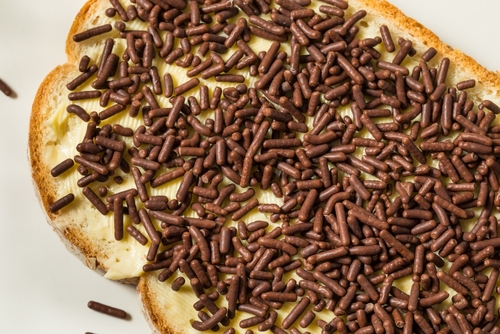
The identity of whoever first decided to press sprinkles into buttered bread is lost to history. Its closest cultural relative is hagelslag — a Dutch tradition of topping buttered bread with chocolate sprinkles, commonly eaten at breakfast. But fairy bread took the concept somewhere uniquely its own: rainbow colors, round sprinkles, and an unbreakable association with celebration.
After World War II, as Australia entered a period of economic prosperity and children’s birthday parties became more common, fairy bread became a fixture of those celebrations. Its simplicity was its superpower — it was affordable, easy to make, and impossible not to smile at. Generation after generation of Australian children grew up pressing their faces toward the triangles on the party table, and the snack became woven into the national fabric.
Why Fairy Bread Matters Culturally
Ask any Australian about fairy bread and watch what happens to their face. There’s a warmth there that goes well beyond the food itself.
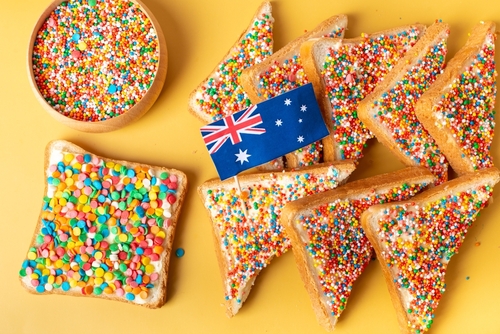
Fairy bread is the undisputed centerpiece of the Australian children’s birthday party spread — sitting alongside sausage rolls, chocolate crackles, and mini frankfurts as a non-negotiable part of the table. It’s so embedded in Australian party culture that its absence at a children’s birthday party is genuinely noted.
For Australian expats living abroad, fairy bread is a powerful piece of home. Making it — or finding the right sprinkles to recreate it overseas — is a small but meaningful act of connection to childhood and country. It turns up at Australian community events around the world, at school fetes, at fundraisers, and at workplace morning teas where someone has decided that adults absolutely deserve to eat like seven-year-olds for a morning.
It has also become a symbol of inclusivity and accessibility. Fairy bread is inexpensive. It takes minutes to make. There are no special skills required. Anyone can make it and everyone can enjoy it, which is part of why it has been embraced by community groups and diversity events as a symbol of coming together.
In the 21st century, fairy bread has experienced something of a cultural renaissance. It has appeared on high-end restaurant menus as a playful homage to childhood. Social media has filled with creative reinterpretations — heart-shaped slices, elaborate sprinkle patterns, themed versions for every occasion. And in 2020, National Fairy Bread Day was officially established, celebrated annually on November 24th, with a portion of proceeds going to youth mental health causes. Since its launch, the day has raised over $114,000 for youth mental health services in Australia.
Why Is Fairy Bread Trending Right Now?
A few forces are converging to bring fairy bread to a much wider global audience.
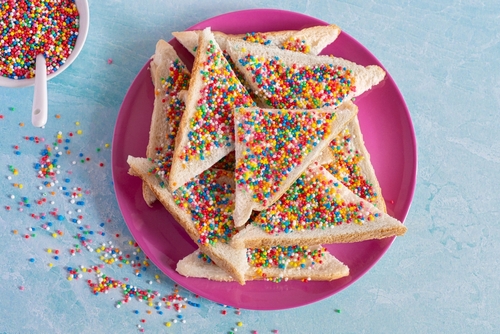
First, there’s the visual factor. Fairy bread is extraordinarily photogenic — all that color and texture is almost algorithmically designed to perform well on social media. The hashtag culture around colorful, nostalgic, and “aesthetic” food has been very good to it.
Second, there’s growing international curiosity about Australian and New Zealand food culture. As these cuisines gain more attention globally, fairy bread keeps surfacing as one of the most distinctly Australian things a person can eat — simple, joyful, and completely unapologetic about what it is.
Third, and perhaps most interestingly, fairy bread fits perfectly into a broader cultural mood around nostalgia food. In a world of elaborate recipes and maximum-effort content, there is something genuinely refreshing about a snack that asks nothing of you except that you enjoy it. It’s the opposite of complicated. And right now, that’s exactly what a lot of people are looking for.

How to Make Fairy Bread
The beauty of fairy bread is that there’s almost nothing to explain — and yet the method matters more than you’d think.
What you need:
- Soft white sandwich bread (the softest, squishiest loaf you can find)
- Unsalted butter, at room temperature (it must be soft — cold butter will tear the bread)
- Hundreds and thousands (small, round, rainbow sprinkles — not jimmies)
How to make it:
- Spread a generous, even layer of soft butter all the way to the edges of each slice of bread. Don’t be shy — the butter is what holds the sprinkles on.
- Pour your hundreds and thousands onto a flat plate or tray, spreading them out in an even layer.
- Take your buttered slice and press it face-down onto the sprinkles, applying gentle, even pressure so they adhere to the butter all the way to the edges.
- Lift the slice carefully and check that the sprinkles are well distributed.
- Cut diagonally into four triangles. (Not rectangles. Triangles. This is not negotiable.)
- Serve immediately — fairy bread is best eaten fresh, before the sprinkles start to soften.
A few tips:
- Leave the crusts on. They give you a butter-free spot to hold the triangle without making a mess.
- If you’re making fairy bread for a crowd, work in batches and serve as you go rather than making them all at once.
- For a modern twist, pastel-colored sprinkles or themed colors for a specific party palette work beautifully — just make sure they’re the small round variety, not the elongated type.
The Global Version: Hagelslag and Beyond
Fairy bread isn’t entirely without relatives. The Dutch have long enjoyed hagelslag — chocolate sprinkles on buttered bread — as a common breakfast food. It’s a more everyday, less celebratory tradition than fairy bread, and the sprinkles are typically chocolate rather than rainbow-colored. But the concept of sprinkles on buttered bread as a legitimate and beloved food choice is clearly not as unusual as it might seem to the uninitiated.
What makes fairy bread distinctly Australian is the specific combination of the round rainbow sprinkles, the soft white bread, the triangles, and above all the occasion. Hagelslag is something you eat on a Tuesday morning before work. Fairy bread is something you eat when someone turns seven and the whole room smells like balloon rubber and birthday cake.
Frequently Asked Questions (FAQs)
What exactly is fairy bread?
Fairy bread is a classic Australian party snack made from soft white sandwich bread spread with butter and covered in colorful round sprinkles called “hundreds and thousands.” It’s cut into triangles and served at children’s birthday parties across Australia and New Zealand. Despite its simplicity, it holds deep cultural significance as a symbol of childhood celebration.
Where did fairy bread come from?
The first known written reference to fairy bread as a food appeared in the Tasmanian newspaper the Hobart Mercury in April 1929, where it was served at a children’s party. The name is believed to have been inspired by a poem in Robert Louis Stevenson’s 1885 children’s book A Child’s Garden of Verses. Its closest international relative is the Dutch hagelslag — buttered bread topped with chocolate sprinkles.
Why do Australians love fairy bread so much?
For most Australians, fairy bread is tied directly to childhood birthday party memories — it’s been a fixture of those celebrations for nearly a century. Its cultural power comes from nostalgia, simplicity, and the fact that it’s genuinely joyful to eat. It’s also deeply accessible: inexpensive, quick to make, and something everyone can enjoy regardless of age or background.
Is fairy bread only eaten in Australia?
Fairy bread is most strongly associated with Australia and New Zealand, where it remains a staple at children’s parties. However, it’s gaining international attention through social media and growing global curiosity about Australian food culture. Australian expats around the world recreate it as a taste of home, and it’s increasingly appearing at international food events and online.
What are the rules for making authentic fairy bread?
Purists are firm on a few points: it must be soft white sandwich bread (not sourdough or wholegrain), the sprinkles must be small and round — the traditional “hundreds and thousands” — not elongated jimmies, and it must be cut into triangles, not rectangles. The butter should be at room temperature so it spreads easily without tearing the bread.
Can you make fairy bread for adults?
Absolutely. While fairy bread is traditionally associated with children’s parties, adults eat it enthusiastically for nostalgic reasons — and National Fairy Bread Day on November 24th is celebrated by people of all ages across Australia. It also appears at adult gatherings as a playful throwback treat, and some high-end restaurants have featured it on menus as a nostalgic homage.
What is National Fairy Bread Day?
National Fairy Bread Day is an annual celebration held on November 24th in Australia, officially established in 2020. It celebrates the snack while raising funds for meaningful causes — most notably youth mental health. Since its launch, the day has raised over $114,000 for youth mental health services in Australia.
Are there healthier versions of fairy bread?
Modern variations exist — including gluten-free bread, vegan butter, and naturally colored or sugar-free sprinkles. However, many Australians would argue that the whole point of fairy bread is its cheerful, sugary simplicity. As one food writer noted, the concept of “healthy fairy bread” is a bit of an oxymoron — it’s an occasional treat, not a health food, and it’s all the better for it.
The Bottom Line
Fairy bread is proof that the most joyful foods are often the most simple. It has no pretensions, no complex flavor profile to analyze, and no elaborate technique to master. It is bread. It is butter. It is color.
And somehow, for nearly a hundred years, it has been making people happy in a way that much more elaborate foods never quite manage. If you’ve never had it, make it this week. Invite someone over, cut it into triangles, and see what happens.
There’s a reason Australians have been eating it at every birthday party since 1929.