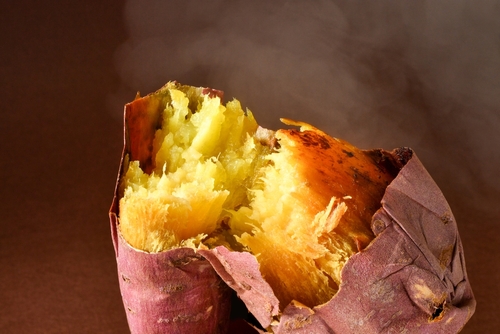

You’re scrolling through your feed and you keep seeing the same image: a deeply caramelised, golden-fleshed potato split open to reveal a molten, almost custard-like interior. It doesn’t look like any sweet potato you’ve cooked before. It looks like dessert. That’s a Japanese sweet potato — and once you understand what makes it different, the obsession makes complete sense.
Japanese sweet potatoes have been showing up at farmers markets, health food stores, and restaurant menus with increasing frequency. Short-form videos of yakiimo — Japan’s iconic whole-roasted sweet potato street snack — have racked up millions of views. Yet most people outside of Japan still aren’t entirely sure what they’re looking at, or what to do with one once they’ve bought it.
This post breaks it all down: what Japanese sweet potatoes are, how they differ from what you’re used to, why they’ve been beloved in Japan for centuries, and exactly how to cook them at home.
So What Exactly Is a Japanese Sweet Potato?
Japanese sweet potatoes are a specific type of sweet potato — botanically classified as Ipomoea batatas, the same species as standard sweet potatoes — but a very different eating experience from the orange-fleshed varieties common in Western grocery stores.
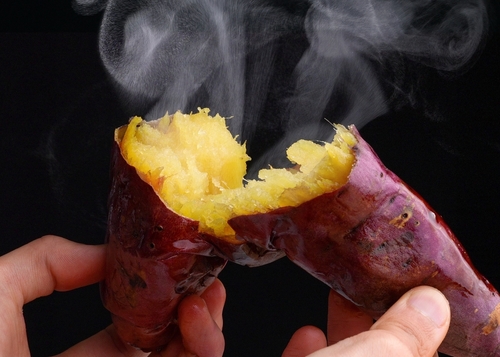
Known in Japan as satsumaimo, they’re recognizable by their purple-red to reddish-brown skin and creamy white to pale yellow flesh that deepens to a warm golden tone when cooked. The inside is never orange. That surprises a lot of first-time buyers.
The flavour is the real revelation. Subtly sweet, nutty, and slightly floral, Japanese sweet potatoes are often described as tasting like a buttery chestnut — with a drier, starchier texture than orange sweet potatoes and an almost dessert-like quality when baked slowly. Depending on the variety, the texture ranges from soft and fluffy (hokuhoku) to dense and gooey (nettori) to silky and smooth (shittori).
One important distinction worth clearing up: Japanese sweet potatoes are not the same as purple sweet potatoes or taro, both of which are commonly confused with them. A purple sweet potato has purple flesh throughout. A Japanese sweet potato has pale yellow flesh — and the purple-red skin is on the outside only.
A Centuries-Old Staple — The Cultural Story Behind Satsumaimo
Japanese sweet potatoes are not a trend in Japan. They are a centuries-old cultural staple with deep historical significance — and that context matters.
Sweet potatoes arrived in Japan around the year 1600, reaching the Ryūkyū Kingdom (present-day Okinawa) via trade with China, then spreading northward to the Satsuma region of Kyushu — which is exactly how they earned the name satsumaimo (literally “Satsuma potato”). From 1700 onward, cultivation expanded across the country.
In 1732, when the Kyōhō famine struck Japan, a scholar named Aoki Kon’yō submitted a treatise to the ruling shogunate recommending sweet potato cultivation as an emergency food crop. The eighth shōgun, Tokugawa Yoshimune, ordered trial cultivation, and the resulting harvest was distributed throughout Japan as seed stock. Aoki’s contribution earned him the enduring title “Sweet Potato Professor.” The crop’s importance continued well into the 20th century — during World War II food shortages, satsumaimo quite literally kept people alive.
Today, Kagoshima and Ibaraki prefectures are Japan’s two largest sweet potato producers, each accounting for roughly 30% of total production, according to Nippon.com. Kagoshima’s rich volcanic soil and warm climate make it particularly suited to cultivation. Digging for sweet potatoes each autumn is a beloved ritual in Japanese kindergartens and elementary schools — a childhood memory shared by millions.
The international appetite for Japanese sweet potatoes is growing just as quickly. Japan exported 6,200 tons in 2023, and according to The Asahi Shimbun, the shipment value rose nearly tenfold to 2.9 billion yen (approximately $19.1 million) over the past decade. Exports surged especially from 2018 onward, driven in part by the success of Japanese-style baked sweet potatoes at Don Quijote stores in Singapore.
Meet the Varieties — They’re Not All the Same
One of the most interesting things about Japanese sweet potatoes is the range of distinct varieties, each with its own flavour, texture, and best use. Think of this as a quick cheat sheet:
- Beni Azuma — Firm, slightly less sweet than others, with red skin. The most widely available variety in Japanese supermarkets. Great for roasting or tempura.
- Beni Haruka — A newer hybrid that became hugely popular for its intense sweetness and soft, gently chewy texture. One of the best choices for yakiimo. Its sweetness actually continues to increase during post-harvest storage.
- Anno Imo — Originally from Tanegashima island in Kagoshima, this variety is exceptionally sweet with a rich, sticky texture. Eating a baked Anno Imo has been compared to eating dessert.
- Silk Sweet — Silky, smooth, and very sweet, with higher natural moisture content that produces a soft, fluffy result when baked.
- Murasaki Imo — The purple sweet potato. Dense, subtly sweet, with striking purple flesh thanks to high anthocyanin content. More commonly used in sweets and processed products than eaten whole.
If you’re trying Japanese sweet potatoes for the first time, Beni Haruka or Silk Sweet are the most forgiving and consistently rewarding.

Yakiimo — The Street Food That Started It All
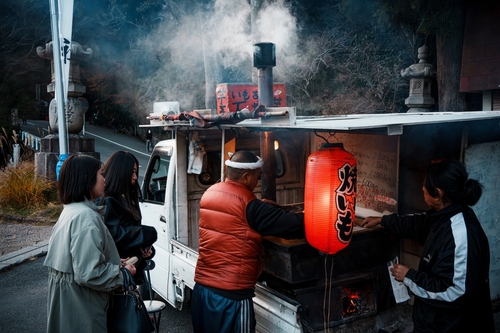
No discussion of Japanese sweet potatoes is complete without yakiimo. The word means simply “baked potato,” but the preparation is specific: sweet potatoes are slow-roasted in or around hot stones, which allows the heat to gently cook them through, concentrating their natural sugars and creating a deeply caramelised, almost molten interior.
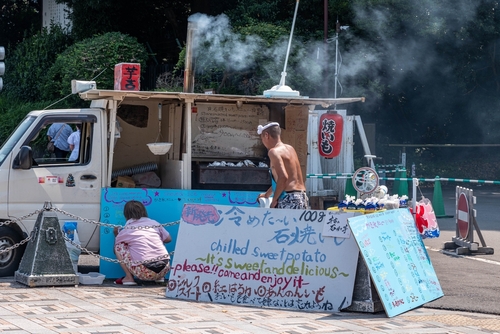
Yakiimo vendors are a sensory icon of Japanese autumn — their carts parked near train stations and shopping streets on cold days, the aroma alone famous for being nearly impossible to walk past without buying something. Today, yakiimo is sold year-round at supermarket entrances across Japan, often with dedicated roasting machines.
The reason yakiimo tastes so good comes down to food science. Sweet potatoes contain beta-amylase, an enzyme that naturally converts starches to sugars during heating. Research published in the Japan Agricultural Research Quarterly (Nakamura et al., 2018) found that maltose concentration in steamed sweet potato storage roots significantly correlates with beta-amylase activity, directly affecting perceived sweetness and texture. The enzyme is most active between approximately 65°C and 80°C (149–176°F), according to food science sources. Slow cooking holds the potato in that temperature range for as long as possible — which is why a rapidly microwaved sweet potato simply cannot match the flavour of one that has been roasted low and slow for 90 minutes.
The result: a naturally sweet, whole, single-ingredient snack that needs nothing added. Yakiimo is increasingly appearing on menus in the US and Europe, and its clean, minimalist appeal — real food, no processing, no added sugar — has introduced millions of Western eaters to the ingredient.
Why Japanese Sweet Potatoes Are Trending in the West Right Now
The timing of this trend isn’t coincidence. Several shifts converged at once.
Social media made the visual appeal undeniable. A perfectly baked Japanese sweet potato, pulled from the oven and split open to reveal its golden caramelised interior, is one of the most satisfying food images circulating right now. Short-form video has done what years of specialist food media couldn’t: put this ingredient in front of mass audiences.
Growing Western interest in Japanese food culture more broadly — driven by travel, restaurant culture, and an appetite for new ingredients — created a ready audience. Japanese sweet potatoes arrived into that interest at exactly the right moment.
They also happen to align with current dietary priorities almost perfectly. A medium baked sweet potato provides 3.8g of dietary fiber and 541.5mg of potassium, along with vitamin C (25% of daily value) and other micronutrients, according to USDA FoodData Central data (FDC ID: 170134). Purple varieties add high anthocyanin levels on top of that. They’re naturally gluten-free, plant-based, and don’t require any nutritional claims — the eating experience makes the case on its own.
American breeders are actively developing new varieties to meet domestic demand. North Carolina State University’s Sweetpotato Breeding and Genetics Program — one of the oldest in the country — is working to develop varieties suited to southeastern US growing conditions, with a focus on expanded germplasm and improved quality traits.
How to Buy and Cook Japanese Sweet Potatoes at Home
Where to find them: Asian grocery stores and Japanese supermarkets carry the widest range of authentic varieties. Health food stores and specialty produce markets increasingly stock them, often labelled generically as “Japanese sweet potato” or by variety name — Murasaki is among the most commonly available in the US. Peak season runs late summer through winter, though they’re typically available year-round.
How to store them: Keep in a cool, dry, dark place with good air circulation. Not the refrigerator. They’ll hold well for up to a week under these conditions.
The best way to cook them — start here:
- Wash thoroughly, wrap in foil, and bake whole at 350–375°F (180–190°C)
- Bake for 60–90 minutes, depending on size — low and slow is essential
- They’re ready when the skin begins to caramelise and the flesh feels completely soft when pressed
- Eat as-is, skin on, with nothing added. A pinch of flaky salt is optional
Other uses once you’re comfortable with them:
- Cubed into soups, stews, or curries
- Diced and roasted for grain bowls or salads
- Mashed as a naturally sweet side dish
- Fried in tempura batter
- Folded into baked goods for natural sweetness and colour
Start Simple, Then Explore
Japanese sweet potatoes are the rare ingredient that earns its reputation through the eating experience alone. No sauce required. No special technique. Just good produce and a low oven.
They also carry something a little extra — a centuries-old cultural story, a childhood memory for millions of Japanese people, and a vendor cart aroma that apparently nobody has ever been able to walk past without stopping. Once you understand all of that, the obsession makes perfect sense.
Frequently Asked Questions (FAQs)
What is the difference between a Japanese sweet potato and a regular sweet potato?
Japanese sweet potatoes have purple-red skin and white-to-yellow flesh (not orange), a denser, drier texture, and a nuttier, more chestnut-like flavour. They taste noticeably sweeter when slow-cooked.
What does a Japanese sweet potato taste like?
Subtly sweet, nutty, and slightly floral — often compared to a buttery chestnut. When baked slowly, the natural sugars concentrate and the flavour becomes rich and almost dessert-like.
What is yakiimo?
Yakiimo is the traditional Japanese preparation of whole sweet potatoes slow-roasted in or near hot stones. It’s Japan’s most iconic cold-weather street snack — eaten plain, skin on, with nothing added.
Are Japanese sweet potatoes healthy?
Yes. They are a good source of dietary fibre, potassium, vitamin C, and other micronutrients. Purple varieties are particularly high in anthocyanins. They’re also naturally gluten-free and plant-based.
Where can I buy Japanese sweet potatoes?
Look for them at Asian grocery stores, Japanese supermarkets, health food retailers, or specialty produce markets. They’re available year-round in North America, with peak season running from late summer through winter.