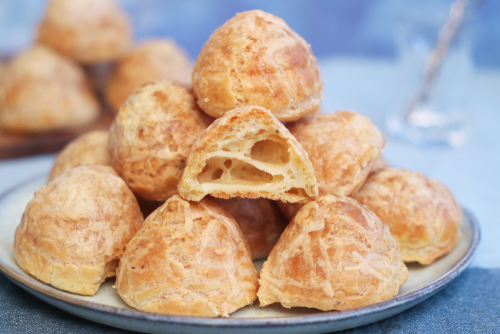

There’s something special about eating the perfect gougère. You take a bite and notice the contrast right away: a lightly crisp shell that gives way to a hollow, airy center, rich with melted cheese and just enough salt. They’re small, but they feel generous. Impressive, yet comforting. The kind of food that looks like it took hours.
But we’ll let you into a secret: gougères don’t take hours. They’re made from choux pastry, which has a reputation for being difficult and finicky, especially if you’re unfamiliar with the techniques used to make it. It’s understandable if you’re a bit hesitant to give it a try, but the truth is that it’s surprisingly approachable.
This Remitly guide walks you through the process, so you can make gougères at home with confidence, even if this is your first time working with choux pastry. We’ll cover how the dough comes together, what the texture should look like at each stage, and how to bake them so they puff properly. Trust us, they’re worth it—they’re delicious. You can thank us later! Let’s get into it.
What are gougères?
Gougères are savory French cheese puffs made from pâte à choux, or choux pastry, the same dough used as a basis for cream puffs and eclairs. Unlike sweet choux pastries, gougères rely on cheese for flavor rather than sugar. That’s what gives them their signature savory richness.
When it’s baked, this dough puffs dramatically thanks to the steam created inside it. The result is a light, hollow interior with a crisp exterior. The cheese melts into the dough, adding depth of flavor and a subtle sharpness that balances the richness of the butter and eggs.
The origins of gougères
Traditionally associated with Burgundy, a region in France celebrated for its wines and refined culinary traditions, gougères are typically served warm alongside a glass of white or sparkling wine. They can be found in French bistros and at festive gatherings, embodying a sense of welcome.
While similar in technique to other choux pastries, gougères stand out for their adaptability. They can be served as a simple snack, an appetizer at a gathering with friends, or even as part of a sophisticated hors d’oeuvre spread.
The ingredients you’ll need
This gougères recipe uses inexpensive ingredients that come together to make the light, savory cheese puffs you’re aiming for. The recipe doesn’t have any hard-to-find items, which makes them feel approachable even if you’ve never made choux pastry before.
You’ll need:
- 1 cup water
- 8 tablespoons (½ cup) unsalted butter, cut into cubes
- ½ teaspoon salt
- 1 cup all-purpose flour
- 4 large eggs, at room temperature
- 1 cup finely grated cheese, such as Gruyère, Comté, or sharp Cheddar, plus ½ cup for sprinkling on top.
- A dash of nutmeg, and a pinch of ground pepper. Optional, but both add warmth that complements the cheese.
This recipe yields about 24 gougères, enough for sharing or enjoying over a couple of gatherings.
How these ingredients work
Choux pastry may look impressive when it bakes, but it’s built on simple kitchen chemistry that anybody can learn. Each ingredient helps make your gougères light, airy, and full of flavor.
- Water creates steam in the oven. That steam is what causes the dough to puff and form a hollow center, giving gougères their signature lightness.
- Butter adds richness and flavor, while also keeping the dough tender. Using unsalted butter is important because it allows you to control the seasoning more precisely, especially since cheeses vary in saltiness.
- Salt helps balance the richness of the butter and cheese, ensuring the gougères don’t taste flat.
- All-purpose flour provides the structure needed to trap steam as the dough bakes. Measuring it carefully helps the dough hold its shape without becoming too dense.
- Eggs are what transform the dough from a thick paste into something stretchy and shiny. They provide structure and lift, allowing the gorgeous gougères to expand rather than spread as they bake.
- Cheese is where much of the flavor comes from. Gruyère and Comté melt smoothly and add a nutty depth, while sharp Cheddar offers a more pronounced bite. Whichever you choose, finely grating the cheese helps it blend evenly into the dough.
Together, these ingredients create a dough that’s sturdy enough to rise, but light enough to feel airy once it’s baked. It’s this balance that makes gougères so satisfying to make and share.
You can experiment with ingredient quality and small variations for subtle flavor differences. For example, using European-style butter, which has a higher fat content, can make the dough richer and silkier. For added aroma, finely chopped fresh herbs like thyme or chives can be folded in with the cheese, giving the gougères a delicate, savory lift.
How to make gougères: a step-by-step guide
Even if you’ve never made choux pastry before, this guide will help you keep it simple. We’ll walk you through the process step by step, and at each stage, you’ll see how the dough should look and feel so the process feels intuitive instead of intimidating.
Step 1: Making the panade
Even though the process begins on the stovetop, you’ll want to start by preheating your oven to 425°F/220°C and lining one or two baking sheets with parchment paper or silicone mats.
Then, in a medium saucepan over medium heat, combine the water, butter, and salt and bring it to a full boil. Once the butter has melted completely and the mixture is bubbling, add the flour all at once. This part can feel sudden, but that’s exactly how it’s meant to be done.
Using a wooden spoon or sturdy spatula, stir vigorously until the flour is incorporated. Once that happens, return the pan to the stove on a low heat and stir until the mixture forms a smooth dough. It should pull away from the sides of the pan and gather into a single ball. A thin film forming on the bottom of the pot is a good sign that the dough has cooked enough.
Step 2: Cooling the dough
Let the panade sit for about five minutes to cool slightly. If it’s too hot when you add the eggs, they’ll start to cook instead of blending smoothly. Letting the dough rest for a few minutes, or stirring it gently to release some steam, helps bring the temperature down without slowing you down too much.
Step 3: Incorporating the eggs
The eggs are added one at a time. Be patient as you wait for them to incorporate. Each egg should be fully incorporated before the next one goes in. At first, the dough may look like it’s separating or becoming slippery, but with continued mixing, it will come back together.
After you’ve added all the eggs, the dough should be smooth, glossy, and thick enough to hold its shape while still being soft and pipeable. This texture is one of the best indicators that you’re on the right track.
Step 4: Adding the cheese
Once the dough’s ready, gently fold in the grated cheese. The cheese changes the dough’s feel a bit, making it softer than a plain choux dough, but that’s okay. This cheesiness is part of what makes gougères special.
This is also the moment to add a small pinch of black pepper or nutmeg if you’d like. These additions aren’t essential, but they add a subtle warmth that complements the cheese nicely.
Step 5: Piping the gougères
You can transfer the dough to a large piping bag fitted with a roughly one-inch opening, or simply use a freezer bag with a corner snipped off. Using two spoons also works just as well. Pipe or spoon one-inch mounds onto the lined baking sheet, leaving enough space between them for some expansion.
If the dough seems too sticky for piping, a quick swipe of wet fingers or a small dusting of flour can help it slide smoothly. They don’t need to be perfect: in fact, part of their charm is their slightly rustic shape.
Once they’re all on the sheet, sprinkle a little extra grated cheese on top of each mound for that extra savory finish.
Step 6: Baking to perfection
Bake the gougères in the preheated oven for 10 minutes, then lower the temperature to 375°F/190°C and bake for another 20 to 25 minutes, until they’re puffed up and deeply golden. You really should resist the urge to open the oven door early, since releasing steam too soon can cause them to collapse. If they’re done right, they should feel light and sound slightly hollow if you tap them.
When they’re done, turn off the oven and use the tip of a sharp knife to pierce each puff gently. This lets steam escape so they stay crisp rather than soggy. Then leave them in the oven with the door ajar for about 15 minutes, a gentle finish that helps lock in their airy shape.
Tips for consistent results
Gougères tend to reward careful attention more than speed. Here are a few tips to ensure success every time:
- Measure carefully
Measuring the flour accurately helps keep the dough balanced. - Don’t rush the eggs
Taking your time with the eggs makes a noticeable difference in texture. - Use good-quality cheese
Using a cheese you enjoy eating on its own usually leads to better flavor in the finished puffs. And a very mild cheese might be a bit too subtle, so sharp cheeses are better for flavor. - Bake thoroughly
Baking them until they’re fully set is also important. If they’re removed too early, the interior can become soft or sink as they cool. Letting them bake until they’re evenly golden helps ensure they stay airy inside. - Use baking sheets of the same weight
This ensures everything cooks evenly. Many ovens also have hot spots, so if you’re using two oven racks, always switch baking sheets from top to bottom and front to back halfway through cooking.
Bringing it all together
While gougères look elegant, they’re built on simple techniques and familiar ingredients. Once you understand how the dough behaves, the process becomes intuitive, and each batch builds confidence for the next.
Having a recipe like this on hand can be especially helpful when you’re looking to share something warm and comforting without spending all day in the kitchen. Whether you’re serving them to guests or enjoying them quietly at home, they’re elegant but feel comforting. Give them a try—we love them and we think you will too.
FAQs
Can I make gougères ahead of time?
Yes, and they’re surprisingly flexible. You can freeze rounded tablespoons of the unbaked dough and bake them straight from frozen with a few extra minutes in the oven. You can also freeze fully baked gougères, then reheat them until warm and crisp.
What kind of cheese is best for gougères?
Gruyère and Comté are traditional choices and are often used because they melt evenly and have a balanced, savory flavor. Many people also enjoy using sharp Cheddar, especially if that’s what’s more familiar or easier to find. Parmesan can also be added in small amounts for extra depth, though it’s best combined with a softer melting cheese rather than used on its own.
The key is choosing something flavorful that melts well.
Why did my gougères collapse?
This often happens if you don’t bake them long enough or if you open the oven door too early. Making sure they’re fully set before removing them helps prevent this.
Can I make the dough without a stand mixer?
Absolutely. Many people make choux pastry by hand with a wooden spoon. It takes a bit more effort, but it’s completely doable and just as effective.