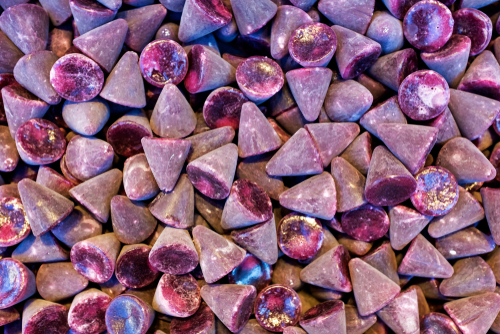

If you walk through the cobblestone streets of Ghent or Bruges, you might smell them before you see them. A sweet, unmistakable scent of raspberries hangs in the air near the open-air markets. Follow that scent, and you will likely find a cart piled high with purple, cone-shaped candies.
These are cuberdons. To locals, they are a beloved treat with a nostalgic nickname: neuzekes, or “little noses.” To visitors, they are often a mystery. They look like hard candies, but they are soft to the touch. They are vibrant and beautiful, yet you rarely see them sold outside of Belgium.
Unlike famous Belgian chocolate or waffles, the cuberdon has not gone global. It remains a uniquely local treasure, tied to the land and the culture in a way few modern foods are. This candy tells a story of tradition, patience, and a recipe that refuses to change for the sake of mass production. If you are visiting Belgium, tasting one is as essential as seeing the architecture.
What Is a Cuberdon?
At first glance, a cuberdon looks simple. It is a cone-shaped candy, usually deep purple, standing about an inch tall. However, the true magic happens when you take a bite.
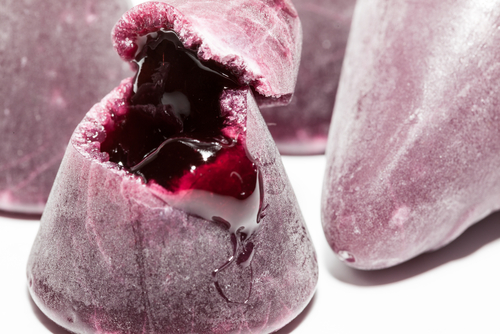
The outer layer is a firm, sugary crust. It provides a slight crunch. Inside, the candy is filled with a thick, sticky, raspberry-flavored syrup. This contrast between the hard shell and the liquid core is what defines a true cuberdon. If the inside is solid, it is not fresh.
While the classic version is raspberry, the texture is the real star. The filling is similar to honey or molasses in consistency. It is made primarily from sugar, gum arabic (derived from the acacia tree), and fruit flavorings. It is a sweet, intense experience that dissolves quickly in your mouth.
The Origins of the “Little Nose”
The history of the cuberdon is a mix of fact and local legend. Most historians believe the candy was created in the 19th century, likely around 1873.
The story goes that a pharmacist in Ghent was experimenting with ways to preserve medicine. At the time, medicines were often mixed with syrup to make them palatable. The pharmacist discovered that after leaving a batch of syrup out for a few days, the outside had hardened into a crust while the inside remained liquid.
He realized this “failed” experiment was actually a delicious confection. He tweaked the recipe, removed the medicine, and the cuberdon was born. Because of its shape, locals quickly dubbed it the neuzeke (little nose) or chapeau-de-curé (priest’s hat). For over a century, the recipe has remained largely unchanged, passed down through generations of confectioners who understand the delicate balance required to make them.
Why Cuberdons Are So Hard to Make (and Ship)
You might wonder why you can buy Belgian chocolate in Tokyo or New York, but not cuberdons. The answer lies in their chemistry. The cuberdon is incredibly fragile and has a very short shelf life.
Making them is a slow process. Hot liquid syrup is poured into starch molds stamped with the cone shape. The candies are then baked at a low temperature for several days. During this time, the sugar crystallizes on the outside to form the crust, while the inside stays liquid.
Once a cuberdon is finished, the clock starts ticking. The liquid center begins to crystallize immediately. Within about three weeks, the sugar from the shell absorbs the liquid from the core. The candy eventually becomes a solid block of sugar. While it is still edible, it loses the signature gooey texture that makes it special.
Because they spoil so quickly and are easily crushed, they are a nightmare to export. They cannot sit in shipping containers or warehouses for months. To enjoy a cuberdon properly, you have to be where they are made.
The Role of Cuberdon in Belgian Street Culture
In Belgium, the cuberdon is not just a product; it is an experience. While you can find them in high-end candy shops, they are most at home on the street.
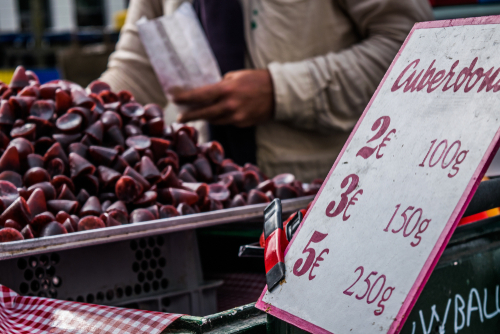
Mobile stalls and wooden carts are the traditional way to buy them. In cities like Ghent, vendors display them in massive, purple piles. You don’t buy them in a sealed plastic bag from a supermarket shelf. Instead, the vendor scoops them into a paper cone for you to eat while you walk.
This keeps the tradition alive and personal. It connects the buyer to the seller. Locals often buy them in bulk to share with family, but because they must be eaten quickly, they are rarely bought for long-term storage. They are a treat for the moment.
Traditional vs. Modern Cuberdons
For decades, there was only one cuberdon: purple and raspberry-flavored. Purists will tell you this is the only “real” cuberdon. However, modern confectioners have started to experiment.
Today, you can find a rainbow of colors and flavors. There are green apple, yellow lemon, black licorice, and even vodka or champagne-filled versions. Some artisan makers stick to natural ingredients, while industrial factories produce cheaper versions with artificial flavors.
Despite the innovation, the classic raspberry remains the standard. It is the flavor that evokes childhood memories for Belgians. If you are trying one for the first time, start with the purple one to understand the baseline before exploring the newer varieties.
How to Eat (and Store) a Cuberdon Properly
There is an art to eating a cuberdon without making a mess. Because the center is liquid, biting directly into the middle can cause the syrup to spill.
The best method is to bite the top of the cone off first. This opens the candy and lets you enjoy the syrup before eating the rest of the shell. It prevents sticky fingers and lets you savor the texture.
As for storage, the rule is simple: don’t. Do not put them in the refrigerator, as the cold ruins the texture and accelerates crystallization. Keep them at room temperature and eat them within a week or two of purchase. If the outside starts to look spotted or dull, the sugar is already changing, and the inside is likely hardening.
Why Cuberdon Matters to Belgian Food Identity
Belgium is famous for exports. The country ships tons of beer, chocolate, and biscuits to every corner of the globe. These products are ambassadors for Belgian quality.
The cuberdon plays a different role. It represents the local, unmovable culture. It is a symbol of “slow food” before that term even existed. It forces you to come to Belgium to experience it. In a world where you can order almost anything online, the cuberdon remains stubborn.
For Belgians, it is a point of pride. It is something they keep for themselves. It represents a connection to the past and a refusal to compromise quality for the sake of convenience. When you eat one, you are participating in a tradition that defies the globalized food market.
Where to Find Authentic Cuberdons Today
If you are planning a trip, you need to know where to look. While you can find them in Brussels and Antwerp, the spiritual home of the cuberdon is Ghent.
The Groentenmarkt in Ghent is famous for its cuberdon stalls. For years, two rival vendors sold candies from carts right next to each other, sparking a lighthearted conflict known locally as the “Cuberdon War.”
When looking for quality, check the surface of the candy. It should be smooth and slightly firm, not rock hard. Avoid bags that look like they have been sitting in a shop window for months. Your best bet is always a market stall where the turnover is high, ensuring the candies are fresh from the mold.
Frequently Asked Questions
Are cuberdons vegetarian or vegan?
Most traditional cuberdons are made with gelatin to help achieve the right texture, which means they are not vegetarian or vegan. However, the main thickening agent is usually gum arabic (from the acacia tree). Some modern artisanal recipes use only gum arabic and are vegan-friendly, but you must ask the specific vendor to be sure.
How long do cuberdons last?
A cuberdon is best eaten within three weeks of production. After that, the liquid center begins to crystallize and harden. They are still safe to eat after this period, but they turn into a solid sugar candy and lose their signature texture.
Can I fly home with cuberdons?
Yes, you can bring them on a plane in your carry-on or checked luggage. However, be careful how you pack them. They are fragile and can be crushed easily. It is best to transport them in a rigid box rather than a soft bag.
Why are they called “Little Noses”?
The nickname neuzekes comes purely from their shape. The cone resembles a human nose. In French-speaking regions, they are sometimes called chapeau-de-curé because they also resemble a priest’s hat.
The Candy That Stays Home
The cuberdon is a reminder that some things are worth the trip. It is a candy that demands freshness and refuses to travel. Its fragile nature is not a flaw; it is what makes it special.
In a world of mass-produced, long-life snacks, the cuberdon stands out as a delicate, fleeting pleasure. It captures the essence of Belgian confectionery: simple ingredients, mastered over time, enjoyed in the moment. So, if you find yourself in Ghent with a paper cone full of purple sweets, take a bite. You are tasting a piece of history that belongs exactly where you are standing.