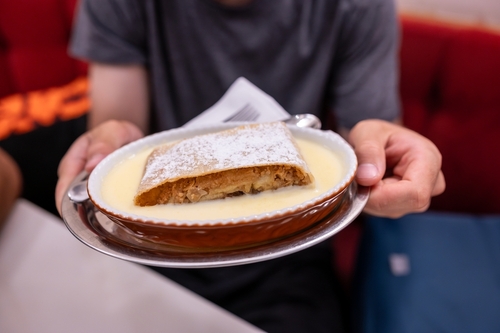

Imagine stepping into a warm café in Vienna on a crisp afternoon. The air smells sweet, carrying the scent of cinnamon and warm apples. You sit down at a small marble table, and a waiter places a plate in front of you. On it sits a golden, flaky pastry, dusted with a fine layer of powdered sugar. This is strudel—more than just a dessert, it is a piece of edible history.
For centuries, strudel has been a centerpiece of Austrian life. It appears in home kitchens on Sundays, in bustling coffee houses, and at village festivals. While many people around the world know it as a sweet treat, for Austrians, it represents a deep connection to tradition, family, and craftsmanship. It bridges the gap between the imperial kitchens of the past and the modern comfort food of today.
In this guide, we explore the rich history of Austrian strudel, the skill required to make it, and the delicious varieties that define this national treasure. From the famous Apfelstrudel to savory regional specialties, you will discover why this flaky pastry remains a symbol of Austrian culture.
A Brief History of Austrian Strudel
The story of strudel begins long before it reached the coffee houses of Vienna. Its origins can be traced back to the Ottoman Empire. The technique of stretching dough until it is paper-thin likely traveled with Turkish soldiers, who brought dishes like baklava to Central Europe. The concept of layering thin pastry with filling took root in Hungary before making its way into Austria.
Once it arrived in Vienna, the strudel truly became Austrian. The oldest known handwritten recipe for strudel dates back to 1696 and is kept in the Vienna City Library. During the 18th century, under the Hapsburg monarchy, the dish gained immense popularity. It moved from simple households to the imperial court, where chefs refined the technique and fillings.
The skill of making strudel dough became a benchmark for bakers. In traditional households, it was often said that a baker’s skill could be judged by whether their dough was thin enough to read a love letter through. This dedication to craft helped cement strudel as a culinary icon of the region.
What Makes a “True” Austrian Strudel
Authentic Austrian strudel is defined by its dough. Unlike the puff pastry often used in mass-produced versions, traditional strudel dough (Strudelteig) is elastic and incredibly thin. It contains very little fat and no sugar, relying on gluten development to stretch without tearing.
A true strudel balances flavors carefully. Austrian desserts typically avoid being overly sweet. The filling should shine, supported by the pastry rather than overpowered by sugar. A crisp, golden exterior contrasts with a soft, flavorful interior.
Serving traditions are also specific. Strudel is best enjoyed warm, fresh from the oven. While it is delicious on its own, it is often served with a side of vanilla sauce (Vanillesauce), a dollop of unsweetened whipped cream (Schlagobers), or a scoop of vanilla ice cream.
Apple Strudel (Apfelstrudel): The National Favorite
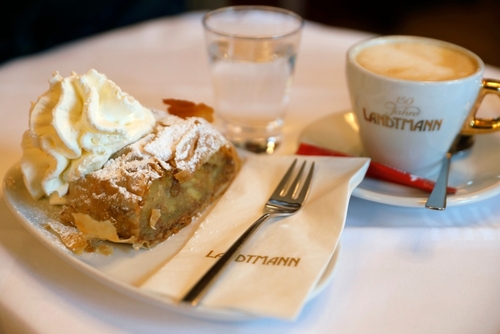
When people think of Austrian desserts, Apfelstrudel is usually the first image that comes to mind. It is the most recognizable variety and serves as a national symbol.
The filling is simple but precise. It typically includes tart apples—varieties like Boskoop or Granny Smith hold their shape well—mixed with sugar, cinnamon, raisins, and roasted breadcrumbs. The breadcrumbs are crucial; they absorb moisture from the apples during baking, preventing the strudel from becoming soggy.
Apfelstrudel is versatile. It is eaten as a dessert, a mid-afternoon treat with coffee (Jause), or even as a main dish on meat-free days in Catholic traditions. It represents comfort and consistency, a recipe passed down through generations of families.
Quark Strudel (Topfenstrudel): A Viennese Classic
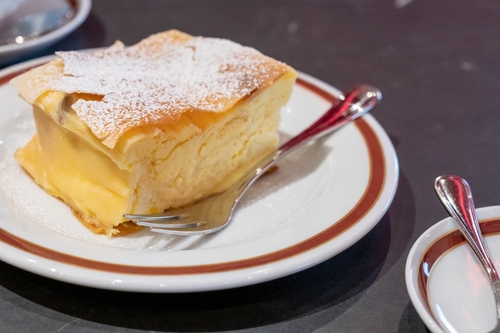
While apple strudel is the most famous internationally, Topfenstrudel holds a special place in the hearts of locals. “Topfen” is the Austrian name for quark, a fresh dairy product similar to curd cheese or thick Greek yogurt.
Topfenstrudel has a creamy, slightly tangy flavor profile. The filling consists of quark, eggs, sugar, sour cream, and sometimes raisins or lemon zest. It is much lighter and less sweet than many other desserts. The result is a warm, custardy center wrapped in crisp pastry.
This variety highlights Austria’s strong dairy tradition. In Viennese coffee houses, you will often find Topfenstrudel listed right alongside its apple counterpart. It is a testament to the Austrian preference for sophisticated, balanced flavors over pure sugary sweetness.
Cherry Strudel (Weichselstrudel): Seasonal and Regional
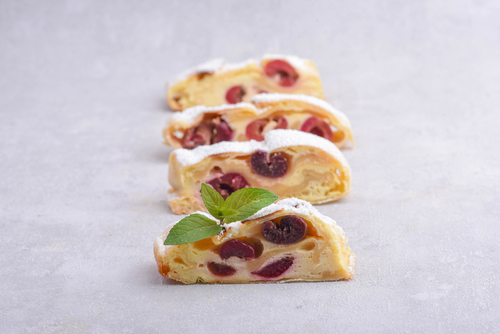
As summer arrives, bakeries and homes across Austria turn to Weichselstrudel. This variety uses sour cherries (Weichseln) rather than sweet cherries. The tartness of the fruit provides a refreshing contrast to the rich pastry.
Because sour cherries have a short season, this strudel is a fleeting summer treat. The acidity of the cherries makes it particularly well-suited for pairing with sweet vanilla sauce, which balances the tart flavor perfectly. It demonstrates how Austrian cuisine adapts to the seasons, utilizing local produce at its peak.
Other Noteworthy Austrian Strudels
Beyond the famous apple and cream varieties, the world of strudel is surprisingly diverse.
Poppy Seed Strudel (Mohnstrudel)
Poppy seeds are a staple in Central European baking. Mohnstrudel features a dense, dark filling made of ground poppy seeds, sugar, butter, and sometimes honey or raisins. It has a distinct, nutty, and slightly bitter-sweet flavor that is deeply traditional.
Nut Strudel (Nussstrudel)
Usually filled with ground walnuts or hazelnuts, Nussstrudel is rich and hearty. It is often served during holidays and winter celebrations. The filling is sweetened and spiced, making it a warming treat during colder months.
Savory Strudels
Strudel is not exclusively for dessert. Savory versions filled with spinach and feta, cabbage, potatoes, or meat are also popular. These are typically served as a main meal rather than a sweet treat, showcasing the versatility of the dough.
Strudel in Austrian Daily Life
Strudel is woven into the fabric of daily life in Austria. While tourists flock to famous cafés like Café Central or Hotel Sacher, locals enjoy strudel everywhere. It is a staple at mountain huts for hikers, a Sunday afternoon tradition at Grandma’s house, and a quick snack from a corner bakery.
Recipes are often family heirlooms. Many Austrians remember watching their mothers or grandmothers stretch the dough across the kitchen table, pulling it until it covered the entire surface. These memories keep the tradition alive. Despite the arrival of modern desserts like cupcakes and macarons, the humble strudel remains a favorite because it represents home and heritage.
Strudel and Austrian Identity Today
Today, strudel acts as a culinary ambassador for Austria. It draws visitors to Vienna and Salzburg, eager to taste an authentic slice. However, its value goes beyond tourism. In a globalized food world where trends change quickly, strudel remains constant. It resists “over-modernization.” You rarely see “deconstructed” strudel or wild fusion flavors because the original is already considered perfect.
Maintaining the authenticity of strudel is important to Austrian identity. It celebrates patience, skill, and local ingredients. Whether enjoyed in a gilded imperial café or a rustic farmhouse kitchen, strudel connects the past to the present.
Why Strudel Endures
Strudel endures because it is honest food. It requires skill to make but is simple to eat. It comforts the soul with warm, familiar flavors. As long as there are apples to slice and dough to stretch, strudel will remain a beloved symbol of Austrian culture. It is a reminder that some of the best things in life are the simplest: flour, fruit, and patience, baked to golden perfection.
Frequently Asked Questions
What is the difference between puff pastry and strudel dough?
Strudel dough is much lower in fat than puff pastry. It is made from flour, water, a little oil, and salt, and is stretched thinly by hand. Puff pastry relies on folding layers of butter into the dough to create lift, whereas strudel dough relies on its elasticity and thinness to become crisp.
Is strudel served hot or cold?
Austrian strudel is traditionally served warm, often straight from the oven. However, it can also be eaten at room temperature. It is rarely served cold from the fridge, as the texture of the pastry is best when warm.
Can I use store-bought phyllo dough to make strudel?
Yes, you can use phyllo dough as a substitute if you cannot make traditional strudel dough. While the texture is slightly different—phyllo is more brittle—it is an acceptable alternative for home baking that saves time.