
Key Highlights
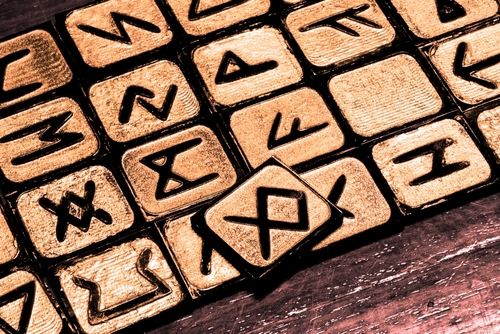
- The runic alphabet is called Futhark. It started with the early Germanic tribes around the year 150 CE, long before the Viking Age.
- The oldest kind is Elder Futhark. It has 24 letters and was made for carving into wood and stone.
- This ancient writing system was used across Northern Europe. People wrote runic inscriptions, personal messages, and made memorials with it.
- Later on, the Norse people turned it into the Younger Futhark. This new form became the main alphabet during the Viking Age.
- Now, the runic alphabet still gets people’s interest. You can see the letters in art, tattoos, pop culture, and the way we look back on history today.
Introduction
Have you ever seen odd, straight lines cut into stone and wondered what they mean? You may have been looking at the runic alphabet. This is an ancient writing system that early Germanic people used. The runes are not just some letters. They are a way to see into the world of strong warriors, wise people, and great storytellers. In this guide, you will learn about the origins of the runic alphabet. You will get to know the Elder Futhark, and find out what these interesting symbols from the old Norse times were all about. Let’s see how the runes became such an important part of norse history!
The Origins of the Runic Alphabet
The origins of the runic alphabet are still talked about a lot by experts. Many think that early germanic tribes in northern europe made this writing system before the vikings were around. These early germanic cultures wanted a way to write things down, and runes were what they came up with.
But this alphabet was not only for record-keeping. It also had something special and mysterious about it. The word “rune” comes from a very old germanic word that means “secret” or “whisper.” This shows it was important in those times. Let’s look at how this alphabet started and how it moved across europe.
Historical Roots and Early Discoveries
The runic alphabet is an old writing system that showed up around 150 CE. Scholars think it may be based on the early Greek alphabet or be taken from ones used in Italy, like Etruscan. The letters are sharp and straight. This makes them easy to carve on wood, bone, or stone.
The earliest runic inscriptions that archaeologists have found are usually short. They have things like a person’s name or a quick note. These simple inscriptions give us a look into history. Finds like this are spread all over Europe, which shows that many Germanic groups used this writing system.
Finding a runestone with these runic markings is like getting a message from the past. Every carved symbol links us to the people who made it so long ago. It helps us learn more about their lives and languages. These discoveries still help us understand how writing started in early Europe.
Geographic Spread Across the Germanic World
The runic alphabet first showed up and then spread with the Germanic tribes. It reached big parts of northern Europe and became a key part of life in many places. The most important spots where these runes were used are now called Denmark, Germany, and Sweden.
This writing system did not stay in mainland Europe. When Germanic people moved, they took it with them everywhere they went. That is how runes got to the British Isles. In these new lands, the alphabet started to change so people could use it for old English.
People in different areas all used these runes, which shows how useful and important they were. Today, you can find inscriptions written in the runic alphabet from the Balkans all the way up to Scandinavia. For many years, this was a tradition many Germanic tribes shared across europe and northern europe.
Structure of the Elder Futhark
The Elder Futhark is the oldest kind of runic alphabet. It is the base for all the later ones. The name comes from the first six letters: F, U, Þ (Thorn), A, R, and K. This is like how the word “alphabet” comes from the Greek Alpha and Beta.
The elder futhark writing system is more than just a group of signs. Each runic letter had its own name, sound, and a deeper meaning. Now, let’s look closer at how many letters it has and the special way they are set up.
Number of Letters in the Original Elder Futhark
The Elder Futhark is an alphabet made up of 24 different runes. This group of letters stayed the same for many years. People in Europe who spoke old Germanic languages used them. Each rune stands for a certain sound, or phoneme, in the language.
The names of the letters in the Elder Futhark were real words in the Proto-Germanic language. For example, the rune for ‘F’ is called Fehu. This word means “cattle” or “wealth.” The rune for ‘U’ is Ūruz. That means “aurochs,” which is a kind of wild ox. These names give every letter more meaning than just its sound.
With this way of writing, the Elder Futhark was a deep and meaningful system. People could use the 24 runes as their full alphabet. At the same time, the names of the runes and what they meant made these signs a big part of their life in Europe. The runes were tied to their culture and what they believed and did every day.
Organization and Order of the Runic Symbols
One thing you should know about the Elder Futhark runes is that they have their own order. It is not like the A, B, C of the latin alphabet. Instead, the runes use F, U, Þ, A, R, K to start. Because of this, these alphabet sets are called futharks.
There are 24 elder futhark runes. People split them into three groups. Each group has eight runes and they are called ættir (the single word is ætt). Every ætt gets its name from a god, taken from the first rune in that group. Frey’s Ætt is the first. Heimdall’s Ætt is the second. Týr’s Ætt is the third. This way of naming shows there is a link to old stories or something more, beyond just writing with an alphabet.
You will see this style in early runic inscriptions. It shows the system was at the heart of how people learned about the alphabet, runes, and rune order. Splitting the runes into three ættir may have even had meaning for magic or hidden uses in runic work. This made the elder futhark runes more than just letters—they were part of something bigger.
Chart of the Elder Futhark: Runes and Their Latin Equivalents
Learning how the Elder Futhark connects to the modern Latin alphabet will help you see how these old runes were used. There is not always an exact match for each rune, but we can make a chart. This chart puts each runic letter by the closest sound in the latin alphabet. It can show you how words would have been spelled with these runes.
Keep in mind, this is a transliteration and not a word-for-word swap. The sounds used in Proto-Germanic are not the same as the ones we use in english today. This simple guide will help you get to know the runic letters and what sounds they make. Take a look below for a quick way to see each rune and what sound it stands for.
Visual Guide to Elder Futhark Letters
To help you visualize the alphabet, here is a chart that displays the 24 Elder Futhark runic symbols alongside their names and the Latin letters they correspond to. This table serves as a handy reference for anyone interested in learning to recognize or use the runes.
The chart is divided into the three ættir, or families of eight runes, which was the traditional way of organizing them. Seeing them laid out this way can help you appreciate the structure of this ancient writing system.
| Runic Symbol | Rune Name | Latin Letter |
|---|---|---|
| ᚠ | Fehu | F |
| ᚢ | Uruz | U |
| ᚦ | Thurisaz | TH |
| ᚨ | Ansuz | A |
| ᚱ | Raidho | R |
| ᚲ | Kenaz | K |
| ᚷ | Gebo | G |
| ᚹ | Wunjo | W |
| ᚺ | Hagalaz | H |
| ᚾ | Nauthiz | N |
| ᛁ | Isa | I |
| ᛃ | Jera | J (or Y) |
| ᛇ | Eihwaz | É (or EI) |
| ᛈ | Perthro | P |
| ᛉ | Algiz | Z |
| ᛊ | Sowilo | S |
| ᛏ | Tiwaz | T |
| ᛒ | Berkano | B |
| ᛖ | Ehwaz | E |
| ᛗ | Mannaz | M |
| ᛚ | Laguz | L |
| ᛜ | Ingwaz | NG |
| ᛞ | Dagaz | D |
| ᛟ | Othala | O |
Phonetic Values and Corresponding Latin Letters
Each runic letter stands for a certain sound, or phoneme, from the old Proto-Germanic language. When we use the latin alphabet to match these runes, we try to find the closest modern letter and sound. For example, the rune ᚠ (Fehu) is for the ‘f’ sound, and ᛏ (Tiwaz) makes the ‘t’ sound. These matches are easy to understand.
But some runes stand for sounds that are not often used in modern english. The rune ᚦ (Thurisaz) gives the ‘th’ sound you find in the word “thorn.” In the same way, ᛜ (Ingwaz) shows the ‘ng’ sound at the end of “sing.” These special sounds show what made the old language stand out.
Knowing these phonetic values is important when you want to write names or words with Elder Futhark. You need to think beyond just trading one alphabet letter for another. You have to pay close attention to the rune sounds so you can get the real way this script would sound.
Symbolism and Meanings of Individual Elder Futhark Runes
The runes in the Elder Futhark were not just used as letters for writing. Each rune had its own deep meaning. These runes got their names from the Proto-Germanic language, so each name stood for a simple word. This word could be about nature, old stories, or things that were part of daily life then. Because of this, runic inscriptions became more than just letters—they packed a lot of meaning into small messages.
You can see hints of what these runes meant in old sources like the Poetic Edda and some ancient poems. These sources show us that runes were a big part of how people saw the world. For them, a single rune could stand for money, fighting through hard times, safety, or winning. Now, let’s look closer at what some of these mighty symbols stood for in old belief and use.
Common Interpretations for Each Rune
Each one of the 24 Elder Futhark runes has its own meaning that comes from its name. These old meanings may not always be the same, but many of them talk about the same big ideas that have lasted through time. This makes the Elder Futhark alphabet full of powerful symbols.
When you learn what these ideas mean, you can see how the people back then thought about the world. They looked at life through nature, higher powers, and what people face in life. A single Elder Futhark rune could stand for something big and deep.
Here are some well-known meanings for a few of the Elder Futhark runes:
- Fehu (ᚠ): Stands for wealth, cattle, and being successful.
- Uruz (ᚢ): Shows strength, wild power, and great new possibilities.
- Thurisaz (ᚦ): Is about giants, thorns, and things that can destroy.
- Ansuz (ᚨ): Stands for the gods (especially Odin), talking, and knowing.
- Raidho (ᚱ): Shows travel, moving, and living life your own way.
- Kenaz (ᚲ): Means a torch, learning, and the fire of new ideas.
- Gebo (ᚷ): Stands for gifts, being giving, and working together.
- Wunjo (ᚹ): Means joy, being at peace, and
Deep Symbolic Associations and Traditional Meanings
The meaning of a rune is more than just a simple word. Runes are tied to Norse stories and also to the old ways of life for Germans. For example, the rune called Ansuz is linked to Odin. He is the god who gave up much to get the knowledge of the runes. So, this rune stands for wisdom from the gods and new ideas.
People used runes for many things, not just for writing. They would carve them onto things to remember someone, to call for safety, or even to place curses. The Björketorp Runestone in Sweden shows this. It has writing with a warning of a strong curse for anyone who touches the stone. This story shows just how much power people thought runes had.
Knowing the runes was seen as a good skill to have. It meant you could get and use knowledge of the runes and maybe understand deeper forces in the world. This tie between the runes and big questions in life is what makes them interesting and draws people to them, still today.
Uses of the Elder Futhark in Ancient Times
The use of runes in ancient times was both practical and deep. Before the Viking Age, Germanic people used Elder Futhark inscriptions for many things. These markings were not just random shapes. They were clear messages made to last a long time. You might see these on a simple tool, a weapon, or even a large runestone.
Runes had a lot of uses. They could show everyday messages or strong magical words. People used them to talk with each other, to mark what belonged to them, and to speak with the spirit world. Now, let’s look at how the use of runes was part of daily life and how they played a role in magical rites.
Everyday Communication and Inscriptions
In daily life, the elder futhark was used as an easy way to talk to others. The earliest runic inscriptions have things like people’s names. They show who owns things like a comb or brooch. It is like a label from a long time ago, so people would know what was theirs.
Runes were used for important personal messages too. People put them on grave markers. These inscriptions told others who was buried there, who made the runic inscriptions, and who put up the stone to remember someone. These grave markers were a public way for all people to honor their loved ones. It also helped to keep their names and personal messages in the memory of the community.
People didn’t just use runes on small things or grave markers. You could also find their inscriptions on cliff walls or big stones. Sometimes, the runic inscriptions were as simple as writing that someone “was here.” This is a lot like modern graffiti. It makes us feel a connection to the people of that time, because they did some of the same things we do now, even thousands of years ago.
Magical, Mystical, and Ritual Applications
People used runes not just for writing, but also in the world of magic. There are many examples of rune inscriptions carved into amulets, charms, and stones. These often show magical ideas and plans. Some offer prayers for safety or wishes for good luck. Others are curses made to harm those seen as enemies. Their strong trust in the power of these carved runes played a big part in making runes important in their culture.
When people held special rituals, they often called on the runes to reach out to the gods or other unseen things. Some rune inscriptions look like they were used in magic acts, but there is not much clear information about how these ceremonies worked today. The sharp lines and letter shapes in the runes worked well for carving into wood or stone. That is how runes stayed on things they used in serious or sacred events.
Now, many people link the use of runes with fortune-telling or what people call rune divination. But history shows there is not much proof this happened a lot, especially at the time the elder futhark was used. Most of the time, older magical use of runes was to make changes in the world. They wanted to give people courage and health with good charms or strike others with curses. Most people were not that focused on asking runes to tell them about the future.
Comparing Elder Futhark, Younger Futhark, and Anglo-Saxon Futhorc
The Elder Futhark was not the only runic alphabet out there. As the Germanic languages changed and spread, the writing changed too. There were two big changes. The first one was the Younger Futhark. People used it in Scandinavia during the Viking Age. The second one was the Anglo-Saxon Futhorc, used in the British Isles.
Each of these alphabets has its own look and style. This shows how the people who used them had new needs over time. When we compare the Elder Futhark, Younger Futhark, and Futhorc, we get to see how runic writing changed across the years. Now, let’s look at how these alphabets shifted and what makes each one different.
Evolution of the Runic Alphabets
The story of runic alphabets is one of change. The Elder Futhark was the first of these. It had 24 letters. The early Germanic tribes used this alphabet for many years. But as time went on, languages kept changing. That made the runes change too.
At the beginning of the Viking Age, around 800 CE, people in Scandinavia wanted a simpler script. So, they changed the Elder Futhark to the Younger Futhark. The new alphabet was much shorter, with only 16 runes. Old Norse, the main language then, had more sounds now. So, some runes had to stand for more than one sound.
Things went in another direction in the British Isles. Here, folks changed the runic alphabet to fit Old English. They made it longer and called it the Anglo-Saxon Futhorc. At its biggest, this had about 33 runes. Even into the medieval period, the alphabet kept growing. This shows how runes could change so well as people and languages changed around them.
Key Differences in Shape, Number, and Usage
The three main runic alphabets are Elder Futhark, Younger Futhark, and Anglo-Saxon Futhorc. These writing systems are not the same. Their shapes, how many symbols there are, and how people use them changed to fit new languages and cultures.
One clear way they are different is in how many runes each alphabet uses. As time went on, languages changed and needed new sounds. The size of each alphabet grew or got smaller to keep up with these changes.
Here are the most important differences:
- Number of Runes: The Elder Futhark has 24 runes. The Younger Futhark made things simpler with just 16 runes. The Anglo-Saxon Futhorc got even larger later, reaching up to 33 runes so it could show all the sounds in old English.
- Shape of Runes: The Younger Futhark made new styles. These had “long-branch” and “short-twig” looks that were easier to carve on wooden sticks. Futhorc also changed its shapes so new sounds in English could be shown.
- Usage: People sometimes see Elder Futhark inscriptions as short marks on personal items. The Younger Futhark was put on big runestones during the Viking Age. The Anglo-Saxon Futhorc was written not just on objects, but also in manuscripts with the Latin alphabet.
These changes show how the writing system, alphabet, and runes had to change for
Translating Modern Words with the Runic Alphabet
Many people today like to write their names or top words using runes. This is called transliteration. It means you turn words from one writing style into another by using the sounds of the words. You can use a chart that shows which runes match with latin letters to help with this.
But it is not as easy as it sounds. There are some problems you may find. English now has sounds and some letters that the old Germaniclanguages did not have. So you may notice a few challenges when you try to use runes for english. Here is the best way to use transliteration and what you need to know about what may not work.
Approach to Transliteration from English to Runes
The best way to start when you want to change English words into runes is to listen to the sounds, not just look at the letters of the alphabet. If you try to swap one letter for another from the Latin alphabet, you might not get the right result. For example, the letter ‘c’ in English can sound like ‘k’ or ‘s’. You should choose the rune for the sound you hear.
To do this, speak the English word out loud and break it into each sound it has. Next, pick the rune that matches each sound. For example, when you say the word “rune,” you hear the ‘r’, ‘oo’, and ‘n’ sounds. For each sound, there is a rune. You would choose Raidho for ‘r’, Uruz for ‘oo’, and Nauthiz for ‘n’.
Using this way gives you a result that is closer to how people used the runes, not just how they look in the Latin alphabet. It helps you understand that runes are about the sounds from an ancient time, not the modern letters in English or the Latin alphabet. Doing this is a fun activity, and it makes you feel closer to these old letters or runes.
Challenges and Limitations in Modern Use
When you try to write english words with runes, you will see some problems. The elder futhark alphabet was not made for modern english. This means that some sounds and letters do not match with the runes in this old alphabet.
Because of this, you will have to make some creative choices. For example, the latin alphabet has letters like ‘q’ and ‘v’. These do not have their own rune. You need to pick the closest sound or put runes together to get close to that sound. So, using runes for english is more like art and not an exact way.
Here are some main problems you will face:
- Missing Sounds: English has vowels and sounds that are not in proto-germanic. The elder futhark does not have a rune for sounds like the ‘j’ in “judge.”
- Silent Letters: There are many silent letters in english. Since runes are only for the sounds you say, you leave out any letter that is not spoken.
- Letter Combinations: For sounds like ‘sh’ or ‘ch’, you must put two runes together, because there is no one rune for these in this alphabet.
- Context Matters: The same letter in the latin alphabet can make many sounds, like ‘a’ in “cat” and “car.” This means you will use a different rune for each case, based on which sound you hear.
Using runes for english words shows how the latin alphabet and the elder f
The Runic Alphabet in Today’s World
The runic alphabet is alive and well in the modern world. These old symbols are not lost. In fact, they are showing up more and more in pop culture, art, and tech. You might see them in a fantasy movie, on jewelry, or in a company’s logo. This growing interest shows that people still love their strange and strong look.
Today, people use the runic alphabet in many ways. Sometimes the use is as it was in the past, but often it is changed in a new way. Some people care about the old rune meanings. Others just like the way the symbols look. That is why the runic alphabet is useful for artists, writers, and other people who want to give their work a hint of myth, magic, or history.
Modern Representations in Art, Fashion, and Technology
In art and fashion, runes are a common design. You can see them in tattoos, on clothes, and in jewelry. People use them to show who they are, to give themselves strength, or to share something about where they come from. Artists put runes in paintings and sculptures to add a touch of old Norse mystery or style.
Pop culture uses runes a lot. You will find the runic alphabet in fantasy stories like the ones by J.R.R. Tolkien. Runes show up in many video games and TV shows set in fantasy or old times. Because of this, people all over the world now know about younger futhark and other runes.
Runes are used in technology, too. The Bluetooth sign is made from two Younger Futhark runes: Hagall (ᚼ) and Bjarkan (ᛒ). These stand for the name Harald Bluetooth, a Viking king. He brought people together. In the same way, Bluetooth brings devices together.
Finding Free Resources and Images for Personal Use
If you want to use runes for your own project, you can find many free resources and images on the internet. You may want a chart for study, a font for design, or images for creative work. When you do a quick search, you will get some great results.
Lots of museum websites, study portals, and font libraries have good materials too. These things usually try to show the real look and use of runes, so they are a good help for people who want to find out more about the old use of runes.
Here are some places where you can find free resources:
- University and Museum Websites: Check the online collections from places like the National Museum of Iceland or websites about runic studies. These give good information and pictures you can trust.
- Font Libraries: Some websites, like Google Fonts, have runic fonts (like Noto Sans Runic) you can download and use in your own work.
- Online Rune Translators: These sites let you see your words changed into runes. They can be fun but know that they are not always right.
- Public Domain Image Sites: You can find pictures of runestones and the runic alphabet on websites with public domain or Creative Commons images, and use them for free in your personal work.
With the use of runes, especially ones from iceland, you have many choices to get started with your project.
Conclusion
To sum up, the elder futhark runes are more than an ancient writing system. They show a long history, deep culture, and strong meaning that still matters today. When you learn about the elder futhark, you get to know what the people before us thought and did. You also find new ways to use these runes to share your thoughts and ideas now. It does not matter if you want to learn about their past or use them for art and your own symbols, the elder futhark runes are still very interesting. If you want to know more about this writing system or how it can add something good to your life, you can always get in touch for a talk!
Frequently Asked Questions
Is there a ‘correct’ Norse runic alphabet today?
There is not one “correct” Norse runic alphabet. The Elder Futhark came first, and people used it before the Viking Age. The Younger Futhark was the main alphabet for Norse words during the Viking Age. Now, which one you use depends on what you want. You can use it for history, making art, or your own reason.
Were the runes used only by the Vikings?
No, runes were not used only by the Vikings. The Elder Futhark was an alphabet that people in many Germanic tribes used in Northern and Central Europe. They used it many years before the Viking Age. The Vikings used the Younger Futhark, which is a new kind of this alphabet. The Younger Futhark came from the older Elder Futhark.
Can anyone use the Elder Futhark runes for divination or personal meaning?
Yes, anyone can use the elder futhark runes for their own growth. Long ago, people talked about the use of runes for divination, but this is still a topic people debate today. Now, many use the elder futhark runes for deep thought and to find meaning. When you have knowledge of the runes and what each one means, you can connect with them in your own way.