
Key Highlights
Here are the main points you should know from our guide about the Pinyin alphabet:
- Pinyin is the official way to use the Roman alphabet to write Standard Mandarin Chinese.
- It helps with language learning. You can use the Roman alphabet to show Chinese sounds.
- When you write a Pinyin syllable, it has three parts. Those are the first sound, the last sound, and a tone mark.
- Mandarin Chinese is a language with tones. The tone mark used will change what a word means.
- If you understand Pinyin, it is the first step to getting good at saying Mandarin Chinese words.
- With Pinyin, you can type Chinese characters on a regular keyboard.
Introduction
Have you ever looked at chinese characters and thought, how do I start learning them? You are not the only one. The chinese language can be tough, but there is a great tool that makes it easier for you. That tool is Pinyin. This romanization system helps you understand chinese by using the roman alphabet. Pinyin works like a bridge. It lets you go from learning chinese characters to using the letters you know. If you are just starting to learn mandarin chinese, Pinyin is the best first step for language learning. It helps you read, write, and speak the chinese language with more confidence.
Understanding the Pinyin Alphabet as a Romanization System
Pinyin is a smart way to use the roman alphabet to show how to say words in Mandarin Chinese. It is like a guide that tells you how something should sound. Instead of guessing how to say a word or a character, you can look at its Pinyin and know how to say it. This makes the chinese language easier for people who are just starting to learn.
This way of writing breaks each chinese sound into small steps. It helps you learn and copy them. In the next parts, we will share what Pinyin is, how it uses roman letters for chinese sounds, and why it is important for language learning.
What Is Pinyin and Why Is It Used for Mandarin Chinese?
Hanyu Pinyin is the main way to write the sounds of Mandarin Chinese using the Roman alphabet. It started in the 1950s to help people in China read and bring in a single method for teaching how to say words. Before Pinyin, there were different systems for writing Chinese sounds, and that made things confusing.
Pinyin gives an easy and clear path to show the sounds of chinese characters. For instance, the word for “horse,” 马, is written as “mǎ” in Pinyin. You get to know right away how to say it and also the tone. If there was no Pinyin, you would need to remember how every single character sounds one by one, which is hard.
The chinese language is easier to learn with this system. Pinyin is what helps most people start with pronunciation, and it’s used to type chinese characters when people use their phones and computers. It is needed for modern chat and writing.
Roman Letters in Pinyin: Bridging Chinese Sounds and English Script
Pinyin uses the Latin alphabet to show how to say words in Mandarin. This makes it much easier for English speakers to begin learning. Many pinyin letters sound close to the ones in English. But, you need to know that the system is made for Chinese sounds and not for English. Some letters will be used in ways that you do not see in English. They have sounds that are new.
Pinyin uses 25 letters of the Roman alphabet. The letter “v” is the only one not used. Because you have seen these letters before, you may get about half of the sounds right when you start. Still, there are some letters where the sound is not what you think.
Here are some examples to help you remember:
- The letter “q” in pinyin sounds like “ch” in cheese.
- The letter “x” sounds like “sh” in sheep, but you move your tongue more forward.
- The “zh” sounds a little like the “j” in jump.
How Pinyin Supports Language Learning and Pronunciation
Pinyin is a big help for language learning because it gives you a clear way to get good at the pronunciation of Chinese characters. It breaks them down into small, simple sounds so you do not have to guess. This helps you know how each character should sound. You can copy how native speakers talk from the first day using this system.
Pinyin is also very important for your listening skills. The more you see and use Pinyin, the more you can pick up on the right sounds and tones. This is key for understanding people when they talk and for joining in real talks with native speakers. It helps you move from just looking at chinese characters to saying them the right way.
In addition, Pinyin is one of the main input methods for all of China. If you want to type a chinese character on any device, you can type its Pinyin. You then pick the right one from a list. Because of this, Pinyin is a must-have tool you will use every day in the digital world.
The History and Development of the Pinyin Alphabet
The story of how Pinyin came to be is very interesting. Before Pinyin, people used different romanization systems to write Chinese words with the alphabet. This often caused a lot of confusion. There was no single, official romanization system, so it was hard for everyone to be on the same page. As China wanted to help more people learn to read and have the same rules for learning, the need for one romanization system became clear.
The People’s Republic of China worked hard to create a new way to write Chinese words using letters. In the middle of the 20th century, Zhou Youguang, a linguist, led the work on Pinyin. This new system was made to be easy for the chinese people to use and helpful for people from other countries, too. Now, let’s see why they wanted to make Pinyin and how it grew to be a global standard people use everywhere.
Origins and Motivation Behind Pinyin Creation
In the early 20th century, there were several systems for writing Chinese words with English letters. These systems were fighting to be the top choice. One well-known system was Wade-Giles. Thomas Wade made it at first, and later, Herbert Giles updated it. For many years, people who spoke English used this way of writing Chinese. But Wade-Giles had some hard parts. This made it tough for many people who wanted to learn the chinese language.
The main reason for making a new system was to help more people be able to read in China. The government wanted something that could help everyone in the country learn how to say words in Standard Mandarin, no matter where they lived. Pinyin was made to be easier for most people to use and to be clear when they looked at the words, unlike the old way.
Lots of language experts worked on this new way to write Chinese words. Zhou Youguang was a big part of this work, and many people know him as the “father of Pinyin.” Their main hope was to have a romanization system that sounded right and was simple to learn. This made it be much easier for people to get into Chinese, no matter who they are or where they come from.
Key Milestones in Pinyin Adoption and Evolution
The adoption of Pinyin was a gradual process marked by several key milestones. After its initial development, the system was officially published by the government of the People’s Republic of China in 1958. Its first major role was in schools, where it was used to teach children the pronunciation of Standard Mandarin Chinese.
Over the next few decades, Pinyin’s influence grew beyond China’s borders. International organizations began to recognize its utility and accuracy. A major turning point came in 1982 when the International Organization for Standardization (ISO) adopted Pinyin as the standard for romanizing Chinese. This solidified its global status.
The United Nations followed suit in 1986, further cementing Pinyin’s role as the official romanization system worldwide.
| Year | Milestone |
|---|---|
| 1958 | Pinyin is officially published by the Chinese government. |
| 1979 | Pinyin replaces Wade-Giles in most foreign publications. |
| 1982 | The ISO adopts Pinyin as the international standard. |
| 1986 | The United Nations adopts Pinyin for all Chinese names. |
Impact on Modern Chinese Education and Communication
Pinyin has changed the way Chinese people learn today. It is the first thing kids study when they go to primary school. This system helps children read and pronounce words. They can see the sounds for many characters by using pinyin letters and tones. Because of this, they start to have accurate communication at a young age.
For mandarin learners all over the world, pinyin is important, too. It helps make the sounds much less confusing. Each textbook, course, and language app uses it. Instead of trying hard to learn strange sounds, learners can trust this system. It helps them learn faster and feel better about using Chinese.
There is also another way pinyin letters matter. Lots of chinese people and others use it to type words in Chinese on digital devices such as smartphones or computers. You can type the pinyin letters, pick the right character, and send your message. This makes pinyin a must-have tool for everyday life now.
Structure of the Pinyin Alphabet: Initials, Finals, and Tones
Every pinyin syllable has three main parts. There is an initial, a final, and a tone. The initial is the first sound. It is usually a consonant. The final is the next sound. It is a vowel or has a vowel in it. The tone mark goes over the main vowel in the final. This tone shows how your pitch should move and helps people know what you are saying. The meaning of the word can change with the tone mark.
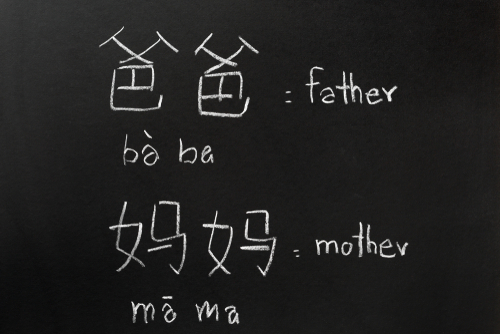
It is important to know about these parts if you want to get good at Mandarin pronunciation. For example, in the pinyin syllable “mā” (妈, mother), “m” is the initial, “a” is the final, and the straight line over “a” is the first tone mark. This helps you see how Chinese sounds are put together.
Next, we will look at each part to help you learn how chinese sounds work and how to say them right.
Initials: Consonant Sounds in Mandarin
In Pinyin, initials are the consonant sounds that come at the start of a syllable. There are 23 initials in all. Most syllables use an initial, but some, like “ài” (爱, love), do not have one and use just the ending sound. Some of these initials sound close to the ones you find in English. For example, m, f, n, and l are the same. But there are some mandarin sounds that are special to chinese sounds.
Mandarin pronunciation has a group called retroflex consonants. These are “zh,” “ch,” “sh,” and “r.” To make these, you move the tip of your tongue back and curl it near the roof of your mouth. These sounds may feel strange when you first try, but they are important for others to understand you.
You also need to know about “j,” “q,” and “x.” These sounds do not match any English sounds exactly. You have to use your tongue in a new way to say them right. When you get these parts of mandarin pronunciation right, you will sound much more like a native speaker.
Finals: Main Vowels and Syllable Endings
Finals are the part that comes after the initial in a syllable. In Pinyin, there are 35 finals. You can put them into simple finals and compound finals. The simple vowels are the base for all the finals and are often the first thing you will learn. There are six simple vowels: a, o, e, i, u, and ü.
Each simple final has its own sound. For example, “a” is said like the ‘a’ in “father.” “i” is like the ‘ee’ in “bee.” The sound “ü” can be tricky for english speakers. You do not have this sound in English. It is a lot like the ‘u’ sound in French or German.
Compound finals happen when two or three vowels come together. Examples of compound finals are “ai” (said like the ‘igh’ in “high”) or “iao.” These create many new sounds in Mandarin. The main vowel in each final will carry the tone mark.
Tone System: How Tone Marks Alter Meaning
Mandarin Chinese is a language where the way you say a word, or the pitch you use, can completely change what the word means. In Mandarin, each syllable can have four main tones and also a neutral tone. These tones show up as tone marks or diacritical marks over the main vowel in a Pinyin syllable.
Take the syllable “ma” for example. There are words where “ma” means something different for each tone mark used. So, to get the meaning right, you need to focus not just on how you say the word, but which tone to use. If you skip the tones, you might say the wrong thing, so it’s important to practice them from the start.
Here are the four main tones you will find:
- First tone (mā): This is a high, steady pitch. It is like you are singing a high note and holding it.
- Second tone (má): This tone rises, almost like when you ask “What?” or “Really?” with your voice going up.
- Third tone (mǎ): This tone falls a bit at first, then goes up, making a dip in the sound.
- Fourth tone (mà): This one is fast and goes down quick, like when you give a short, sharp command and say, “Stop!”
There is also a neutral tone. It is used in speech lightly and does not get stressed.
Using the right tone on the main vowel is key in Mandarin Chinese
Comparing Pinyin and the English Alphabet
When you first see the Pinyin alphabet, you might notice that it looks a lot like the English alphabet. The reason for this is both use the Roman alphabet. This can help English speakers who want to start learning Mandarin. But it’s important to know that Pinyin is a tool to show the sounds of Chinese words. It isn’t the same as the English system.
In Pinyin, the same letters often sound different from what you know in English. If you try to read Pinyin letters like English letters, your mandarin pronunciation will be wrong. Next, we will talk about the main differences with the sounds, spelling, and special sounds you might find in Pinyin. This will help you avoid common mistakes when saying chinese words.
Differences in Pronunciation and Spelling
One of the biggest problems for English speakers who are learning chinese sounds is to think that a Pinyin letter always sounds the same as in English. Some letters, like ‘m’ and ‘f’, are almost the same. But many are not. For example, the Pinyin letter ‘c’ is like the ‘ts’ you hear in “cats.” The Pinyin ‘q’ is like the ‘ch’ sound in “cheese.” These changes in how we say the sounds are important.
There is also another big difference. In English, a letter can have many different sounds. Think about the letter ‘a’ in the words “cat,” “father,” and “late.” In Pinyin, every letter or letters together always stand for one set sound. It does not change. This makes chinese sounds much simpler to learn for English speakers once you know the rules.
Spelling in Pinyin shows you the sound only. It does not come from old words or history like English spelling does. Once you have learned the Pinyin system, you can say any word written in it. This is a big help for anyone learning chinese sounds, because it makes reading and saying new words easier and using the language much smoother.
Unique Sounds and Letters in Pinyin
Pinyin has some sounds and letters you will not find in English. One thing that stands out is the vowel “ü.” To make this sound, round your lips as if you want to say “ooh,” but say “ee.” You can hear this in words like “lǜ” (绿, green) and “nǚ” (女, female). The two dots above the letter are called diacritical marks. They show that this is not the usual “u.”
Another thing that is special in Pinyin is the use of tones. Mandarin pronunciation uses four main tones and one neutral tone. The meaning of a word can change with each tone. These tones are shown by accent marks placed over the vowels. English does not use these marks.
Here are some other sounds that make Pinyin special:
- zh: This comes out like the ‘j’ in “jar,” but your tongue is curled back.
- x: This is a sharp ‘sh’ sound, and you put the tongue tip near the front teeth.
- r: At the start of a syllable, this is said like the ‘s’ in “measure.”
Common Beginner Mistakes and How to Avoid Them
When you first start with Pinyin, it’s easy to make some mistakes that can change your learning experience. The biggest mistake most people make is using English sounds for Pinyin letters. It’s important to remember that Pinyin is its own set of sounds, which are not the same as English. If you forget this, you will probably say a lot of words the wrong way.
Another thing that gets in the way is not paying attention to tones. Many people try hard to get the initials and finals right, but they do not always focus on the tones. Tones are not just extra sounds—they change what a word means. If you skip them, you won’t get accurate communication with others. Consistent practice with tones from day one is a good idea.
Here are some tips to help you with pronunciation and have a better learning experience:
- Listen to native speakers and try to say the sounds like they do.
- Don’t just guess. If you are not sure how something sounds, go look it up.
- To begin, practice tones with single syllables. Move to full words when you feel ready.
- Record what you say and listen to it. Then, compare it with a native audio to hear the difference.
Beginner’s Guide: Getting Started with the Pinyin Alphabet
Are you ready to start learning the Pinyin alphabet? This simple guide will help you have a good learning experience. You will get clear explanations and find out about the best tools for accurate pronunciation. With the right steps, you will be reading and typing Pinyin in no time.
When you use online audio charts and try out a Chinese keyboard, you will see that learning Pinyin is open to all who want to learn Mandarin Chinese. Follow these steps, so you can build a strong base in how Mandarin sounds. Let’s get started on this journey together.
Essential Tools and Resources for Learning Pinyin
When you learn Chinese Pinyin, having the right resources can help a lot. There are many good tools out there, and a lot of them do not cost anything. One of the best ones is an interactive Pinyin audio chart. You just click on each letter and you get to hear how a native speaker would say it.
Many language learning apps and websites have a whole section just for Pinyin. You will find lessons, quizzes, and guides that show you how to say things the right way. You can use these on your phone or other digital devices. This is a good way to practice any time and get quick feedback on how you are doing.
Here are some tools you can use to get started:
- Online Pinyin Audio Chart: You can use this to hear the right way to say initials, finals, and tones.
- Pinyin Keyboard Apps: Use these on your phone or computer to practice typing in Pinyin.
- Flashcard Apps (like Anki or Pleco): These help you remember how Pinyin sounds match with Chinese characters.
- YouTube Channels: Many channels give free and clear lessons on how to say Pinyin the right way.
Step-by-Step Guide to Mastering Pinyin Pronunciation
Learning how to say words the right way takes time and practice. This guide will help Mandarin learners by giving clear explanations and breaking things down into easy steps. When you do this, you will not feel stress. You can work on one skill at a time and keep moving forward.
The first thing you should do is listen. Before you try to speak, spend some time listening to the sounds. Pay attention to how they should sound. After that, you can move on to practice. There are many tools and drills online that help you get better. The guide gives you simple directions and structure. This will help you feel good and build your confidence fast.
This guide will help you with listening to how native people say the words, practicing using online tools, and learning the parts of Pinyin. If you follow these steps, you will be on your way to clear and accurate pronunciation in Mandarin.
Step 1: Listening to Native Pronunciations (Audio Charts)
The first step to learn the Pinyin alphabet is to listen. Before you try to say any word, you should know what the sounds are. The best way to do this is to use an online Pinyin audio chart. On these charts, you can click on every initial, final, and tone with your mouse. You will hear how it is said by native speakers.
As you listen, make sure you notice small differences in the sounds. Some sounds, like ‘z,’ ‘c,’ and ‘s,’ or ‘j,’ ‘q,’ and ‘x,’ can sound close. Do not listen just once. Play each sound a few times. If there is a video, also take a look at how the person moves their mouth. This step of passive listening is very important. It helps your ear get used to the sounds in the Chinese language.
This step helps build your “mental audio library” for Mandarin pronunciation. It will be much easier to fix your speech when you start talking. You will know the sound you are going for.
Step 2: Practicing with Online Pinyin Keyboards and Apps
After you get used to the sounds, you can start to practice. One good way you can do this is by using a virtual Chinese keyboard online. Most computers and mobile devices let you add a Pinyin keyboard very easily. With this, you can type pinyin letters, and the computer or phone will show you a list of Chinese characters that match the word.
All you need to do is type the pinyin for a word, such as “nihao”, and then you will see the Chinese characters with the same sound. This way is helpful for you to remember, and it also gets you used to how people use Pinyin every day. Some online tools will play the sound for you as you type, which helps even more.
Using a chinese keyboard on your digital devices is good for linking the pinyin letters, how the word sounds, and the chinese characters together. It’s a hands-on way to learn that uses your eyes, ears, and fingers. This will make it much easier when you want to talk with someone, type messages, or look things up in Chinese on your mobile devices or computer.
Step 3: Memorizing Initials, Finals, and Tones with Practice Drills
Once you have trained your ear and have practiced typing, the last step is to really remember the Pinyin system. You do this by using consistent practice. Break Pinyin down into the main parts. These are initials, finals, and tone marks. Keep working with them until you feel that using them comes easy. Going over the same things again and again is very important for language learning.
Try to focus on only one group of sounds at a time. For example, spend one day on the simple finals. Spend the next day on a set of initials that are alike. Then, have another day just for the four main tones. Test yourself often with flashcards. You can use real cards or do this on your phone.
Here are a few good ways to practice:
- Tone Pairs: Say two-syllable words that have different tone pairs, like 1st-2nd or 3rd-4th tones. This helps you get better with tones.
- Minimal Pairs: Work with words that sound almost the same except for one sound, like “shì” and “sì.” This will help you fix your pronunciation.
- Read Aloud: Pick short and easy texts written in Pinyin. Then read them out loud. Make sure you check your tones and how you say the words.
By doing these things during your daily practice, you make language learning feel easier and more steady. Practice often, and the way you say and type in P
Conclusion
To sum up, knowing the Pinyin alphabet is important if you want to learn Mandarin Chinese well. This romanization system helps show the link between Chinese sounds and the English alphabet. It is also important for getting the right pronunciation and picking up the language. When you learn about its parts—like initials, finals, and tones—you will get better at reading and speaking. It does not matter if you are just starting or trying to get better, you can use all the great tools out there to help you learn. Start with Pinyin, and you will soon find out how good and interesting Mandarin Chinese can be!
Frequently Asked Questions
How do I pronounce each letter in the pinyin alphabet?
The best way to learn Pinyin pronunciation is by using an interactive audio chart. Many letters in Pinyin do not sound the same as English ones, so it helps to listen to native speakers. This way, you get clear explanations on how to make the unique Chinese sounds needed for good Mandarin pronunciation.
Where can I find an audio chart for pinyin pronunciations?
You can find a free Chinese Pinyin audio chart online by doing a quick search. There are many language learning websites and apps with charts like these. You can click on each sound and hear how native speakers say it. You can use these resources on all digital devices, so you can practice when you want.
Are there online tools for typing in pinyin?
Yes, there are many tools online you can use to type in Pinyin. Most computers and mobile devices have a Chinese keyboard in their settings. You can turn this on. With this, you type the Pinyin spelling, and then you choose the right Chinese character. This makes typing easy.
How is pinyin used in language learning apps and websites?
In language learning apps, you see Pinyin under chinese characters. It helps you know how to say new words. This is in lessons, quizzes, and flashcards. It makes your learning experience better. With Pinyin, you can get accurate pronunciation and learn to speak mandarin chinese the right way from the start.