
Key Highlights
- The Phoenician alphabet is an early writing system. It came from the Proto-Canaanite script around the 15th century BC.
- This was one of the first alphabetic scripts that people used in many places. Phoenician traders spread it all over the Mediterranean.
- This old writing system led to many modern ones, including the Greek alphabet and Latin script.
- The origins of the Phoenician alphabet go back to Egyptian hieroglyphs. It turned tricky picture-based writing into something much simpler.
- The Phoenician script is what we call an “abjad.” It had 22 consonants, and the person reading would guess the vowels.
Introduction
Have you ever thought about where the letters you use each day started? The story goes back thousands of years to the Phoenician alphabet. This old writing system changed a lot. It made writing easier, and more people could use it. That helped lead to many of the languages we have now. To really know the history of writing, you need to see how this old alphabet became the start of scripts that people all over the world still use today. Now, nearly 70% of people use a writing system that grew from the Phoenician alphabet.
Tracing the Origins of the Phoenician Alphabet
The story of the Phoenician alphabet starts in the old Near East. This important script did not just show up. It grew from other writing styles during the early Iron Age. It comes from the Canaanite languages. People spoke these languages in the Levant, in places like Lebanon, Syria, and Israel.
People who study ancient texts have found how it all happened. The alphabet was a big step in the history of writing. It moved from hard symbols to ones that show sounds. Now, let’s look at the time and places that helped make this script and see what shaped it.
The Ancient Mediterranean World and Early Alphabets
The ancient Mediterranean world was a busy place, with different people meeting and trading. Each group had its own way of recording things. Before the Phoenicians, people used complex writing systems. These included Egyptian hieroglyphs and many other linear scripts. These old ways of writing often needed hundreds of symbols. That meant that reading and writing was a skill for just a few trained scribes. For instance, in the early Greek world, the Linear B script had nearly 200 symbols.
The Phoenician alphabet was important because it made everything much simpler. It did not use detailed pictures or symbols for syllables. Instead, the new writing system was based on the idea that one sign stands for one sound. This made reading and writing much easier for people to learn.
This change was a huge step in the history of writing. It helped more people, like merchants, soldiers, and regular folks, to share ideas over long distances. This writing system became the starting point for new alphabets. These would later spread across the Greek world and other places, shaping how people communicate.
When and Where the Phoenician Alphabet Emerged
The phoenician script started to look different and new around the 11th century BC, in the early iron age. The origins of the phoenician alphabet are in the coastal land of the Levant, which back then people called Canaan. This place now includes what we know as Lebanon, northern Syria, and Israel.
Before the early iron age, people living in this area, even the Phoenicians, mostly used cuneiform scripts for writing. But with time, the new alphabet system of the phoenician script was found to be easier to use and better for trade. The oldest known writing in this script was found in Byblos. It is from around 1000 BC.
The phoenician script started here, but soon people in the heartland began using it everywhere. Over time, this way of writing reached southern asia minor and even across the Mediterranean. The geographic origin of this script in the Levant made it easy for phoenician sailors to take it with them as they met new people and went new places.
Early Influences and Precursors to the Phoenician Script
The Phoenician script did not just appear; it came from older writing systems. It grew out of the Proto-Canaanite alphabet, which started around the 15th century BC. This change is seen as the missing link between picture writing and real alphabets. The biggest influence on the phoenician letters was egyptian hieroglyphs. Many shapes and names of the phoenician letters lead back to these symbols.
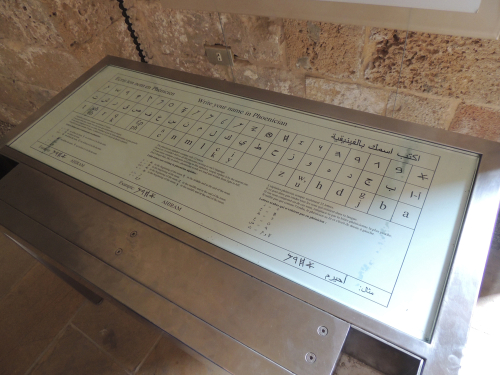
The first letter, ‘aleph, stands for “ox” and came from a drawing of an ox’s head. The Phoenicians took these symbols and made them fit with the sounds of their own canaanite languages. Other types of linear scripts were around, but the Phoenicians made their consonant alphabet known and used.
Many historians say the Phoenicians made a huge step because they built the first widespread alphabetic script. They organized it well, and their large trade network helped the phoenician script reach far from its home. This helped shape most alphabets after it all over the world.
Structure and Characteristics of the Phoenician Alphabet
The smart thing about the Phoenician alphabet is how simple and useful it is. This writing system is called an “abjad,” a type of writing system that has only consonants. When people used this script, they had to guess the right vowel sounds by looking at the words and knowing the language. This way worked well for languages like the Semitic languages.
There were 22 letters in the Phoenician script. Every letter had its own name and sound. This made the alphabet simple to learn, unlike other systems with hundreds of symbols. Now, let’s talk about the letters in this writing system and how this type of writing system worked.
Number of Letters and Their Phonetic Values
The Phoenician alphabet was comprised of 22 distinct letters, each representing a consonant sound. This was a perfect fit for Semitic languages like Phoenician, whose words are often built on three-letter consonantal roots. The meaning of a word could be understood from its consonants alone, with vowels providing grammatical nuance.
The letter names themselves were acrophonic, meaning the name of the letter began with the sound it represented. Many of these names were borrowed from everyday objects, a holdover from the script’s pictographic ancestors. For example, the letter mem meant “water” and represented the /m/ sound, while nun meant “fish” and stood for the /n/ sound.
This direct link between a letter’s name, its shape, and its sound made the system intuitive and easy to master. Here are some of the Phoenician letters and their names:
| Phoenician Letter | Letter Name | Meaning of Name |
|---|---|---|
| ? | ’āleph | Ox |
| ? | bēt | House |
| ? | gīmel | Camel |
| ? | dālet | Door |
| ? | mēm | Water |
| ? | nūn | Fish |
Unique Features of the Abjad Writing System
The Phoenician alphabet is a well-known type of writing system called an abjad. This type of writing system changed how people wrote because it used only consonants. It does not have any signs for vowel sounds. People using it guessed the missing vowel sounds from context. At first, it may seem tricky, but for Semitic languages, it worked very well.
In languages like Phoenician and Hebrew, words come from consonantal roots. These usually have three letters. These letters hold the main meaning of the word. For example, the root K-T-B means “writing.” By adding different vowel sounds to this root, people could get new words like “he wrote” or “a book.” The main point of the word comes from the consonants. This made the abjad system good for those who used it.
This writing system changed writing in a few main ways:
- Simplicity: The number of symbols someone had to learn dropped from hundreds to only 22.
- Speed: People could write faster since they did not need to add the vowels.
- Adaptability: It was easy for other Semitic languages to use, because they also used consonantal roots.
- Accessibility: Its easy form helped many more people, not just trained writers, learn to read and write—even merchants and regular people.
This is why the Phoenician abjad became such a big idea in the history of type of writing systems.
How the Phoenician Script Was Written and Read
The way people used the Phoenician script to write was usually from right to left in straight lines. This is how many other scripts that came from it, like Hebrew and Arabic, also go. It’s like you open a book at the back and read from the right side to the left on each line.
Some of the earliest Phoenician inscriptions used something called boustrophedon. This word means “as the ox plows.” In this way, one line goes right to left, and the next line goes left to right. Each line goes in a different way, like an ox moving back and forth in a field.
While people in some places wrote on clay tablets, the Phoenician script was used on many things. People would write on papyrus or on pieces of broken pottery, also called ostraca. The shapes that make up the writing in the Phoenician script were easy to make with ink and good brush, which was better for people who spent time by the sea, instead of using sticks on wet clay.
The Role of Phoenician Traders in Spreading Written Language
The Phoenician alphabet was not limited to its original home. The people who spread the alphabet were the Phoenician traders. These traders were well known for how they traveled and traded by sea. They went all over the Mediterranean, making settlements and starting pathways for trade from the Levant to North Africa and into Southern Europe.
As they traded things like wood, cloth, and glass, the traders also took another big thing with them—their writing system. Sharing this alphabet changed how people talked to each other all across the old world. It gave everyone a new, easy way to keep records and send messages. We can see that their business efforts helped the alphabet become popular in many places.
Maritime Commerce and Alphabet Dissemination
Maritime trade was the main driver that spread the Phoenician alphabet. The Phoenician merchants were known as masters of the sea. They built a wide network in the Mediterranean world that brought together many groups of people. Their ships took many goods to different places. More than that, they brought new ideas to every port. When they set up trading posts and colonies, their writing system came along with them every time.
For any group focused on trade, there had to be a way to keep track of trading deals, cargo, and contracts. This writing system was simple and did its job well. Other ancient scripts took a lot of time to learn, but the Phoenician one could be picked up quickly by sailors and regular workers, not only by scribes. This made it better than the other types of writing back then.
As Phoenician merchants met with people in the Mediterranean world all the time, many started using their writing system. These people saw how good it was for their business and everyday work. Because of that, people slowly changed the way they wrote and spoke. The spread of the Phoenician alphabet was never a forced act but happened on its own through contact, trade, and the need to understand each other better.
Adoption by Neighboring Civilizations
The Phoenician writing system was very useful. The people living nearby saw how good it was and made it their own. In the Middle East and around the Mediterranean, many groups started to use it for their own languages. The ancient Israelites are one example. They used a script almost the same as the Phoenician one to write Old Hebrew.
Other middle eastern kingdoms, like the Moabites and Ammonites, used this writing system too. The writing system later moved to the greek world, where it changed a lot. The Greeks did not just copy it. They changed it to work for how their own language sounded.
When people took this writing system, they would often do these things:
- Use the letter shapes and the sounds that went with them.
- Keep the old letter names, like alpha from aleph and beta from bet.
- Change the script a bit to work with their own language, especially by adding vowel sounds.
Archaeological Finds and Inscriptions Across the Mediterranean
Archaeological findings give solid proof that the Phoenician script was known in many places. People have found Phoenician inscriptions across the Mediterranean. This includes areas from Lebanon all the way to Spain. These finds help us see that the script was part of many people’s lives back then. You can see these ancient texts on things like monuments, pottery, and even small personal items. All this shows the Phoenician script was used a lot in daily life.
One famous and key find is the writing on the sarcophagus of King Ahiram of Byblos. This object is from around 1000 BC. It gives us one of the earliest full examples of how the Phoenician script looked and worked in the Early Iron Age. This discovery was very helpful in learning about the alphabet’s old forms and its use at that time.
Other big archaeological finds with the phoenician script include:
- The Nora Stone: This stone was found in Sardinia. It is one of the oldest Phoenician texts that people have found outside the Levant. It points to how the alphabet began to move west early on.
- The Pyrgi Tablets: These were found in Italy and are made of gold. They have a treaty written in both Phoenician and Etruscan. This shows that the script was used when making deals between different peoples.
- Numerous Ostraca: There have also been many broken pieces of pottery with Phoenician writing on them.
Influence of the Phoenician Alphabet on Later Scripts
The Phoenician alphabet has left its mark on the world through the scripts it helped create. This old writing system was the starting point for many key alphabets. The impact of the Phoenician script spread as it led to the greek alphabet, the aramaic alphabet, and, over time, the latin alphabets we use today in the West.
When each new group picked up the Phoenician writing system, they changed it to fit their own language. Still, the basic setup stayed the same. If we follow the chain from the start, we can see how it moved from the greeks to the forms we use today.
The Greek Alphabet: Adaptation and Change
The Greeks began using the Phoenician alphabet, and this was a big moment in the history of writing. The Greeks came across the script while trading and saw that it could be useful. But the Phoenician letters were not a perfect match for the Ancient Greek language. The Phoenician system, also called an abjad, did not have letters for vowel sounds. In Greek, vowels are very important for grammar, so they had to find a way to improve the script.
The Greeks did something smart to fix this problem. They took some Phoenician letters that stood for sounds not used in Greek and used them for their vowel sounds. For example, the Phoenician letter ‘aleph became the Greek vowel alpha (A). The letter he turned into epsilon (E). By doing this, they made the first type of writing system with different characters for both consonants and vowel sounds.
This change made the greek alphabet more clear and useful. With the new writing system, people could show spoken words more exactly on paper. This was important for putting their poetry, ideas, and history in writing. This improved alphabet became the base for many other types of writing system after that. The use of phoenician letters and the focus on vowel sounds helped shape all of these new systems.
From Greek to Latin: Foundations of Modern European Alphabets
The journey of the alphabet from Greece to the rest of Europe continued through Italy. The Greek alphabet was adopted and modified by the Etruscans, a civilization in ancient Italy, who created their own script. This Etruscan script, a form of Old Italic, was then borrowed by the Romans, who adapted it to write Latin. This adaptation formed the basis of the Latin alphabets that dominate Western alphabets today.
Many letters we use in English come directly from this lineage. The Romans adopted most of the Etruscan letters, which were themselves derived from Greek. They standardized the shapes and sounds, creating the clear, elegant script that would spread with their empire.
The direct line of descent is clear when you compare the letters. The shape and sound have been passed down through generations of scripts, with minor changes along the way.
| Phoenician | Greek | Latin |
|---|---|---|
| ? (‘aleph) | Α (Alpha) | A |
| ? (bet) | Β (Beta) | B |
| ? (gimel) | Γ (Gamma) | C, G |
| ? (dalet) | Δ (Delta) | D |
| ? (he) | Ε (Epsilon) | E |
Connections to Hebrew, Aramaic, and Other Semitic Scripts
The Phoenician alphabet did not just impact Greece and Rome in the west. It was also important for the growth of big writing systems in the East. The link between the Phoenician alphabet and other scripts, like the Hebrew alphabet and the Aramaic alphabet, is very strong. Around the start of the first millennium BC, scripts used for writing Phoenician, Biblical Hebrew, and Moabite looked so much the same that they could almost be mistaken for each other.
The Aramaic script, which came from the Phoenician system as well, became very important. It was the official writing style of the Achaemenid Persian Empire. People used it to write the Aramaic language, which became the main way to speak across much of the old Near East.
You can see this shared background in a few ways:
- Letter Shapes: Many letters in the Hebrew alphabet and Aramaic alphabet come right from letters in the Phoenician alphabet.
- Script Direction: The way the words go on the page is the same in Phoenician, Hebrew, and Aramaic—they all start on the right and go to the left.
- Abjad System: At first, the Hebrew alphabet and Aramaic script both were abjads. That means they just showed the consonants and did not write out the vowels. Later on, people made systems to show the vowels too.
Languages and Societies that Used the Phoenician Alphabet
The Phoenician alphabet was first made for writing the Phoenician language. This was a Semitic language that people spoke in big city-states on the Levantine coast. But the alphabet was not just for one language or group of people. As the power of the Phoenicians grew, more people used their script. Different groups changed and used the alphabet in new ways to fit what they needed.
The alphabet went from its home to places like Carthage. In Carthage, the script changed into what people called Punic. Now, let’s look at the groups that used this writing. We can also see how it helped people who spoke different languages talk to each other in the old world.
Use in Phoenician City-States and Colonies
The Phoenician alphabet was mostly used by the Phoenician people. They lived in city-states like Tyre, Sidon, and Byblos that were rich and free. In these places, the script was needed for many things. People wrote royal messages, religious texts, and most important, they used it for their big trading lives. Ancient texts found in these cities give us good records of their lives and what they did.
When the Phoenicians moved across the Mediterranean, they took the alphabet with them. They started new settlements from Cyprus to Spain. These places became centers where the alphabet was used. In each one, people used the script to handle trade, run colony business, and keep close with the homeland.
Now, the Phoenician language is not one people speak anymore. The alphabet is not in use today, but its impact is still with us. Many alphabets from around the world came out of this one. The script was made to fit the time and people. It was a tool for a busy group that sailed and traded far, even if their land was small.
Carthaginian and Punic Adaptations
One of the most well-known colonies of the Phoenicians was Carthage. You can find this city in today’s Tunisia in North Africa. As Carthage got bigger and started to make its own mark, its kind of Phoenician language and the writing system changed. This newer form is called Punic. The Punic script came straight from the old Phoenician, but over time, it took on a new style that was more flowing and curved.
The Carthaginian people used Punic script in both their work and personal life. It stayed as the main writing system in North Africa for many years, even after Rome took over Carthage. In fact, researchers have found that people kept speaking and writing Punic even when Rome ruled, up to at least the 6th century AD.
Key points about Punic adaptations include:
- Evolution of Style: Punic script turned into a more curved and flowing style. It was not as stiff as the early Phoenician way of writing.
- Long-Term Use: This writing system stayed around long after many other Semitic scripts were gone. This shows it was a big part of north Africa’s life and culture.
- Neo-Punic: In the time when Rome was in control, a newer form came up called Neo-Punic. It started to show some hints from Latin, but it still kept the most important parts of the old Phoenician structure.
Lasting Impact on Multilingual Societies
The Phoenician writing system was important in the history of writing. It helped many groups be able to talk to each other across the ancient world. The writing system was simple and easy to use. Because of this, people from different places and languages could use it as a shared tool to send messages and speak to one another. This was good for busy trade cities where Greek, Egyptian, Aramaic, and others came together to do business.
One smart part of the Phoenician writing system was that it used signs for sounds. This made it different from picture-based writing systems that were tied to just one language. The alphabet could be adapted to write almost any language people needed. That was a big change for everyone. For the first time, many cultures could borrow the writing system for their own use. They did not need to know a totally new or hard system.
Because of this, people came closer together. They could write treaties in more than one language and still use the same kind of writing. Merchants could make notes that their partners from other lands would understand. Ideas could travel from one group to the other very fast. So, the Phoenician writing system was not only a script but also a way to link different people. It really played a significant role in building a world where new languages and cultures could meet and work together.
Conclusion
To sum up, the Phoenician alphabet was a key change that helped build many writing systems we use now. It began long ago in the old Mediterranean world, where it grew because of people meeting and trading. This shows how important it was in helping people learn how to read and write. When we look at how it led to the Greek and latin alphabets, we see that this type of writing helped shape the basics of how we talk to each other today. Learning about the Phoenician alphabet makes us more aware of the history of written words. It also links us with a mix of languages that are still changing. If you want to know more about old scripts, you can ask our experts for a free consultation!
Frequently Asked Questions
Why is the Phoenician alphabet considered such a breakthrough in writing history?
The Phoenician alphabet changed the way people wrote. It was the first writing system to use an alphabet that many people could use. The phoenician script had only 22 symbols for sounds, so it was simple. This made learning to read and write easier for more people, not just a few scribes. The writing system played a significant role in making it easy to share ideas. Because it was simple, the phoenician script spread fast to many places. It later became the base for most of the new alphabets we use now.
What are common myths or misconceptions about the Phoenician alphabet?
Many people think the Phoenicians came up with the alphabet all by themselves. The truth is, their writing system came from older Proto-Canaanite scripts. What the Phoenicians really did was make this writing system better, use the same rules for everyone, and spread it far and wide through their trade. This is why so many people give them credit.