
Key Highlights
Here’s a quick look at what this article covers:
- Old Persian cuneiform is an old way to write used by the Achaemenid Persian Empire. People say it was made by Darius I around 520 BC.
- The script brings together different signs. It has alphabet signs, signs that stand for full sounds, and even signs for words. This makes the old Persian cuneiform script stand out among other writing systems.
- A well-known thing written in Old Persian cuneiform is the big Behistun Inscription. It helped people understand how to read this script.
- Some European scholars, like Carsten Niebuhr and Henry Rawlinson, were the first to start breaking the code of the Persian cuneiform script.
- This old way of writing helps us learn much about the history, the words, and the power that rulers of the Persian Empire had.
Introduction
Have you ever thought about how old kings told people about their wins for all time? The Persian Empire was one of the biggest powers in history. They used a special way to write called old persian cuneiform. With it, they shared stories about their strong leaders and the huge lands they ruled. Old persian cuneiform shows us the old persian language that the top people of the Persian Empire used. When we read these old persian writings, we find out what life was like more than two thousand years ago. The words bring us into the world of ancient persian times.
The Origins and Development of Old Persian Cuneiform
The story of how the Old Persian cuneiform script came to be is very interesting. Most ancient scripts changed slowly over many years. But the Old Persian cuneiform script was made on purpose. King Darius I said he started it around 520 BC, and he probably asked his writers to make a new script for his big public writings.
This special type of persian cuneiform soon became the way for kings to make important statements. That helped make it a big part of history. Old Persian was an Old Iranian tongue. It let the Achaemenid rulers stand out from other groups that used different cuneiform scripts back then. Now, let’s look at how people found this old persian cuneiform script and what was happening in history when it was made.
Early Evidence and Archaeological Discoveries
The story of Old Persian starts when people found it again after it was lost for a long time. For many years, people did not know about the script or what it meant. The beautiful writing on stones was confusing to everyone. In the 17th and 18th centuries, some explorers from Europe went to see places like the ruins of Persepolis. They wrote down what they found, and this made many people interested. These travelers copied the wedge-shaped marks they saw in the stone very carefully.
The first big clues about Old Persian did not come from the clay tablets they used to find in Upper Mesopotamia. Instead, these clues came from large stone monuments. These finds helped a lot in trying to figure out the writing and what it said. Some important places and finds are:
- Inscriptions at the ruins of Persepolis, the main city of the Achaemenian empire.
- The huge Behistun Inscription in what is now Iran.
- Some smaller items found all over the old empire, from the Syrian Desert to Persia.
These discoveries gave scholars what they needed to start trying to read and understand old persian. The script began to be used in the 6th century BC, starting around 520 BC when Darius the Great ruled. This means that, compared to other cuneiform writing systems, it is one of the newer ones.
Historical Context within the Achaemenid Empire
The old Persian script started during an important time in the Persian Empire, under the reign of Darius I. When Darius became king, he wanted people to know he was the true ruler. He needed to show his power all across the large and mixed group of people in his empire. So, Darius told his workers to make a new old Persian script. This script was meant for Achaemenid royal inscriptions and was a strong way to spread his rule and message.
In these writings, Darius called himself big titles like “Great King” and “King of Kings.” He wrote down his wins and family line in stone at well-known spots. By doing this, he made sure people would remember him and his business for a long time. The old Persian script started to be a sign to people of the strength of the Achaemenid family and the Persian Empire.
The story and value of old Persian cuneiform are closely tied to what the Persians wanted to do. The old Persian script was not used for things people did every day, like making a note with clay tablets. It was for big things. It showed the king had the right to lead and that he was in charge of many people and lands.
The Evolution from Earlier Writing Systems
Old Persian cuneiform was something new, but the people who made it did not do it alone. They had seen other ancient scripts before and got ideas from the old cuneiform writing system that started in Mesopotamia thousands of years ago. The signs all look wedge-shaped, showing this history.
The Old Persian cuneiform writing system is not like the earlier Akkadian or Sumerian scripts. Those had hundreds of hard signs. Old Persian is much easier, and uses a semi-alphabetic system. You can see some things it shares with the Ugaritic alphabet, which also wrote its sounds with cuneiform wedges but did not need as many signs.
Old Persian is not like Egyptian hieroglyphs, which used pictures. It is also not as difficult as old cuneiform systems that mixed signs for words and syllables. Old Persian made writing faster and easier. This helped the Achaemenid kings get their royal messages down quickly and clearly.
Structure of the Old Persian Cuneiform Script
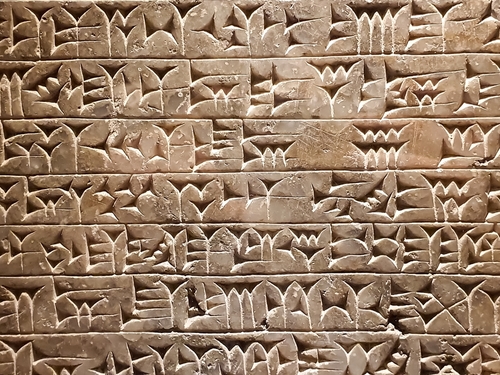
At first, the Old Persian script may look like a bunch of wedges placed together in a puzzling way. But, it really has a clear system behind it. The Persian cuneiform script is a mix of different writing types. It uses parts of an alphabet, a syllabary, and also logograms, which stand for whole words. This mix makes it stand out from other cuneiform scripts.
Its sign inventory is much smaller than the ones you see in older Mesopotamian writing systems. So, there is less to learn with the old persian script. To know Old Persian, you need to spot 36 different phonetic signs. There are also a few logograms, and a special word divider that is part of this cuneiform script.
Let’s break down these parts to see how the old persian script really works.
Symbol Inventory and Sign Classification
The core of the Old Persian script is its set of 36 phonetic signs. These are not purely alphabetic like the letters we use today. Instead, most of the different signs are syllabic, meaning they represent a consonant followed by a vowel. For example, a single sign could stand for “da,” “di,” or “du.” This simplified the sign inventory significantly compared to older cuneiform scripts.
Scholars classify these signs based on the sounds they represent, often using the International Phonetic Alphabet (IPA) for precise transcription. The system includes pure vowel signs, which are used at the beginning of words, and the consonant-vowel syllabic signs. Recognizing Old Persian symbols involves learning these phonetic values.
To give you an idea, here’s a small sample of the signs and their classifications. Note that the appearance is a simplified description of the wedge shapes.
| Sign Category | Example Sign (Simplified) | Transliteration |
|---|---|---|
| Vowel | ? | a |
| Syllable | ? | da |
| Syllable | ? | xa |
| Syllable | ? | mi |
Logograms, Syllabary, and Numerals
Besides its syllabic signs, the Old Persian cuneiform script used some special marks to help people write faster. The most useful of these were logograms. These are single signs that stand for a whole word. This was a quick way to write common words in royal messages. The script also had an easy-to-understand way to show numbers.
This setup connects the cuneiform script straight to how people spoke Old Persian. The main part of this script turned spoken sounds into signs, known as the syllabary. Logograms then gave a fast way to write key ideas. This mix of ways to write was a good fit for big stone carvings. The system included:
- Logograms for big words like “king,” “god,” “earth,” and “country.”
- A logogram just for the top god, “Ahuramazda.”
- A special wedge going at a slant to split words, so the text was much easier to read than other cuneiform scripts.
- A ten-based number system for counting.
The old persian cuneiform script was not the same as the Persian alphabet, which showed up later on. It put together different ways to write in one system. The numerals and logograms worked with the syllabic signs, so the carvings could share the whole meaning of the old persian language on stone.
old persian
persian cuneiform
cuneiform script
Comparison with Other Ancient Cuneiform Scripts
Yes, Old Persian cuneiform looks very different from other cuneiform scripts like Akkadian or Sumerian. While they all use wedge-shaped marks, the systems do not work the same way. Old Persian cuneiform script is known for being simple. The older cuneiform writing had many signs—sometimes hundreds—for many uses. These could stand for whole words, short sounds, or signs that help tell what words mean.
But Old Persian cuneiform script is not as complex. Most signs show syllables, and there are just a few logograms. This helps make the system clear and quick to use. Here are some main ways they differ:
- Sign Count: Old Persian has only 36 phonetic signs and a few logograms. Akkadian cuneiform used many more, with several hundred.
- Structure: Old Persian is semi-alphabetic. Older scripts were mostly logographic and syllabic.
- Word Divider: Old Persian uses a sign to break up words. This is something you will not find in most other cuneiform scripts.
Because it is simple, Old Persian cuneiform was easy to pick up and read. This script was made for the royal texts of the time, not for full records or big stories. Once the Achaemenids were gone, this script stopped being used. After that, other systems took over and turned into what people know as Middle Persian.
[old persian cuneiform script](#
Decipherment of Old Persian Cuneiform
For almost two thousand years, people did not know what the cuneiform inscriptions in Persia meant. The decipherment of Old Persian was a big step forward in the 19th century. It started when European travelers got curious. These people made careful copies of the strange writings they saw in old ruins.
The work to unlock the script was a lot like a detective story. It needed smart thinkers, careful guessing, and important moments when things became clear. When the code for Old Persian texts was cracked, the scholars not only brought back knowledge of old Persian. They also found the way to read other, even older cuneiform languages. Now, let’s see the people and the ways that made all this possible.
Pioneers in Decipherment and Breakthrough Moments
The story of how people cracked the code of ancient cuneiform inscriptions started with a few focused people. In the 1760s, a German explorer named Carsten Niebuhr made sure to copy the cuneiform inscriptions at Persepolis very carefully. He was the first to notice that the writing used three different systems, was read left to right, and that the easiest of these scripts had 42 unique signs.
After Carsten Niebuhr, a man called Georg Friedrich Grotefend made a big guess that paid off. He believed the writings talked about Achaemenid kings and saw that one string of words repeated as a royal title, “King, Great King, King of Kings.” He figured out the Old Persian names for Darius, Darius’ father Hystaspes, and for his son Xerxes. By doing this, he could match several sounds to letters in the script.
The last step came from Henry Rawlinson, a British officer. In the 1830s, he climbed the Behistun cliff to copy a giant text written in three languages. His work appeared in the Journal of the Royal Asiatic Society and helped finish the puzzle for the Old Persian part. This made it possible for people to figure out the writing of the other two languages—Elamite and Babylonian—too.
Methods and Challenges in Translating the Script
The work to figure out cuneiform, especially the Old Persian script, was a great example of using logic to solve tough problems. At first, there was an important thing to notice: people found the same writing at places like Persepolis and Behistun, but it was shown in three scripts side by side. Out of those, the one called Class I looked the easiest, and they were right to think it was Old Persian.
What did people do? They looked for things that happen a lot. They saw that a slanted wedge in the writing showed where words stopped, so they could pick out each word one at a time. Next, they looked at the names of people. They tried to match names they already knew from old Greek stories, like the names of the Persian kings. When they compared the words for Darius and Xerxes in many old persian texts, they could slowly start to figure out which marks made which sounds.
The hardest thing for them was that they didn’t have a tool to compare like a Rosetta Stone. So, the decipherment of old persian and the whole decipherment of cuneiform was done just by guessing and looking at many different patterns. The Old Persian script used signs where each one stood for a mix of a consonant and a vowel, which made things even more tricky. This was something that people like Christian Lassen had to figure out first, before they could translate all of it.
How Decipherment Unveiled Royal Inscriptions
When the Old Persian script was cracked, people could now unlock a lost past of royal stories and events. For the first time in many years, folks were able to read and get the meaning of the Achaemenid royal inscriptions. These words came right from the Persian kings, who wrote about their lives, beliefs, and how big the Persian Empire really was.
The Behistun Inscription was the most famous of all these. When its words were shared with the world, it showed that the old tales of Darius the Great—how he came to power and put down uprisings in the empire—were true. So, what once were strange marks carved in stone started to look like strong records from history. Now, the old persian script opened up new knowledge, like:
- The family lines and names of kings such as Darius and Xerxes.
- Lists that showed the groups of people and places run by the Persian Empire.
- Public notes from the kings about fair rules, keeping the peace, and their respect for their god Ahuramazda.
Now, the old persian inscriptions gave a lot for people to learn from. With these, history experts could check facts, and sometimes set straight what Greek writers like Herodotus said. All this gave a better picture of the Persian Empire and its rulers.
Key Royal Inscriptions in Old Persian
The story of Old Persian is seen in stone carvings found all over the big area of the old Persian Empire. These important royal writings show the power and respect that the Achaemenid kings had. Every Persian cuneiform inscription has a story to tell. You can see how a king became ruler or how a huge palace was built.
The Behistun Inscriptions are the most well-known of all. They played a big part in helping people read and understand the Persian cuneiform script. There are also many other such records at large archaeological sites. Let’s take a look at some of these amazing records from the past and see what they tell us about that time.
[Keywords used: old persian, persian cuneiform, persian empire, behistun inscriptions, persian cuneiform inscription]
The Behistun Inscription: Its Content and Significance
The Behistun Inscription is the most important out of all old Persian texts. It was carved into a limestone cliff in western Iran. This rock carving is a big story about Darius the Great. He wanted people to know who he was. The site also has a large carved picture of Darius himself. He is called the “King of Kings” and shows himself winning over his enemies. The size and hard-to-reach spot of the inscription were meant to help it last for all time.
The writing on this stone is in old Persian cuneiform script, Elamite, and Babylonian. Darius used these words to share how he became king. He says he is the real son and next ruler. He also writes about winning many fights against people who tried to take away his power. This writing worked like a message to support Darius and show that he belonged on the throne. In his inscription, Darius talks about:
- Darius’s family roots, linking him to the Achaemenid rule.
- His fights and work to keep his place as king.
- A statement that he has the right to rule, given by the god Ahuramazda.
The meaning of the Behistun Inscriptions cannot be overlooked. Since there are three kinds of scripts used there, this rock helped experts crack the code for cuneiform script. Now, people could understand not only old Persian cuneiform script but also the languages used long ago in Mesopotamia
Examples from Persepolis and Other Major Sites
While Behistun is the best known, there are many other old persian inscriptions found at the ruins of persepolis. This place was the big ceremonial capital of the persian empire. The cuneiform writing system can be seen on doorways, on staircases, and at the large gates. At persepolis, these old persian inscriptions are usually short and have set phrases. While they might not have as many words as what is at Behistun, they are still important.
At persepolis, you can see that the inscriptions mostly tell the king’s name and his titles. They also talk about his part in building the beautiful palaces. This is a way to show everyone who visited the big city just how strong and faithful the king was. There are writings from Darius the Great, his son Xerxes, and even kings who ruled after them. All of them left words on these walls. Here are some other big places with old persian inscriptions:
- The tomb of Darius the Great at Naqsh-e Rustam, which is close to persepolis.
- Some inscriptions found at Susa, which was also a top capital in the persian empire.
- A canal inscription from Suez, which shows that the persian empire even reached Egypt.
These old persian inscriptions prove that leaders used writing to show their rule all over the land—and to make sure there would be a long-lasting mark for all people to see.
What These Inscriptions Reveal about Royal Authority
The Old Persian inscriptions give us a clear look at what royal authority was like in the Persian Empire. These texts are strong and clear. They do not hide their message. They openly show power, right to rule, and approval from the gods. The phrase “King of Kings” was used many times. It was not just a fancy name. It showed the Persian ruler was the boss of all other local kings and leaders in his land.
In the old Persian inscriptions, it is clear that the king ruled with help from Ahuramazda. This god was the highest one in Zoroastrianism. Because of this, the king’s power was not only from the army, but also a duty given by god. Many times, the writing talks about the king making peace and fairness in the land. It also talks about him fighting lies and taking care of his people.
Even though old Persian cuneiform was used for these big writings, it was not the everyday language people used at work in the Persian empire. For their usual office language, they used Aramaic instead. This difference shows old Persian writing had a special job. It was made just for sharing big ideas about kingly power across the empire. It was not for daily business; it was made for everyone to remember, for a long time.
Modern Usage and Resources for Old Persian Cuneiform
Most people might think that old scripts like Old Persian cuneiform are only for museums or college papers. But now, this writing is being used in new ways because of the digital world. With the Unicode standard and special digital fonts, you can type Old Persian characters on your computer. This has helped a lot of researchers, students, and those who are interested in the subject.
The Old Persian language is not used every day and is not the same as the modern Persian spoken today. Even so, the writing is still important in books and on computers. There are many online resources and some university classes for those who have interest in it. You can find out more and even learn old Persian cuneiform if you want.
Unicode and Digital Fonts for Old Persian Script
For the Old Persian script to work on computers, it first had to be added to the Unicode Standard. The Unicode Standard gives every character a special number. This lets you use old persian in any program, on any device, and in any language. Old Persian was put into Unicode back in 2006. This move made digital fonts possible.
Now, there are digital fonts for old persian. These let people type and see old persian cuneiform on documents and websites. Many good fonts are free, and they try to look just like the old stone carvings. This is not the same as the newer persian alphabet, which came from the Arabic script.
If you want to type with old persian script, you can download fonts on the web. Here is where you can look:
- Font sharing sites such as FontSpace may offer persian cuneiform fonts.
- Some university and academic sites will give out special fonts.
- The ‘Alphabetum’ font is made for ancient scripts and has all the old persian set.
- The ‘Esnaashari & Sarhadi’s Old Persian Unicode Font’ is another font for this script.
Learning Tools and Resources for Reading Old Persian
Do you want to learn how to read the same language that Darius the Great used? There are now many tools to help you get started with Old Persian cuneiform script. It does take time and effort, but if you love history or old languages, you can learn the basics of the old Persian cuneiform script.
Most of these tools come from top schools and are shared by experts, so the info is good and follows the newest ideas in this field. You will find everything from simple guides about the script to books on the full old Persian language. You can use many things to get started on your way.
Some top ways to learn to read old Persian are:
- Online courses and stuff posted by the University of Chicago, where they spend a lot of time on the study of the old Near East.
- Textbooks and grammars that are put out by well-known publishers like Cambridge University Press.
- Websites that focus on old languages. These often have sign lists, sample readings, and translations of Persian cuneiform script.
- Academic articles and magazines that talk about special writings and points about the old Persian language.
No matter which way you want to learn, there is something out there for you to get into the old Persian cuneiform script and its history.
Conclusion
Old Persian cuneiform gives us a look into the ancient world. It shows us the way people used language, what their culture was like, and how power was held during the Achaemenid Empire. Learning about this writing system lets us know more about history. It helps us see how amazing early people were. When we look at where old persian started, how it was built, and the decipherment of Old Persian, we can see messages in royal writings that show us how people ruled and lived then. If you are interested in old persian or persian cuneiform, there are many resources you can use to learn. If you want to know more, you can get a free consultation to help guide you in learning about this old writing system.
Frequently Asked Questions
How can I identify genuine Old Persian cuneiform in museums or images?
To spot real Old Persian cuneiform, you need to look for simple signs. These are semi-alphabetic and not as hard to read as some other cuneiform scripts. One thing that shows it is true Old Persian is the slanted wedge, which works like a word divider. You can find real examples on items from the ruins of Persepolis at places like the British Museum. The old Persian writing is seen there for you to check and study.
Is Old Persian cuneiform still studied or used in modern research?
Yes, people still learn about old Persian cuneiform and the old Persian language. Historians, linguists, and archaeologists work with these topics a lot. Groups like the American Oriental Society and magazines like the Journal of the Royal Asiatic Society often share new work about old Persian texts. This helps all of us get a better look at the Achaemenid period using old Persian, Persian cuneiform, and the old Persian language.
Where can I find examples and translations of Old Persian royal inscriptions?
You can get translations of old persian inscriptions, like the well-known behistun inscriptions, in works from cambridge university press and also from university of chicago online. There are also many websites about ancient history that have easy-to-read translations and copies of the cuneiform inscriptions for everyone to see.