
Key Highlights
- The Maya civilization made one of the few writing systems in the world that was complete. Their logosyllabic script brought together word signs and sounds.
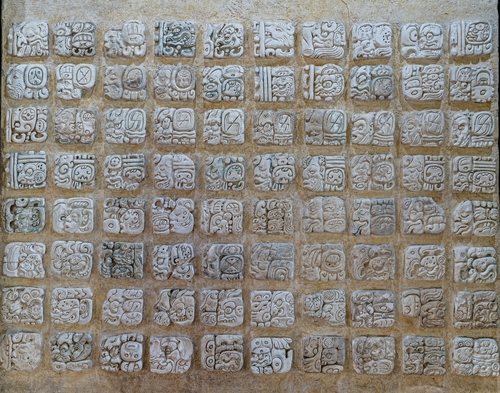
- Maya glyphs show up as complex symbols. These can stand for full words, ideas, or even single sounds. People often put these symbols into blocks.
- The way of understanding the maya script took a long time to figure out. A big step forward came from russian linguist Yuri Knorozov.
- The maya calendar was deeply linked with how they wrote things down. They used it to mark history, the family of kings, and religious ceremonies.
- The Maya texts that still exist, like codices and monumental inscriptions, give us a great look at the ancient maya and their lives.
- Maya writing systems are not like those that use just an alphabet. The maya writing system has hundreds of signs, which are made up of both images for whole words and sounds for making words.
Introduction
Have you ever thought about how old cultures kept their records? The Maya civilization is special because it is one of only five groups that came up with a complete writing system. The maya writing system and mayan script were rich and let them write down their history, beliefs, and knowledge in great detail. Lots of old writing systems couldn’t do what maya writing could, but the ancient maya system was strong and could share any thought or idea. Now, let’s get to know more about the ancient maya, their writing systems, and what made maya writing stand out.
Origins and Development of the Mayan Writing System
The Maya hieroglyphic writing system goes back many years. People can trace its start all the way to the 3rd century BC. This early Maya script was the first part of something big. It helped build one of the hardest writing systems in the Americas.
This was a big step for the Maya civilization. It let them keep close records of their lives and world. If you look back at its history, you see how the hieroglyphic writing system changed over time. You also notice what gave it its own style. The rise of these writing systems is an important part of how the Maya script and Maya civilization grew.
Historical Context of Mayan Civilization
The ancient Maya lived for many years and built great cities with a rich culture. The hieroglyphic script was very important for the ancient Maya. It was the main way for them to keep records about the lives of their kings and the history of their families. Not everyone could write; this skill was for just a few people, like priests and scribes.
Because of that, most maya inscriptions talk about what the ruling class did. You can see clear stories of things like the birth and marriage of kings, fights, and when they won or lost, all shown on public monuments. These carvings help us see what mattered most to the maya civilization for both politics and society.
The main focus on rulers and other high-status people means that dates matter a lot in the hieroglyphic script. Dates often take up a large part of any inscription. This shows how important time and family lines were to the Maya.
Early Forms of Mayan Script and Influences
The earliest known Maya texts were found at the site of San Bartolo in Guatemala. These old writings show us how the Maya script started. The first signs were the base for a way of writing that got more detailed and beautiful as time went on. The Mayan script was not like an alphabet where each symbol means one simple sound.
It used what we call a logosyllabic system. This means they had signs for full words and signs for different parts of words, or syllables. With this kind of system, scribes could write in many ways. The way this system came to be was likely because people needed to keep track of time, like calendars, and tell stories about kings.
This mixed logosyllabic system is what makes the Mayan script different from writing with an alphabet. Maya scribes did not just use a few letters. They could pick from hundreds of signs. This let them make texts that were both good to look at and rich in language, across their many works of maya texts.
Structure of the Mayan Writing System
The Maya writing system is called a logosyllabic system. What does this mean to you as someone reading it? Maya hieroglyphs use two kinds of signs. Logograms are signs that show whole words or ideas. Syllabic signs show parts of words as sounds.
These signs come together in “glyph blocks,” and that is how people make words and sentences. This way of writing is one of the most advanced writing systems of the world. Now, let’s look at how all these parts fit together.
Logograms and Their Function
Logograms are signs that show both the sound and the meaning of a whole word. Today, we use some simple logograms like “@” to mean “at” and “&” to mean “and.” These are examples you see and use, too. In ancient maya scripts, most signs you come across are logograms for words such as “jaguar” or “shield.”
Inside a single word or what is called a “glyph block,” the largest sign you see is usually the main sign. The main sign is often the biggest part. The mayan hieroglyphs look like drawings, so they show what the word means. This makes the writing system easy to spot. For example, the sign for a mountain may look like a small, shaped hill.
Still, if mayan writing used only logograms, they would have needed thousands of signs, and that would not be good. To help with this, the ancient maya mixed these word signs with small pieces that show the word’s sound. Doing this gave their script great versatility and made it much simpler to use.
Syllabic Elements and Phonetic Complements
The Maya did not just use logograms in their writing. They also used syllabic signs, called phonograms. These signs stand for the sound of a full syllable, such as “pa,” “ma,” or “ka.” This is a big way the maya writing is not the same as a simple alphabet. Words in the Mayan languages often use a pattern that goes consonant-vowel-consonant. This means the Maya scribes would write words by how they sounded.
There is an interesting rule in maya writing system using syllabic signs. The last vowel at the end of the word is often not said out loud. So, if you see a word for “mountain,” which is witz, it might be spelled with the syllables wi and tzi. But when you say it, you drop the “i” at the end.
In the maya script, syllabic signs can also act as phonetic complements. These are small syllabic signs placed beside a logogram to help people know just how to read it. This is important because many logograms have more than one possible meaning. For example, a phonetic complement would show if a sign should be read as tuun (“stone”) and not something else. Using phonetic complements makes the maya writing more clear.
Decoding Mayan Glyphs
The journey to understand maya writing took a long time. It was hard and slow. For many years, no one knew what the hieroglyphic inscriptions meant. The decipherment of the maya script needed the help of many people. There were a few big steps forward. These key moments helped us find out more and more about the system.
A pivotal moment happened in the 1950s. At this time, a russian linguist named Yuri Knorozov made a big discovery. His ideas changed how people looked at maya texts. He showed that the glyphs were not just pictures. The decipherment of the maya script came from seeing that they were part of a working sound system.
Techniques Used in Decipherment
Figuring out the Maya script was like working on a big, old puzzle. One of the first clues was from the 1500s and came from Bishop Diego de Landa. He tried to make a simple A-to-Z chart for the signs, but he was wrong about how they worked. The script was made of syllables, not single letters, and this confused him.
A big step happened later because of Yuri Knorozov and his new way to look at things. He said that the marks were for sounds, not for just single letters. He tested this idea with pictures found in the Maya codices. By doing this, he started to find out what each sign sounded like.
When experts learned what a sign stood for, they used dictionaries of Mayan languages. This way, they could find which words matched the signs and put together a list. They used some smart tricks for this:
- Pattern Recognition: They spotted patterns in the signs and linked them to things like leaders or animals.
- Positional Analysis: They looked at where the signs showed up in the writing, for example, seeing that the date was usually at the beginning.
- Linguistic Comparison: They used today’s Mayan languages to help guess what old words might sound or mean.
- Cross-Referencing: They checked different carvings to spot the same names or events that showed up in more than one place.
Breakthroughs and Key Figures in Translation
The full decipherment of the Maya script was a collaborative effort spanning generations, but a few individuals made critical contributions. While his “alphabet” was flawed, the manuscript of Diego de Landa provided a crucial, albeit misunderstood, starting point by preserving some glyphs and their supposed phonetic values.
The game-changing moment belongs to Yuri Knorozov. Working in the 1950s, he realized de Landa’s signs were not letters but syllables. He famously used the glyphs for “turkey” (cutz) in the codices to prove his theory, opening the door for the phonetic reading of Maya texts.
Their contributions highlight the difference between misunderstanding the system and cracking its code. The work of these and other scholars turned the hieroglyphic script from mysterious symbols into a readable record of Maya history.
| Figure | Contribution |
|---|---|
| Diego de Landa | Wrote Relación de las cosas de Yucatán, which included an “alphabet” that later provided clues for phonetic decipherment. |
| Yuri Knorozov | Proposed the syllabic approach, proving that Maya glyphs represented sounds (syllables), not just letters or ideas. |
How Mayan Glyphs Work
To really see the beauty and depth of maya writing, it helps to know how maya glyphs work. The people who wrote with this system put different signs together in box-shaped layouts called glyph blocks. Each block can show just one sign or a few signs, and they make a word or a short idea.
The pictorial nature of the maya writing system makes it even more interesting. The pictures are not just shapes—they mean something by themselves. How you see the signs inside each block, and the steps you take to read them, follow set steps and rules. Now, let’s look at how this structure works in the maya writing system.
Arrangement and Reading Order
When you look at a Maya text, you can see the glyphs are put together in a neat way. There is a clear pattern in how they are placed. The general rule is to read from the top left, go right, and then move down to the next line. Most of the time, the blocks are in columns of two glyph blocks.
In each glyph block, you read the signs from left to right and from top to bottom. The biggest sign, which people call the “main sign” or the “largest sign,” is usually read first. After that, you read the smaller signs, or “affixes,” that are attached to it.
This way of reading the maya script was needed so people in different places could all understand the writing. The scribes could be creative when they made the glyphs, but the setup always gave a way to keep everything clear. This structure helped the Maya script work well everywhere.
Visual Components and Symbolism
The visual parts of maya glyphs are full of detail and meaning. Many of these signs are pictures, so you can see animals, things, or body parts in them. These maya glyphs are not only used for decoration. Each one has a meaning you can get from the picture. For example, if you see a “jaguar” glyph, it might look like a jaguar’s head.
The pictorial nature of the maya writing system let scribes be very creative. They could write a word in many different ways. Some used only signs that stand for whole words, while others wrote phonetically, using syllabic signs. Sometimes, they mixed both types in the same maya script. This kind of freedom showed what made the maya writing so special.
But the maya glyphs are also tied to what the Maya people believed. The signs did more than show words. For example, the colors of some glyphs were also about directions or gods. So, each glyph is a look into the maya worldview.
The Mayan Calendar in Writing
The famous Maya calendar was more than just a way to keep track of the days. It was a key part of maya writing. In fact, you will see that maya writing system often started hieroglyphic texts with a date, especially on big stones and monuments. This tells us that time had a big place in their lives.
The Maya made use of many calendars that worked together. Some of them were the Long Count and the Calendar Round, which helped keep track of time for many years. They wrote these dates with the maya writing system, so events in their history were tied to how they saw the world and time moving on. Now, we will take a closer look at how these calendar systems worked.
Long Count and Correlation with Time
The Long Count calendar was the way the Maya kept track of time for many years. You can think of this like a huge timeline in history. The Maya used it to put events in order, starting from a special creation date. The writing of Maya hieroglyphs for the Long Count was very exact. It helped them make a clear record of what happened in their history.
This system was key for saving history. The Maya wrote down Long Count dates for things like a king’s birth, when he became king, or when there was a big fight. Using the writing of Maya hieroglyphs, they gave their dynasty a timeline that was easy to follow. People today and archaeologists both look a lot into how these dates match up with our calendar.
With the Long Count, the Maya script became a strong way to write down history. They carved these dates in stone, so what the rulers did and what happened in their cities would be remembered for a long time.
Calendar Round and Ritual Use
Along with the Long Count, the Maya also used the Calendar Round. This system put together two cycles: one was a 260-day religious calendar called Tzolk’in. The other was a 365-day solar calendar called Haab’. When you got a date using both calendars, it would not come up again for another 52 years. This made the cycle very important in daily life and religious work for people in the maya civilization.
Writing down these dates meant a lot for the Maya. It was closely tied to the maya civilization’s ways of life and beliefs. People used the Calendar Round to pick good times for their biggest events. Some of these were:
- Religious festivals and ceremonies
- Planting and picking crops
- Looking for signs in the sky
- Giving gifts or offerings to the gods
You will see Calendar Round dates on public monuments, in books that they made, and also on their pottery. This shows us that keeping track of these dates mattered to all the Maya, not just a few people. The dates helped them know when to talk to their gods and also how to live in the world around them.
Societal Roles of Mayan Writing
Maya writing was more than just something to look at. It was very important in Maya society. People used it for things like government, religion, and life day by day. Not everyone could write. In the Maya world, only a small group could read or do the writing. Most of the time, it was the rich or priests, and the Maya scribe was someone everyone respected.
These scribes used writing to help show the power of those in charge. They set up religious events and wrote down what mattered most for the people. Back then, Maya writing worked kind of like social media does now. It put out main ideas on big stones and saved what people needed to remember in their books. Here, we will look more at how Maya writing was used by the Maya scribe as their own kind of social media.
Purposes: Religion, Governance, and Daily Life
In religion, Maya writing played a big part. Maya scribes would write down prophecies, data about the stars to help predict eclipses, and rules for rituals in special books. They called these books codices. These texts told priests what to do and helped keep the universe in balance.
The script was also important for running things. Leaders of the Maya civilization used the script as a tool to show their power. They ordered big monuments that had long stories about their family history, battles they won, and who they married. When they put up these writings for people to see, it made their right to rule look stronger and showed the people they were in charge.
Much of Maya writing was about rulers, but it was also used for more everyday things. Codices talk about farming, raising bees, and giving offerings. These records let us see that maya writing was not only for the elite, but was also used in regular life. It helped people plan farming and manage the economy that kept Maya civilization going.
Recording History and Genealogy
One of the main uses of Maya writing was to keep records of history and family lines. The Maya knew the value of their own place in time. They used their script to write down past events with great care. Monumental inscriptions on stelae—these are carved stone slabs—show many true stories from the past.
Many maya inscriptions share details about the lives of leaders. They show the full family history for their royal lines. Maya texts would tell who a king’s parents and grandparents were. This links each ruler to strong family roots. Doing so helped make sure a king’s right to rule was clear. It also proved that the same group was in charge over time.
When they carved these records on stone, the Maya made their history last. The deep detail saved in maya writing back then helps scholars now find out what happened in maya cities. From these texts, people today can see the maya were some of the most well-recorded peoples of old America.
Inscriptions and Surviving Mayan Texts
So, where can we see this writing system now? Thousands of Maya inscriptions are still here. You can find them carved into stone monuments. Some are painted onto pottery. Others are written in special books called codices that fold out like a screen. These are the main things we have to learn about the ancient Maya.
Sadly, only a few of the codices made from bark paper lived through the Spanish conquest. The rest got lost over time. Most of what we know comes from the strong hieroglyphic inscriptions that people found at Maya archaeological sites. These important texts tell us a lot about the ancient Maya world. Let’s look at some of the places where people have found these texts.
Locations of Major Glyphic Inscriptions
People have found many major Maya inscriptions at different archaeological sites across Mexico, Guatemala, Belize, and Honduras. In the past, these places used to be busy cities. Here, rulers would put up public monuments to remember their big moments and what they did. The oldest texts found so far are at the site of San Bartolo in Guatemala.
Some of the best-known and largest hieroglyphic texts come from cities like Tikal, Palenque, Copan, and Calakmul. You will usually see these inscriptions on:
- Stelae (these are upright stone monuments)
- Lintels (beams set above doorways)
- Altars
- Hieroglyphic stairways
Most of these public monuments were set up in plazas and courtyards. This way, people in the city could see them in their daily lives. Now, many of these artifacts are still found at their original places. Some have been moved to museums, including ones in Mexico City, to help keep them safe and cared for.
Codices and Other Ancient Mayan Documents
The Maya wrote down what they knew, not just on stone, but in books too. These books were called codices. They made them from long pieces of bark paper, folding them like an accordion. A lot of these books were lost because Spanish priests burned most of them in the 1500s. There are only four Maya codices left today.
People gave each Maya codex the name of the city where you can see it now. They are the Dresden Codex, the Madrid Codex, the Paris Codex, and the Maya Codex of Mexico. These old maya texts have very useful facts about maya astronomy, their rituals, and their daily activities. You do not always find this information in monumental inscriptions.
These codices show a special way of keeping history. They focus on knowledge, not just the stories about kings. If you look at the earliest known maya texts on stone, you see that the maya used their hieroglyphic writing system in many different ways. They could write about almost every part of their life.
Conclusion
To sum up, the Mayan writing system is a big part of history and culture. It fits right into the life of the Mayan people. From the way it started, to the way the glyphs and the calendars work, learning about this old script helps us know more about what the Mayans were able to do with their minds. When we can read the glyphs, we get to see what they thought, how they ruled, and what daily life was like for them. It shows us how writing helped keep their history and who they are alive. If we keep looking into Mayan writing, we find not only a language but a close link to a group of people that still interests us today. If you want to know more about this amazing topic, please get in touch for more helpful mayan writing resources.
Frequently Asked Questions
How many symbols are there in the Mayan writing system?
The Mayan script has more than one thousand known glyphs. Still, people did not use more than 500 at one time. The maya writing system uses both logograms, which show whole words, and with about 150 syllabic signs. These syllabic signs stand for sounds in a word, and there can be many different ways to write each sign. The mayan script and its maya writing and syllabic signs are part of what makes this way of writing special.
What language did the Mayan glyphs record?
The Mayan script was used to write a few types of the Mayan language family. Most of the big maya texts talk about an old type of Ch’olan. The maya writing found in the surviving books is mostly in Yucatec Maya. The maya writing system could fit different but close languages.
Are there resources for learning to read basic Mayan glyphs?
Yes, you can find a lot of resources. There are online workshops and PDFs like the “Introduction to Maya Hieroglyphs” from the XIX European Maya Conference. You can also watch video tutorials. Many websites have searchable dictionaries of Mayan languages and collections of Maya glyphs. These can help you start to know and understand basic Maya glyphs.