
Key Highlights
Here are the key points from our look at the Latin alphabet:
- The Latin alphabet is also called the Roman alphabet. It came from the Greek alphabet, with help from the Etruscans.
- This writing system started in Italy around the 6th century BC. At that time, it had only 19 letters.
- Letters like J, U, and W were added much later. This happened in the Middle Ages and the Renaissance, so the alphabet could show different sounds.
- The Roman Empire helped spread the Latin script all over Europe.
- Today, this writing system is the most used alphabet script in the world. People have changed it so it works for hundreds of languages.
Introduction
Have you ever thought about the letters that you use every day? The Latin alphabet is now the most used writing system in the world. But its story started many years ago and went through many cultures. This alphabet is the base for English and many other languages. It did not pop up by chance. It changed and got better over many years. In this story, you will get to know how the roman script started long ago and how it has become the top way for people to write and talk with each other now.
Understanding the Latin Alphabet
The Latin alphabet, also known as the Roman alphabet, is the set of letters you are seeing right now. It started from the greek alphabet, and the ancient romans used it a long time ago. Through many years, this writing system became the main way of writing for many languages around the world.
So what makes the latin script stand out? The way it is built and how it changed through time makes it different from other systems. Let’s take a closer look at what the latin script is and how it matches up with other big writing systems in the world.
Defining the Latin Alphabet and Its Unique Features
The Latin alphabet is a writing system that uses letters to show basic speech sounds. Each letter stands for a single sound, which is called a phoneme. This is what makes the roman alphabet easy to pick up and use for different languages. You just need to know the standard letters of the latin alphabet to start writing words.
Some other writing systems use symbols for full syllables or even whole words. But the roman alphabet shows vowel and consonant sounds on their own. This makes it flexible. It can let people change it a little to fit the sounds of many different languages.
Today, the latin alphabet has 26 basic letters. But in the past, there were only 19. Over time, the alphabet added more letters to fit the needs of the groups that use it. This ability to change is one reason the roman alphabet works so well in many parts of the world.
Distinctions Between the Latin Alphabet and Other Writing Systems
The Latin script is not like many other writing systems in the world. It came from the Phoenician alphabet through the Greek alphabet, but over time, it started to show its own traits. You can see that it shares roots with things like the Arabic alphabet, but they turned out very different.
One big thing that sets it apart is its style. The Latin alphabet is made of letters. Each letter is there for one sound. It is not like logographic or syllabic systems.
Here’s how the Latin script compares to other writing systems:
- Chinese characters: In this system, each symbol stands for a word or idea. It does not show a single sound.
- Arabic alphabet: This type is called abjad. Letters here show mainly consonants. Vowels are added if needed and are shown with signs above or below.
- Japanese Kana: This script is a syllabary. Each sign stands for a whole sound like “ka” or “shi”.
How the sounds and meanings are shown in each writing system is what makes them stand out from each other.
Early Origins of the Latin Alphabet
The story of the Latin alphabet started a long time before the Romans. It goes way back to the Middle East. There are parts of it that come from ancient Egyptian hieroglyphs. People did not just make this early script out of thin air. It was shaped over the years by many changes, starting with a script called Proto-Sinaitic.
That first script was given from one culture to another. Each group made it a bit different. One of the most important parts in this story is the Phoenician alphabet. Let’s look at how these old ways of writing were handed down and changed over time. These changes helped build the letters we use now.
Proto-Sinaitic Roots and their Transmission
The story of the alphabet started about 3,750 years ago in the Sinai Peninsula. People used something called Proto-Sinaitic script. It is the oldest known alphabet. This script came from Egyptian hieroglyphs. But instead of drawing big symbols for words or ideas, they changed them to show the sounds of their Semitic languages.
This new way of writing soon spread to Canaan. That area is now part of the Middle East. From Proto-Sinaitic, the Phoenician alphabet was made. The Phoenicians were good at trade and sailing. They took their alphabet all around the Mediterranean.
Their writing was the start for other scripts, like Hebrew and Arabic. What matters most here is that the Phoenicians gave their alphabet to the Greeks. This was a big step forward for writing in the world.
Influence of the Greek and Etruscan Alphabets on Latin Letters
When the Greeks took the Phoenician alphabet, they did something big. They added vowels. The Phoenician alphabet mostly showed just consonants. The Greeks used some old letters and made some new ones to show vowel sounds. This greek alphabet became the first full alphabet. It helped their language in many ways and made it very useful.
The Etruscans, who lived in Italy around the 7th century BC, then started using this greek alphabet too. They changed some greek letters so the sounds of their own language could be shown. Today, people can read most Etruscan words because it looks a lot like ancient greek writing. But the meaning of the Etruscan language is still hard to know.
Later, the Romans took the etruscan alphabet to write their latin language. They kept many letters, got rid of the ones they did not need, and changed some to fit their words. This is why some letters we use today still look just like old greek letters. The alphabet of today comes from greek to Etruscan and then to latin.
Development in Ancient Rome
The ancient Romans helped shape the Latin alphabet, making it look like what we see today. When the Roman Empire got bigger, its language and writing system spread with it. At first, writing was used to record history, praise important people, and for official things. This skill was not for everyone. It was only for a few people at the top.
The Roman script in those days had some interesting parts. We can look at how the ancient Romans changed the alphabet to fit their own language. We can also see what some of the first letters looked and sounded like.
Adaptation of Letters for Latin Sounds
The ancient Romans changed the Etruscan alphabet so it could match the sounds used in the Latin language. They removed some letters from the Etruscan alphabet because they were not needed for Latin words. These changes helped them make a better roman alphabet.
One big change the Romans made was adding the letter ‘G’. At first, the letter ‘C’ came from the Greek ‘gamma’ and was used for both /k/ and /g/ sounds. About the 3rd century BC, they put a bar on the ‘C’ to create the new letter ‘G’. This new letter showed just the /g/ sound, and it made speaking and reading easier.
The Romans also changed other letters to suit the latin language better. Each letter was shaped to fit how they spoke. This helped them make their writing system match their true phonetic values and sound values. Because of this, the roman alphabet worked well for everything, from big public writing to simple daily notes. This clear link between letters and sounds was one thing that set their writing system apart.
Early Forms and Pronunciation of the Classical Latin Alphabet
The classical Latin alphabet had 23 letters when the Romans used it. It did not have J, U, or W like we use today. Back then, the letter ‘I’ stood for both the vowel /i/ and the consonant /j/ sound. The letter ‘V’ showed both the vowel /u/ and the consonant /w/ sound.
In classical Latin, words were spoken the same way each time. For example, the letter ‘C’ was always like a ‘K’ sound. ‘V’ was spoken like the English ‘W’ sound. People wrote from left to right. This was different from old ways, where they sometimes wrote right to left or used both ways.
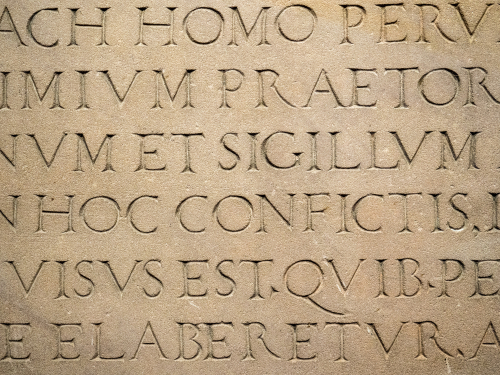
The early roman script was mostly made up of big, square letters. These were seen cut into stone on old buildings. They made them so people could see the words well and so they would last a long time. In those days, they didn’t use punctuation marks, or leave space between words like we do now. If someone wanted to show a pause or change of thought, they often just started a new line.
Keywords: classical latin alphabet, classical latin, roman script
Evolution Through the Ages
The Latin alphabet kept changing even after Rome fell. In the Middle Ages, the writing style changed a lot. People who wrote books by hand started to use new ways of writing. These ways were quicker and easier than using the old Roman capital letters.
This change happened because it was needed to make things easy and also because of rules made by leaders. Let’s see how the people who wrote in the middle ages changed the alphabet and how their changes shaped the letters we use now.
Medieval Transformations and Abbreviations
During the Middle Ages, people started to write in a way that was rounder and moved more smoothly on the page. For daily needs like letters or contracts, a script called Roman cursive was used. This style was faster to write, and letters started to link, which helped bring about lowercase letters.
Scribes who needed to copy many religious and school texts made up many abbreviations. They did this to save time and keep from using too much parchment. These short forms were used in many manuscripts, which now makes it hard for people today to understand without learning these tricks first. People in different places also made their own ways to write, which were called “hands.”
In the 9th century, there was a big change with help from the emperor Charlemagne. He wanted everyone in his empire to use the same way to write. So, he pushed a new script called Carolingian minuscule. This script was easy to read, brought in lowercase letters, and set even spaces between words. Carolingian minuscule became the base for the lowercase letters that people use in modern writing.
Key Changes from the Middle Ages to the Renaissance
The shift from the Middle Ages to the Renaissance made the latin script even better. The Carolingian minuscule had brought clear lowercase letters, which set a new way to write. Scholars in the Renaissance looked back at old times and put these simple lowercase letters together with strong Roman capital letters, often for titles and headings.
This pairing of uppercase and lowercase is still the way we write today. The Renaissance was a time where people wanted everything to be the same, so the look of letters became more set all over Europe. This happened because there was a lot of sharing between cultures during this time.
Other big changes during this time included:
- The slow, steady split of ‘I’ and ‘J’, and ‘U’ and ‘V’ into their own single letters. This helped show which letter stood for a consonant and which was for a vowel sound.
- The start and growing use of punctuation marks to help people understand the way sentences worked.
- The first steps for the addition of diacritics in many languages. This change made it possible to show sound details for words.
This time really shaped the look of latin script, mixing capital letters with lowercase letters. It also opened the door for new changes, like the addition of diacritics.
The Emergence of Modern Latin Alphabet
The modern Latin alphabet comes from old classical and medieval scripts. But, we now have some big changes that make it better. One of the main upgrades is the use of lowercase letters. There are also new things like punctuation marks and the same shapes for letters. These changes really help the way we write and read today.
The printing press made a big difference in the history of the alphabet. It helped to set the rules for how we write letters and use punctuation marks. After the printing press, the alphabet started to look more like what we know now. Let’s look at these key changes.
Introduction of Lowercase and Diacritical Marks
The idea of lowercase letters did not start quickly. It came from cursive writing that people used because it was faster for daily tasks. Letters started to get smaller and more rounded. This made it easier for people to write them. But the real change came with the Carolingian minuscule script. Charlemagne helped spread this new style of writing in the 9th century. This made a clear and easy-to-read set of lowercase letters.
This change was big compared to the all-capital writing that was used in ancient Rome. The new way to write helped people read and copy texts much faster and with less trouble. That was big for saving and sharing knowledge during the Middle Ages.
As more languages started to use the Latin alphabet, there was a need to show some sounds that were not in the old Latin. This is why diacritical marks got added. These are little signs, like accents or cedillas, put on letters. They let languages such as French, Spanish, and German show the sound of a word the right way, with the letters already in the alphabet.
Standardization and Printing Press Influence
The printing press was made by Johannes Gutenberg around the year 1450. This was a big moment for the Latin alphabet. Before this, people wrote words by hand and there were many ways to write the same letter. Using movable type meant that printers had to pick one clear way to show each letter. They picked the styles most people liked and could read, so our alphabet became more set in place.
Printing let people make lots of books. This helped spread spelling and grammar that was the same across lots of places in Europe. People also used punctuation marks more often, things like commas, periods, and question marks. This made reading easier for people because it was all more clear.
Because of this time where writing became the same everywhere, it was possible to add even more letters and signs later on. As the years went by and new things like computers came, people needed to show new symbols and letters for different languages. The clear and steady rules from the printing press made this possible. That is why the Latin alphabet can work even in the digital age.
Spread of the Latin Alphabet Worldwide
The journey of the latin script did not stay in Europe. The roman script began its big trip during the time of the roman empire. As the roman empire grew, it took the script all over Europe. Later, european explorers, missionaries, and colonists brought the latin script to other parts of the world. They went to the americas, africa, and asia.
Because of this, the alphabet started to be used for many new languages. Some of these new languages did not have writing before the latin alphabet. Now, let’s see how the latin script moved all around the world and what it did for language and technology.
Adoption by European Languages
The Latin script first came to Europe with the Roman Empire. It was used for the Romance languages that came from Latin. Some of these languages are Italian, French, Spanish, and Portuguese. When Rome fell, Christian missionaries helped spread the Latin script even more.
People who spoke Germanic languages like German, Dutch, and English started to use the Latin script too. The Old English alphabet was first written with runes, but later missionaries brought in the Latin script. In the same way, many Slavic languages, like Polish, Czech, and Croatian, used the Latin script because of the influence of Roman Catholicism.
Each language made changes to the alphabet. They sometimes added marks or put letters together to make special sounds. This helped the Latin script grow and become the top script in Western and Central Europe.
Global Use Beyond Europe—Americas, Africa, and Asia
The age of exploration and colonization started in the 15th century. During this time, the Latin script spread all over the world. When European countries set up colonies in the Americas, Africa, and Asia, they brought their languages and writing with them. Many native scripts were pushed out, or people used the Latin script for the first time for their own language.
In the Americas, people use Spanish, Portuguese, French, and English—all with the Latin alphabet. Now, from the United States to Argentina, the Latin script is the main alphabet.
In other places, many countries chose to use the Latin script or were influenced to do so. They did this to make things like world communication and new technology easier. Some key examples are:
- Vietnam: The Vietnamese language changed from using a character-based style to the Latin script in the 20th century.
- Turkey: In 1928, Turkey traded the Arabic script for a Latin-based alphabet to help modernize the country.
- Indonesia and Malaysia: Both use the Latin script for their national Indonesian languages.
- Many African languages now use the Latin script too.
Impact on International Communication and Technology
The Latin alphabet is used in many countries and has changed how people talk to each other around the world. Since many big world languages use it, the Latin script has become an everyday tool for business, science, and talking between countries. Having the same letters helps people write to each other across borders with less trouble.
In technology, you can see this even more. The basic Latin alphabet was the starting point for early computers and messages sent by machines, like with ASCII. Because of that, it is still key to how the internet works, how code gets written, and the keyboards we all use.
Also, the Latin script is the base for the International Phonetic Alphabet (IPA), which experts use to write down how any word sounds. This shows that the basic Latin alphabet is helpful, flexible, and still has a big part in today’s connected world. The simple and useful design has made it needed when people want to work together around the globe.
Structure and Variations of the Latin Alphabet
We often think the basic Latin alphabet has just 26 letters. But there is more to it. The basic Latin alphabet is the main part of the script. Many different languages have made changes to the alphabet to fit what they need. This means there are extra letters, combinations of letters like ligatures, and even groups of two or more letters, called multigraphs.
These changes show us the basic Latin alphabet can be shaped in many ways. In this piece, we will look at what makes up the alphabet and how different languages change it with their own additional letters.
Basic Letters, Ligatures, and Multigraphs
The modern English alphabet uses the 26 letters of the basic Latin alphabet. Each of these letters, from A to Z, is a distinct letter that originally evolved from a Greek or Etruscan predecessor. For example, ‘A’ came from the Greek ‘alpha’, and ‘B’ from ‘beta’.
In addition to these basic letters, some scripts use ligatures and multigraphs. A ligature is when two or more letters are joined into a single character, like ‘æ’ (from a and e). A multigraph is a sequence of letters that represents a single sound, such as ‘sh’ or ‘ch’ in English.
These elements add another layer to the writing system. While the basic letters form the foundation, ligatures and multigraphs allow languages to represent sounds more precisely without inventing entirely new letters. Here is a brief look at some of the letters and their origins.
| Letter | Origin | Notes |
|---|---|---|
| A | Greek ‘alpha’ | Present in the earliest Latin alphabet. |
| C | Greek ‘gamma’ | Originally represented both /k/ and /g/ sounds. |
| G | Modification of ‘C’ | Introduced in the 3rd century BC to distinguish the /g/ sound. |
| J | Variant of ‘I’ | Became a distinct letter in the Middle Ages. |
| U | Variant of ‘V’ | Separated from ‘V’ in the 16th century. |
| W | Double ‘U’ (‘VV’) | Introduced in the 7th century to represent the /w/ sound. |
Language-Specific Adaptations and Extended Character Sets
The best thing about the Latin script is how easy it is to change it for a particular language. As people started to use the Latin script in new places, they made changes to fit the sounds found in their own language. Many times, this was done by adding marks, called diacritical marks, to the letters they already had.
For example, in German, you will see the umlaut. This shows a new kind of vowel sound with letters like ä, ö, and ü. French has accents. These include marks like é, è, and â, as well as the cedilla under the letter c, like ç. All of these changes build on the basic set of the alphabet.
Some languages add new letters, too.
- In Spanish, the ‘ñ’ is a distinct letter in their alphabet.
- The Polish language has letters like ą, ę, and ł. These all show special sounds by using diacritics.
- Icelandic keeps using old letters, such as ‘ð’ (eth) and ‘þ’ (thorn).
All of these changes to the Latin script help people from many countries write the words that fit their language. That way, every particular language can keep the way it sounds.
Conclusion
The Latin alphabet has been around for many years. It started long ago and has changed a lot since then. Today, people use it all over the world to talk and write with each other. The way the Latin alphabet has changed shows that it can fit many different languages and ways of life. This shows just how strong and useful it is.
Learning about where the Latin alphabet comes from and how it has changed helps us see why it matters. It also shows how it plays a part in helping people talk with each other around the world. As the world gets more connected, people use the Latin alphabet more. It stays important for sharing ideas and talking with others.
If you want to learn more about the Latin alphabet, you can find more information from other sources or join more talks about it.
Frequently Asked Questions
Which modern languages use the Latin alphabet?
Today, the Latin alphabet is used in hundreds of different languages. The Romance languages, such as Spanish and French, use it. Many Germanic languages, like English and German, also use the Latin alphabet. It is used in some Slavic languages, for example, Polish and Czech. Many other languages around the world have also started to use it, like Vietnamese, Turkish, and Swahili.
How did each letter in the Latin alphabet develop?
Each letter in the alphabet has a long story. Many of them go back to the greek alphabet. The greek alphabet came from the phoenician alphabet. Later, the romans used these letters for latin and made some changes. The letters J, U, and W came during the middle ages.
What are the main differences between ancient and modern Latin alphabets?
The big difference is that the old Latin alphabet had fewer letters. It only used uppercase letters. Lowercase letters came later in the Middle Ages. The modern Latin alphabet has lowercase letters. It also uses regular punctuation marks. You will see letters like J, U, and W now, but they were not there in the classical script.