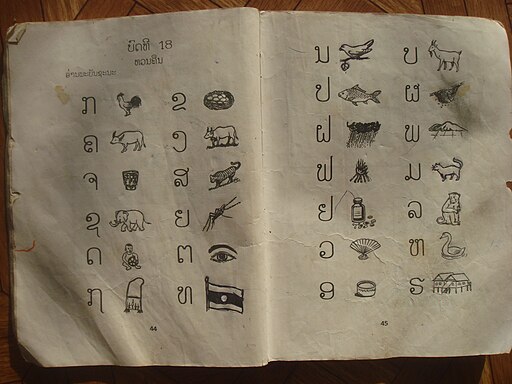

Key Highlights
Here are the key takeaways about the Lao alphabet:
- The Lao script is a writing system called an abugida. In this system, every consonant has an inherent vowel sound.
- The Lao alphabet started in the 14th century. It was made by using the Old Khmer script, which comes from the Brahmi script.
- The Lao alphabet has both consonants and vowels. The vowels in the Lao script are written as small marks around the consonants.
- Lao is a tonal language. It has six tones. These tones in Lao are set by the class of consonant, the type of syllable, and special tone markers.
- The Lao script is not like English, because there are no spaces between words. In the Lao writing system, a space means the end of a clause or end of a sentence.
Introduction
Welcome to the world of the Lao alphabet! If you want to know more about how people write in the Lao language, you are at the right spot. The Lao alphabet, called “Akson Lao,” is the official way to write in Lao. People in Laos and in some other countries use this writing system too. The Lao script has a long history and a special style. It is different from other writing systems.
In this guide, you will see the basic consonants. You will also learn about the interesting sounds in the Lao language. This guide gives you what you need to know about the Lao alphabet and its consonants. It will help you get started and understand how this writing system works.
Overview of the Lao Alphabet
The Lao alphabet is the main writing system for the Lao language. People use the Lao script to write everything in Lao. It is an abugida. This means the system starts with consonant letters, and then there are vowel markers. The vowels are shown with marks above, below, or around the consonants. Each consonant has an inherent vowel. You can change this vowel by adding other vowel signs.
There are around 4.5 million speakers of Lao. Most people who use Lao live in Laos. Here, Lao is the official language for everyone. The Lao script is very important for all kinds of writing, from big papers to short daily messages. Lao is a phonetic system, so the way you say words in the Vientiane dialect is just how you write them. The Vientiane dialect is seen as the standard. We will look more closely into the structure of the Lao script and see how people use it every day.
Script Classification and Writing System
The Lao writing system is known as an abugida. This means the script uses a type of syllable alphabet. You will find the Lao script in the same group as the writing systems of South and Southeast Asia. All these scripts came from the old Brahmi script. In an abugida, the main parts are syllables built around consonants.
The Lao script is different from an alphabet. It does not give equal status to vowels and consonants. Instead, the Lao writing system shows vowels with diacritics, or marks. These marks cannot be used by themselves. They must be put with a consonant letter. If a vowel shows up at the start of a word, it connects to a special glottal stop character.
Here are some main things to know about the Lao writing system:
- Writing Direction: The Lao script is written left to right on horizontal lines.
- Syllable Structure: Every syllable centers around a main consonant.
- Word Separation: There are no spaces between words in the Lao writing system. A space marks the end of a clause or the end of a sentence, like how we use punctuation in English.
- Tonal Language: The tone of a syllable matters a lot for meaning. The tone is picked by a mix of different ways.
Importance of the Lao Alphabet in Everyday Life
The Lao script is a big part of life in Laos. It is the main way that people write the Lao language. People use it each day in talks, schools, offices, and on the news. You will see the alphabet on street signs, in newspapers, in letters, and in texts sent on phones.
The script is not just for the Lao language. People use the Lao script to write some other languages too, like Khmu and Katu. They are minority languages in Laos. This helps keep these languages alive and gives their people a way to write down their words.
If you want to really know Lao culture, you will need to know the Lao alphabet. It helps you get close to Lao books, stories from the past, and what the people think. The letters are not just marks on a piece of paper. The alphabet is a key part of who the people of Laos are.
Historical Development of Lao Script
The story of the Lao script is about change and growth. It started in the 14th century. At that time, the leaders of the Lan Xang kingdom wanted a special way to write their language. The new writing system did not come from nothing. It got a lot of ideas from scripts already being used.
The main one was the Old Khmer script. This Khmer script was common in the area then. As the years went by, the Lao script changed and started to look different. It got its own style but still kept some things from nearby scripts. In the next parts, we will look more at where the Lao script came from. We will also talk about what it took from other writing systems.
Origins and Evolution
The Lao alphabet was first made in the 14th century. When the Lao regions joined together, the kings of Lan Xang asked smart people to make a new script just for the Lao language. This was an important step for the Lao, because it helped build their own culture and national pride.
The people working on the new script used the Old Khmer script as a base. The Old Khmer script started from the Pallava script, which comes from Southern India. Many scripts in Asia began from the same place, the Brahmi script, so the Lao script is part of this big family. That is the reason you may notice that the Lao script looks close to others.
As the years went by, the Lao script had some changes. The changes made the alphabet simpler and made it fit the way people speak Lao now. For instance, some consonants in the past sounded different from each other. Later, these extra letters were put together to show tones better instead. Because of these changes, the Lao script looks how it does today.
Influences from Other Southeast Asian Scripts
The Lao script did not grow on its own. The script most like it is the Thai script. These two are often called a sister system. Both come from the Khmer script and have a lot in common in the way they are built and the shapes of the letters. In fact, people who speak Lao or Thai can often understand each other when they talk.
But even though they are close, there are some clear ways they are not the same. The Lao alphabet is usually simpler than the Thai script. It uses fewer consonants, and the way it shows vowels is more easy to follow. Laos made some official changes to the writing system. These steps helped make it more clear and easier for people to learn.
The Khmer script had the most impact at first. It gave the Lao script its basic style as an abugida writing system. Over time, the Lao script also changed because of strong links with other nearby cultures, most of all with Thai culture. Having both the influence of Khmer and the close tie to Thailand gives the Lao script a special place in the history of writing systems in Southeast Asia.
Structure of Lao Letters
Knowing how Lao letters are built helps you learn the alphabet. In Lao, the system starts with consonants. These make the base of each syllable. Vowels in Lao are not their own letters. You write them as small marks near a consonant. They may go above, under, before, or after it. This has set rules for where they go.
This way of building words means you need to remember the shape of each consonant and know the different vowel signs. The way a syllable sounds is set by how you mix its consonant, attached vowel, and any tone marks. Next, let’s look at both the consonants and vowels in the Lao alphabet to see how they work.
Consonants and Their Classification
The Lao alphabet has a set of basic consonants, which are divided into three classes: high, mid, and low. This classification is crucial because it helps determine the tone of a syllable. Originally, some consonants had multiple letters representing distinct sounds, but over time, these sounds merged. The redundant letters were then repurposed to indicate different tones.
Not all consonants can appear anywhere in a syllable. While all consonants can be used at the beginning, only a specific subset can be used as a final consonant. When certain consonants appear at the end of a syllable, their pronunciation changes. For example, a letter that makes a /b/ sound at the beginning might be pronounced as a /p/ sound at the end.
The table below shows the three consonant classes, which are essential for determining a syllable’s tone. Note that this is a simplified overview for understanding the system.
| Consonant Class | Function |
|---|---|
| High | Helps produce high or rising tones. |
| Mid | Helps produce mid or low-falling tones. |
| Low | Helps produce low or falling tones. |
Vowels and Placement Rules
In the Lao script, vowels are not their own letters. They are marks added to consonants. Each consonant comes with its own vowel sound. This sound is usually a short /a/ or /o/ sound. It stays there unless you add a different vowel mark. These vowel marks can go above, below, in front of, or behind the consonant. Some can even be on more than one side at once.
Vowel length is very important in the Lao language. Changing the length can change a word’s meaning. There are short vowels and long vowels. Each type has its own marks in the Lao script. Knowing where to put these marks and how to say them is a big part of learning to read and write Lao well.
For example, you might write a vowel differently if it is long or short. The vowel and the consonant together make one syllable. Learning where to place the vowels helps you have good pronunciation with Lao words.
Tonal Features in the Lao Alphabet
Lao is a language where the tone of a syllable matters a lot. There are six tones in Lao, and these are closely tied to the writing system. The tone is not only about how you say a word. It helps people tell the words apart if they sound almost the same. If you do not use the right tone, your meaning can be lost. Clear speaking means knowing and using the right tone every time.
The tone of a syllable in Lao is set by these three things: the class of the first letter (it can be high, mid, or low), if there is a tone mark or not, and what kind of syllable it is (either open or closed). These things work together and maybe make the Lao script seem harder. Now, let’s look at what tone markers are and how they work in this writing system.
Tone Markers and Their Usage
The Lao script has four tone markers to show the right tone. These tone markers are small marks that go above the first consonant of a syllable. The consonant class and the way the syllable is built will give a basic tone. But, these tone markers can change it to another one. For example, if you add a marker, it can make a syllable go from a low tone to a high tone.
These tone markers make the writing system more detailed. When you read Lao, you need to spot the consonant, the vowel, and also check for any tone marker. That is the way to get the right pronunciation for the syllable. The four tone markers match certain changes in the tone of a syllable. How they work will depend on the type of consonant used.
It is important to know the tone markers if you want to read Lao aloud in the right way. If there were no tone markers, picking the right tone of a syllable would be much harder to do. These markers are a key part of what makes the Lao script good for showing the sounds of the spoken language.
Interaction of Tones with Script Structure
The tonal features of the Lao script are a big part of how it works. They are mixed in with how you write the letters. The way you say a syllable in Lao depends on many things. You have to look at the consonant, the vowel, and the tone marker. These work together to show how to say each word. This helps make the writing match how people talk in the Lao language.
To get the tone of a syllable, you need to look at a few things at the same time. First, you must know what class the first consonant is. It could be high, mid, or low. Next, you need to see what kind of syllable it is. Is it “open,” which means it ends with a vowel? Or is it “closed,” meaning it ends with a consonant like p, t, or k? Last, you have to see if there is one of the four tone markers.
Because of this, learning the Lao script is not only about knowing the letters. You must also learn how these rules work together. The way the consonant, vowel, and marker mix leads to one of the six tones. That is how the Lao script tells you the right way to say each syllable and helps with your pronunciation.
Conclusion
To sum up, knowing the Lao alphabet is important if you want to learn about the Lao language. The alphabet is not just for people who study words. It also helps you see more about the culture and story of Laos. The letters and sounds in the Lao language have their own style and way of working. This can make learning it interesting for many people. When you learn about Lao consonants, vowels, and the special tone marks, you get to see what makes this language great. This will help you talk with people and connect better. No matter if you are visiting Laos, are a student, or are just want to try something new, getting to know the Lao alphabet can give you a better look at what life is like there. If you want to ask something or need a hand as you start, you can always ask for help.
Frequently Asked Questions
How difficult is it for English speakers to learn the Lao alphabet?
For people who speak English, the Lao alphabet can be hard. This is because it has many new consonants and vowel marks. The hardest part is often learning the tones. English does not use tones, so it will be new for you. But, the good thing about the lao alphabet is that the sound rules stay the same. You will say the words right once you learn the rules of pronunciation.
Can you provide a simple guide or chart for beginners?
Yes, you can find many online resources that show charts of the Lao alphabet. A good chart will show you all the consonants and vowels. It will also let you see how the pronunciation works. Try to find guides that talk about the different classes of consonants and the rules for tones. This will help you understand how to read and speak Lao in the right way.
What are the main differences between Lao and Thai scripts?
The big differences are in how hard they are to use. The lao script uses fewer consonants and has a simple way to spell words. The thai script is more complex. They have the same roots and make a sister system, but lao has changed. People changed the lao alphabet so it is easier and sounds match better to how words are said.