
Key Highlights
- The Khmer alphabet is the main writing system for the Cambodian language. People in Cambodia, Vietnam, and Thailand use it, and there are millions who speak it.
- This alphabet is an abugida. In it, each consonant has a vowel sound by itself, and that makes this writing system special.
- There are two main consonant groups in the Khmer alphabet. People call them the a-series and o-series. These groups help decide how the vowel signs will sound.
- Vowels in the Khmer writing system come in two types. Some are dependent vowels, which change with the consonant. Others are independent vowels, and they can stand by themselves.
- When you learn the Khmer alphabet, you start to see the beauty of the Cambodian language. It also helps you know more about the country’s rich culture.
Introduction
Welcome to the world of the Khmer alphabet! If you have ever wondered about the nice, flowing writing you can see in Cambodia, you are in the right place. The Khmer writing system is at the heart of the Khmer language. It is more than a group of letters. It is a way to learn more about the old and rich culture found in Cambodia. In this guide, we will look at what makes this alphabet different. You will get to know about the consonant and vowel signs. This will help you start your new learning with the Khmer language and its writing system.
Overview of the Khmer Alphabet and Its Importance in Cambodian Language
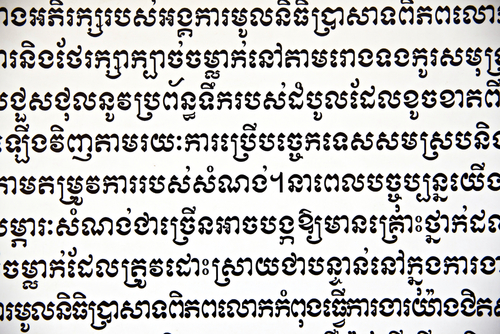
The Khmer alphabet, called អក្សរខ្មែរ (âksâr khmêr), is the main script used for the Khmer language. The Khmer language is the official language of Cambodia. This writing system is special because it is an abugida. It means each consonant comes with a built-in vowel sound. The Khmer script is important in Cambodia. People use it every day in things like government papers, street signs, books, and religious texts.
If you want to feel close to Cambodian culture, it is important to learn the Khmer script. The way it looks and its historical roots are big parts of the Khmer people’s story. Next, we will talk about its history and how people use this unique writing system now.
Historical Background of the Khmer Script
The Khmer script has long historical roots. It came from the Brahmi script of ancient India. The Pallava script, used in southern India and Southeast Asia in the 5th and 6th centuries AD, also played a big part in how Khmer looked and grew. This shows there was a lot of sharing of culture and ideas across these places.
The oldest Khmer writing that people have found is at Angkor Borei. This is just south of Phnom Penh today. It dates back to 611 AD. This tells us people have used the Khmer script for more than a thousand years. The script has changed in many ways as time went on, especially during periods like the time of the Khmer Empire, which is known for Angkor Wat.
Through the years, the Khmer script has shaped other writing systems nearby, too. The alphabets of Thai and Lao, for example, both came from the Khmer script. They share many things in how they look and work. Because of this, the Khmer alphabet is a very important part of how writing and language grew in Southeast Asia.
How the Khmer Alphabet Is Used Today
Today, the Khmer alphabet is at the heart of the Khmer language. It is used by about 16 million native speakers in Cambodia. You will find khmer writing all over the country. People use it on government buildings, in newspapers, on shop signs, and even on menus. Schools also teach in Khmer, so each new group of students will use and keep this important part of their culture.
There are people who use the khmer language outside Cambodia, too. In Vietnam, there are more than a million Khmer native speakers, and the language is seen as a minority language there. In northeast Thailand, a type of khmer that people call Northern Khmer is spoken by around 1.4 million people.
If you want to start learning, you have to get to know the Khmer alphabet first. It is a big step for learners who want to speak and understand the language well. There are systems where people write khmer with English letters, but knowing the real writing script helps you say words right and understand how the language really works. It is a useful tool for anyone who wants to live in, travel through, or study in Cambodia.
Structure of the Khmer Alphabet Compared to the Latin Alphabet
The Khmer alphabet is different from the English one. The letters in the English alphabet stand for either a consonant or a vowel. But the khmer script is a unique writing system called an abugida. In this writing system, each consonant comes with a vowel sound. You can change this vowel sound by adding signs for vowels.
Because of this, learning the khmer script is not like learning English. You do not just memorize single letters. You have to learn the different ways a consonant and a vowel combine in the khmer writing system. Now, let’s look at some things that make the khmer script so special and different from other alphabets.
Unique Features of Khmer Script
One thing you notice right away in the khmer script is the absence of spaces between words. In khmer, spaces are not used to show word boundaries. Instead, they mark the end of a clause or a sentence. This makes it hard for some beginners to find where one word ends and the next begins. The way words just run together is a main part of this script.
Another thing about khmer is how much it uses diacritics. In khmer, vowel signs show up as diacritics. They can be above, under, in front, behind, or wrapped around a consonant. There is also this smaller form of a consonant known as a subscript. The subscript is used when you need to write a second consonant in a cluster, and only the second consonant comes in this form.
This mix of features creates syllables that look complex but do not take up much space. To read and write khmer right, it is important to know how to use the diacritics and subscripts. Even though there are rules in place to guide spelling, some words in khmer can still be written in more than one way. This gives you even more to learn when you study how to write this language.
Key Components – Consonant Series and Vowel Signs
The Khmer alphabet has two main parts. These are the consonant series and vowel signs. It does not work like the ABCs you find in English, where each letter has its own sound. In Khmer, the sound you get from each syllable changes because of how the consonant and vowel signs come together. The consonants in the Khmer alphabet are put into two groups. The vowel signs may also sound different depending on which group the consonant is.
It might look hard at first, but the way it works does make sense. When you learn how the consonants and vowels go with each other, you will see there is a pattern. This pattern helps you read the Khmer alphabet much better. Here are the main things you need to remember:
- The modern Khmer alphabet has 33 khmer consonants.
- These consonants are split into the a-series and the o-series.
- Each consonant has a regular vowel sound. The a-series uses /ɑː/, and the o-series uses /ɔː/.
- Khmer vowels are put above, below, in front of, or behind consonants as small marks. These marks are called dependent vowels or diacritics. They change the consonant’s basic vowel sound.
- There are also independent vowels. These are khmer vowels that stand alone like their own letter.
This system connects all the parts of khmer vowels, dependent vowels, independent vowels, consonant sounds, and more. Understand
Khmer Consonant Series — Names, Sounds, and Groups
The 33 consonants in the Khmer script make up the base of its writing system. Each main consonant has its own name. It also belongs to one of two sets. These sets decide how the consonant will work with vowel marks. Getting to know these sets is important if you want to say words in Khmer the right way.
The Khmer script also has subscript forms. These help make consonant clusters. If you have two consonants side by side and there is no vowel between them, the second consonant goes under the first one in a smaller way. Knowing how these groups work will help you read longer words in Khmer.
The Two Main Consonant Series: A-Series and O-Series
As mentioned, Khmer consonants are split into two groups: the a-series (first series) and the o-series (second series). The series of the initial consonant in a syllable determines the pronunciation of any attached vowel sign. This is one of the most important rules in Khmer writing.
The a-series consonants have an inherent /ɑː/ sound (like the “a” in “father”). In contrast, the o-series consonants have an inherent /ɔː/ sound (like the “o” in “more”). When you add a vowel sign, it will have a different sound depending on whether it’s attached to an a-series or o-series consonant.
For example, the same vowel sign might produce an “ee” sound with an a-series consonant but an “oo” sound with an o-series consonant. Learning to identify which series a consonant belongs to is therefore essential.
| Series Type | Inherent Vowel Sound | Example Consonant |
|---|---|---|
| A-Series | /ɑː/ (ah) | ក (kâ) |
| O-Series | /ɔː/ (oh) | គ (kô) |
Pronunciation Rules for Consonant Series
Learning how to say Khmer consonants begins with knowing their series and how they act in different cases. The main rule is this: the consonant’s series helps you know what the vowel sound will be. Each vowel sign can make two sounds, and the consonant shows you which one you should use.
When consonants are written in their subscript form to put two sounds together, you should still follow the main consonant for the pronunciation rules. The subscript consonant is said right after the main one and there should not be a vowel sound in between. Some consonants in Khmer can also change sound or go silent when they come at the end of a word.
Here are a few key rules about how to say Khmer consonants:
- Always check if the consonant is an a-series or o-series to know the right vowel sound.
- Some consonants at the end are read with a glottal stop. This is a short break in the sound.
- The last consonant in a syllable is sometimes soft or may not be heard at all. This depends on the letter.
- Watch for consonants that look almost the same but are not from the same series. These can sound different with the same vowel signs.
Understanding Khmer Vowel Signs
Khmer vowels are just as important as consonants. These vowels come in two main groups: dependent vowels and independent vowels. Most of the Khmer vowels you see are dependent vowel signs. These are marks, called diacritics, that go with consonants to form a syllable.
These vowel signs do not have a set sound by themselves. How you say them depends on which consonant (a-series or o-series) they are with. Let’s look more at how dependent vowels and independent vowels are different, and how they work.
Dependent vs. Independent Vowels
Most vowels in the Khmer script are called dependent vowels. These are not full letters on their own. They are marks that change the sound of a consonant. They are called “dependent” because the sound they make will change if the consonant is from the a-series or o-series. There are more than 20 of these vowel signs in Khmer.
On the other hand, independent vowels in Khmer script are full letters. They can stand alone and make a vowel sound at the start of a syllable with no consonant. There are not as many independent vowels, and people do not use them as much. They often appear in khmer words that start with a vowel sound, like words borrowed from Pali or Sanskrit.
If you are a beginner, you need to start with the dependent vowels and know their two main pronunciations. Learn how these vowels work with consonants. This is the best way to read most Khmer words. You can learn the independent vowels later as you grow your vocabulary.
How Vowel Signs Attach to Consonants
In the Khmer script, vowel signs are small marks that we call diacritics. These signs can sit in different spots around a consonant to make a full syllable. In English, vowels are written in a straight line with the rest of the word. But Khmer vowels can be found above, below, on the left, or to the right of a consonant. Some vowel marks even go around the consonant.
Where each vowel sign goes does not change, so you need to learn the spot for each one. For example, there is a vowel mark that you always write under a consonant, while another always goes to the side. When you put a consonant with its vowel mark, it becomes one block that shows both the sound and the letter together.
Here are the different ways khmer vowels can be placed on a consonant:
- Above the consonant
- Below the consonant
- To the left of the consonant
- To the right of the consonant
- Some tricky vowels use parts that show up on more than one side of the consonant.
Essential Tips for Learning to Read and Write the Khmer Alphabet
Starting with the Khmer alphabet may seem hard at first, but you can do it with the right plan. If you are a beginner, it helps to take small steps. Do not try to learn everything at once. Begin with one part, like the a-series consonants, and move on after you know them.
Many people learning the khmer script see better results from short practice times every day, instead of long ones once in a while. Doing the same thing again and again helps you get better. In the next part, we will go over some good exercises and tools for beginners and other learners. These will help you learn the khmer alphabet and make progress.
Practical Exercise Ideas and Mnemonics
Practical exercises and little memory tricks can help you pick up the Khmer script much faster. If you are a beginner, mnemonics can be a good way to know both the shapes and the sounds of each Khmer letter. Try to link each character to an image or a word in English that sounds close to it. For example, you might look at a letter and think it looks like an animal or a thing you know.
It’s also good to be active in your practice. Don’t just read the words—write them down too. This helps your hand get used to the letters and makes it easier to remember. Begin with small, simple one-syllable words. As you get better, try hard words and learn more vocabulary.
Here are some things you can do to help you get started:
- Use flashcards to learn the consonants and vowels.
- Write out the alphabet every day.
- Read and practice simple words and phrases.
- Put labels on things in your home with the Khmer names.
- Make your own mnemonics by linking letter shapes to things you know well.
- Listen to native speakers and try to match the sounds with the letters you read.
Recommended Charts, Posters, and Mobile Apps for Practice
Having things you can see and use makes learning the Khmer alphabet much easier. Educational posters and charts are good ways to help with this. They let you see all the letters at once. You can find the alphabet charts online. Some are canvas prints, so you can hang them on your wall. This helps you get used to the letters every day.
Now, with technology, there are mobile apps that help you practice wherever you are. Many apps are made for learning the Khmer script. They have things like interactive quizzes, audio pronunciations, and writing practice. These tools help you remember what you have learned. They also give you ways to practice the Khmer alphabet that are new and fun.
Here are some resources to check out:
- Khmer Alphabet Charts: Search online for charts you can print or buy as educational posters. Sites like Amazon sell these.
- Mobile Apps: Try apps such as “Write Me” or “Ling.” These apps have lessons and exercises for the Khmer script and pronunciations.
- Online Keyboards: Visit websites like Lexilogos. They have a virtual Khmer keyboard for typing out the alphabet, so you don’t need extra software. This is helpful for putting together words.
Conclusion
To sum up, if you want to learn more about the Khmer language and culture, it helps a lot to know the Khmer alphabet. At first, the many consonant sounds and vowel marks can seem hard. But if you keep trying, have patience, and use the right resources, you can get the hang of this script. Using good ways to learn will help you read and write better, and this will help you talk to people who speak Khmer. So, do not be afraid to try, check out what tools are out there, and have fun learning this special and rich language.
Frequently Asked Questions
How many letters are in the Khmer alphabet, and what are their names?
The modern Khmer alphabet is made up of 33 consonant letters. Every consonant has a name that shows its sound, like “kâ” for ក. These Khmer letters are the base of the writing system people use in Cambodia. If you want to read and write in the Khmer script, you need to learn the alphabet and the consonant sounds first.
Are there online tools or keyboards for typing in Khmer script?
Yes, you can find many online tools and phone apps to help you type in the Khmer script. Some websites, like Lexilogos, give you a virtual keyboard. You can also add a Khmer keyboard to your phone’s settings. These tools are good if you want to practice and talk with others in the right writing system. The Khmer script is easy to use with these options.
What are the best strategies for memorizing Khmer consonants and vowels?
The best way to remember the Khmer script is to use flashcards every day. You can also practice writing the letters by hand. Try to make up little tricks or stories in your head that link the shapes of the Khmer consonants and vowels to things you already know. The more you go over it, the better you will remember it. Working with the script each day helps make your memory strong.