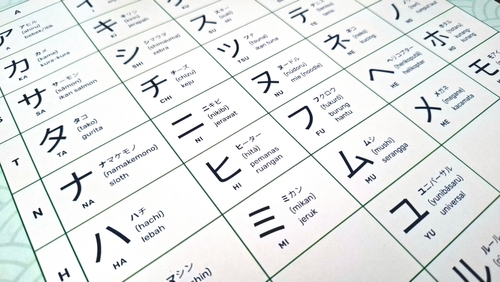

If you are thinking about learning Japanese, you might have looked at a page of Japanese text and felt a little overwhelmed. Unlike English, which uses a single alphabet to form words, Japanese looks like a complex mix of squiggly lines and intricate blocks.
One of the first questions new learners ask is: “Does Japanese have an alphabet?”
The short answer is no, not in the way English does. Instead, the Japanese writing system uses three distinct scripts that work together: Hiragana, Katakana, and Kanji.
While this might sound complicated, it is actually a logical and beautiful system once you understand how the pieces fit together. You don’t need to learn everything at once. By breaking it down into manageable steps, you can start reading and writing Japanese sooner than you think.
In this guide, we will walk you through the basics of Japanese letters, explain the differences between the three scripts, and provide a clear roadmap for how to start your learning journey today.
Does Japanese Have an Alphabet?
In English, we use the Roman alphabet. Each letter represents a sound, and we combine them to make words. Japanese is different. It relies on two “syllabaries” and one system of logographic characters.
Here is the breakdown of the three systems you need to know:
- Hiragana: The native Japanese phonetic system.
- Katakana: The phonetic system used mainly for foreign words.
- Kanji: Chinese characters that represent words or ideas.
Ideally, you will eventually learn all three. However, beginners usually start with Hiragana.
Here is a simple comparison to help you visualize the difference:
|
System |
Type |
Used For |
Example |
|---|---|---|---|
|
Hiragana |
Syllabary |
Native Japanese words, grammar particles, verb endings |
あ (a) |
|
Katakana |
Syllabary |
Foreign loanwords, scientific names, emphasis |
ア (a) |
|
Kanji |
Logographic |
Nouns, stems of adjectives and verbs, names |
日 (sun/day) |
Hiragana – The Foundation of Japanese
What Is Hiragana?
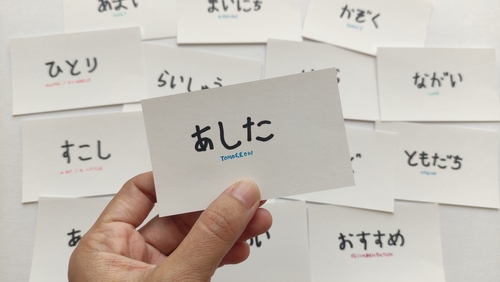
Hiragana is the first script you should learn. It consists of 46 basic characters. Unlike English letters which are consonants or vowels (like ‘k’ or ‘a’), each Hiragana character represents a full syllable (like ‘ka’, ‘su’, or ‘mo’).
Hiragana is the backbone of the language. It is used for native Japanese words that don’t have a Kanji, and for grammatical elements like particles (which mark the subject or object of a sentence) and verb endings.
Hiragana Chart
To learn how to read Japanese, you will use a hiragana chart. The chart is organized by vowel sounds.
The five vowel sounds are: A, I, U, E, O (pronounced ah, ee, oo, eh, oh).
The rest of the chart combines these vowels with consonants (K, S, T, N, H, M, Y, R, W). For example:
- K-row: Ka, Ki, Ku, Ke, Ko
- S-row: Sa, Shi, Su, Se, So
- T-row: Ta, Chi, Tsu, Te, To
Learning Tip: Focus on one column at a time. Do not try to memorize the whole chart in one sitting.
When Is Hiragana Used?
You will see Hiragana everywhere. It connects the hard nouns (usually Kanji) together to make a coherent sentence.
- Grammar: To change the tense of a verb (e.g., taberu to tabemashita).
- Furigana: These are small Hiragana characters written next to difficult Kanji to tell you how to pronounce them. This is incredibly helpful for beginners.
Katakana – For Foreign Words and Emphasis
What Is Katakana?
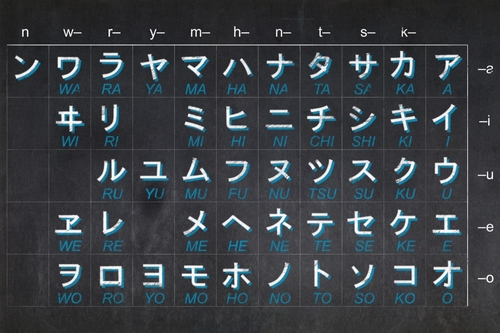
Katakana also has 46 basic characters. The sounds are exactly the same as Hiragana. The character ‘Ka’ exists in both scripts—it just looks different.
Visually, Hiragana is curvy and smooth. Katakana is sharp and angular. Think of Hiragana as cursive script and Katakana as print block letters.
Katakana Chart
When studying a katakana chart, you will notice the layout is identical to Hiragana (A, I, U, E, O).
- Hiragana ‘a’: あ
- Katakana ‘a’: ア
- Hiragana ‘ka’: か
- Katakana ‘ka’: カ
When Is Katakana Used?
Japanese borrows thousands of words from other languages, mostly English. These “loanwords” are written in Katakana.
- Coffee: Kōhī (コーヒー)
- Computer: Konpyūtā (コンピューター)
- Hotel: Hoteru (ホテル)
If you speak English, learning Katakana is fun because you will instantly recognize many words just by sounding them out.
Kanji – The Meaning-Based Characters
What Is Kanji?
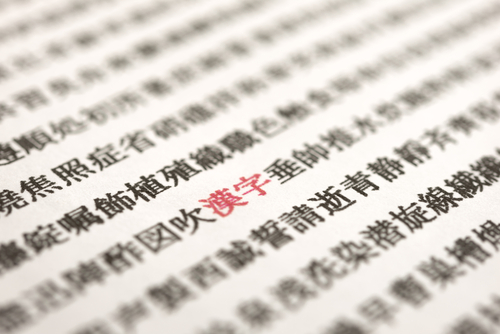
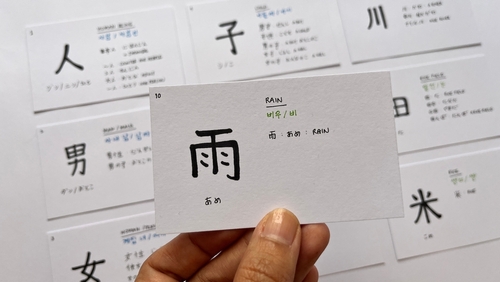
This is usually the most intimidating part for new learners. Kanji are characters adopted from the Chinese writing system. Unlike Hiragana and Katakana, which represent sounds, Kanji represent meaning.
There are thousands of Kanji, but you do not need to know them all. The Japanese Ministry of Education has a list called the Jōyō Kanji, which includes 2,136 characters necessary for daily life.
How Kanji Works
Most Kanji have two ways to be read:
- Onyomi: The reading derived from the original Chinese pronunciation.
- Kunyomi: The native Japanese reading.
The reading changes depending on how the character is used or if it is combined with other Kanji.
Example Breakdown
Let’s look at the character for “sun” or “day.”
- Kanji: 日
- Meaning: Sun, Day
- Readings: Ni, Nichi, Bi, Hi
If you combine it with the character for “origin” or “book” (本), you get:
- 日本 (Nihon) = Japan (The Origin of the Sun).
How the Three Systems Work Together

It might seem redundant to have three systems, but they work together to make reading easier. Because Japanese doesn’t use spaces between words, the different scripts help your eye distinguish between nouns, verbs, and particles.
Here is an example sentence:
“I eat bread.”
Watashi wa pan o tabemasu.
私はパンを食べます。
Let’s break it down:
- 私 (Kanji): Watashi (I) – The subject.
- は (Hiragana): Wa – Grammar particle marking the topic.
- パン (Katakana): Pan (Bread) – A loanword from Portuguese.
- を (Hiragana): O – Grammar particle marking the object.
- 食べ (Kanji + Hiragana): Ta-be – The stem of the verb “to eat.”
- ます (Hiragana): -masu – The polite verb ending.
See how the Kanji and Katakana pop out from the Hiragana? This helps you identify the key words (I, Bread, Eat) quickly.
Japanese Alphabet vs English Alphabet
There are a few major differences that English speakers should know:
- Syllables vs. Letters: In English, ‘K’ is just a sound. In Japanese, ‘Ka’ is a whole syllable.
- Pronunciation: Japanese pronunciation is very consistent. The letter ‘A’ always sounds like “ah” (as in father). It doesn’t change like the English ‘a’ in apple, ate, or about.
- No Spaces: As mentioned, you generally don’t use spaces. You rely on the mix of scripts to see where words end.
How Long Does It Take to Learn the Japanese Alphabet?
Many people worry that it will take years to learn to read. While Kanji is a long-term project, the basics come quickly.
- Hiragana: With consistent practice (15–30 minutes a day), you can memorize these 46 characters in 1 to 2 weeks.
- Katakana: Since the sounds are the same, this also takes about 1 to 2 weeks.
- Kanji: This is an ongoing journey. However, learning the most common 100 Kanji will let you understand a surprising amount of signs and menus.
Step-by-Step Plan to Learn the Japanese Writing System
If you are ready to start, here is a simple roadmap to follow:
- Start with Hiragana: Do not use “Romaji” (Japanese written in English letters) for too long. Switch to Hiragana as soon as possible.
- Practice Reading: Read simple words out loud. This connects the shape of the letter to the sound in your brain.
- Move to Katakana: Once you are comfortable with Hiragana, start tackling Katakana charts.
- Start Beginner Kanji: Learn numbers, days of the week, and basic nature words (tree, fire, water).
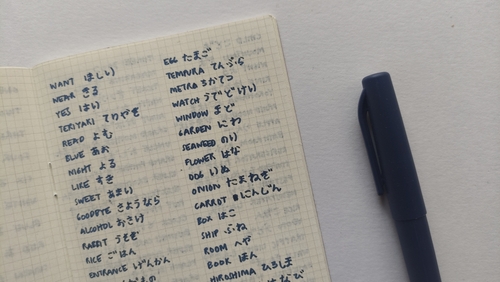
- Use Spaced Repetition: Apps like Anki or digital flashcards are excellent for remembering characters over the long term.
Common Mistakes Beginners Make
Learning a new language is a process, and making mistakes is part of it. Here are a few to watch out for:
- Ignoring Stroke Order: Japanese characters must be written in a specific order (usually top-to-bottom, left-to-right). If you write them in the wrong order, they often look “off” or messy.
- Relying on Romaji: It is tempting to write “Arigato” instead of 「ありがとう」. But relying on English letters will slow down your ability to read real Japanese later.
- Confusing Similar Characters: Some letters look very similar. For example, the Katakana for ‘Shi’ (シ) and ‘Tsu’ (ツ) look nearly identical except for the angle of the strokes.
- Trying to Learn All Kanji at Once: Don’t burn out trying to memorize 2,000 characters in a month. Focus on kanji basics first.
Frequently Asked Questions
How many letters are in the Japanese alphabet?
Japanese doesn’t have a single alphabet. It has two syllabaries (Hiragana and Katakana) with 46 basic characters each, plus thousands of Kanji characters.
Is Japanese harder than English?
For English speakers, the writing system is harder because it is completely different. However, Japanese grammar is actually quite logical, and the pronunciation is much simpler than English.
Should I learn Hiragana or Katakana first?
Definitely learn Hiragana first. It is the foundation of the language and is used for grammar. Katakana is secondary.
How many Kanji do I need to know?
To be considered fluent or to read a newspaper, you need about 2,000. To pass the basic level of the Japanese Language Proficiency Test (JLPT N5), you only need about 100.
Can you write Japanese using only Hiragana?
Technically, yes. Children’s books are often written entirely in Hiragana. However, for adults, writing without Kanji makes sentences very long and difficult to understand because many Japanese words sound the same but have different meanings (and different Kanji).
Final Thoughts: Where to Start Today
Learning the Japanese alphabet might feel like a big mountain to climb, but you only need to take one step at a time. You don’t need to be perfect, and you don’t need to know everything today.
Start by printing out a hiragana chart. Try to memorize just the first five vowels (A, I, U, E, O) today. Tomorrow, try the K-row. Small, consistent efforts add up to big results. Before you know it, those squiggly lines will turn into words, sentences, and stories.
You can do this!