
Key Highlights
- The georgian language uses three main writing systems: Asomtavruli, Nuskhuri, and Mkhedruli. Each one has its own history.
- Mkhedruli is the modern script people use for all everyday writing. It is the official script for the georgian language.
- The georgian alphabet is phonetic. Each letter matches mostly to a single sound, so pronunciation stays steady.
- Georgian scripts do not use capital letters. This makes the writing system easier than latin or cyrillic.
- In 2016, UNESCO named the living culture of the georgian alphabet an intangible cultural heritage of humanity.
- The alphabet means a lot in georgian life. You can see it often in art, literature, and daily life.
Introduction
Have you ever seen a language that has letters made of smooth, flowing lines? They do not look like any lettering used in the Western world. This is what you get with the Georgian alphabet. The special Georgian script is not just a way to write. It also shows the long history and bright culture of Georgia.
In this guide, you will find out the story of this interesting writing system. We will talk mostly about the modern Mkhedruli script. You will also learn how people use it in the Georgian language today.
The Three Georgian Writing Systems: Asomtavruli, Nuskhuri, and Mkhedruli
The Georgian script is made up of three separate writing systems that have changed over many years. The oldest one is called the Asomtavruli alphabet. Then came Nuskhuri, and today people use the modern Mkhedruli script. These three are a big part of Georgian culture and are linked with the story of the Georgian Orthodox Church. Each shows a different period in time and was used for different things.
These alphabets are part of the special Kartvelian language family. They have all played a big role in writing by people in this part of Georgia. Right now, Mkhedruli is used for the official language of Georgia. The two older scripts were mostly used for old religious texts and for making inscriptions. You can see that all three have their own way of looking and have been used in their own ways through history.
Differences in Structure and Design Among the Scripts
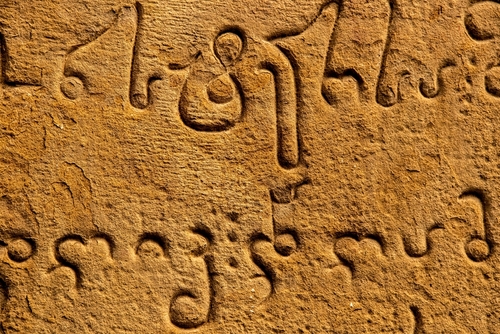
The three Georgian scripts all look very different. The asomtavruli alphabet has letters that are round and stand upright. Every letter is the same height. Its large and clear shape made it good for inscriptions on stone or church walls. People sometimes call asomtavruli “capital letters” because it was used for titles and had a formal look in the past.
Nuskhuri is not round but has smaller, sharper letters. It was made for writing manuscripts and helped people write faster. These letters fit well on one page. Because of this, nuskhuri was great for long religious books and is often called the “lowercase letters” of its period.
Today, the mkhedruli script is what is used for everyday writing in Georgian. Its letters are smooth and go into each other, so it lets people write quickly, a bit like cursive. Unlike the other two scripts, mkhedruli script is now the only alphabet Georgians use in daily life. None of these scripts have a rule for capital letters or lowercase letters today.
Unique Roles and Historical Usage of Each System
Each of the three Georgian scripts had its own role in the history of the country. Asomtavruli is the oldest script, and it was mostly used for big inscriptions and the first religious manuscripts. The Georgian Apostolic Autocephalous Orthodox Church saved its careful style for important texts.
In the 9th century, Nuskhuri showed up and became the main script for religious texts. People would use Asomtavruli for the titles and Nuskhuri for the main part of the text, like when they wrote psalms or hymns.
In the 10th century, Mkhedruli came into use. At first, people used it for things that were not about religion. Later, it became what everyone used for all writing, from royal charters and other government documents to everyday communication. People also wrote records and other things with it, like work by traditional craftspeople or goldsmiths. People even wrote literature and history in this script.
The Evolution and History of the Georgian Alphabet
The story of the Georgian script goes back over 1,500 years. The oldest known pieces of the Georgian language alphabet come from the 5th century CE. People carved these early inscriptions using the Asomtavruli script. This was the start of a strong tradition in writing for the georgian people that has changed a lot as time went on.
With centuries of change, the alphabet kept up with the needs of people in the country. The style of writing shifted from large carvings to quicker ways to write by hand. Over time, these changes gave us the mkhedruli script, which is the style used now. Let’s now look at how the georgian language alphabet started and what the big steps were in its history.
Origins and Early Development
The origins of the Georgian alphabet go way back in Georgia’s history. Some believe King Parnavaz made the script in the 3rd century BC, but the oldest proof we have is from the 5th century CE. The first inscriptions in the Georgian script were found on a tablet in Palestine around 430 AD and at the Bolnisi Sioni church about 493 or 494 CE.
The early carvings of the Georgian script are impressive. It shows that the alphabet was already well-developed before anyone carved it into stone. The rise of Christianity in Georgia was closely linked to the early development of the alphabet, since a written language was important to translate and make religious texts.
People wanted a script to spread religious teachings and also record stories about their culture. This pushed folks to improve the alphabet. Early writings like The Martyrdom of Saint Shushanik (476–483 CE) show how the Georgian alphabet quickly became special. It helped tell stories and keep the national identity strong, long before it changed in later years.
Major Milestones Leading to Modern Mkhedruli
The journey from the ancient script to the modern Mkhedruli alphabet is marked by several key milestones. This evolution reflects Georgia’s changing social and religious needs over centuries of change. The development was not a sudden replacement but a gradual transition where different scripts coexisted and served different functions.
Initially, Asomtavruli was used for monumental inscriptions and important titles in religious manuscripts. Around the 9th century, Nuskhuri developed as a more practical script for writing the main body of religious texts, allowing for faster and more compact writing.
By the 10th-11th centuries, the Mkhedruli alphabet began to emerge for secular use, such as in royal charters and historical records. Its fluid, cursive-like forms made it ideal for everyday writing. Over time, Mkhedruli became the dominant script for all purposes.
Here is a summary of these milestones:
| Script | Period of Use | Primary Function |
|---|---|---|
| Asomtavruli | 5th–9th centuries | Monumental inscriptions, titles in religious texts |
| Nuskhuri | 9th–11th centuries | Main body of religious manuscripts, used with Asomtavruli |
| Mkhedruli | 10th century–Present | Secular documents, evolved to become the standard modern script |
The Modern Mkhedruli Script: Features and Importance
The Mkhedruli script is the main way people write the modern script for the Georgian language. It is the dominant script you will see in Georgia. It shows up on street signs, in books, and on websites everywhere in the country. The smooth shapes of the letters look nice and are made to write fast and clear. They are also a big part of the pride people feel about being Georgian. Mkhedruli helps to show all the Georgian sounds you hear in everyday use.
This modern script is the clear choice for writing the official language of Georgia. People use it for everything, no matter if it’s talking, writing, or reading. Mkhedruli is easy to say and write. The letters make sense for how words sound. It gives a mix of beauty and usefulness. Now, let’s look closer at the way the letters appear and see why this script is the go-to for modern Georgian.
Letter Forms, Sounds, and Pronunciation Guide
The modern Georgian alphabet, Mkhedruli, is made up of 33 letters. It has 5 vowels and 28 consonants. One good thing for people learning it is how regular it is in sound. Every one of the Georgian letters stands for one sound. This makes pronunciation simple. You just say the word as you see it. That is not the way it always works in English.
Georgian sounds have some things that may be new to people who know English. You find some types of consonants in this alphabet that do not show up much in English. Georgian is known for having consonant clusters and also for having ejective consonants, which are made with a fast burst of air. For example, the word “tkven” (თქვენ) means “you” and “mtsrtneli” (მწვრთნელი) means “trainer”.
Even with these special consonants, you will notice the clear link between Georgian letters and sounds. That means you can be sure of how to say most words when you see them written. There are no silent letters and no tough rules for spelling. This part makes it easy for people to first start reading the Georgian alphabet.
Why Mkhedruli is Standard in Contemporary Georgian
The Mkhedruli script became the main writing style for the modern Georgian alphabet because it was helpful and easy to use. The shapes are round and smooth, so scribes could write faster. This was good for work like royal charters or keeping old records.
When life changed, people wanted one script everyone could use in everyday communication. Mkhedruli was simple and nice to look at, so it turned into the dominant script. Old scripts called Asomtavruli and Nuskhuri were mostly used for religion and big monuments, but Mkhedruli was good for everything in daily life.
Now, the modern Georgian alphabet can be seen everywhere. People use it for stories, news, sending text messages, or even on street signs. When everyone started to use Mkhedruli as the one script for the Georgian language, it brought the writing system together and made it a strong and beautiful sign of the country.
Learning the Georgian Alphabet: Practical Insights
Are you thinking about learning the Georgian alphabet? The round Georgian letters may seem hard at first, but many learners say it is fun to learn them. These practical tips will help you get started with knowing and writing this different script. You do not have to reach fluency right away. The first thing is to feel good with the letters.
The main thing is to bring a curious mind and to take your time. Below, we will talk about some common problems new learners face. We will share easy ways to help you get past these problems. With good steps, you can remember the alphabet and read simple words faster than you think.
Common Challenges for Beginners and How to Overcome Them
One of the biggest challenges for learners of the Georgian script is that the letters look nothing like those in Latin or Cyrillic. This makes it hard for anyone new to make a link to what they already know. Another thing that can be tough is that some letters in the Georgian alphabet look very close to each other. This can be confusing, especially for people just starting out.
Learning the correct pronunciation can also be hard. There are some sounds in Georgian that you will not find in English, and the consonant clusters can trip people up. Words with lots of consonants in a row, like “mtsrtneli” (trainer), may seem very hard to say or even try to hear at first. Still, the good news is that the Georgian language alphabet is phonetic. You say each word just how it is written, and that helps a lot once you get used to reading and speaking Georgian.
The best way to get better is to take things slow. Try not to worry about learning everything at the same time. Here are a few tips to help you:
- Use flashcards: Make cards for each letter with its sound and practice often.
- Break down sounds: Listen to how native speakers say the tough consonants and practice saying these by themselves before you work on consonant clusters.
- Focus on visual differences: Put letters that look alike in small groups and practice telling them apart.
With time and practice, you will get to know the Georgian script and improve your
Tips and Techniques for Memorizing Georgian Letters
Learning the 33 Georgian letters does not have to be hard. You can really have fun with it if you use the right techniques. Try not to just memorize each letter by repeating it. Instead, link each letter to a picture or an idea that means something to you. This active learning will help you form strong memory links and make the time you spend learning more enjoyable.
You can start by linking the way each Georgian letter looks to an object you know. For example, some learners look at the letter “ა” (a) and think of a twisting vine. The letter “ბ” (b) can look like a house with a little chimney. This is a personal way, so what you see in the letter might be different from what others see. That is okay, because these personal mnemonics can really help you remember.
Using common Georgian words helps as well. As you learn more Georgian letters, try simple words like “ki” (კი – yes) and “ara” (არა – no). Reading these gives you practical use of your new skills right away.
Here are some more ways to learn the Georgian alphabet, letters, and pronunciation:
- Write by hand: When you write the letters, it helps you remember better.
- Use alphabet learning apps: Many apps turn learning into games, and this makes practice fun.
- Practice with a native speaker: Talking and listening helps, especially to learn correct pronunciation.
- Label items around your house:
Cultural Significance and Use of the Georgian Alphabet Today
The Georgian alphabet is much more than a set of letters people use for everyday writing. It stands as a strong symbol of who Georgians are and what their cultural heritage means. In 2016, UNESCO put the use of all three Georgian writing systems on its list of the intangible cultural heritage of humanity.
This shows how important the alphabet still is in Georgian culture today. It is not just something from long ago. It is alive, and it ties people now to their families from the past. The Georgian alphabet has played a big part in art, stories, and the way people in Georgia see themselves. Let’s see how this special script has shaped Georgian culture in these ways.
Influence of the Georgian Alphabet on Art, Literature, and Identity
The Georgian alphabet has a big impact on the art and culture in the country. In art, the smooth curves of the Mkhedruli script often show up in paintings, sculptures, and crafts made by hand. People respect calligraphy as a form of art. The alphabet’s look inspires many artists.
In literature, the alphabet helps people save and create many different Georgian texts. You can find it in old religious manuscripts as well as in new books. Because of the alphabet, Georgian writers can carry on telling important stories that help make up the country’s identity. Some works, like The Martyrdom of Saint Shushanik, show what is important to the nation and teach about its values.
This strong link between the alphabet and the culture is why it is on the Representative List of the Intangible Cultural Heritage of Humanity. The script stands as a clear sign of Georgia’s history, strength, and lasting culture. It plays a key role in the way Georgians think about who they are and where they come from.
Conclusion
To sum up, the Georgian alphabet and the Mkhedruli script are more than just tools for talking or writing. They are a big part of Georgia’s culture and history. The way Mkhedruli looks and its long story show the strength and new ideas of the Georgian people. When you begin to learn this script, keep in mind that knowing where it comes from can help you enjoy the language and the culture much more. It does not matter if you love learning new languages or just want to know more, this blog’s tips can help you start to get the Georgian alphabet. If you have any questions or want help, you can always ask for a consultation!
Frequently Asked Questions
Is the Georgian alphabet related to any other writing systems?
The Georgian alphabet is a one-of-a-kind writing system. There are no clear links to other major writing systems. Unlike most scripts used in Europe, the Georgian alphabet does not come from Greek or Latin. It is also separate from Cyrillic. This short and separate history interests many linguists.
How many letters are in the modern Georgian alphabet and what do they represent?
The modern Georgian alphabet is called Mkhedruli. It has 33 Georgian letters. This alphabet is made for the Georgian language. In the Georgian alphabet, each letter stands for a single sound. This helps people use the language in a clear way. There are 28 consonants and 5 vowels in it. Because of this mix of consonants and vowels, the alphabet can show all the sounds in Georgian very well.
How is the Georgian alphabet used in everyday life in Georgia?
In Georgia, people use the alphabet in every part of their everyday life. It is the script for the official language of Georgia, so you can see it all over the place. It is on street signs, in books, on TV, and in all kinds of daily communication. This alphabet is used for all everyday writing by those who speak Georgian.