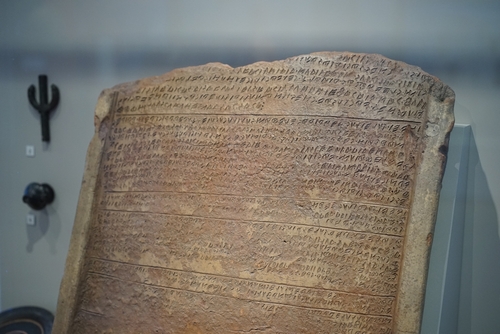

Key Highlights
- The Etruscan alphabet started in ancient Italy. It came from a Western style of the Greek alphabet.
- The Etruscan language is not well known, but we can say the words because more than 10,000 Etruscan inscriptions were found on many old items.
- People used to write this old script from right to left. This is different from the way we write now.
- The Etruscan alphabet is the main source of the Latin alphabet. It has shaped many European languages.
- Even though it shaped these languages, there are no big works of writing in the Etruscan language left today.
Introduction
Come with me on a trip back in time to look at the amazing Etruscan alphabet. This old writing system was very important to the Etruscan civilization. The Etruscans were a strong group that lived in ancient Italy before Rome became powerful. People still do not know everything about the Etruscan language. But its writing system has left something we still see today. Are you ready to learn about this script from before Rome and see what it gave to the world? Let’s get started.
Origins and Development of the Etruscan Alphabet
The story of the Etruscan alphabet is an interesting part of the history of the Etruscans. This writing system started around the 7th century BC in Etruria. Etruria is in central Italy, covering what is now Tuscany and Umbria. The Etruscan civilization did not make this writing system from nothing. Instead, they changed it from another script.
The Etruscans adapted a western variety of the greek alphabet. Greek colonists brought this writing system to the Italian peninsula. As we learn more, we will talk about the time in history that helped this script grow. We will also look at the early proof that shows us its origin.
Historical Context and Geographic Roots
The Etruscan alphabet started in a busy part of ancient Italy. The Etruscan civilization was strong in central Italy. But their reach also went into northern Italy and some parts of southern Italy. Being in this spot meant they were near many groups of people. This made it easy for new ideas to spread.
It was the Euboean Greeks who brought their version of the alphabet to the Etruscans. These Greeks had set up homes in the south. This meeting of cultures was a big deal. The Etruscans began to see that a writing system was helpful for trade, religious events, and running things each day. They soon changed the Greek letters to work for their own language.
You could see writing on many things from tombstones to things kept at an Etruscan sanctuary. It became a key part of how the Etruscans lived. Their way of writing is an important moment in the story of the Italian peninsula. It helped lead to new writing systems in the years that came after.
Early Evidence and Archaeological Discoveries
Our knowledge of the Etruscan language comes from important finds made by archaeologists. More than 10,000 Etruscan inscriptions have been found. These have given us a lot of new information. The Etruscan inscriptions are not in long books. Instead, you find them on things that people used every day or used for special rituals, and these have lasted for many years.
You can spot the Etruscan language in many places. These writings can be seen on:
- Tombstones and funerary urns, usually showing the name or life of the person who has died.
- Mirrors, vases, and jewelry, sometimes with the owner’s name or a special message.
- Statues and wall paintings seen inside Etruscan tombs.
One of the biggest finds is a book called the Liber Linteus. This is a rare Etruscan linen book. People are still not sure what it all means, but the text seems to be a ritual calendar. These old things are the main way we learn about the Etruscan language and their alphabet.
Structure and Features of the Etruscan Script
The Etruscan script has some special things that make it different. This writing system was an alphabet, so each symbol stood for a sound. One big thing about it was how people wrote it. Most of the time, Etruscan writing goes from right to left in a line. That is not how we write English now. Some early texts also use something called boustrophedon. In this style, lines go back and forth in different directions.
At first, people wrote words together with no spaces. As the classical Etruscan alphabet changed, writers began to use a dot or a symbol like a colon to show where one word ended and a new one started. This made it much easier to read. After this, we will look at the letters and the sounds that go with them.
Alphabet Letters and Their Appearance
The alphabet letters of the Etruscan script look familiar yet distinct, clearly showing their Greek origins. The archaic form of the Etruscan alphabet contained 26 letters, though not all were used to write the Etruscan language. Over time, the classical alphabet streamlined this, dropping letters that were not needed for Etruscan phonology.
Each letter had a specific sound value, many of which are recognizable to us today. For example, the letter ‘A’ looked very similar to its modern counterpart and had the same sound. Others, like the letter for ‘F’, which looked like the number ‘8’, are quite different. The order of the letters was learned from model alphabets, like the one found on the Marsiliana Tablet.
Here is a simplified table showing a few Etruscan letters and their approximate sounds, giving you an idea of their appearance:
| Etruscan Letter (Approx. Appearance) | Sound Value |
|---|---|
| A | a |
| 8 | f |
| M (with 5 strokes) | m |
| ↑ | t |
| K | k |
Unique Sounds and Characteristics
The phonology of the Etruscan language had a few quirks that showed up in the way the letters looked. The Etruscans took the greek alphabet, but they found out that they did not need all the same sounds. For instance, they did not have an ‘o’ sound, so they took out the letter omicron. They also did not use sounds like those in Beta and Delta, because the Etruscan language did not split up voiced and unvoiced stops like ‘b’ and ‘p’, or ‘d’ and ‘t’.
Because of this, there were some redundant letters at first. The Etruscans used three different marks for the ‘k’ sound—Gamma, Kappa, and Qoppa—depending on the vowel that came after. In time, this part of their writing system became less complicated. One unique thing was that they made up a new letter, the extra sign ‘8’, for the ‘f’ sound. This sound was in the Etruscan language, but not in the greek alphabet.
This way of using only the needed letters, along with its right-to-left direction of writing, made the etruscan language and its writing system stand out. Their script was made just right for the unique phonology of the etruscan language, with interesting ideas like the use of redundant letters and added signs.
Relationship to Greek and Latin Alphabets
The Etruscan alphabet was not made or used by itself. It was a big step between the Greek alphabet and the Latin alphabet. The story starts with the western Greek alphabet. Greek traders brought this writing system to Italy. The Etruscans used it and changed it to fit their own language. They made their own unique way to write words.
Later on, the Etruscans gave this new alphabet to their neighbors, the Romans. The Romans changed the Etruscan script more. They built the Latin alphabet from it. The Latin alphabet is what we use now in most western European languages. Next, we will look at how the Etruscan script is like the Greek alphabet and also the ways it helped to shape the Latin alphabet.
Comparisons with Greek Letterforms
When you see the Etruscan alphabet next to the greek alphabet, you can quickly spot the greek influence. Many letters look the same, especially in early etruscan inscriptions. The Etruscans took most letter shapes and their sounds straight from ancient greek.
But the Etruscans did not just copy everything. They changed things to fit their own way of speaking.
- Dropped Letters: The Etruskans did not use some greek letters, like Beta (B) and Delta (D), because they did not say those sounds. Their language did not tell voiced and unvoiced sounds apart. They also got rid of Omicron because they did not use an ‘o’ sound at all.
- Added Letter: The Etruscans had an ‘f’ sound that ancient greek did not have. So, they made a new letter for it. It looked like the number 8.
All these changes show the Etruscans started with the contemporary forms of the greek alphabet but made it fit their world. They created something new for their own people.
Influence on the Latin Alphabet
The Etruscan alphabet was the direct parent of the Latin alphabet. The rise of the Latin alphabet is a story where the Romans borrowed and improved things, with the Etruscans being the main go-between for this writing system. When the early Romans became more powerful, they started using the way of writing that their important neighbors, the Etruscans, had.
The Romans took the Etruscan script and made it fit their own language, which was one of the related languages called Italic. Over the course of its simplification, they made big changes. One important change was turning the writing direction from right-to-left to the left-to-right way most people use now.
They brought back some letters that the Etruscans had stopped using. For example, the Romans needed a letter for the ‘O’ sound, so they brought back that letter. They also started using the Etruscan ‘C’ for both ‘k’ and ‘g’ sounds before adding a new letter, ‘G’. This way of passing on ideas in writing is what made the Etruscans’ place in history last for a long time.
Etruscan Inscriptions and Artifacts
The story of the Etruscan alphabet can be seen on thousands of Etruscan artifacts that have lasted over the years. While we do not have many of their important books, we do have etruscan inscriptions on many different objects. These writings give us clues about the Etruscans’ language, what they believed, and how they lived every day.
You can find their script everywhere, from fancy etruscan tombs to simple greetings at an etruscan sanctuary. The most common etruscan inscriptions are short and use the same few phrases. You will often see these on funerary urns and on sarcophagi. Now, let’s take a look at some of the most notable examples of this writing found on these monuments and tablets.
Major Examples from Monuments and Tablets
Most Etruscan inscriptions are short. Still, there are some very important Etruscan texts that are much longer. These few, longer examples have helped us understand the language a lot. Many of these big tablets and long texts are now kept in the national museum. They give people the most material to look at when people study the Etruscan text and words.
Some of the best examples of longer Etruscan inscriptions are:
- The Liber Linteus Zagrabiensis: This is the longest Etruscan text that has survived. The words are written on a linen book. Later, people used this fabric to wrap a mummy. It looks like it is a ritual calendar.
- The Pyrgi Tablets: These are three golden plates. People found them at a sanctuary in Pyrgi. They are important because they have writing in both Etruscan and Phoenician. This has helped a lot with translation.
- The Tabula Cortonensis: This bronze tablet shows details of a land deal. It helps people know more about the words they used for rules and social matters.
- The Cippus Perusinus: This is a stone tablet from Perugia. It tells about a legal agreement between two families.
These long etruscan texts, found on these tablets and other places, are very important in the history of the Etruscans. They give us the best way to try to know what the Etr
The Marsiliana Tablet and Its Significance
The Marsiliana Tablet is one of the key finds for those who want to know about the origin of the Etruscan alphabet. It was found in a tomb from the 7th century BC. The tablet is small and made from ivory. It is not used for normal writing but instead is a “model alphabet.” On one side, you see the full 26-letter western variety of the greek alphabet. The letters sit in a line around the edge.
The tablet gives us a clear look at the point in time when the Etruscans took the greek alphabet from Greek people living nearby. These people probably came from the city of cumae. The board shows all the letters that the Etruscans used before making changes to fit their own words.
Because of the tablet, we know the Etruscans got the alphabet all at once and not in pieces. The tablet may have been used for practice in writing or as a chart to help learn the letter order and shapes. For people who study history, the Marsiliana Tablet is important. It shows right away how the Etruscan writing system connects back to the greek alphabet.
Conclusion
To sum up, the Etruscan alphabet is a great way to see the link between old civilizations and modern languages. The way it is built and its different qualities show a lot about the Etruscans and help us see how it shaped both Greek and Latin writing. When we look at Etruscan inscriptions and old pieces, we get to know more about their culture, language, and art. If you love history or just want to know where writing began, learning about the Etruscan alphabet can give you many new ideas. If you want to know more or need a talk about this, you can get in touch anytime!
Frequently Asked Questions
Why is the Etruscan language only partly understood today?
The Etruscan language is not fully known. The reason for this is that there is no big piece of writing from them, and it does not have closely related languages we can compare it to. All that we know of Etruscan comes from short and repetitious funeral writings. That means our knowledge of Etruscan offers only a little vocabulary and grammar. This makes it hard to get a full idea of the Etruscan text and also hard to find any clear linguistic similarities to other languages.
How can someone start identifying Etruscan writing?
To find Etruscan inscriptions, you should look at the direction of writing. Most of the time, the Etruscan writing system goes from right to left. You need to know the letter shapes, too. The Etruscan alphabet has its own look. One special sign you might see is ‘8’, which they used for the ‘f’ sound. When you spot these things on old items, you will have a good start in picking out Etruscan inscriptions. This is a key step to know more about their writing.
Are there modern uses or representations of the Etruscan alphabet?
The Etruscan alphabet is not used in modern times. But you can still find it in books or studies about history. The Latin alphabet came from it, and that is probably its biggest sign of being passed down to us today. People are still interested in this culture. Emperor Claudius, the Roman emperor, wrote about the Etruscans too. But sadly, none of his work about them is left for us to read now.