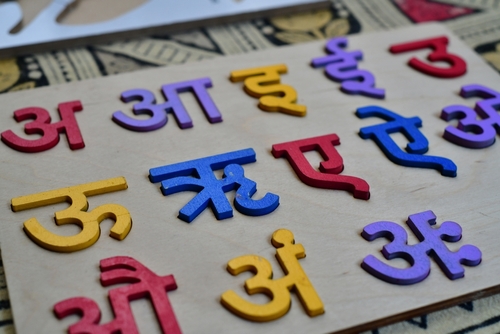

Key Highlights
- The Devanagari script is a writing system that you will find in use for the Hindi language and for other languages in India.
- It is an alphasyllabary. This means that every consonant in Devanagari comes with an inherent vowel sound.
- The script has a set of vowels and a set of consonants. They are put together by the way people pronounce them.
- People write Devanagari from left to right. The letters hang from a horizontal line known as a shirorekha.
- This devanagari alphabet is highly phonetic. People write the words just like they sound when you say them.
- Devanagari got its start from the old Brahmi script.
Introduction
Welcome to the world of the Devanagari script! If you want to know more about the writing you find in languages like Hindi and Sanskrit, you are at the right spot. This alphabet has a rich history and a clear structure. It is not just a group of symbols. It is a way for people to learn about the culture and the way of saying things in South Asia. In this guide, we will go over the structure, vowels, consonants, and other special parts of the Devanagari alphabet. All of this will help you see how good and important the Devanagari script is.
Overview of the Devanagari Alphabet
The Devanagari alphabet is a popular writing system that started in India. People use it to write many languages. Some of the main ones are Hindi, Marathi, and Nepali. This is also the main script used for modern Sanskrit. What makes the Devangari alphabet stand out is its phonetic form. If you hear a word, you can often write it down. And if you see a word, you can say it out loud the right way.
Devanagari is not like the Latin script where you put letters next to each other in a line. In this writing system, symbols come together into syllables. These syllables hang from a special horizontal line. This is an important feature of its look. Now, let’s see more about where it came from, why it matters for many languages, and how people use it today.
Origins and Development of the Devanagari Script
The Devanagari script has a long history in ancient India. It began with the Brahmi script, which is one of the oldest writing systems to be found in the area. Brahmi acted as a base for many other scripts in South and Southeast Asia. Over time, the Brahmi script changed into different local forms.
By the 7th century CE, the Nagari script came from these new forms. The Nagari script is known as the direct parent of the Devanagari script we use now. The name “Devanagari” is often said to mean “script of the divine city.” People called it this because of its high place in religion and learning.
The Nagari script slowly grew and became more regular over time. This led to today’s Devanagari script. Because it is clear and works well for sounds, the Devanagari script has been a strong and important writing system for hundreds of years in India—a strong link between old and new times.
Significance in South Asian Languages
Devanagari is important for the cultural and language life of the Indian subcontinent. It is the main script used for Hindi, which is spoken by most people in India. It is also the script used to write Sanskrit. Sanskrit is an important language in old Indian books, stories, and ways of thinking. Because of this, Devanagari is needed to read many religious, science, and story works.
Devanagari is not just for Hindi and Sanskrit. People use it to write other main languages too. For example, it is used for Marathi, which is spoken in the state of Maharashtra. Nepali people in Nepal also use Devanagari. This shows that the script brings together many people in South Asia who use the same way of writing. This makes it one of the biggest writing systems in this part of the world.
Devanagari helps write words the way they sound, and it has an easy-to-understand way of putting letters in order. These things make it a good script for writing and saving languages. When you learn Devanagari, you can read and write in many cultures and groups—from the busy streets of India to the high hills of Nepal.
Modern Usage and Global Presence
Devanagari is well-known around the world in the digital age. This is mostly because it is part of the Unicode standard. With the unicode standard, the script works the same on computers, phones, and other devices. Because of this, people can type, share, and read in Hindi, Sanskrit, and other Devanagari scripts online with no problem.
There are also many digital fonts to choose from now. No matter if you read news, send messages, or make a document, there is a font that will show the script the right way. This digital change has helped keep Devanagari important for people today.
Devanagari is not just for South Asia or India. It is also used in Europe and other places. For example:
- Used in academic and language research across the world.
- Found in cultural and religious groups outside India.
- Used with new types of media, like websites and social platforms.
Structure of the Devanagari Script
The Devanagari script has a style that makes it easy to spot and tells it apart from other ways of writing. The most known thing about it is the line on top, called the horizontal line or shirorekha. This line goes over the letters in a word and links them together. This setup helps the script look neat and all the letters seem to hang from a clothesline.
One of the main ideas in Devanagari is that it is made around syllables. Every consonant symbol has an inherent vowel sound with it, which is usually the ‘a’ sound, also known as the schwa. If you want to change the vowel sound or show a consonant without a vowel, you add special marks. Because of this, the Devanagari script is phonetic and clear. Now, let’s look more closely at how this works.
Syllabic Nature and Script Layout
The Devanagari script is a writing system where the main parts are syllables. It is not like an alphabet that treats vowels and consonant letters the same. In the Devanagari script, each consonant comes with a default vowel sound. This built-in vowel is a short “a” sound, like the “a” in the word “about.” So, when you see the consonant letter क, you say “ka” instead of just “k.”
This way of building words changes how the whole writing system looks. When people write with the Devanagari script, they put symbols together in blocks. These blocks each show a full syllable. For example, the word “Devanagari” (देवनागरी) is spaced out like de-va-nā-ga-rī. The writing goes from left to right, and the syllables join up with a horizontal line on the top.
Because of this set-up, the sound and writing are closely linked. Whenever you can, you write words so the syllables do not finish with a consonant. This makes the flow of words soft and easy to say. The strong tie between how a word sounds and how you write it is what makes the Devanagari script special.
Basic Organization of Vowels and Consonants
The Devanagari alphabet is systematically organized into vowels and consonants. The vowel letters are listed first, followed by the consonant letters. In total, the standard Hindi alphabet contains 11 vowels and 33 basic consonants, though additional characters exist for specific sounds and loanwords.
The vowels each have two forms: an independent form used when a vowel stands alone or at the beginning of a word, and a dependent form (matra) used when it modifies a consonant. The consonants are grouped based on their place and manner of articulation, making the system highly logical for learners. For example, consonants pronounced with the back of the tongue (like ‘k’) are grouped together.
This organization is a key feature of the Hindi alphabet. Here’s a quick look at the main categories:
| Category | Description |
|---|---|
| Vowels | Represent vowel sounds and appear in independent and dependent forms. |
| Consonants | Represent consonant sounds and have an inherent ‘a’ vowel. |
| Special Characters | Include nasalization marks and other diacritics for pronunciation. |
Writing Direction and Notable Features (Shirorekha)
One thing that stands out about the Devanagari script is how it is written and how it looks. Devanagari script and English are both written from left to right. The most well-known part of Devanagari is the shirorekha, which is a horizontal line that goes across the top of all the letters in a word. This line joins the letters together and is the feature that gives Devanagari its easy, flowing look.
Most consonant letters in Devanagari also have a long vertical line. This line is a main part of the consonant. When consonant clusters are formed, sometimes the vertical line is dropped from the first letter so the next one can join in.
Many things make Devanagari script stand out from other writing systems, besides the shirorekha:
- It is alphasyllabic, which means every consonant already has an inherent vowel.
- There are two ways for vowels to appear: they can be written on their own or attached to a consonant.
- Consonants are grouped in a set way, based on how people say them.
- It uses some special hints, like the virama, to show when the inherent vowel in a consonant should not be pronounced.
Vowels in the Devanagari Alphabet
Vowels are very important in the Devanagari alphabet. They give life to the consonants. Each vowel letter matches a certain vowel sound, and these are split into short vowels and long vowels. Knowing the difference helps you say words the right way. For example, the short ‘a’ is not the same as the long ‘ā’.
Hindi vowels come in two forms, and this is something you need to know when you start with the script. Learning how to use these forms is needed for good reading and writing. Now, let’s see the list of vowels and what forms each one has.
List of Devanagari Vowel Characters
The Devanagari script has a group of vowel letters. Each one makes a special sound. If you want to say them right, it helps to think about the sounds you hear in English. But, some of these sounds only happen in Hindi. Every vowel letter in Devanagari can have an independent form and a dependent form. The independent form is used when the vowel stands alone, and the dependent form is called a matra. The matra is used to change the sound of a consonant.
You will see the independent forms at the beginning of a word or right after another vowel. For instance, the Hindi word आम (ām), which means “mango,” starts with the independent vowel आ. The dependent forms are small marks you add to consonants. The marks change the ‘a’ sound that every consonant starts with.
Here is a list of some common Hindi vowels in their independent form and how they sound like in English:
- अ (a) – like the ‘a’ in ‘about’
- आ (ā) – like the ‘a’ in ‘father’
- इ (i) – like the ‘i’ in ‘sit’
- ई (ī) – like the ‘ee’ in ‘see’
- उ (u) – like the ‘u’ in ‘put’
Independent and Dependent Vowel Forms
A basic part of writing in Devanagari is to know about the two forms that every vowel has. The first form is the independent form. It is the vowel as a single letter. You use this independent form if a vowel sound comes at the beginning of a word or right after another vowel. It shows up when there is no consonant to connect the vowel to.
The other form is the dependent form. People call this a matra. A matra is a mark that goes with a consonant. The job of the matra is to change the consonant’s default vowel sound, which is ‘a’ or the schwa, and put in another vowel sound instead. The short ‘a’ sound is the default vowel, so it does not use a matra.
For example, to write the syllable “ki,” you start with the consonant क (ka). Then, you add the matra for the ‘i’ sound ( ि ). This gives you कि. Matras make it quick and simple to show vowel sounds in syllables. This system is key to how the script works. Knowing how to use matras helps you get better at writing and reading in Devanagari. It also improves your pronunciation.
Pronunciation and Usage of Vowels
Getting the correct pronunciation of Hindi vowels is very important for clear speaking. In Devanagari, each vowel sound is special. The script shows a clear difference between short vowels and long vowels. For example, the short vowel इ (i) is said quickly, like in ‘sin’. The long vowel ई (ī) lasts longer, like in ‘seen’. The time you hold these vowel sounds can make the meaning of a word change.
When a vowel comes after a consonant, you need to use its corresponding dependent form. This is called a matra. The matra connects to the consonant. It can go above, under, before, or after the consonant letter to make the right syllable. For example, if you take the consonant स (sa) and add the matra for ‘o’ (ो) to it, it becomes सो (so).
The best way to get good at these vowel sounds is to practice often. Listen to people who speak Hindi and copy the sounds of these vowels. Practice them both alone and in their matra forms with consonants. Focus on how long and how good each vowel should be. Mastering these things will help your fluency and help you understand Hindi even better.
Consonants in the Devanagari Script
Consonants are like the main parts of words in the Devanagari script. The consonant symbols in Devanagari are set up based on the place and manner of articulation. This means there are groups for sounds you make with your lips, called labial, and for sounds you make with your teeth, known as dental consonant. So, it makes the way to learn them very clear and systematic.
There is something special about the Devanagari script. Each consonant symbol already comes with an ‘a’ sound built in. If you want to write two or more consonants together and you do not want a vowel between them, you have to make a consonant cluster. Now, we will look at the types of consonants, how they are grouped, and how consonants mix with vowels in Devanagari.
Types of Consonants (Stops, Nasals, Approximants)
Devanagari consonant sounds are put into groups based on how we make them with our mouths. This way of sorting the sounds helps make the script easy to use and understand. The main groups are stops, nasals, and approximants. Each group is decided by how the air moves when we speak.
Stops are made when you completely block the air in your mouth, then let it out. These can be split into pairs too. Some stops are unaspirated, which means there is not extra air. Others are aspirated, where you let out more air. Nasals happen when you let air go out through your nose, like when you say ‘n’ or ‘m.’ Approximants happen when your tongue or lips get close together but still let some air out, making sounds like ‘y’ or ‘l.’
Here’s a look at the different kinds of these consonant types:
- Stops: Consonants like क (ka), ग (ga), प (pa), and ब (ba).
- Nasals: Sounds like न (na) and म (ma).
- Approximants: Consonants such as य (ya), र (ra), and ल (la).
- Fricatives: Sounds made when you push air through a narrow gap, like स (sa) and श (sha).
Consonant Groups by Articulation
The Hindi alphabet is smart in the way it is put together. In the Devanagari script, consonants are put in a grid using two things: where the sound comes from in your mouth (place of articulation) and how the sound is made (manner of articulation). This kind of table helps you see the way the sounds are tied together right from the start.
The consonant groups go from the back of your mouth to the front. The first group is called velar consonants, like क (ka) and ख (kha). You make these at the soft part on top of your mouth. The next groups in the Hindi alphabet are palatals, retroflex, dentals, and labials. Each group comes from a little bit further forward in your mouth. In each group, the consonants are put in the order of how the sound comes out. So it starts with simple sounds, then goes to sounds you push air with, then to sounds that need your throat, and more.
This tidy way to put the Hindi alphabet is not just to look neat. It really helps people who want to pick up the script. If you figure out the pattern, you can guess the pronunciation of new letters that are found in the same part of the table. That clear and simple structure is one main reason why people call the Devanagari script very good for learning how the words sound.
How Consonants Combine with Vowels
In Devanagari, a consonant and a vowel join together to make a syllable. Each consonant comes with its own ‘a’ sound by default. If you want the syllable to use a different vowel, you add the vowel’s dependent form, called a matra. For example, the consonant प (pa) gets an ‘i’ matra and turns into पि (pi).
When two or more consonants are found next to each other without a vowel in between, they make a consonant cluster. This is also called a conjunct. To show a consonant cluster in writing, the first member of a conjunct is often shown in a half form. You make this by removing the vertical line from the first consonant and putting it next to the second consonant. For example, half च (ca) connects to छ (cha) to make च्छ (ccha) in the word अच्छा (acchā).
It is important to know how this combination works in Devanagari, because not all consonants have a simple half form. Sometimes, the combination of consonants makes special characters that you have to remember. For example, if you join क (ka) and ष (ṣa), you get the special character क्ष (kṣa).
So, to put it simply: when you want to form different syllables in Devanagari, you have to use dependent forms, half forms, matras, and sometimes memorize
Special Signs and Pronunciation Marks
Besides vowels and consonants, Devanagari has many special signs and diacritic marks. These marks help with clear pronunciation. They can show things like nasalization, if a vowel is missing, or certain punctuation. Using these marks is key because they make sure the way people speak can be shown in writing.
Some signs in Devanagari, like the virama (or halant), help join two consonant sounds. Others, like the anusvāra, make a sound more nasal. Learning about these diacritic marks is just as important as learning the letters. Here, we will go over some of the most common signs and what they do.
Anusvāra, Visarga, and Chandrabindu
Devanagari uses a few important marks to change how words sound, especially with nose sounds and breath. The first one, called Anusvāra, is a dot above the main line of the letters (for example, कं). This mark shows you need to add a nasal sound, like when you say the ‘n’ in “Sanskrit” (संस्कृत). The bindu is key in writing many Hindi words and Sanskrit words.
Next, there is Visarga. This is shown by two dots after a letter (like in कः). Visarga means you use a soft, voiceless sound, almost like an ‘h,’ but you do not use your voice. You will see this at the end of words often in Sanskrit.
Another mark is Chandrabindu, or the “moon dot” (for example, कँ). You find this above the letter, and it shows that the vowel sound is actually going through your nose. In Hindi words, such as हूँ (hū̃, which means “am”), Chandrabindu is common. Nasalization is a big part of the way Hindi is spoken and is important for good pronunciation. It helps you say words the right way.
These small marks help a lot. They make a difference in how you pronounce words and can even separate words that look almost the same.
- Anusvāra (ं): Adds a nasal consonant sound.
- Visarga (ः): Adds a
Halant (Virama) and Its Function
The Halant, called the virama, is a small line you see under a consonant (like क्). The main job of this mark is to drop the consonant’s default vowel sound. So when you see a Halant, you get the sound of the consonant only, not with the vowel. For example, क is read as “ka,” but क् is just “k.”
This sign is used when putting two consonants together in Devanagari. You put the halant under the first consonant to knock out the vowel sound. This lets the letters come together to make a new sound. For example, if you put स् + क, you get स्क, which is read as “ska.” Many new fonts now make this look like one shape, but at its core, this happens because of the halant.
You can use the halant at the end of a word if the word finishes with only a consonant sound. This is seen more in Sanskrit than Hindi, especially at the end of a sentence. Knowing how the virama works will really help you get the right pronunciation, and learn how Devanagari puts together tough words with more than one consonant or if the pure consonant sound is needed at the end. The halant is key in handling these vowel sound changes.
Accent Marks and Emphasis in Writing
Modern Hindi is written in Devanagari. It usually does not use diacritic marks to show stress or tone. But you will see these marks in old Vedic Sanskrit books. In those books, the marks tell you the pitch of a syllable. This was very important for saying old songs and chants the right way. The main diacritic marks are called udātta, which is the high tone, anudātta, which is the low tone, and svarita, which means the tone goes down.
Today, people do not use special marks for stress when they write in Devanagari. People understand emphasis from the sentence and the meaning. The script is phonetic, so it helps tell the different sounds the words make. It also makes clear the difference between short and long vowels. This helps you know which part to stress. One thing to know is the schwa sound. It is at the end of many words but is dropped in speech, so that can make the stress change.
Devanagari is sometimes called the “script of the city.” The name can make people think it has a divine or special use. This means how you say words and vowels in Sanskrit or Hindi had to be very clear. Even though people do not use these accent marks much now, knowing about them helps you see how the script shows details in pronunciation. It tells us about the script’s way of making sounds clear—like the long vowels and even which vowels to
Languages and Applications of Devanagari
Devanagari is the main writing system for much more than just Hindi. People in the Indian subcontinent, including those who speak Sanskrit, Marathi, and Nepali, use it every day. Its clear sounds make it good for all types of writing, like stories, official papers, and important religious texts.
The writing system also works well in many areas. Some nearby languages use it too. They add a few special marks or letters so the script fits the way their people talk. Because of these uses, Devanagari has become a big part of the language world in South Asia. Next, we will see how people use it in major languages and for important writing.
Use in Hindi, Sanskrit, Marathi, and Nepali
The Devanagari script is used as the main writing system for many big South Asian languages. In Hindi, it is the most used and the official way to write. People use Devanagari in their everyday life, for books, and even in government files. This script matches the sounds of spoken Hindi very closely, which makes it easy to read and write.
Devanagari is also what people use for Sanskrit today. Because of this, it helps people now learn about old stories, science papers, and big ideas from long ago. The Marathi language, which is spoken in Maharashtra, and Nepali, the national language of Nepal, both use Devanagari too when people write.
Each language might change the alphabet a little or have a different way to say words. But the Devanagari script stays the same for all. This helps bring people and cultures in these areas together. It also lets people understand each other better, even if they speak different languages.
Keywords: devanagari script, writing system, hindi language, devanagari, sanskrit, hindi, alphabet, pronunciation, marathi
Adaptation for Other Regional Languages
The Devanagari script stands out because it can change to fit different needs. At first, people used it for only a few main languages. But now, you can see it used for many regional languages and dialects in India. People change the script by adding new marks or letters. They do this to show sounds that you do not find in Hindi or Sanskrit.
For instance, when words come from other language groups, like those with Perso-Arabic roots, people add dots below some letters. These dots are called nuqta. By using them, we get new letters such as क़ (qa) from क (ka), and फ़ (fa) from फ (pha). So the Devanagari script can write more types of sounds clearly.
The way Devanagari changes shows the strong design of the script. You can add to it without breaking the main structure. That makes it a good pick for many people who use different languages. Here are a few ways it has adapted:
- Writing languages such as Konkani, Maithili, and Bhojpuri.
- Adding sounds from Arabic and Persian.
- In the past, some experts even thought about using it for European languages.
By staying flexible, the Devanagari script connects people. It helps to share ideas across India and even beyond.
Examples of Literary and Official Texts
Devanagari script is used for many important books and documents. In the past, people wrote sacred books like the Vedas, Ramayana, and Mahabharata in Sanskrit using Devanagari. These books show how the script helped save important cultural and religious ideas.
Today, people use Devanagari for all Hindi government papers. You can also find it in newspapers, stories, and poems. Books like “A Primer of Modern Standard Hindi” use it to help people learn Hindi. These resources are easy to find as a PDF or in print for anyone who wants to study.
When you read old books or today’s news stories, you get the ideas through the Devanagari script. It links the past and present. With its use in old texts and new digital papers, Devanagari script is very helpful for people who care about the languages and cultures of South Asia.
Conclusion
To sum it up, the Devanagari script is more than a way to write words. It is an important part of culture and language. This writing system connects many people in South Asia and other parts of the world. It has its own setup with vowels, consonants, and some special marks. It helps make languages like Hindi, Sanskrit, Marathi, and Nepali more beautiful.
When you understand how the Devanagari alphabet works and how to use it, you will find it easier to learn these languages. You also get to know more about their deep and rich history. Whether you want to start learning or know a bit and wish to get better, learning the Devanagari script is a good step. It lets you explore new ideas and cultures through reading and writing. If you want to find out more, you can reach out for a free talk and we can start this journey in language learning together.
Frequently Asked Questions
How many letters are there in the Devanagari alphabet?
The Devanagari script used today for Hindi has 44 basic letters. The script has 11 vowel letters and 33 consonant letters. There are more characters in Devanagari when you add special signs, joint consonant letters, and some letters for sounds borrowed from other languages.
How do you pronounce and write with the Devanagari script?
Writing in the Devanagari script means you put consonant symbols and vowel marks, called matras, together to make syllables. The pronunciation in Devanagari is very clear. Each letter or each letter with a matra always sounds the same way. The best way to get this right is to practice every vowel sound and each consonant symbol. It also helps a lot if you can work with a native speaker.
What are the best tips for beginners learning Devanagari?
If you are new to this, begin with the vowels and their two forms. Write Hindi words by hand because this will help you get used to them. Try out “A Primer of Modern Standard Hindi” as one helpful tool. You can also put a Devanagari font on your computer, so you can start typing in Hindi. The most important thing is to practice every day if you want to get good at it.