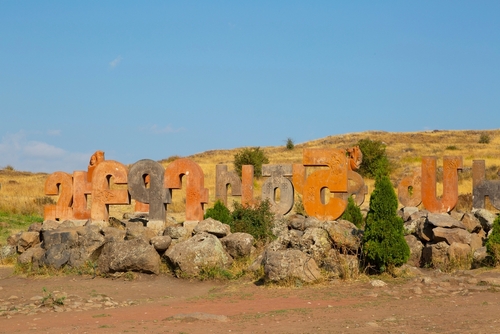

Key Highlights
Here’s a fast and easy way to see what is in this guide about the Armenian alphabet:
- The Armenian alphabet was made in 405 AD by Mesrop Mashtots. This was a huge moment in Armenian culture.
- This alphabet has 39 letters. Each one sounds and looks different.
- The Armenian alphabet helped people translate the Bible and other religious texts. It also helped keep the Armenian language alive.
- There are two main ways to speak Armenian, called Eastern and Western. The pronunciation is a little different in each one.
- If you want to know the Armenian language and its rich history, learning the alphabet is the first thing to do.
Introduction
Welcome to the world of the Armenian alphabet! This special writing system is more than just letters. It is a big part of the Armenian language and who the Armenian people are. The alphabet has a rich history that goes back many years. It has helped the Armenian people keep their strong culture and stories alive. Are you ready to learn about where the alphabet came from, how it is made, and why it looks so nice? Let’s start this journey and find out more about one of the most unique alphabets in the world.
Origins of the Armenian Alphabet
The Armenian alphabet was made by Mesrop Mashtots, a scholar and monk, in about 405 AD. Before this, the Armenian people used scripts like Greek and Syriac. But these scripts did not work well with the sounds of the Armenian language. The new Armenian script became a big change for the people.
This writing system let them translate religious texts and build their own way of writing. Because of this, Armenian culture and identity grew stronger. The alphabet fits the language well, the goal Mesrop Mashtots wanted and reached. Now, let’s look at how the Armenian script was made and what was happening around that time.
Mesrop Mashtots and the Creation of the Script
Mesrop Mashtots was a skilled Armenian linguist. He is the one who came up with the Armenian alphabet in the year 405 AD. He saw a big need for the Armenian people to have their own alphabet. This way, they could read their language and talk about their religious books. He worked hard at this task to make sure all sounds of the Armenian language would fit well.
He spent time looking at other writing systems. He even checked out the Greek alphabet while working on this. After learning about these scripts, Mesrop Mashtots built a whole new set of letters. It was not just a small change to what was already there. It was a new idea that fit the Armenian people and their way of speaking.
The first sentence ever written using this alphabet came from the Book of Proverbs. It was, “To know wisdom and instruction; to perceive the words of understanding.”
This was a very big moment in history. Mesrop Mashtots, as an Armenian linguist, gave the Armenian people much more than just an alphabet. He handed them the tool to keep their culture and help teach people. It brought the Armenian people closer, helping them stay together for over 1,600 years. The Armenian language and own alphabet still matter a lot now because of what Mesrop Mashtots did.
The Socio-Cultural Context of 5th Century Armenia
In the 5th century, Armenia faced a hard time. The country was stuck between the strong powers of Rome and Iran. Christianity had become the main faith about one hundred years before this, but there was no local way to write. So, religious texts were in Greek and Syriac. This meant most Armenian people could not understand them.
The alphabet was made to fix this problem. With it, the Armenian people could now put the Bible and other religious texts into their own language. Now, everyone could read about Christianity. This was an act from the Armenian people to show that they were different and strong in their own way. It helped all Armenians come together, sharing the same faith and a way to write and speak.
The new script grew to be a big part of Armenian culture. This was more than just a change in religion. It gave the Armenian people their own way to show who they are, not just follow what Rome or Iran wanted. Each Armenian word written with the script reminded people of their roots. It set up a way for a rich group of stories, books, and poems that would grow for many years.
Structure and Letters of the Armenian Alphabet
The Armenian script is a clear way to write and has 39 letters. There are vowels and consonants in this alphabet. Each letter has both an uppercase and a lowercase form. The Armenian writing, like English, goes from left to right on the page. This helps make it easy for learners to use.
In the armenian writing, each letter gives you a specific sound. The armenian alphabet is phonetic, so one letter stands for one sound. This is a big part of what makes it easy to learn. Now, let’s look at the armenian alphabet itself and learn how to say each letter.
The 39 Unique Armenian Letters
Originally created with 36 letters by Mesrop Mashtots, the Armenian alphabet later expanded to 39 to accommodate foreign sounds. This set of characters includes 7 vowels and 32 consonants, providing a complete phonetic range for the language. Each letter has distinct uppercase and lowercase forms, similar to the Latin alphabet.
The names of the first two letters, “Ayb” (Ա) and “Ben” (Բ), give the alphabet its name: “aybuben.” This naming convention is similar to how “alpha” and “beta” form the word “alphabet” in Greek. The letters themselves are not just phonetic symbols; they are also an integral part of Armenian art and cultural expression.
Here is a table detailing the letters of the Armenian alphabet, their names, and their sounds in both Eastern and Western dialects.
| Name | Uppercase | Lowercase | Eastern Pronunciation | Western Pronunciation |
|---|---|---|---|---|
| Ayb | Ա | ա | a | a |
| Ben | Բ | բ | b | p |
| Gim | Գ | գ | g | k |
| Da | Դ | դ | d | t |
| Yech | Ե | ե | ye/e | ye/e |
| Za | Զ | զ | z | z |
| Eh | Է | է | e | e |
| Ut | Ը | ը | uh | uh |
| To | Թ | թ | t’ | t’ |
| Zhe | Ժ | ժ | zh | zh |
| Ini | Ի | ի | i | i |
| Lyun | Լ | լ | l | l |
| Khe | Խ | խ | kh | kh |
| Tsa | Ծ | ծ | ts | dz |
| Ken | Կ | կ | k | g |
| Ho | Հ | հ | h | h |
| Dza | Ձ | ձ | dz | ts |
| Ghad | Ղ | ղ | gh | gh |
| Che | Ճ | ճ | ch | j |
| Men | Մ | մ | m | m |
| Yi | Յ | յ | y/h | y/h |
| Nu | Ն | ն | n | n |
| Sha | Շ | շ | sh | sh |
| Vo | Ո | ո | vo/o | vo/o |
| Cha | Չ | չ | ch’ | ch’ |
| Pe | Պ | պ | p | b |
| Je | Ջ | ջ | j | ch’ |
| Rra | Ռ | ռ | rr | rr |
| Se | Ս | ս | s | s |
| Vev | Վ | վ | v | v |
| Tyun | Տ | տ | t | d |
| Re | Ր | ր | r | r |
| Tso | Ց | ց | ts’ | ts’ |
| Hyun | Ւ | ւ | (part of ու/u) | v/w |
| Pyur | Փ | փ | p’ | p’ |
| Ke | Ք | ք | k’ | k’ |
| O | Օ | օ | o | o |
| Fe | Ֆ | ֆ | f | f |
| Yev | և | yev | yev |
Pronunciation Guide and Phonetic Features
Getting the pronunciation right is one of the best parts of learning a new language. The Armenian alphabet is mostly based on how words sound. Each letter stands for a specific sound. This way, you can learn to read quicker if you know the sounds of the Armenian language. Still, some of these sounds may be new if you speak English.
You need to practice the sound for each letter one at a time. In the Armenian alphabet, there are 7 vowels and 32 consonants. Many of them match sounds in English, but there are some that are different. For example, Armenian has a few aspirated consonants, like ‘փ’, ‘ք’, and ‘թ’. You say these with more force and air than you would with English letters that look the same.
Here are some things to remember about the Armenian language’s sounds:
- Aspirated vs. Unaspirated: The sounds for letters like ⟨p⟩, ⟨t⟩, and ⟨k⟩ have matching aspirated ones in Armenian—these are ⟨փ⟩, ⟨թ⟩, and ⟨ք⟩. The main difference is how much air you breathe out.
- Voiced vs. Voiceless: Some of the consonants do not sound the same in every dialect. For example, ⟨բ⟩ sounds like ‘b’ in Eastern Armenian but more like
Eastern vs. Western Armenian Alphabet
The Armenian language has just one alphabet. However, it has two main dialects. These are Eastern Armenian and Western Armenian. Eastern Armenian is the official language used in Armenia. Western Armenian is mainly used by the Armenian people who live in other countries in the Middle East, Europe, and the Americas.
Both dialects use the same alphabet. The differences are mostly in the way words are said and, sometimes, in how words are written. It is important to know these differences if you want to speak or understand Armenian well. This is true no matter which dialect you learn. Let’s take a closer look at what makes Eastern Armenian and Western Armenian different, especially in pronunciation and spelling.
Distinctive Pronunciation and Orthographic Differences
The biggest difference between Eastern Armenian and Western Armenian is how some consonants sound. For example, a sound that is voiced in one may be voiceless in the other. Because of this change, there is a clear sound shift in the armenian language that learners should know when they listen to it.
Also, there is a special group of consonant sounds called plosives (these come from stopping the airflow). These are said in two different ways in eastern armenian and western armenian. This is one way people can tell which dialect it is. There are a few small changes in the way words are written, too. After the 1920s, eastern armenian spelling was made simpler. But people who speak western armenian still use the old way of writing.
Here are some main ways the pronunciation is different:
- The letter ⟨բ⟩ is said as ‘b’ in Eastern Armenian, but people in Western Armenian say it as ‘p’.
- The letter ⟨գ⟩ is said as ‘g’ in Eastern Armenian, but in Western Armenian it is ‘k’.
- The letter ⟨դ⟩ is said as ‘d’ in Eastern Armenian, but in Western Armenian it is ‘t’.
- The other way around, the letters ⟨պ⟩ (‘p’), ⟨կ⟩ (‘k’), and ⟨տ⟩ (‘t’) in Eastern Armenian sound like
Evolution and Regional Variations Over Time
The Armenian alphabet has changed over time, like other living writing systems. At first, Classical Armenian (Grabar) had 36 letters. These letters were enough for many years. But as the language changed, new letters were added. In the Middle Ages, the letters ‘օ’ (o) and ‘ֆ’ (f) became part of the alphabet. This helped show sounds in foreign words.
Changes also happened because of different ways Armenian was spoken in different places. Eastern Armenian and Western Armenian began to sound less alike as years went by. Now, their pronunciation and spelling show these changes. This is because people from Armenian-speaking groups went through different things in history.
The biggest change happened in the 1920s in Armenia. There was a reform to how the language was written. This change made the symbol ‘և’ into a letter of its own. The new way was used in Armenia where eastern armenian is spoken. But it was not accepted by Armenians who had moved away from Armenia. Most of them still use the old, classical armenian spelling. Because of this, now there are two major ways of writing armenian, each used by different groups.
The Alphabet’s Role in Armenian Identity and History
The Armenian alphabet is much more than just a way to write words. It is a strong symbol of who the Armenian people are and what their culture stands for. When the alphabet was made, it became a big moment in the history of the Armenian people. It helped them keep their language and their faith safe, even when they faced outside threats. The script soon played a big part as the first step for a new and growing Armenian literature.
The link between the alphabet and Armenian culture has been around for over 1,600 years. You can see these letters everywhere, from old manuscripts to new art. These Armenian letters always show the strength, the spirit of making new things, and the sense of self the people have. We should look at how the Armenian alphabet has helped keep Armenian literature safe, and why it means so much as a sign of who Armenians are.
Preservation of Armenian Literature and National Heritage
The creation of the Armenian alphabet was the main reason Armenian literature could be saved and shared. Right after this happened, there was a “golden age” of both translation and new writing. The Bible was the first and most important book to be translated, and this helped Christianity become even stronger among the Armenian people.
People did not stop at just religious texts. Writers and historians started to write down Armenian history, old stories, and ideas in their own language. They made thousands of amazing hand-written manuscripts, and a lot of them still exist today in places like the Matenadaran in Yerevan. These manuscripts are more than just books. They are priceless pieces of a rich Armenian life from long ago.
The alphabet helped Armenian literature go on, even when times were very hard. Armenian studies grew because so many writings were kept safe. This collection gives new and old readers a way to learn about the history, language, and thinking of the Armenian people. Having their own alphabet made sure the story of Armenians would not be lost over time.
Symbolic and Spiritual Significance in Armenian Culture
In Armenian culture, the alphabet is more than just letters used for writing. People see these letters as very special. They are not just for words. Many will say that the alphabet is a holy gift. It helped keep the nation’s Christian faith and the Armenian identity safe. You can see this respect in art. The letters often show up in detailed patterns found on khachkars, which are cross-stones, and in old books called manuscripts.
Many people believe that the alphabet of Armenia holds secrets in the way its letters are built. Armenian studies talk about how the order or even the shape of the letters, and their number values, may hide spiritual or mysterious ideas. For instance, the first letter, Ա (Ayb), starts the Armenian word Աստուած (Astvats), which means “God.” This connects the first letter, “Ayb,” to both beginning and divinity.
No one knows for sure if Mesrop Mashtots, the creator of the Armenian alphabet, hid these secrets on purpose or if people started to look for these meanings much later. Still, this idea adds something special and strange to the script. Because so many believe the letters mean more, the alphabet is not just a tool for writing. Instead, it has a holy place in Armenian culture and the life of the spirit, linking what people write to something divine.
Learning the Armenian Alphabet: Tools and Techniques
Are you ready to start learning the Armenian alphabet? For beginners, this is the first step into the Armenian language. The script may look new or a little hard at first glance, but there are many tools and good ways to help you start. These days, you have language apps and other tools that make it easier for beginners and other learners.
You can use different ways to learn, from apps for your phone to hands-on practice. The key is to be steady with your practice and use the tools that help with the memorization part. Try to make the process fun, not a boring chore. Here you can find some great tips and the best resources to get started.
Modern Apps and Online Resources for Beginners
Learning the Armenian alphabet is now easier in this digital time, even for beginners. There are many language apps and online resources that help you get to know the armenian script in a fun way. These tools let you practice all 39 letters over and over, so you remember them. A lot of them help you learn through repeating and linking the shape of the letter with a sound.
It is good to find tools that have audio so you can hear the pronunciation. Listening matters just as much as looking at each armenian letter. Using flashcards, online or on paper, will also help you. These make it easy to keep things simple and improve your memory. With such tools, you will feel better and build your skills one step at a time.
Here are a few types of online resources to check out:
- Language Apps: Apps like Ayp-Pen-Kim or LingoDeer have places for beginners to learn the armenian script with simple quizzes and exercises.
- YouTube Channels: Many channels let you watch and listen as speakers show you how to say every letter in the alphabet.
- Online Flashcards: On sites like Quizlet, you can find or use ready-made sets of armenian alphabet flashcards, some with audio.
- Interactive Websites: Some sites give you charts you can click on. You can hear the name and sound of each letter by just tapping it.
Creative Practice Methods and Memorization Tips
Learning Armenian letters can be much more fun and easy if you use creative practice methods, not just digital tools. The idea is to work with Armenian writing in different ways. This helps the letters stay in your mind. You do not need to be serious all the time. It’s okay to enjoy learning.
One good way to remember a letter is to connect how it looks with a word or shape you already know. For example, the Armenian letter ⟨ս⟩ (s) is shaped a lot like the English “u”, and ⟨մ⟩ (m) looks like a lowercase “u” but has a tail at the end. When you make these small connections, the process to memorize gets faster for beginners.
Here are some good and easy ways to use creative practice with Armenian writing:
- Write by Hand: Write Armenian letters with your hand often in a notebook. Doing this will help you get their shapes in your muscle memory.
- Use Flashcards: Make your own flashcards for Armenian letters. Put the uppercase and lowercase forms on one side, and their name and sound on the other side.
- Label Your World: Stick notes with Armenian words for things in your house. If you have a table, you can put “սեղան” (seghan – table) on it.
- Trace Different Fonts: Go online, find Armenian letters in different fonts, and trace over them. This lets you see how
Conclusion
The Armenian alphabet is more than a set of letters. It is an important part of Armenian identity and culture. The alphabet has 39 special letters and a long history. It has helped keep Armenian books and stories alive for many years. When you know how the alphabet works and see the differences in Eastern and Western Armenian, you get to understand its real value.
There are now many new ways to learn the Armenian script that can make the process easy and fun. These tools are good for people who want to get better with the alphabet. Take time to enjoy the beauty of the Armenian script. You can find many resources to help you on your way.
If you want to learn more, you can try our language learning resources for free today.
Frequently Asked Questions
Are there hidden meanings within the Armenian alphabet?
Many people think that the Armenian alphabet is not just for writing. They say it has meaning that goes deeper. In Armenian studies, some say that the letters, the way they are shaped, the order they come in, and even their numbers may have big secrets. These secrets can connect to faith and the way the world works. This adds something special, making people see the Armenian alphabet as more than a tool for words.
How can I type in Armenian using a digital keyboard?
You can type in the Armenian language on a digital keyboard without much trouble. Just add Armenian to your device settings, whether you use a computer, smartphone, or tablet. Most devices give you phonetic layouts. This means Armenian letters are matched to similar Latin keys. For example, you get ‘բ’ when you hit the ‘b’ key. This makes Armenian writing fast and easy.
Where can I find the best resources to learn the Armenian alphabet?
For beginners, it is good to use resources that mix both visual and audio learning. You can use language apps like Ayp-Pen-Kim. You may also watch online video tutorials on YouTube. There are websites like Quizlet with interactive flashcards, too. These tools help you remember letters and their sounds in a way that is both clear and fun.