

U.S. companies are increasingly hiring international freelancers. The demand is strong, budgets are often competitive, and remote work opportunities continue to expand. But for many freelancers outside the United States, the process of getting paid can feel overwhelming—tax forms, wire transfers, currency conversion, and compliance requirements can pile up before the first invoice is even sent.
The good news? It’s more manageable than it looks.
This guide walks you through how to receive USD payments from U.S. clients—safely, efficiently, and professionally. From choosing a payment method to completing the W-8BEN form, you’ll find practical, step-by-step guidance to help you set up a payment system that works and protects your income.
Step 1: Choose How You Want to Receive USD Payments
Before you send your first invoice, you need a reliable way to receive payment. Here are some of the most common options:
| Payment Method | Fees/Costs | Best Use Case |
| SWIFT Wire Transfer | Intermediary and receiving bank fees may apply | Invoices over $1,000 where transfer costs are proportionally smaller |
| ACH via a U.S. Receiving Account | Often lower than SWIFT transfers | Freelancers who bill regularly and want to reduce transfer costs |
| Online Payment Platforms | Platform costs plus FX conversion costs | Smaller invoices or clients who prefer digital payment tools |
| Multi-Currency Accounts | Not specified | Freelancers who want greater control over FX timing |
Step 2: Understand the W-8BEN Form
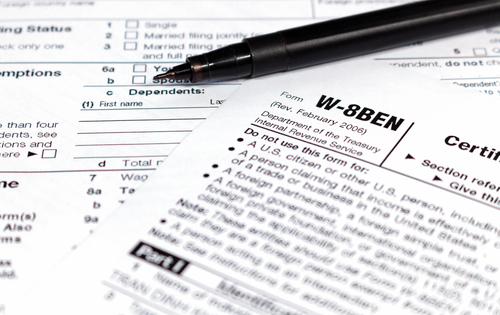
If you work with U.S. clients, you’ll likely be asked to complete a W-8BEN form. This is a standard IRS document that certifies you are a non-U.S. person for tax purposes.
Why it matters: Under U.S. tax law, companies paying foreign contractors are generally required to withhold 30% of payments unless the contractor provides documentation confirming their tax status. Submitting a W-8BEN correctly can reduce or eliminate this withholding, depending on whether a tax treaty exists between the U.S. and your country.
Key points to know:
- You do not need a U.S. Social Security Number to complete this form
- You may need your country’s tax identification number
- The form is submitted to your client—not filed directly with the IRS
- A valid W-8BEN typically remains in effect for three calendar years
Tax treaties between the U.S. and other countries may reduce withholding rates. Because the implications vary by country, consider consulting a local tax professional before billing U.S. clients.
Step 3: Decide Whether to Invoice in USD or Local Currency
Most international freelancers working with U.S. clients invoice in USD. Here’s why that is common—and when another approach might make sense.
Invoicing in USD:
- Often preferred by U.S. clients
- Simplifies payment processing on their end
- Places FX risk on you, meaning your local income may fluctuate with exchange rates
Invoicing in your local currency:
- Reduces your currency risk
- May require the client to arrange FX conversion
- Less common in some U.S. corporate payment systems
A common practice is to invoice in USD and manage FX exposure through thoughtful conversion timing and pricing buffers.
Step 4: Clarify Who Pays the Transfer Fees

Wire transfer fees can reduce your earnings if not discussed upfront. Before work begins, confirm the fee arrangement in writing.
Things to clarify with your client:
- Who covers the outgoing wire fee
- Whether intermediary (correspondent) bank fees may be deducted
- Whether payment should be “net of fees” so you receive the full invoiced amount
A simple line in your agreement or email can help. For example:
“Please ensure payment covers all applicable transfer fees so the full invoiced amount is received on my end.”
This small step can help avoid surprises over time.
Step 5: Set Clear Payment Terms

U.S. companies often operate on Net-30 billing cycles—meaning they pay invoices 30 days after receipt. For freelancers, that can feel like a long time to wait.
Set expectations early. Include the following in your agreement:
- Payment terms: Net-7 or Net-15 may be reasonable depending on the relationship
- Milestone billing: Break longer projects into stages tied to deliverables
- Upfront deposit: A partial deposit can reduce risk when working with new clients
- Late payment clause: Specify what happens if invoices are overdue
Clear terms reduce misunderstandings and demonstrate professionalism.
Step 6: Manage Your Currency Exchange Strategically

Even modest fluctuations in the USD exchange rate can affect your overall income. The goal isn’t to predict currency markets—but to be intentional about how and when you convert.
Practical strategies:
- Hold USD in a multi-currency account and convert periodically
- Monitor exchange rates using publicly available financial tools
- Factor potential exchange costs into your pricing
- Track conversion rates for accurate tax reporting
A deliberate approach can help reduce unnecessary exchange-related losses.
Step 7: Track Payments and Keep Documentation

Good record-keeping helps at tax time and supports faster resolution if questions arise.
What to keep:
- Copies of invoices sent
- Your completed W-8BEN and related correspondence
- Payment confirmations
- Exchange rate records for each transaction
- Client communications about payment
Once payment is received, sending a brief confirmation to your client adds a professional touch.
Common Mistakes to Avoid
Even experienced freelancers can run into avoidable issues when working with U.S. clients.
- Delaying the W-8BEN submission
- Overlooking FX spreads when choosing a payment method
- Not clarifying wire fees in advance
- Confusing ACH with international wire systems
- Waiting too long to follow up on late payments
Frequently Asked Questions (FAQs)
Do I need a U.S. bank account to work with U.S. clients?
No. You can receive USD payments through international wires, digital payment platforms, or financial services that provide U.S. account details without requiring you to open a physical U.S. bank account.
What is the W-8BEN and do I have to file it with the IRS?
The W-8BEN is a certificate of foreign status used for U.S. tax purposes. You provide it to your client—not directly to the IRS.
Will 30% tax automatically be withheld from my payments?
Without a W-8BEN, withholding may apply. With a valid form on file, withholding may be reduced or eliminated depending on applicable tax treaties and your country of residence.
How long do international USD wire transfers take?
Often 2–5 business days via SWIFT, though timing varies by bank and country. ACH transfers through a U.S. receiving account are typically faster.
What’s a cost-effective way to receive USD from abroad?
Costs vary by provider, invoice size, and country. Digital financial platforms and multi-currency accounts may offer competitive pricing compared to traditional bank wires, but it’s worth comparing options based on your specific needs.